
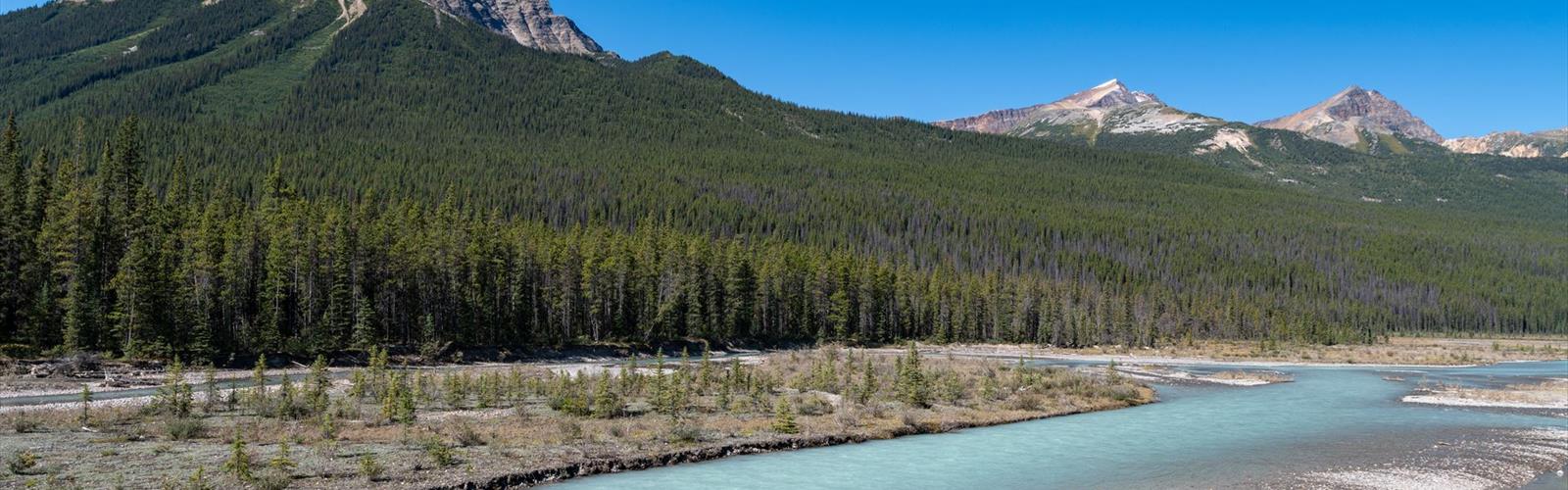

Ready to explore Mount Woolley? Here's everything you need to know before you go!
Discover the trail
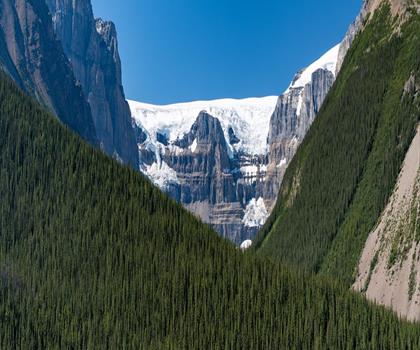
Photos: Christoph Strässler from Oberdorf BL, Schweiz — CC BY-SA 4.0 (Wikimedia Commons)
Trail description
Mount Woolley rises to 3,405 meters (11,171 feet) in the heart of the Canadian Rockies, commanding attention as one of the more formidable peaks in Jasper National Park. Part of the Winston Churchill Range, this mountain was named after Herman Woolley, an early explorer and mountaineer who helped map this rugged corner of Alberta. What sets Mount Woolley apart from other Rockies peaks is its dramatic glaciated terrain and the technical nature of its approaches, making it a destination that rewards experienced hikers with some of the most spectacular alpine scenery in the region.
The mountain's imposing presence becomes apparent long before you reach the trailhead. From the Icefields Parkway, Mount Woolley's steep faces and hanging glaciers create a striking silhouette against the sky. This isn't a casual day hike—it's a serious mountain adventure that demands respect, preparation, and solid hiking experience.
The Woolley Shoulder Route
The most popular and accessible route to Mount Woolley follows the Woolley Shoulder, though "accessible" is a relative term when discussing a peak of this caliber. This route provides the most straightforward path to the summit while still delivering an exhilarating and challenging climb that will test your endurance and mountain skills.
Your journey begins at the Tangle Creek Falls parking area along the Icefields Parkway. From here, the trail initially follows established paths before branching into more demanding alpine terrain. The early sections wind through dense subalpine forest, where the sound of rushing water from nearby creeks accompanies your steady climb.
As you gain elevation, the forest gives way to expansive alpine meadows that burst with wildflowers during the brief summer season. These meadows provide the first real glimpse of the challenges ahead, as Mount Woolley's imposing bulk dominates the horizon. The terrain becomes increasingly rocky as you approach the shoulder, requiring careful foot placement and steady nerves.
The final approach to the Woolley Shoulder involves traversing rocky ridges and navigating around pristine glaciers that cling to the mountain's upper reaches. The glacier crossings demand particular attention—what appears solid from a distance may conceal crevasses or unstable ice. This is where the route transitions from a challenging hike to a true mountaineering experience.
Wildlife and Natural Features
Mount Woolley's diverse elevation zones support an impressive array of wildlife. In the lower forested sections, keep watch for black bears and the occasional grizzly, particularly during berry season. As you climb into the alpine zone, mountain goats become the dominant large mammals, their sure-footed navigation of seemingly impossible cliff faces providing both entertainment and inspiration.
Marmots are common throughout the rocky areas, their sharp whistles often serving as an early warning system for approaching weather changes. Pikas, small rabbit-like creatures, dart between the talus slopes, gathering vegetation for their winter stores. Golden eagles and other raptors frequently soar overhead, riding the thermals that rise from the sun-warmed rock faces.
The glacial features around Mount Woolley offer a fascinating glimpse into the forces that shaped this landscape. The pristine glaciers you'll encounter represent some of the most accessible ice formations in the Canadian Rockies, though they require careful navigation and proper equipment to cross safely.
Planning and Preparation
Mount Woolley demands thorough preparation and the right equipment. The weather in this region changes rapidly and without warning—clear morning skies can give way to afternoon thunderstorms or sudden temperature drops that bring snow even in summer months. Pack layers that can handle everything from intense sun reflection off snow and ice to bitter wind and precipitation.
Sturdy mountaineering boots are essential, as the terrain ranges from loose scree to solid rock to potentially icy surfaces. Crampons and an ice axe may be necessary depending on conditions and the time of year. A helmet is strongly recommended for the upper sections where rockfall poses a real hazard.
Navigation tools are critical—GPS devices and detailed topographic maps should be considered mandatory equipment. The route-finding becomes increasingly complex as you gain elevation, and weather can reduce visibility to mere meters. Carry plenty of water and high-energy food, as this is a long, demanding day that will tax your energy reserves.
Check current trail and weather conditions before departing, as conditions can change dramatically from day to day. Parks Canada maintains updated information on trail conditions, and local outfitters in Jasper can provide valuable insights into current mountain conditions.
Access and Logistics
Reaching Mount Woolley begins with a drive to Jasper National Park, one of Canada's premier mountain destinations. From the Jasper townsite, head south on the famous Icefields Parkway (Highway 93), one of the world's most scenic mountain drives. The route to Sunwapta Pass takes you through increasingly dramatic mountain scenery, building anticipation for the adventure ahead.
At Sunwapta Pass, follow the signs toward the Tangle Creek Falls parking area, which serves as your trailhead. This parking area can fill up during peak season, so an early start serves multiple purposes—better parking availability, more stable weather conditions, and additional daylight hours for the long approach and return.
The remote location means cell phone coverage is spotty at best, so inform someone of your planned route and expected return time. Emergency services are far away, making self-reliance and proper preparation even more critical than usual.
Practice Leave No Trace principles throughout your visit to help preserve this pristine environment for future adventurers. Pack out all trash, stay on established routes where they exist, and maintain appropriate distances from wildlife. The fragile alpine environment around Mount Woolley recovers slowly from damage, making careful travel essential for protecting this remarkable landscape.
The Essential Hiking Checklist
Everything you need for your next hike. Bilingual, printable, 1 page.
Get your free hiking checklistRecommended gear for this trail
As an Amazon Associate I earn from qualifying purchases.


Ready to go?
Everything you need to know before you goStarting Point
The mount woolley trailhead is located in the Kananaskis Valley, approximately 60 km west of Calgary. To get there, take the Trans-Canada Highway (Hwy 1) west to the Kananaskis Village exit. Follow the signs to the Peter Lougheed Provincial Park. The trailhead is located at the end of the park road.
When?
How much?
As an Amazon Associate I earn from qualifying purchases.
Affiliate links — LGPO may earn a commission at no extra cost to you.
- Hiking shoes Essential
- → Salomon Elixir Tour Mid WP · 203.38 $
- Layered clothing Essential
- Rain jacket Essential
- Trekking poles
- → Black Diamond Trail Ergo Cork · 69.99 $
- Headlamp
- → Petzl Actik Core 625 · 103.95 $
FAQ - Frequently asked questions
Everything you need to knowSimilar hikes nearby
Discover other trails you might enjoy
Fossil Mountain
Canadian Rockies

Snake Indian Mountain
Canadian Rockies
Mushroom Peak
Canadian Rockies
Stutfield Peak
Canadian Rockies
Mount Sarbach
Canadian Rockies
Roche Miette
Canadian Rockies
Hiking near Jasper
82 trails to explore ~78 km away
We work hard to provide the most up-to-date and error-free data possible. If something seems incorrect, let us know! Your contribution helps the whole community.
Hikers' opinions
Be the first to review!
No hiker has shared their experience yet. Share your impressions and help other hikers!