
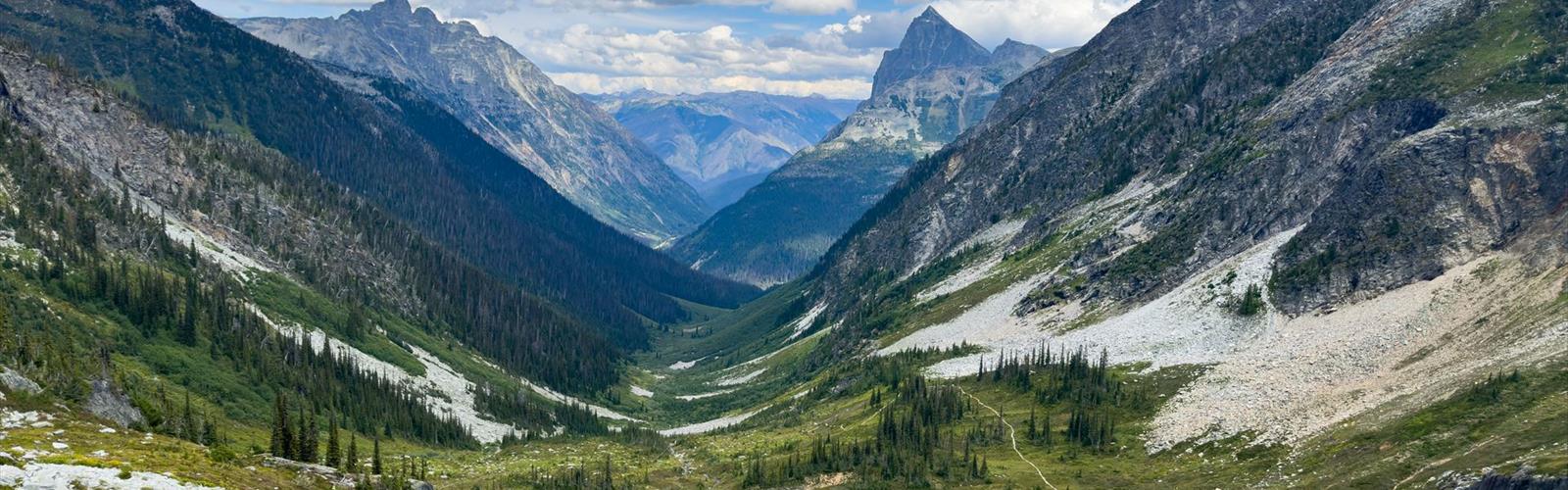

Ready to explore Glacier National Park of Canada? Here's everything you need to know before you go!
Discover the trail
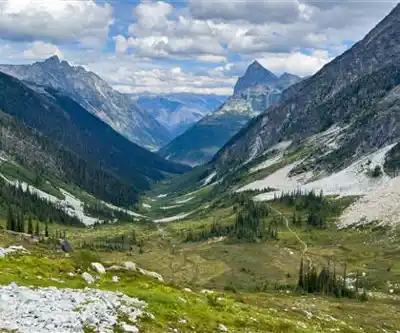
Photos: Christoph Strässler from Oberdorf BL, Schweiz — CC BY-SA 4.0 (Wikimedia Commons)
Trail description
Glacier National Park of Canada sits in the heart of the Kootenay Rockies, offering some of the most dramatic mountain scenery you'll find anywhere in the Canadian Rockies. This isn't just another pretty mountain park – it's a place where massive glaciers flow down from towering peaks, creating a landscape that feels both ancient and alive.
The park spans a relatively compact area, but what it lacks in size it makes up for in sheer vertical drama. You're looking at peaks that shoot up over 3,000 meters, with glaciers clinging to their faces and sending meltwater cascading down through deep valleys. The Trans-Canada Highway cuts right through the park via Rogers Pass, making this one of the most accessible glacier viewing areas in North America.
Trail Network and Hiking Experience
With over 140 kilometers of maintained trails, Glacier National Park caters to everyone from families looking for an easy forest walk to experienced mountaineers seeking serious alpine challenges. The trail system is well-designed, with most routes starting from easily accessible trailheads along the highway or from the Rogers Pass Discovery Centre.
The easier trails take you through some of the most impressive old-growth forest you'll see in the Rockies. These aren't the typical pine and fir forests – you're walking among massive western red cedars and hemlocks, some over 800 years old. The forest floor is thick with moss and ferns, creating an almost rainforest-like atmosphere despite being in the mountains. The air feels different here, heavy with moisture and the earthy scent of decomposing logs that have been feeding the forest for centuries.
For those ready to gain some elevation, the more challenging trails lead up toward the glaciers themselves. The terrain becomes increasingly rugged as you climb, transitioning from dense forest to alpine meadows, then to rocky slopes and moraines. Your legs will feel the burn as you switchback up steep grades, but the higher you go, the more dramatic the views become. Glaciers fill the valleys between peaks and waterfalls drop hundreds of meters down cliff faces, creating a soundtrack of rushing water that follows you throughout your hike.
The Illecillewaet Glacier Experience
The Illecillewaet Glacier stands as the park's crown jewel and most famous attraction. This massive river of ice flows down from the Névé, a high-elevation ice field that feeds several glaciers in the area. What makes this glacier special isn't just its size, but how accessible it is – you can get relatively close views without technical climbing skills.
The glacier has been retreating significantly over the past century, and interpretive displays along the trails show you exactly where the ice edge used to be. It's a powerful reminder of how these landscapes are constantly changing. The area around the glacier offers some of the best examples of glacial geology you'll find anywhere, with obvious moraines, glacial polish on the bedrock, and classic U-shaped valleys carved by ice.
The approach to the glacier takes you through terrain that changes dramatically as you gain elevation. You'll start in thick forest, emerge into areas of avalanche-cleared slopes with different vegetation, then climb through increasingly rocky terrain as you approach the ice. The final approach gives you clear views of crevasses, seracs, and the constantly shifting nature of the glacier itself. The sound of the glacier – creaking, groaning, and occasionally cracking – reminds you that you're witnessing a living, moving landscape.
Wildlife Encounters
The park's wildlife reflects its position in the heart of the Rockies. Mountain goats are the stars here – these sure-footed climbers are perfectly adapted to the steep terrain and are often visible on cliff faces that look impossible to navigate. They're most commonly seen in the early morning or late afternoon, and the higher elevation trails give you the best chances for sightings. Watching them navigate seemingly vertical rock faces with casual confidence is one of those moments that makes you stop and appreciate just how wild this place really is.
Black bears are present throughout the park and are particularly active during berry season in late summer. They tend to favor the avalanche slopes where berry bushes grow thick, and you'll often see evidence of their feeding in the form of broken branches and scattered scat along the trails. The park's bear safety protocols are strict, and you'll need to be prepared with proper food storage and awareness.
The bird life is diverse, ranging from high-altitude specialists like white-tailed ptarmigan in the alpine zones to forest species like varied thrushes and winter wrens in the lower elevations. Raptors including golden eagles and peregrine falcons hunt in the area, taking advantage of the dramatic topography and updrafts created by the steep valley walls.
Seasonal Conditions and Planning
Summer brings the most accessible conditions, with most trails snow-free from July through September. This is when the alpine meadows explode with wildflowers – paintbrush, lupine, mountain avens, and dozens of other species create spectacular displays that rival anything you'll see in the Rockies. The weather can change quickly at any time of year, and afternoon thunderstorms are common in summer. You'll want to start early and be prepared to turn back if clouds start building over the peaks.
Winter transforms the park into a completely different environment. The heavy snowfall – often exceeding 10 meters annually – creates excellent conditions for backcountry skiing and snowshoeing, but also brings serious avalanche danger. The park is famous among backcountry skiers for its deep powder and challenging terrain, but winter travel requires advanced skills and proper equipment.
Rogers Pass Discovery Centre and Historical Context
The Rogers Pass Discovery Centre serves as both the park's visitor center and a museum dedicated to the area's railway history. The Canadian Pacific Railway's route through Rogers Pass was an engineering marvel when it was completed in the 1880s, but the heavy snowfall and avalanche danger eventually forced the railway into the Connaught Tunnel beneath the pass.
The center provides crucial information about current trail conditions, weather forecasts, and safety considerations. The exhibits help you understand how the railway's construction opened up this remote area and how the challenges of building through such terrain led to innovations in engineering and avalanche control. Today's Trans-Canada Highway uses extensive avalanche control measures, including howitzer bombardment to trigger controlled avalanches.
The historical context adds depth to your visit – you're not just seeing beautiful scenery, but walking through an area that played a crucial role in connecting Canada from coast to coast. The remains of old railway infrastructure are still visible along some trails, giving you a tangible connection to this history and reminding you that this dramatic landscape has challenged human ambition for over a century.
The Essential Hiking Checklist
Everything you need for your next hike. Bilingual, printable, 1 page.
Get your free hiking checklistRecommended gear for this trail
As an Amazon Associate I earn from qualifying purchases.


Ready to go?
Everything you need to know before you goStarting Point
The trails at the glacier national park of canada in British Columbia can be accessed from the Trans-Canada Highway.
When?
How much?
As an Amazon Associate I earn from qualifying purchases.
Affiliate links — LGPO may earn a commission at no extra cost to you.
- Hiking shoes Essential
- → Salomon Elixir Tour Mid WP · 203.38 $
- Layered clothing Essential
- Rain jacket Essential
- Trekking poles
- → Black Diamond Trail Ergo Cork · 69.99 $
- Headlamp
- → Petzl Actik Core 625 · 103.95 $
FAQ - Frequently asked questions
Everything you need to knowSimilar hikes nearby
Discover other trails you might enjoy

Emerald Lake
Kootenay Rockies

Golden Skybridge
Kootenay Rockies
Bugaboo Provincial Park
Kootenay Rockies
Mount Stephen
Kootenay Rockies
Magog, Lake
Kootenay Rockies
Iceline Trail
Kootenay Rockies
Hiking near Banff
187 trails to explore ~138 km away
We work hard to provide the most up-to-date and error-free data possible. If something seems incorrect, let us know! Your contribution helps the whole community.
Hikers' opinions
Be the first to review!
No hiker has shared their experience yet. Share your impressions and help other hikers!