


Ready to explore Whistler Blackcomb Resort? Here's everything you need to know before you go!
Discover the trail
Trail description
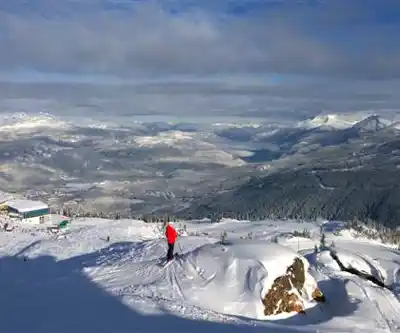
Whistler Blackcomb Resort is one of the most iconic mountain destinations in North America, and while it's best known as a world-class ski resort, its hiking opportunities are just as compelling. Situated in the Sea-to-Sky corridor of British Columbia, the resort sits within a dramatic alpine landscape shaped by glaciers, ancient forests, and rugged peaks that draw outdoor enthusiasts year-round.
The Mountain Setting
Whistler Blackcomb encompasses two distinct mountains — Whistler Mountain and Blackcomb Mountain — rising side by side above Whistler Village. The terrain here is genuinely alpine: think exposed ridgelines, glacial remnants, wildflower meadows at elevation, and dense old-growth forest lower down. The vertical relief is significant, and even hikers who take the gondola up will find themselves in a landscape that feels remote and wild despite the resort infrastructure nearby.
The upper alpine zones offer sweeping views across the Coast Mountains, with glaciated peaks stretching in every direction. On a clear day, the scale of the landscape is hard to fully absorb — it's the kind of place that makes you stop mid-trail just to take it in.
Hiking at Whistler Blackcomb
Hiking at Whistler Blackcomb is a bit different from a typical trailhead experience. The resort operates the PEAK 2 PEAK Gondola and the Whistler Village Gondola, which give hikers access to the alpine without having to earn every metre of elevation on foot. That said, there are plenty of options for those who want to hike up from the valley floor as well.
The trail network spans a wide range of terrain and ability levels. From the top of the gondola, hikers can access routes that traverse open alpine meadows, skirt the edges of glaciers, and connect between the two mountains. Lower on the mountain, forested trails wind through second-growth and old-growth stands, crossing streams and offering a quieter, shadier experience than the exposed upper zones.
Some of the most popular routes lead to destinations like Harmony Lake, Spearhead Loop, and Singing Pass Trail. These aren't technical routes, but the elevation and exposure mean hikers should be prepared for rapidly changing weather and cool temperatures even in midsummer.
What Makes This Place Stand Out
What sets Whistler Blackcomb apart from other hiking destinations in British Columbia is the combination of accessibility and genuine alpine terrain. The gondola system means that families, casual hikers, and visitors who aren't up for a full-day grunt can still experience high-alpine environments that would otherwise require significant fitness and experience to reach. At the same time, the trail network is extensive enough that experienced hikers can put together long, challenging days entirely on foot.
The resort also invests heavily in trail maintenance and signage, so navigation is generally straightforward. Interpretive panels along some routes provide context about the local ecology, glacial history, and Indigenous connections to the land — the territory is the traditional home of the Lil'wat and Squamish Nations, and that history is woven into the landscape in meaningful ways.
Wildlife and Ecology
The ecosystems at Whistler Blackcomb shift dramatically with elevation. Down in the valley and on the lower slopes, you're moving through coastal temperate rainforest — dense, mossy, and humid. As you gain elevation, the forest transitions to subalpine fir and mountain hemlock, then opens up into the treeline zone where krummholz trees cling to rocky slopes. Above that, the alpine tundra takes over: low-growing plants, exposed rock, and the kind of open sky that feels enormous.
Wildlife is present throughout. Black bears are commonly spotted on the lower and mid-mountain slopes, particularly in late summer when berry crops are at their peak. Marmots are a fixture in the upper alpine zones — you'll almost certainly hear their sharp warning whistles before you see them. Pikas, ptarmigan, and a variety of raptors round out the wildlife picture. Hikers should follow standard bear awareness practices and give all wildlife plenty of space.
Practical Information
Access to the upper mountain hiking trails requires a gondola ticket during the summer season, which runs roughly from late June through early October depending on snow conditions. The resort's summer operations include food and beverage options at the top of the gondola, which is worth knowing if you're planning a full day out.
Hikers heading into the alpine should come prepared regardless of the forecast. Afternoon thunderstorms are common in summer, temperatures drop quickly above treeline, and conditions can change fast. Layers, rain gear, sun protection, and plenty of water are all essential. Some of the higher routes cross snow well into July, so traction devices or at minimum careful route-finding may be needed early in the season.
Whistler Village itself offers full services — gear shops, restaurants, accommodation, and transit connections — making it easy to base yourself here for multiple days of hiking. The resort's trail maps are available at the gondola base and online, and staff at the mountain are generally knowledgeable about current conditions.
Getting There
Whistler Blackcomb is located along the Sea-to-Sky Highway (Highway 99) in British Columbia, roughly two hours north of Vancouver. The drive itself is spectacular, following Howe Sound through dramatic coastal mountain scenery. Public transit options include the BC Ferries and bus connections, and Whistler Village is compact and walkable once you arrive. Parking is available in the village, though it fills up quickly on summer weekends — arriving early or using transit is a smart move during peak season.
Recommended gear for this trail
As an Amazon Associate I earn from qualifying purchases.


Ready to go?
Everything you need to know before you goWhen?
How much?
As an Amazon Associate I earn from qualifying purchases.
Affiliate links — LGPO may earn a commission at no extra cost to you.
- Hiking shoes Essential
- → Salomon Elixir Tour Mid WP · 203.38 $
- Layered clothing Essential
- Rain jacket Essential
- Trekking poles
- → Black Diamond Trail Ergo Cork · 69.99 $
- Headlamp
- → Petzl Actik Core 625 · 103.95 $
FAQ - Frequently asked questions
Everything you need to know
25 hikes under 2 hours from Montreal
Distance, elevation, parking and season for each one. The ones we go back to ourselves.
Get the guideSimilar hikes nearby
Discover other trails you might enjoy
Bridle Path
Vancouver Coast Mountains
Flora Lake
Vancouver Coast Mountains

Alouette Mountain
Vancouver Coast Mountains
Williamson Lake
Vancouver Coast Mountains
Brandywine Mountain
Vancouver Coast Mountains

Coliseum Mountain
Vancouver Coast Mountains
Hiking near Whistler
160 trails to explore ~0 km away
We work hard to provide the most up-to-date and error-free data possible. If something seems incorrect, let us know! Your contribution helps the whole community.
Hikers' opinions
Be the first to review!
No hiker has shared their experience yet. Share your impressions and help other hikers!