
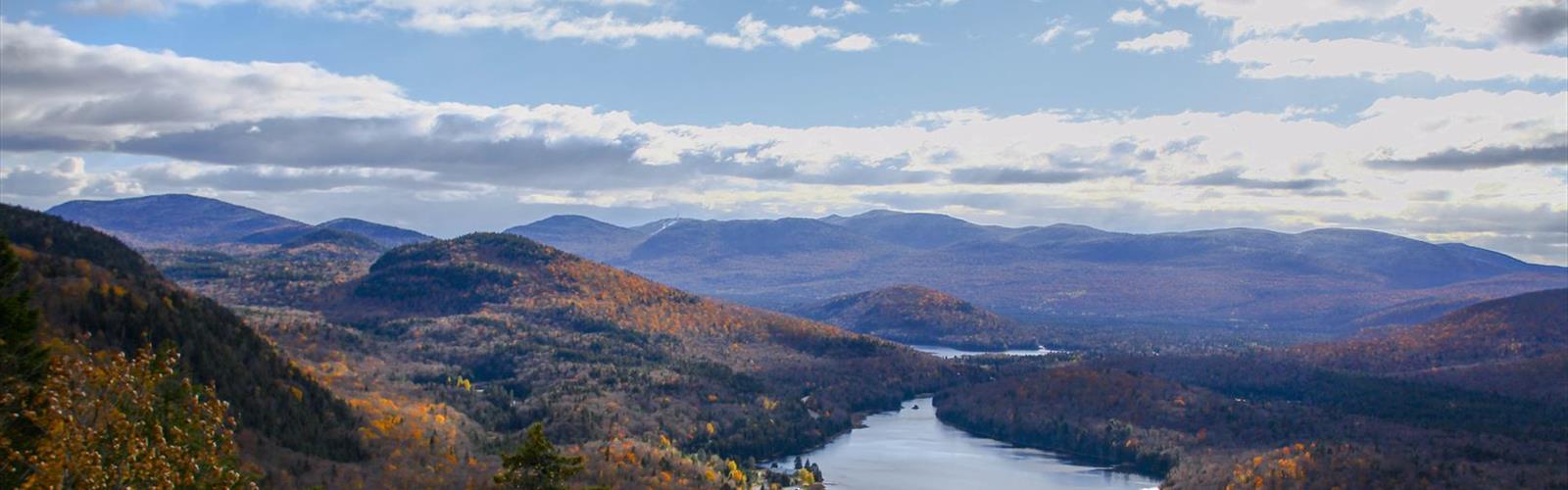

Ready to explore Mont Blanc? Here's everything you need to know before you go!
Discover the trail
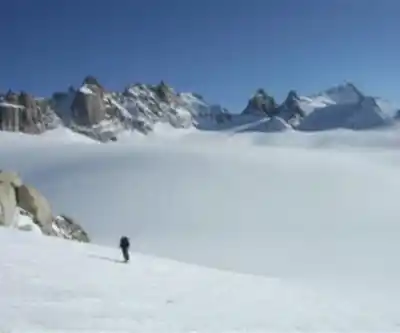
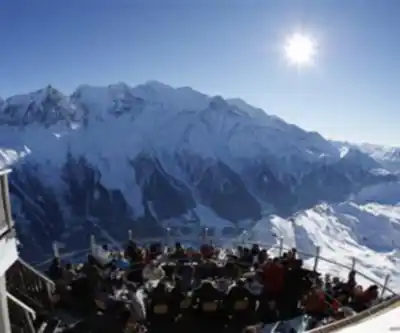
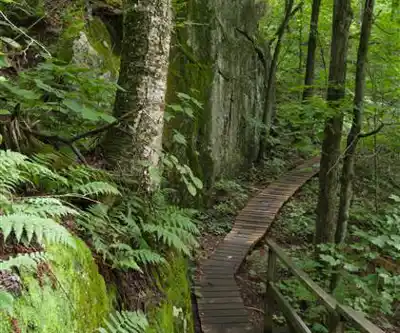
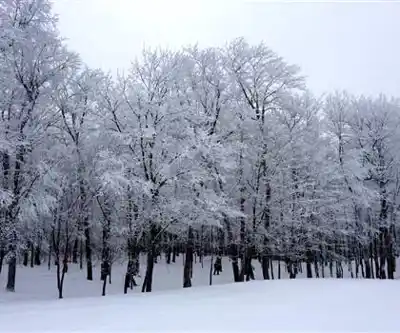
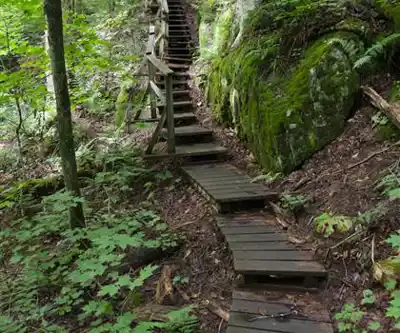
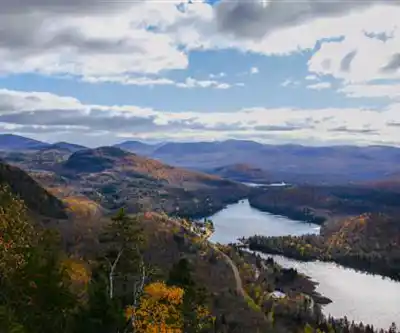
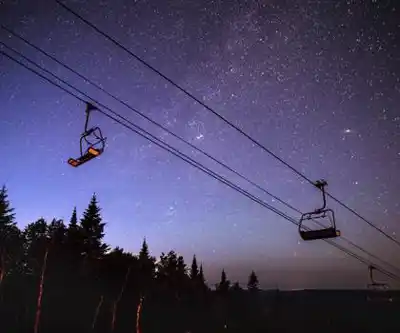
Photos: Douglas J O'Brien — CC BY-SA (Flickr) kohane — CC BY-NC (Flickr) Fæ — CC0 (Wikimedia Commons)
Available trails
| TrailTrails | Dist.Distance | GainElevation | TimeDuration | Difficulty | GPX |
|---|---|---|---|---|---|
|
Advanced
|
71 km | 705 m | 17h | Advanced |
Trail description
Mont Blanc is one of the more demanding and rewarding hikes in the Laurentides region of Québec. At 8.4 km with 1,065 m of elevation gain, it's a serious climb that earns its Hard difficulty rating — but the payoff at the top is the kind of panoramic view that makes you forget how much your legs hurt on the way up. Plan for around 4 hours 30 minutes on the trail, though your actual time will depend on your pace and how long you linger at the viewpoints.
What the climb actually feels like
This isn't a casual stroll. With over a kilometre of elevation gain packed into 8.4 km, Mont Blanc asks a lot of you — especially in the steeper sections where the trail pitches upward and your lungs start to have opinions. The terrain shifts as you gain altitude: you'll move through stretches of dense forest where the canopy keeps things cool and shaded, then hit more exposed sections where the grade steepens and the views start opening up around you.
The trail is well-marked and maintained, which matters on a climb like this. When you're working hard and watching your footing, clear signage takes one variable off your plate. First-timers to the mountain will appreciate not having to second-guess the route at every junction.
Trekking poles are worth bringing. On a 1,065 m elevation gain, your knees will thank you on the descent — which can be just as demanding as the climb up, especially on steeper sections where loose terrain or wet rock requires careful footing.
The views and what you're working toward
The summit payoff at Mont Blanc is the main event. From the top, you get broad, open views across the Laurentides landscape — rolling forested hills stretching out in every direction, the kind of scene that puts the effort of the climb in perspective. On a clear day, the visibility is excellent, and it's worth timing your visit to take advantage of good conditions rather than rushing through in poor weather.
Even before the summit, the trail offers moments where the forest opens up and you get partial views that build anticipation. The experience isn't just about the top — it's about the gradual reveal as you gain elevation and the landscape around you keeps changing.
Wildlife and what you might spot along the way
The forested sections of the trail are active with wildlife, particularly if you're moving at a quieter pace. Deer and foxes are present in the area, and bird life is consistent throughout the climb. The lower forested sections tend to be the most productive for wildlife sightings — once you're higher up and the terrain opens, animals are less likely to be close to the trail.
In the warmer months, wildflowers appear in the clearings and along sunlit stretches of the trail. It's one of those details that's easy to miss when you're focused on the climb, but worth slowing down for — especially in late spring and early summer when the blooms are at their peak.
Who this hike is right for
Mont Blanc is best suited to hikers who are comfortable with sustained elevation gain and have some experience on harder terrain. The 1,065 m of climbing over 8.4 km is not forgiving — if you're newer to hiking or haven't been out much recently, this one will be a tough day. That said, if you're in decent shape and looking for a genuine challenge in the Laurentides, this is exactly the kind of hike that delivers.
It's not the right choice for young kids or anyone who struggles on steep, uneven ground. For experienced hikers — or those who want to push themselves — the combination of sustained climbing, varied terrain, and strong summit views makes it one of the more satisfying days you can have in the region.
Practical things to know before you go
Given the 4h30 estimated duration and the physical demands of the climb, start early. An early morning departure gives you the best chance of good light at the summit, avoids the hottest part of the day in summer, and leaves a comfortable buffer if the hike takes longer than expected.
Bring more water than you think you need — sustained climbing in the Laurentides heat can drain you faster than expected. Solid footwear with ankle support is strongly recommended given the elevation change and the varied terrain underfoot. Layers are worth packing even in summer, since the summit can be noticeably cooler and windier than the trailhead.
Mont Blanc is accessible from major cities in Québec, making it a realistic day trip for anyone willing to commit to the drive and the climb — a full, satisfying day in the Laurentides without needing to plan an overnight stay.
The Essential Hiking Checklist
Everything you need for your next hike. Bilingual, printable, 1 page.
Get your free hiking checklistRecommended gear for this trail
As an Amazon Associate I earn from qualifying purchases.


Ready to go?
Everything you need to know before you goStarting Point
To access the hiking trails, you can start at the main trailhead located at 1006 Chemin des Voyageurs, Mont-Tremblant, QC J8E 1T1. There is a parking lot available at this location for visitors. Additionally, another possible starting point is at 400 Rue du Mont-Plaisant, Mont-Tremblant, QC J8E 1L2. Both locations provide convenient access to the trails in the area.
When?
How much?
As an Amazon Associate I earn from qualifying purchases.
Affiliate links — LGPO may earn a commission at no extra cost to you.
- Hiking shoes Essential
- → Salomon Elixir Tour Mid WP · 203.38 $
- Layered clothing Essential
- Rain jacket Essential
- Trekking poles
- → Black Diamond Trail Ergo Cork · 69.99 $
- Headlamp
- → Petzl Actik Core 625 · 103.95 $
FAQ - Frequently asked questions
Everything you need to knowSimilar hikes nearby
Discover other trails you might enjoy
Parc De La Rivière Doncaster
Laurentides

Parc Du Domaine Vert
Laurentides

Parc national d'Oka
Laurentides

Sommet Saint-Sauveur
Laurentides

Mont Condor
Laurentides

Montagne Du Dépôt Et Montagne Du Caribou
Laurentides
Hiking near Laval
97 trails to explore ~82 km away
We work hard to provide the most up-to-date and error-free data possible. If something seems incorrect, let us know! Your contribution helps the whole community.
Hikers' opinions
Be the first to review!
No hiker has shared their experience yet. Share your impressions and help other hikers!