

Ready to explore Parc Régional Du Poisson Blanc? Here's everything you need to know before you go!
Discover the trail
Available trails
| TrailTrails | Dist.Distance | GainElevation | TimeDuration | Difficulty | GPX |
|---|---|---|---|---|---|
|
Beginner
|
3.8 km | — | 51min | Beginner | |
|
Beginner
|
3.1 km | — | 41min | Beginner | |
|
Intermediate
|
1.1 km | — | 15min | Intermediate | |
|
Advanced
|
2.3 km | 230 m | 52min | Advanced |
Trail description
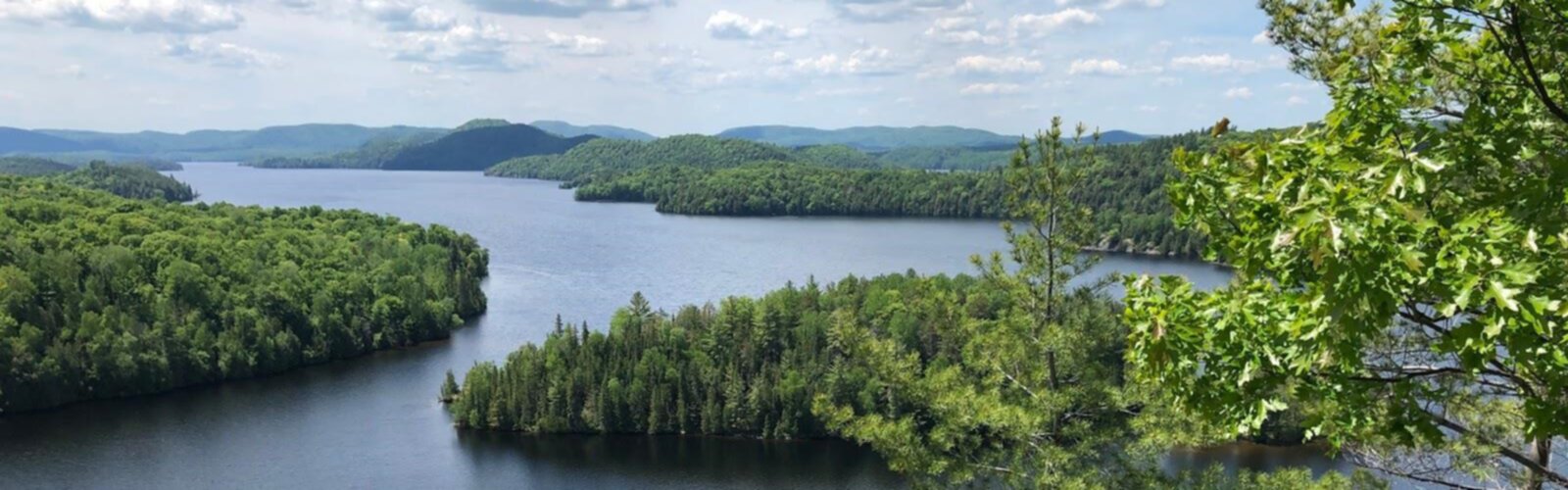
Parc Régional Du Poisson Blanc is one of those places in the Laurentides that doesn't get talked about as much as it should. It sits far enough off the main tourist circuits that you can actually feel the quiet when you arrive — no lineup for a trailhead, no crowded viewpoint with people jostling for the same photo. What you get instead is a big, calm reservoir, dense Laurentian forest, and trails that give you room to breathe and move at your own pace.
The hiking experience
The park has trails for different experience levels, which makes it a solid choice when your group has mixed abilities or when you're not sure how much you want to push on a given day. The terrain shifts as you move through the park — stretches of shaded forest walking give way to rockier ground that asks a bit more of your footing, and then the trees open up to views over the surrounding landscape that make the effort feel worthwhile.
One of the main hiking options here is a 10.3 km route with roughly 300 m of elevation gain, rated easy and estimated at around 3 hours 15 minutes. That easy rating is accurate in terms of overall effort, but the rocky sections can slow your pace compared to a groomed path — wear footwear with real grip, especially if there's been recent rain or if you're hiking with kids. The best approach on this trail is to resist the urge to move fast. The forest sections reward slower walking, and the openings toward the water are worth stopping for rather than treating as a checkpoint.
Terrain and what you'll actually notice
The contrast between the forest interior and the reservoir views is what gives this park its character. Inside the trees, it feels classic Laurentides: green, enclosed, and quiet, with the trail winding through mixed forest and the occasional rocky outcrop underfoot. That enclosed feeling makes the moments when the landscape opens up feel more dramatic than they might otherwise — you step out of the woods and suddenly there's a wide stretch of water backed by cliffs and dense forest on the far shore.
Those cliff-framed reservoir views are genuinely striking. The elevation gain here isn't extreme, but the park doesn't need it — the combination of calm water, steep rock faces, and thick forest creates a bold backdrop that holds your attention. It's the kind of scenery that makes you stop and actually look around rather than just glance and keep moving.
Paddling the reservoir
The reservoir is a big part of why people come to Parc Régional Du Poisson Blanc, and if you have access to a kayak or canoe, it's worth building your day around it. The water is calm and clear, and the shoreline alternates between steep cliff sections and forested edges — the kind of paddling where the scenery keeps changing and you don't feel the urge to rush. It's a relaxed, spacious experience, more about taking in the landscape than covering distance.
Combining a hike with a paddle in the same day is an easy way to get the full picture of what the park offers. Hike first while your legs are fresh, then use the paddle to wind down — or flip the order if you'd rather ease into the day on the water. Either way, the two activities complement each other well, and the reservoir gives you a perspective on the landscape that you simply can't get from the trail.
Island camping
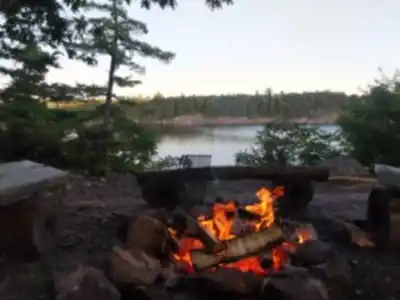
For an overnight stay, the park offers rustic camping on islands scattered across the reservoir. The island setting is the main draw — you're surrounded by water, the forest is right there, and the mornings tend to be genuinely memorable: birds, open sky, and wide views before the day gets going. It's a simple setup by design, so pack light and keep your expectations calibrated to rustic. The point isn't comfort infrastructure — it's the location itself.
An island overnight pairs naturally with a full day of paddling and hiking. Arrive by water, set up a simple camp, and let the reservoir and the surrounding forest be the main event. It's a low-tech, outdoors-first kind of trip that works best when you leave the distractions behind.
Wildlife
The park sits in good habitat for Laurentides wildlife, and quiet movement pays off here. Deer and beavers are around, and the bird life is active — especially along the water's edge and in the transition zones between forest and reservoir. Your best chances come when you slow down: a calm paddle close to the shoreline, or a deliberate pause on the trail in a quieter section of forest. The reservoir and its islands create a lot of edge habitat, which tends to be productive for both birds and other animals.
Planning your visit
For a day trip, the 10.3 km hike gives you a solid few hours on the trail, and if you have time afterward, even a short paddle adds a completely different dimension to the visit. If you're coming with a group that has varying fitness levels, the mix of trail options means you can find something that works without anyone feeling like they're holding the group back.
For a longer stay, the island camping turns the park into a proper multi-day destination — hike, paddle, camp, repeat. The rhythm here is unhurried by nature, and that's the point. Parc Régional Du Poisson Blanc rewards visitors who give it time rather than trying to check it off quickly.
Services and amenities
This information may vary by season.
The Essential Hiking Checklist
Everything you need for your next hike. Bilingual, printable, 1 page.
Get your free hiking checklistRecommended gear for this trail
As an Amazon Associate I earn from qualifying purchases.


Ready to go?
Everything you need to know before you goStarting Point
The trailhead for parc régional du poisson blanc is located in Saint-Sauveur, in the Laurentian region. To access it, take Highway 15 North and exit at Exit 66.
When?
How much?
As an Amazon Associate I earn from qualifying purchases.
Affiliate links — LGPO may earn a commission at no extra cost to you.
- Hiking shoes Essential
- → Salomon Elixir Tour Mid WP · 203.38 $
- Layered clothing Essential
- Rain jacket Essential
- Trekking poles
- → Black Diamond Trail Ergo Cork · 69.99 $
- Headlamp
- → Petzl Actik Core 625 · 103.95 $
FAQ - Frequently asked questions
Everything you need to knowSimilar hikes nearby
Discover other trails you might enjoy
Parc De La Rivière Doncaster
Laurentides

Parc Du Domaine Vert
Laurentides

Parc national d'Oka
Laurentides

Sommet Saint-Sauveur
Laurentides

Mont Condor
Laurentides

Montagne Du Dépôt Et Montagne Du Caribou
Laurentides
Hiking near Gatineau
48 trails to explore ~69 km away
We work hard to provide the most up-to-date and error-free data possible. If something seems incorrect, let us know! Your contribution helps the whole community.
Hikers' opinions
Be the first to review!
No hiker has shared their experience yet. Share your impressions and help other hikers!