
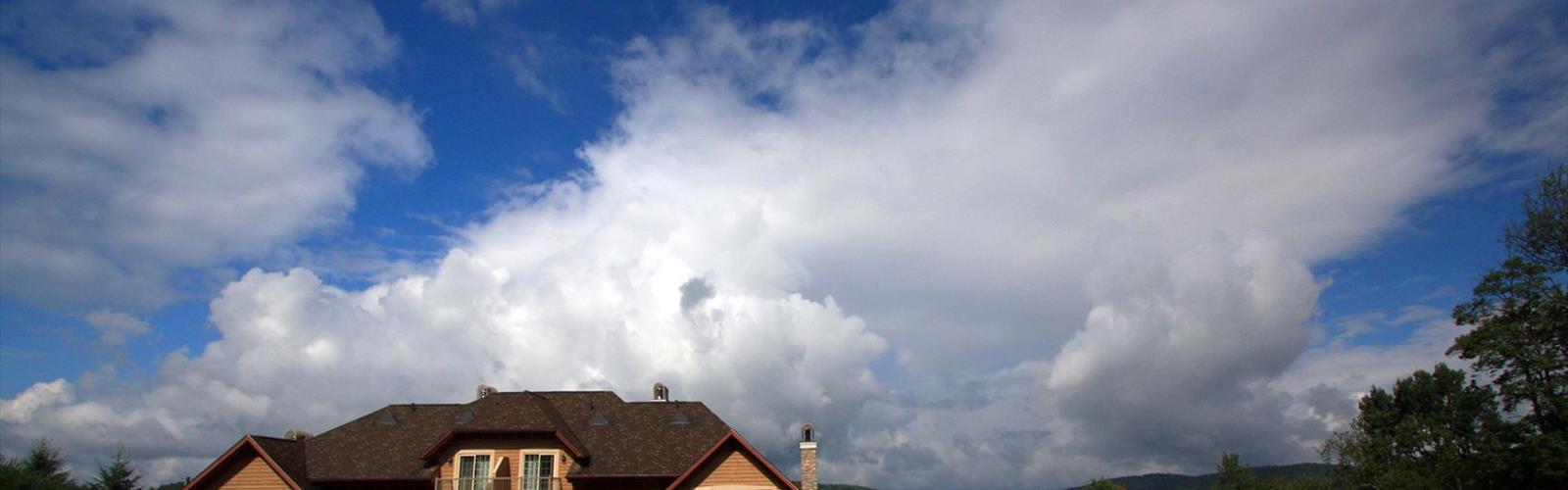

Ready to explore Parc linéaire Le P'tit Train du Nord? Here's everything you need to know before you go!
Discover the trail
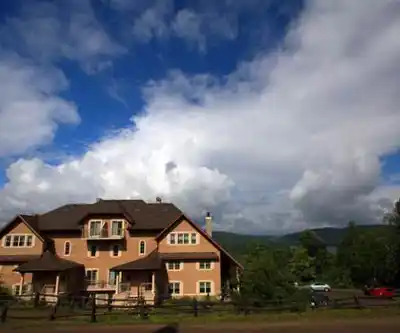
Trail description
Parc Linéaire Le P'tit Train du Nord is one of those places in the Laurentides where it's easy to spend a whole day outside without needing expert hiking skills or complicated planning. The trail follows the corridor of a former railway line, which gives it a calm, steady feel underfoot and a layout that's straightforward to follow. You're moving through a mix of natural scenery and small communities, with the sense that you're traveling through the region rather than just doing an out-and-back in the woods.
What the trail is like
Stretching over 232 kilometers, Parc Linéaire Le P'tit Train du Nord is one of the longest linear parks in Canada. Because it's built on an old rail bed, the route is generally gentle and accessible — the elevation change along the corridor stays around 200 meters across the full length, which means you're rarely dealing with anything steep. That makes it a good match for hikers of many levels, from people easing into longer walks to experienced hikers who want a long, steady day without punishing climbs. The linear park format also changes how it feels compared to a typical loop: instead of circling back to a single trailhead, you're constantly progressing through new sections of the Laurentides landscape.
The surface and terrain reflect its railway origins — expect a route that feels more like a wide, consistent corridor than a narrow, rugged singletrack. That's not a drawback; it's just a different kind of outing. It's ideal when you want to focus on the scenery, cover ground at an even pace, or plan a longer point-to-point day without the constant up-and-down you'd get on a mountain trail.
Scenery along the way
The appeal here is the variety that comes from moving through such a long slice of the Laurentides. As you go, you'll pass through lush forests and alongside serene lakes, then emerge into charming villages before slipping back into quieter stretches. That mix keeps the walk feeling fresh: a shaded corridor of trees can suddenly open up into wider views, and the shift from nature to community and back again gives the route a genuine "traveling through the region" quality.
Because the trail is well-maintained and clearly marked, you don't need to be glued to your navigation app to stay on track. That frees you up to settle into a rhythm, look around more, and make decisions on the fly about how far you want to go.
Wildlife watching
This is a good trail for casual wildlife spotting simply because you spend so much time moving through habitat edges — forest, water, and open corridors. Keep your eyes open as you go; deer and birds are common sightings, and moose are a real possibility in quieter sections. The best approach is to stay observant, scan ahead down the trail, and slow down when entering stretches where the path narrows or vegetation thickens close to the route.
The history under your feet
One of the standout features of Parc Linéaire Le P'tit Train du Nord is that it's not just a path through nature — it's built on a piece of regional infrastructure with a real story behind it. Originally constructed as a railway in the early 20th century, the line played a crucial role in connecting remote communities across the Laurentides. That history still shapes your experience today: the gentle grade, the long straightaways in places, and the way the route links villages all make sense when you remember it was designed for trains, not hikers.
Hiking here can feel like moving along a historical spine of the region. You're traveling the same corridor that once supported day-to-day life and movement between communities, but with today's outdoor-focused use and modern amenities along the way.
Planning your visit: access points and route options
With numerous access points along the route, it's easy to tailor the outing to your schedule and energy level. You can choose a short walk from a convenient entry spot, plan a longer one-way hike by arranging a shuttle or second vehicle, or simply pick a section that matches the kind of scenery you want that day — more forest and lakes, or more village-to-village wandering.
The multiple access points are also what make this trail practical for repeat visits. Instead of doing the same stretch every time, you can sample different segments and get a slightly different feel on each outing. If you're visiting the region with a group that has mixed abilities, it's also easier to adjust on the fly: start at one access point, walk until you've had your fill, and turn around without needing a fixed destination.
Multi-day potential
If you want more than a single-day hike, this trail naturally lends itself to a longer journey. The route passes through villages, and there are opportunities for rest at nearby accommodations along the way. That's a meaningful difference compared to more remote backcountry trails — you can build a multi-day plan that still includes comfortable stops, meals, and a chance to recharge, while spending your days moving through the Laurentides landscape.
Even if you're not doing an overnight, the village-to-village layout makes for satisfying day hikes: you can walk with a destination in mind, take a break in a community setting, and then continue on or head back depending on how your day is going.
More than hiking: cycling and winter use
Parc Linéaire Le P'tit Train du Nord isn't limited to hiking. The park also accommodates cycling, which fits naturally with the long, rail-trail corridor and makes it easy to cover more distance in a day. In winter, the same route becomes a cross-country skiing option, offering a very different experience of the Laurentides — quieter, snow-covered, and focused on steady movement through the landscape.
This multi-season, multi-activity setup is part of what makes the trail stand out in the region. It's a single corridor you can return to across different months and experience in a new way each time, without needing a completely different skill set or complicated logistics.
Who it suits and what to expect
Because the route is gentle and accessible, it works well for a wide range of hikers, including those who want a simpler, lower-stress outing. The clear marking and well-maintained surface mean less time problem-solving and more time enjoying the scenery. For experienced hikers, it's a great choice when you want a long, steady effort, when you're hiking with someone newer to the outdoors, or when you want an easier day that still feels like a real journey through the Laurentides.
Expect a hike where the experience is shaped by movement and variety: forest to lake, lake to village, village back into quieter green stretches. If you come expecting steep climbs and rugged footing, it may feel too mellow; if you come looking for a scenic, practical, history-rich corridor where you can choose your own pace and distance, it fits beautifully.
Services and amenities
This information may vary by season.
The Essential Hiking Checklist
Everything you need for your next hike. Bilingual, printable, 1 page.
Get your free hiking checklistRecommended gear for this trail
As an Amazon Associate I earn from qualifying purchases.


Ready to go?
Everything you need to know before you goStarting Point
To access the hiking trails, you can start at several trailheads along the route. Here are some options:
Saint-Jérôme Trailhead: Located at 160 Rue de la Gare, Saint-Jérôme, QC J7Z 2C2. This is a popular starting point with parking available nearby.
Sainte-Adèle Trailhead: You can begin your hike from this location at 1000 Rue Valiquette, Sainte-Adèle, QC J8B 2M3. Parking facilities are accessible here as well.
Val-David Trailhead: Situated at 2525 Rue de l'Église, Val-David, QC J0T 2N0. There is parking available for those starting their hike from this point.
Mont-Tremblant Trailhead: Start your journey from 1886 Chemin du Village, Mont-Tremblant, QC J8E 1K4. Parking is provided in the vicinity.
Each of these trailheads offers convenient access to the hiking trails and has parking facilities to accommodate visitors.
When?
As an Amazon Associate I earn from qualifying purchases.
Affiliate links — LGPO may earn a commission at no extra cost to you.
- Hiking shoes Essential
- → Salomon Elixir Tour Mid WP · 203.38 $
- Layered clothing Essential
- Rain jacket Essential
- Trekking poles
- → Black Diamond Trail Ergo Cork · 69.99 $
- Headlamp
- → Petzl Actik Core 625 · 103.95 $
FAQ - Frequently asked questions
Everything you need to knowSimilar hikes nearby
Discover other trails you might enjoy
Parc de la Rivière Doncaster
Laurentides

Parc Du Domaine Vert
Laurentides

Parc national d'Oka
Laurentides

Sommet Saint-Sauveur
Laurentides

Mont Condor
Laurentides

Montagne du Dépôt et Montagne du Caribou
Laurentides
Hiking near Laval
97 trails to explore ~100 km away
We work hard to provide the most up-to-date and error-free data possible. If something seems incorrect, let us know! Your contribution helps the whole community.
Hikers' opinions
Be the first to review!
No hiker has shared their experience yet. Share your impressions and help other hikers!