
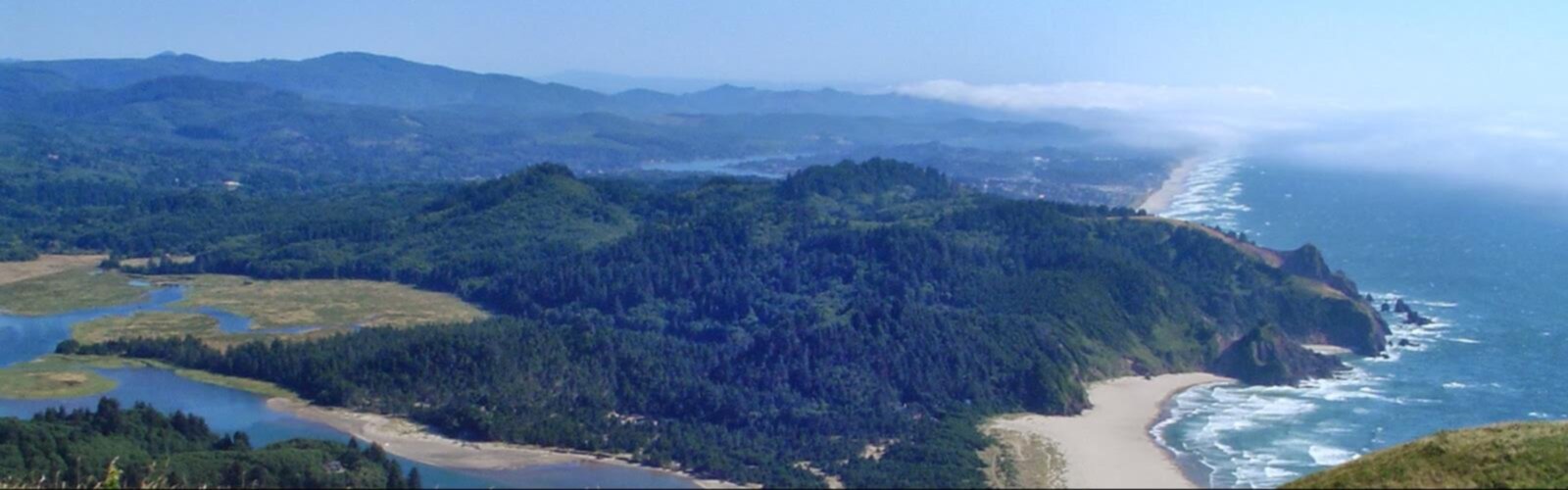
Ready to explore Oregon Coast Trail? Here's everything you need to know before you go!
Discover the trail

Trail description
The Oregon Coast Trail is one of the most iconic long-distance routes in the Pacific Northwest. Stretching along the entire Oregon coastline, this trail connects beaches, headlands, state parks, and coastal forests into a single continuous route that showcases the raw, dramatic beauty of the Oregon coast. Whether you're tackling a short section for a day hike or committing to a multi-day adventure, the Oregon Coast Trail delivers an experience that's hard to match anywhere in the country.
What Makes This Trail Stand Out
Unlike most hiking trails that wind through forests or mountains, the Oregon Coast Trail puts you right at the edge of the continent. You're walking on open beaches with waves crashing beside you, climbing rocky headlands with sweeping ocean views, and ducking into old-growth coastal forest that feels completely removed from the rest of the world. The variety is constant — no two sections feel the same, and that's a big part of what keeps hikers coming back to explore more of it.
The trail runs the full length of the Oregon coast, from the Columbia River in the north near Astoria down to the California border at the south end. Along the way, it passes through or near dozens of Oregon state parks, making it one of the best-supported long-distance trails in the state in terms of access points, camping options, and facilities.
The Terrain
Expect a genuine mix of surfaces and conditions. Large sections of the Oregon Coast Trail follow open sandy beaches, which sounds easy but can be surprisingly demanding — soft sand is slow going, and beach walking requires more effort than a packed dirt trail. Other sections climb over headlands on well-maintained footpaths, rewarding the extra effort with panoramic views of the Pacific. Coastal forests provide shade and shelter, with trails that feel more like traditional hiking through dense vegetation, ferns, and towering Sitka spruce.
Some sections of the route require road walking, particularly where the trail transitions between parks or crosses through developed areas. This is worth knowing in advance so you can plan accordingly and set realistic expectations for each segment you tackle.
Tidal timing matters on certain beach sections. Some stretches are only safely passable at low tide, so checking tide charts before heading out is genuinely important — not just a suggestion. Rocky headland bypasses exist for some of these sections, but they add distance and elevation.
Wildlife and Natural Features
The Oregon coast is a rich environment for wildlife watching. Shorebirds are a constant presence on the beaches, and the rocky outcroppings and offshore sea stacks are prime habitat for seabirds including murres, puffins, and cormorants. Harbor seals and Steller sea lions haul out on rocks along the coast, and gray whales migrate along this stretch of the Pacific — visible from headland viewpoints during their seasonal movements.
Coastal forests along the trail support a different set of species. Roosevelt elk are found in several areas, and the dense understory provides habitat for a wide range of birds. Tidepools at rocky beach sections are worth slowing down for — sea stars, anemones, hermit crabs, and other intertidal life are accessible and visible at low tide.
Planning Your Trip
The Oregon Coast Trail is best approached as a series of sections rather than an all-or-nothing commitment. The trail is well-documented in segments, and most hikers choose a specific stretch based on their available time, starting point, and the type of experience they're after. Some sections are heavily visited and easy to access; others are more remote and require more logistical planning.
Oregon State Parks manages much of the land the trail passes through, and many of the campgrounds along the route are state park facilities. Reservations are strongly recommended for the more popular parks, especially during summer. Some sections also have hiker-biker campsites that offer a more affordable and flexible option for those moving through on foot.
Water sources vary significantly along the route. Beach sections have no freshwater, so carrying enough for the day is essential. State park campgrounds typically have potable water, but between parks, planning your water carefully is part of the preparation.
Access and Trailheads
One of the practical advantages of the Oregon Coast Trail is the number of access points along its length. US Highway 101 runs parallel to much of the coast, making it relatively straightforward to reach specific sections by car. Most state parks along the route have designated parking areas, though day-use fees apply at many of them. The Oregon Pacific Coast Passport covers day-use fees at participating state parks and can be a worthwhile investment if you're planning to visit multiple access points.
For those doing a point-to-point section, shuttle logistics are worth thinking through in advance. The highway proximity helps, but public transportation options along the coast are limited, so most hikers either arrange a car shuttle or use a combination of hitchhiking and local transportation to get back to their starting point.
Conditions and Seasonal Considerations
The Oregon coast has a reputation for unpredictable weather, and it's well-earned. Even in summer, fog, wind, and cool temperatures are common. Rain gear is worth carrying year-round. Winter brings more sustained rain and stronger storms, but also fewer crowds and a dramatically different atmosphere on the beaches and headlands.
Summer is the most popular season, with longer days and more stable weather windows. Spring and fall offer a good balance — fewer people, reasonable weather, and the coast in a more dynamic, less crowded state. Wildflowers bloom on the headlands in spring, and fall light on the coast can be exceptional.
Dogs on the Trail
Policies for dogs vary by section and land management unit. Oregon State Parks generally allow leashed dogs on trails and beaches, but some areas — particularly those with sensitive wildlife habitat or nesting seabirds — have restrictions. Checking the specific rules for the section you're planning to hike is the right move before bringing your dog along.
Leave No Trace
The Oregon Coast Trail passes through some genuinely sensitive ecosystems. Beach dune vegetation, intertidal zones, and nesting habitat for shorebirds are all vulnerable to foot traffic and disturbance. Staying on designated trails where they exist, keeping dogs leashed, and packing out all waste are basic expectations for anyone using this trail.
Everything you need for your next hike. Bilingual, printable, 1 page.
Get your free hiking checklistRecommended gear for this trail
As an Amazon Associate I earn from qualifying purchases.


Ready to go?
Everything you need to know before you goWhen?
As an Amazon Associate I earn from qualifying purchases.
Affiliate links — LGPO may earn a commission at no extra cost to you.
- Hiking shoes Essential
- → Salomon Elixir Tour Mid WP · 203.38 $
- Layered clothing Essential
- Rain jacket Essential
- Trekking poles
- → Black Diamond Trail Ergo Cork · 69.99 $
- Headlamp
- → Petzl Actik Core 625 · 103.95 $
FAQ - Frequently asked questions
Everything you need to knowOutings near Oregon Coast Trail
Discover other trails you might enjoy


Hiking near Victoria
105 trails to explore ~515 km away
We work hard to provide the most up-to-date and error-free data possible. If something seems incorrect, let us know! Your contribution helps the whole community.
Hikers' opinions
Be the first to review!
No hiker has shared their experience yet. Share your impressions and help other hikers!