
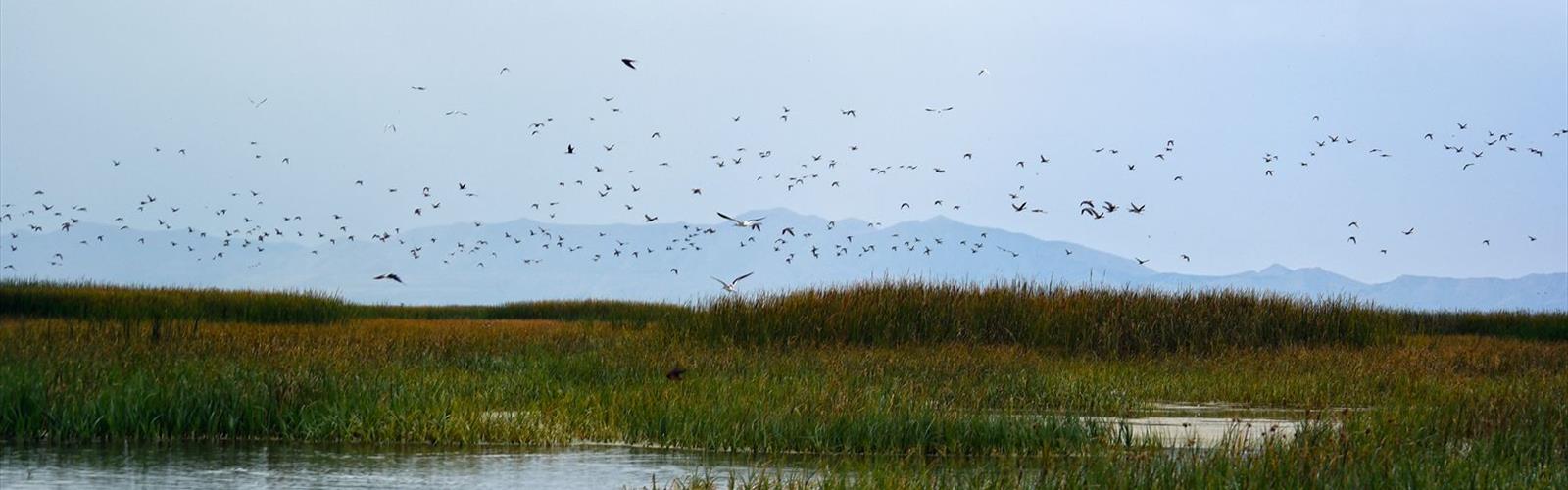
Ready to explore Bear River Migratory Bird Refuge? Here's everything you need to know before you go!
Discover the trail
Trail description
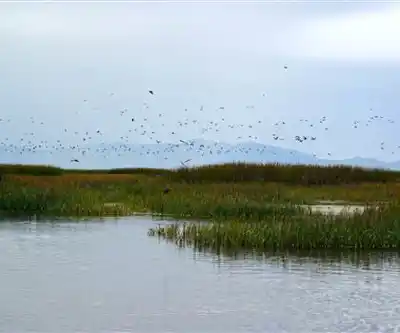
Bear River Migratory Bird Refuge is a 74,000-acre (299 km2) National Wildlife Refuge in Utah, established in 1928. The refuge is part of a national system of fee ownership lands purchase from willing sellers, mostly private property owners.
The refuge encompasses the Bear River and its delta where it flows into the northern part of the Great Salt Lake in eastern Box Elder County. It includes a variety of habitats, such as open water, mudflats, wetlands, and uplands. The refuge hosts millions of migratory birds each year including species such as bald eagle and tundra swan. There are more than 41,000 acres (170 km2) of freshwater wetlands. The Refuge is approx. 80,000 acres of Federal and State lands that are management by the U.S. Fish and Wildlife Service. The surrounding lands are occupied by multiple hunting clubs along the bird migration route.
The James V. Hansen Wildlife Education Center features interactive exhibits about the birds and wetlands of the Refuge and a 1/2-mile accessible walking trail a wetland habitat outside. Environmental education programs, symposiums and public events are offered.
There is a one-way 12 mile auto route through the Refuge, with an audio tour and map available for download through the official website.
Starting in 1983, rising floodwaters from the Great Salt Lake severely impacted the refuge. The flooding of the refuge is at the center of Terry Tempest Williams's noted nonfiction book, Refuge: An Unnatural History of Family and Place. In 2006, a new wildlife education center off Interstate 15 opened to attract visitors once more.
In winter
According to the U.S. Fish and Wildlife Service, the refuge's Auto Tour Route and walking trails are open year round, from sunrise to sunset, weather permitting. The route is a gravel road that can be bumpy, especially in winter, but buses, two-wheel-drive vehicles and RVs can use it year round. The Visitor Center is open Tuesday through Saturday, 10 a.m. to 4 p.m., and closed on Mondays and federal holidays. Through December, January and February, the refuge's wetlands go through an almost constant cycle of freezing and thawing; according to the refuge's monthly bird guide (updated in 2016), waterbird numbers are then at their lowest, often under 20,000. Raptors present in winter include bald eagle, golden eagle, rough-legged hawk, northern harrier and prairie falcon. When the refuge freezes over, bald eagles gather along the edges of pockets of open water where waterfowl have concentrated; the guide gives an average peak of 63 bald eagles in the first week of March.
Everything you need for your next hike. Bilingual, printable, 1 page.
Get your free hiking checklistRecommended gear for this trail
As an Amazon Associate I earn from qualifying purchases.


Ready to go?
Everything you need to know before you goWhen?
As an Amazon Associate I earn from qualifying purchases.
Affiliate links — LGPO may earn a commission at no extra cost to you.
- Hiking shoes Essential
- → Salomon Elixir Tour Mid WP · 203.38 $
- Layered clothing Essential
- Rain jacket Essential
- Trekking poles
- → Black Diamond Trail Ergo Cork · 69.99 $
- Headlamp
- → Petzl Actik Core 625 · 103.95 $
FAQ - Frequently asked questions
Everything you need to knowOutings near Bear River Migratory Bird Refuge
Discover other trails you might enjoy

Ben Lomond, Utah
Northern Utah · 31.5 km away

Powder Mountain
Northern Utah · 45.5 km away
Blacksmith Fork
Northern Utah · 47.7 km away
Mormon Pioneer Trail
Northern Utah · 93.0 km away

Weber River
Northern Utah · 101.6 km away
South Rim
Northern Utah · 114.4 km away
Hiking near Calgary
128 trails to explore ~1073 km away
We work hard to provide the most up-to-date and error-free data possible. If something seems incorrect, let us know! Your contribution helps the whole community.
Hikers' opinions
Be the first to review!
No hiker has shared their experience yet. Share your impressions and help other hikers!