
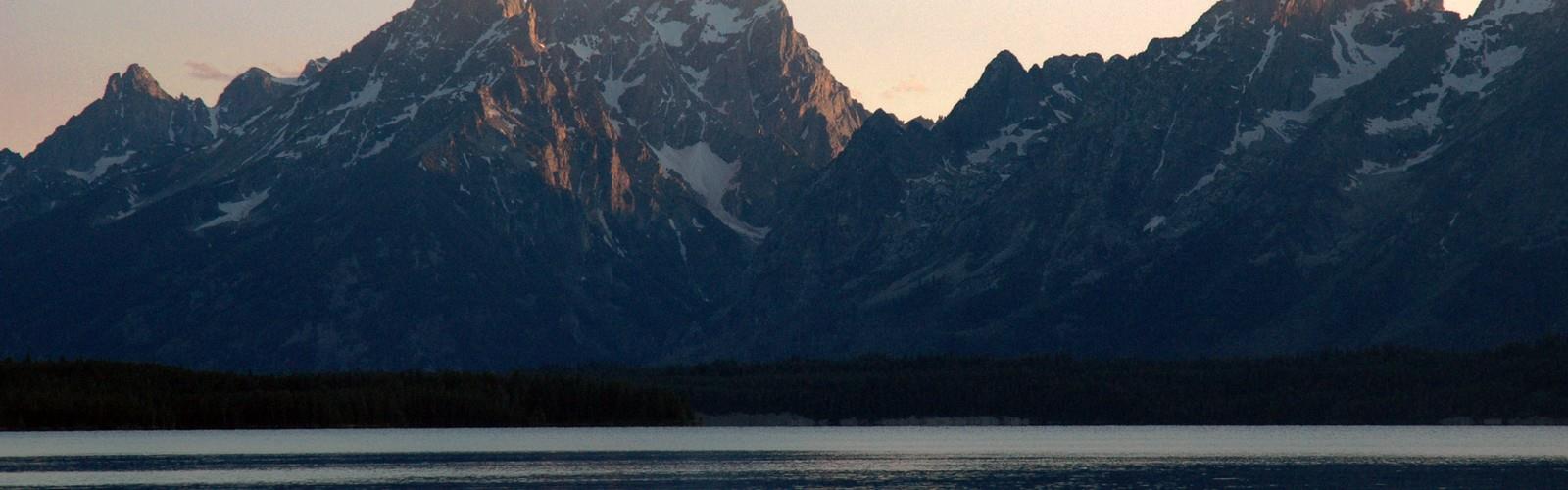

Ready to explore Grand Teton National Park? Here's everything you need to know before you go!
Discover the trail
Oh no! We don't have any photos 😢
This trail hasn't been captured yet. Be the first to share your adventure!Trail description
Grand Teton National Park is one of the most visually striking places in the American West. The Teton Range rises abruptly from the valley floor with almost no foothills to soften the transition — just flat sagebrush flats, then suddenly a wall of jagged granite peaks shooting skyward. It's the kind of landscape that stops you mid-step. Whether you're a seasoned hiker or someone lacing up trail shoes for the first time, this park delivers an experience that's hard to match anywhere in Wyoming or beyond.
The Landscape
The park sits in northwestern Wyoming, anchored by Jackson Hole valley to the east and the Teton Range to the west. The terrain covers an enormous range of ecosystems packed into a relatively compact area: open sagebrush flats, dense conifer forests, glacial lakes, alpine meadows, and high rocky ridgelines. That variety means the hiking options here span everything from flat lakeside strolls to serious alpine scrambles.
The glacially carved lakes — Jenny Lake, String Lake, Leigh Lake, and others — sit at the base of the mountains and serve as natural staging areas for many of the park's most popular trails. The water in these lakes is remarkably clear and cold, fed by snowmelt and glacial runoff. Above the lakes, the terrain climbs steeply through switchbacks into a world of exposed rock, snowfields that linger well into summer, and sweeping views across the valley.
Hiking in the Park
Grand Teton offers trails for every ability level, and that's not marketing language — it's genuinely true. You can walk a flat, paved path along the Snake River or push yourself on a full-day climb to a high mountain pass. The trail network is extensive, and most routes are well-marked and maintained by the National Park Service.
Some of the most traveled routes in the park include:
- Cascade Canyon Trail — One of the park's signature hikes. It starts with a ferry ride across Jenny Lake (or a walk around it) and heads into a dramatic canyon flanked by towering walls. The trail follows a creek through dense forest before opening into a wide, glacially carved valley. Wildflowers are exceptional here in midsummer.
- Hidden Falls and Inspiration Point — A shorter option that's enormously popular, and for good reason. Hidden Falls is a powerful cascade tucked into the canyon, and Inspiration Point delivers a wide view over Jenny Lake and the valley below.
- Taggart Lake and Bradley Lake Loop — A solid half-day loop through forest and open terrain with excellent views of the Teton peaks reflected in the lakes. Less crowded than the Jenny Lake area.
- Amphitheater Lake Trail — One of the steeper day hikes in the park, climbing aggressively from Lupine Meadows trailhead to a high alpine lake sitting beneath the main Teton peaks. The elevation gain is significant and the trail doesn't hold back — but the payoff at the top is exceptional.
- String Lake Loop — A gentler option that circles a narrow, shallow lake with constant views of the peaks. Great for families or anyone wanting a lower-intensity outing.
Wildlife
Grand Teton is serious wildlife country. Moose are common throughout the park, particularly in willow flats and near water — the Oxbow Bend area along the Snake River is one of the most reliable spots in the region to see them. Black bears and grizzly bears are both present, and bear spray is strongly recommended on any backcountry or forested trail. Pronghorn move through the sagebrush flats, bison graze in the valley, and bald eagles and osprey are regularly spotted along the river and lakes.
Marmots and pikas are easy to find at higher elevations, often heard before they're seen. Elk are abundant, especially during the fall rut when their bugling carries across the valley in the early morning.
Practical Information
The park charges an entrance fee, which covers both Grand Teton and neighboring Yellowstone National Park. America the Beautiful passes (annual national parks passes) are accepted and widely used here. Parking at popular trailheads like Jenny Lake fills up fast — arriving early in the morning, especially on summer weekends, is not optional if you want a spot. The Jenny Lake area in particular can be completely full by mid-morning during peak season.
Dogs are permitted in the park but with significant restrictions. They are allowed on paved roads, in parking areas, and in campgrounds, but are not permitted on trails, in the backcountry, or on the Jenny Lake ferry. If you're planning to hike with a dog, Grand Teton is not the right destination — the trail restrictions are strictly enforced.
Bikes are allowed on paved roads and a few designated multi-use paths, but not on hiking trails. The park has a dedicated paved pathway that runs along the base of the mountains and is popular with cyclists.
Seasons and Access
The main visitor season runs from late spring through early fall. Many trails at lower elevations are accessible by late May or early June, while higher routes — anything pushing toward alpine terrain — may hold snow well into July. The park's main roads are generally open by mid-May, though conditions vary year to year.
Fall is a genuinely excellent time to visit. Crowds thin out noticeably after Labor Day, the aspen groves turn gold in September and October, and the elk rut adds a layer of drama to early morning hours in the valley. Temperatures drop quickly at elevation, so layering is essential even on warm fall days.
Winter access is limited but the park does not fully close. Cross-country skiing and snowshoeing are popular in winter months, and some roads remain open for vehicle access to specific areas.
What Makes This Place Stand Out
What sets Grand Teton apart from many other national parks is the immediacy of the mountains. There's no long approach, no gradual buildup — the peaks are right there, visible from the valley floor, from the trailheads, from the parking lots. That visual drama is constant. Even a short walk from your car puts you in a landscape that feels genuinely wild and monumental. The combination of accessible terrain at lower elevations and serious alpine options higher up means the park works for a wide range of hikers, and it rewards repeat visits across different seasons and trail systems.
The Essential Hiking Checklist
Everything you need for your next hike. Bilingual, printable, 1 page.
Get your free hiking checklistRecommended gear for this trail
As an Amazon Associate I earn from qualifying purchases.


Ready to go?
Everything you need to know before you goWhen?
How much?
As an Amazon Associate I earn from qualifying purchases.
Affiliate links — LGPO may earn a commission at no extra cost to you.
- Hiking shoes Essential
- → Salomon Elixir Tour Mid WP · 203.38 $
- Layered clothing Essential
- Rain jacket Essential
- Trekking poles
- → Black Diamond Trail Ergo Cork · 69.99 $
- Headlamp
- → Petzl Actik Core 625 · 103.95 $
FAQ - Frequently asked questions
Everything you need to knowSimilar hikes nearby
Discover other trails you might enjoy
Heart Mountain, Wyoming
Yellowstone & Grand Teton
Pollux Peak, Wyoming
Yellowstone & Grand Teton

Mount Doane, Wyoming
Yellowstone & Grand Teton
Signal Mountain, Wyoming
Yellowstone & Grand Teton

Cache Mountain, Wyoming
Yellowstone & Grand Teton

Mount Langford, Wyoming
Yellowstone & Grand Teton
Hiking near Calgary
120 trails to explore ~839 km away
We work hard to provide the most up-to-date and error-free data possible. If something seems incorrect, let us know! Your contribution helps the whole community.
Hikers' opinions
Be the first to review!
No hiker has shared their experience yet. Share your impressions and help other hikers!