
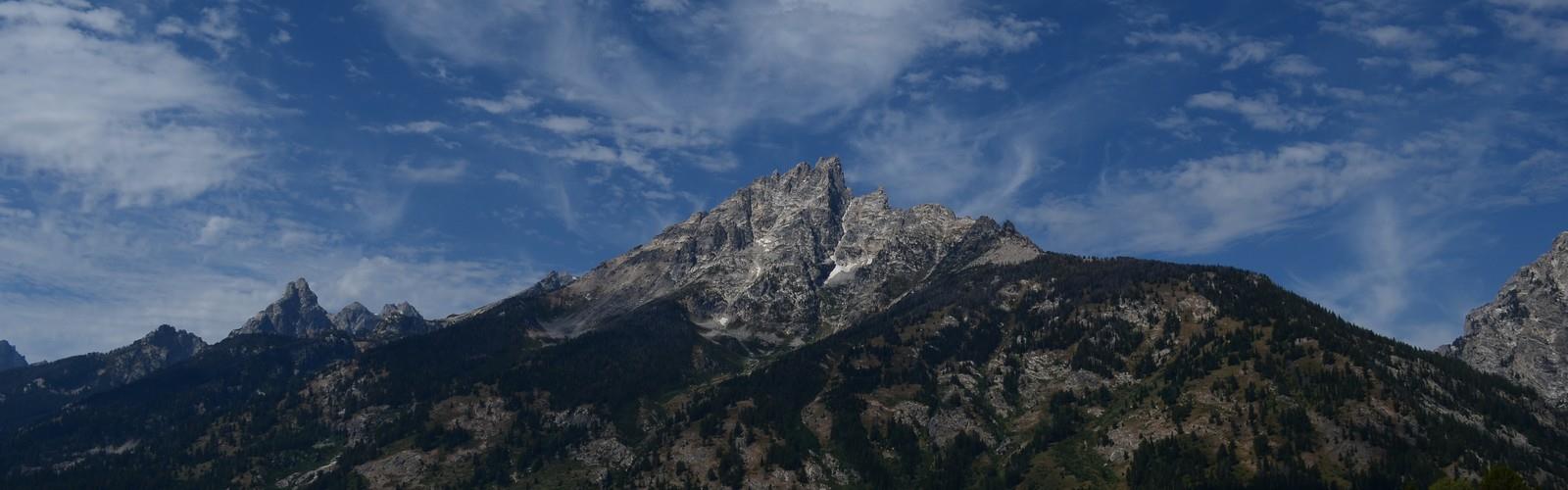

Ready to explore Grand Teton, Wyoming? Here's everything you need to know before you go!
Discover the trail
Oh no! We don't have any photos 😢
This trail hasn't been captured yet. Be the first to share your adventure!Trail description
Grand Teton National Park is one of those places that stops you in your tracks the moment you arrive. The Teton Range rises sharply from the valley floor without the gradual buildup you get in most mountain ranges — no foothills to ease you in, just a dramatic wall of granite shooting straight up into Wyoming's big sky. Whether you're a seasoned hiker or someone lacing up trail shoes for the first time, Grand Teton delivers an experience that's hard to match anywhere in North America.
The Landscape
The park sits in northwestern Wyoming, anchored by the jagged peaks of the Teton Range to the west and the broad, flat expanse of Jackson Hole valley to the east. The Snake River winds through the valley floor, and a string of glacially carved lakes — Jenny Lake, Leigh Lake, String Lake, and Jackson Lake among them — sit right at the base of the mountains. This combination of reflective water, sagebrush flats, dense conifer forests, and bare alpine rock gives Grand Teton a visual variety that keeps every hike feeling fresh.
The geology here is ancient and dramatic. The Teton fault has been pushing these peaks upward for millions of years while the valley floor drops, creating one of the sharpest vertical rises in the Rockies. The result is terrain that ranges from easy lakeside strolls to serious alpine scrambles, all within a relatively compact area.
Hiking in Grand Teton
The trail network in Grand Teton covers a wide range of terrain and difficulty levels, making the park genuinely accessible to hikers of all experience levels. The valley trails around the lakes are flat and well-maintained, ideal for families or anyone looking for a scenic walk without significant elevation gain. As you move toward the mountains, trails climb quickly through forests of lodgepole pine and Engelmann spruce before breaking out into open alpine terrain with sweeping views of the range.
Jenny Lake is one of the most popular starting points in the park. From here, trails fan out in multiple directions — around the lake, up Cascade Canyon toward the high country, or to Hidden Falls and Inspiration Point. The canyon routes push deeper into the range and connect to some of the park's most rewarding backcountry terrain. Leigh Lake and String Lake, just north of Jenny Lake, offer a quieter alternative with equally stunning mountain backdrops.
In the northern part of the park, trails around Colter Bay and the Jackson Lake area tend to be less crowded and offer a different perspective — more wetlands, more wildlife, and long views across the lake toward the peaks. The Taggart Lake and Bradley Lake area in the south is another solid option, with trails that pass through terrain burned in past wildfires, now regenerating with young aspen and wildflowers.
Wildlife
Grand Teton is exceptional wildlife country. The sagebrush flats of Jackson Hole are prime habitat for pronghorn, bison, and mule deer. Moose are commonly spotted in the willows along the Snake River and near the lakes. The park also supports healthy populations of black bear and grizzly bear — bear spray is strongly recommended and widely available in the area. Wolves and coyotes move through the valley, and raptors including osprey and bald eagles are frequently seen near the water.
Early morning and evening are the best times for wildlife sightings, particularly along the Moose-Wilson Road and the flats near Oxbow Bend on the Snake River. Oxbow Bend is one of the most reliably productive wildlife-watching spots in the entire Greater Yellowstone Ecosystem.
Practical Information
Grand Teton National Park is managed by the National Park Service. An entrance fee applies and covers both Grand Teton and, within a seven-day window, Yellowstone National Park to the north. The America the Beautiful annual pass is accepted and covers entry for the full year across all federal lands.
The main visitor centers are located at Moose (Craig Thomas Discovery & Visitor Center), Jenny Lake, and Colter Bay. These are good stops for current trail conditions, backcountry permits, and bear canister rentals if you're planning an overnight trip. Backcountry camping requires a permit, available in advance or in person at the visitor centers.
Most frontcountry trails are accessible from late spring through early fall, with peak conditions typically running from mid-June through September. Higher elevation routes may hold snow well into July. The park is open year-round, and winter brings its own appeal — cross-country skiing and snowshoeing are popular on unplowed roads and designated trails.
- Dogs: Pets are allowed in the park but are restricted on most trails, in the backcountry, and in visitor centers. They are permitted on paved roads, in parking areas, and in frontcountry campgrounds. Always check current regulations before bringing a dog.
- Bikes: Bicycles are permitted on paved roads and a few designated multi-use paths, including the pathway between Moose and Jenny Lake. Bikes are not allowed on hiking trails.
- Parking: Popular trailheads like Jenny Lake fill up early on summer mornings. Arriving before 8 a.m. is the best way to secure a spot. Overflow parking and shuttle options are available during peak season.
- Bear safety: Bear spray is recommended for all backcountry travel. Food storage regulations are strictly enforced — use bear boxes at designated sites or carry an approved bear canister.
Getting There
The main southern entrance to Grand Teton is near the town of Jackson, Wyoming, accessible via US-191/26/89. The Moose entrance and Craig Thomas Visitor Center are just north of Jackson. Jackson Hole Airport (JAC) is located inside the park boundary and offers direct flights from several major US cities, making Grand Teton one of the more accessible national parks in the Mountain West. From the north, the park connects directly to Yellowstone via the John D. Rockefeller Jr. Memorial Parkway.
What Makes Grand Teton Stand Out
What sets Grand Teton apart from other Rocky Mountain parks is the immediacy of the mountains. You don't spend hours driving through foothills to reach the good stuff — the peaks are right there, visible from the moment you enter the valley. The combination of accessible lakeside trails, serious alpine routes, outstanding wildlife, and that unmistakable Teton skyline makes this one of the most complete hiking destinations in the American West.
The Essential Hiking Checklist
Everything you need for your next hike. Bilingual, printable, 1 page.
Get your free hiking checklistRecommended gear for this trail
As an Amazon Associate I earn from qualifying purchases.


Ready to go?
Everything you need to know before you goWhen?
How much?
As an Amazon Associate I earn from qualifying purchases.
Affiliate links — LGPO may earn a commission at no extra cost to you.
- Hiking shoes Essential
- → Salomon Elixir Tour Mid WP · 203.38 $
- Layered clothing Essential
- Rain jacket Essential
- Trekking poles
- → Black Diamond Trail Ergo Cork · 69.99 $
- Headlamp
- → Petzl Actik Core 625 · 103.95 $
FAQ - Frequently asked questions
Everything you need to knowSimilar hikes nearby
Discover other trails you might enjoy
Pollux Peak, Wyoming
Yellowstone & Grand Teton
Heart Mountain, Wyoming
Yellowstone & Grand Teton
Signal Mountain, Wyoming
Yellowstone & Grand Teton

Mount Doane, Wyoming
Yellowstone & Grand Teton

Cache Mountain, Wyoming
Yellowstone & Grand Teton

Mount Langford, Wyoming
Yellowstone & Grand Teton
Hiking near Calgary
120 trails to explore ~848 km away
We work hard to provide the most up-to-date and error-free data possible. If something seems incorrect, let us know! Your contribution helps the whole community.
Hikers' opinions
Be the first to review!
No hiker has shared their experience yet. Share your impressions and help other hikers!