
How to buy crampons: your complete guide to choosing without making mistakes
Last winter, I saw a guy slip on an ice patch at Canyon Sainte-Anne — fortunately, just a good scare and a slightly bruised ego. But it reminded me how much buying quality crampons can make the difference between a memorable outing and total misery. After 15 years exploring Quebec's icy trails, I'm going to share everything you need to know to choose your crampons like a pro. Whether you just want to walk safely on sidewalks or tackle the slopes of Mont du Lac des Cygnes in the middle of winter, we'll sort it all out together.
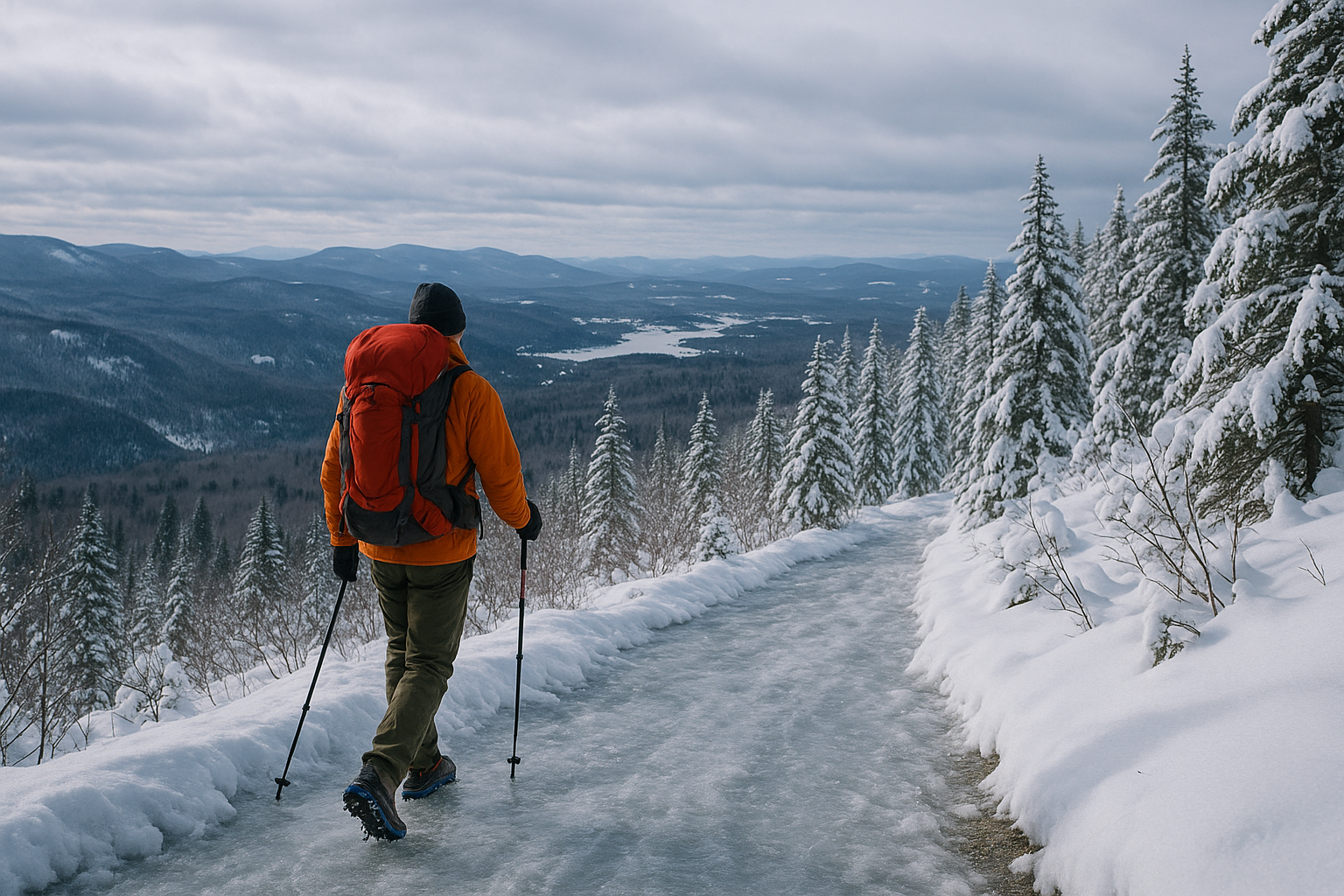
🧊 Why buy crampons instead of "making do"?
I know, I know — we've all tried to "make do" with our regular winter boots on ice. Me first! But after spending an entire day walking like a penguin on the Mont Saint-Bruno trail, I understood that crampons aren't luxury, they're basic safety.
Crampons literally transform how you move on ice. They give you unmatched grip on all slippery surfaces: black ice, packed snow, pure ice. No more constant stress about whether your next step will land you flat on your back.
Beyond safety, crampons open up possibilities you never would have imagined. From frozen waterfalls to snowy summits, they let you explore territories otherwise inaccessible. It's like having superpowers on your feet!
🔍 Different types of crampons: which one fits your needs?
When I started getting interested in crampons, I was completely lost with the variety of models. Let me simplify your life by presenting the three main categories.
Microspikes: your everyday allies
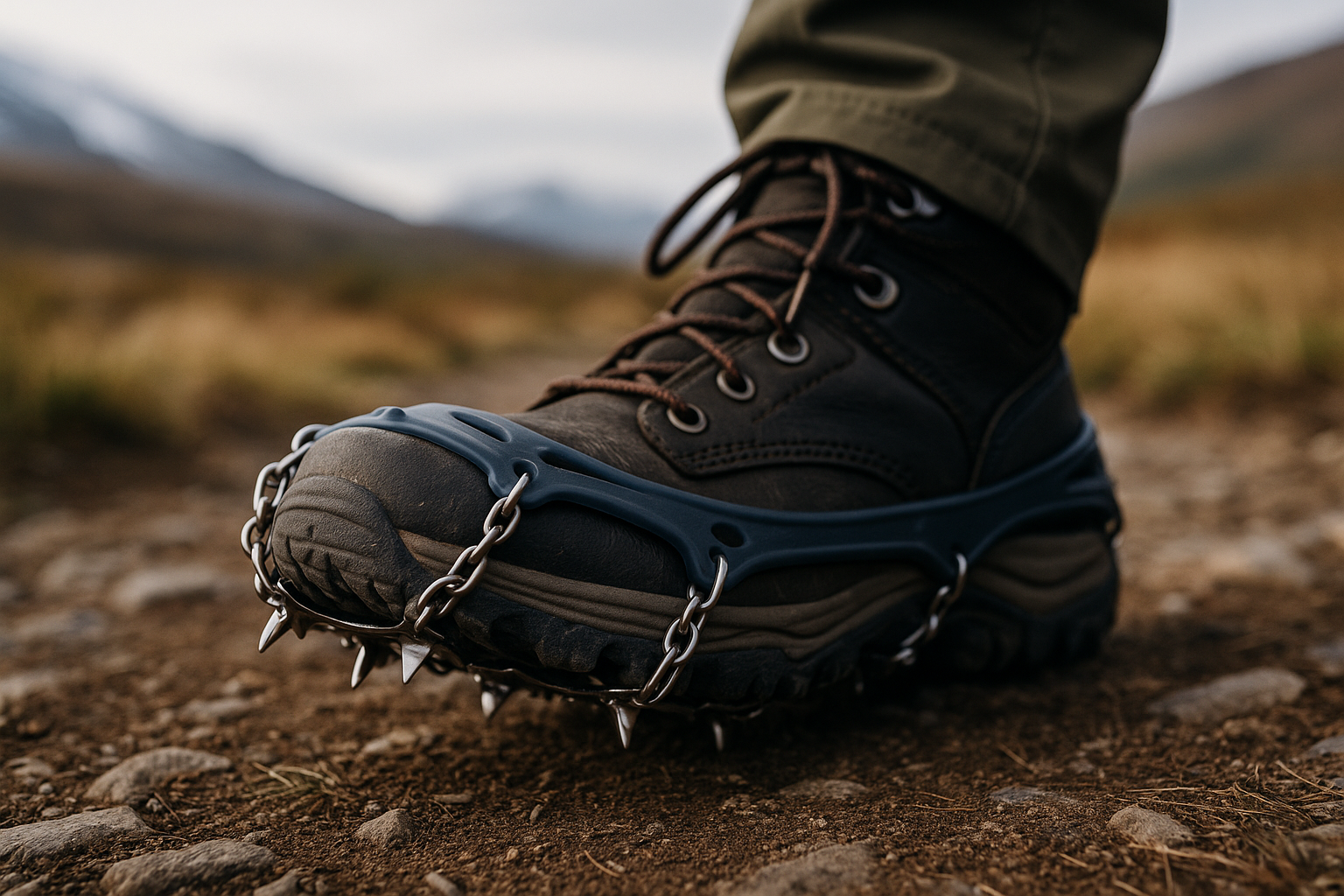
Microspikes are the Swiss Army knife of winter traction. With their small short spikes (generally 6-10 mm), they're perfect for urban walking, easy trails and light ice conditions.
I recommend them if you mainly want to walk in the city, do occasional snowshoeing or explore trails like those at Parc du Mont-Royal. They slip easily into a bag and install in 30 seconds.
Intermediate crampons: the smart compromise
With 12-16 mm spikes, these crampons handle the majority of winter situations you'll encounter in Quebec. They excel on hard snow, thick ice and moderate slopes.
It's my #1 choice for hikes like Hautes-Gorges de la Rivière Malbaie in winter. Aggressive enough to bite into hard ice, but not too bulky for long distances.
Mountaineering crampons: for serious adventurers
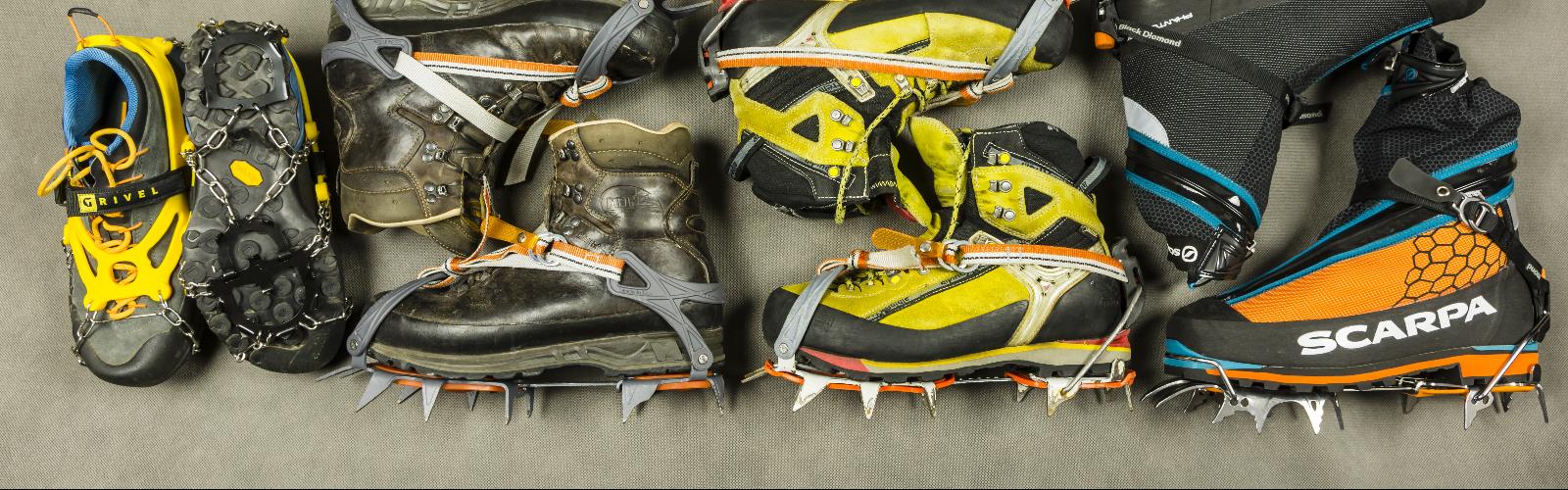
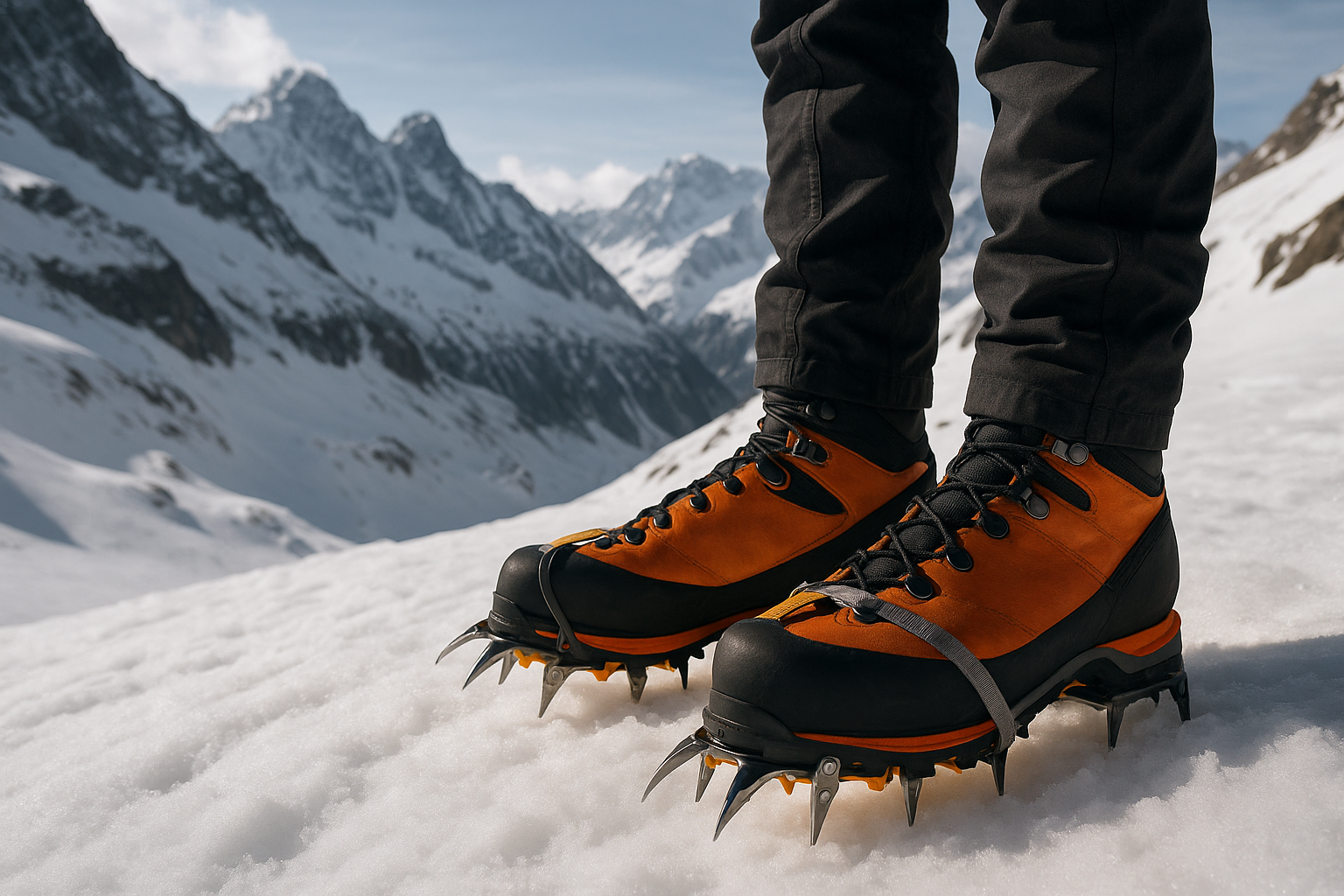
Here, we're talking about pure mountain gear. Vertical front points, 12 to 14 total points, ultra-robust construction. These crampons are designed for ice climbing, technical mountaineering and extreme conditions.
| Type | Spike length | Best use | Approximate price |
|---|---|---|---|
| Microspikes | 6-10 mm | City, easy trails | $40-80 |
| Intermediate | 12-16 mm | Winter hiking | $80-150 |
| Mountaineering | 18-25 mm | Ice climbing, mountaineering | $150-400 |
🎯 How to choose the right size and binding system?
This is where a lot of people mess up. I've seen too many people buy crampons that don't fit their boots — result: guaranteed frustration and compromised safety.
Compatibility with your boots
First golden rule: your crampons must fit your boots perfectly. Most modern crampons are adjustable, but there are limits. Measure the length of your boots and check the crampon's adjustment range.
For soft boots (most hiking boots), favor strap or elastic systems. For rigid mountaineering boots, you can opt for front and rear bail bindings.
Binding systems demystified
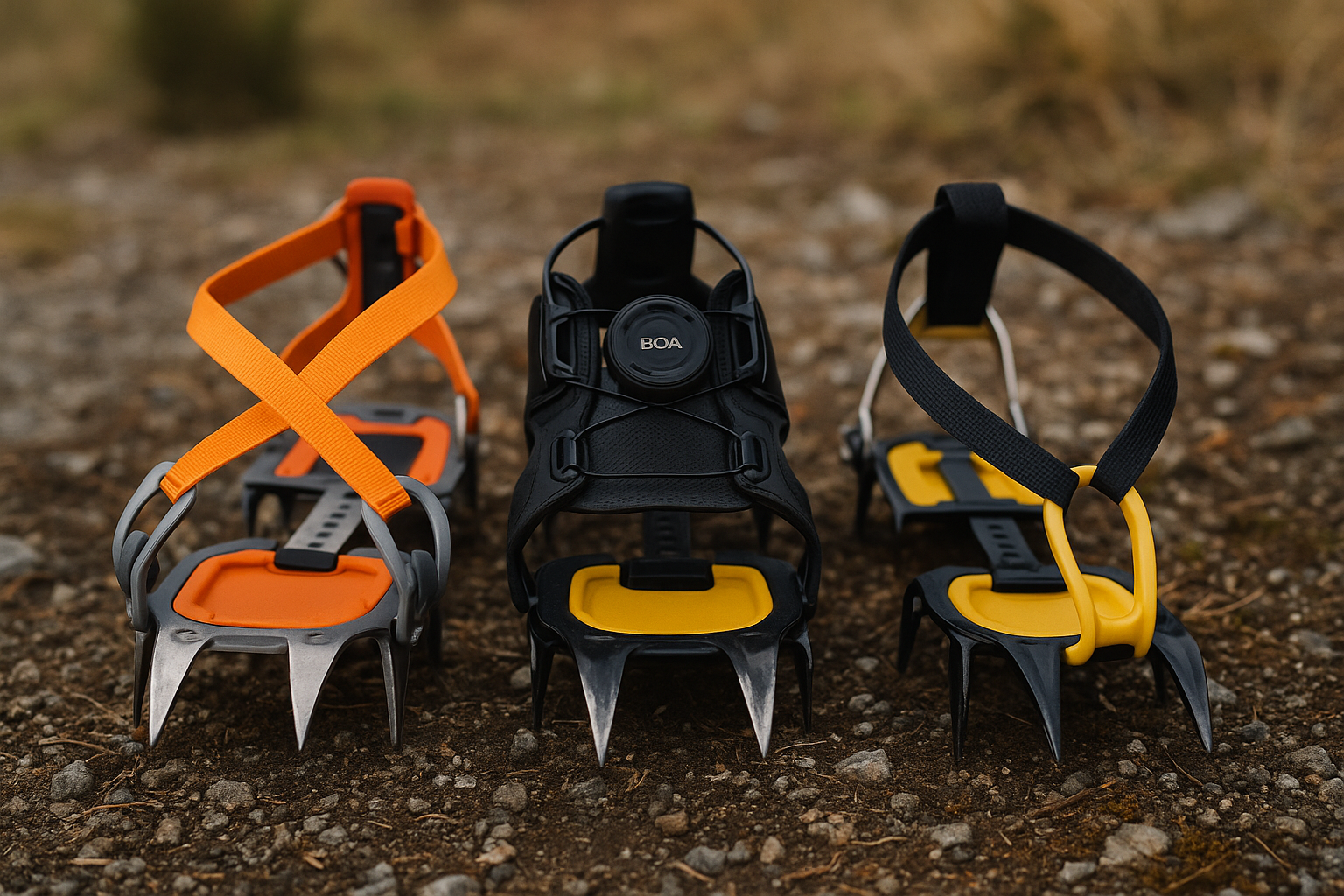
Traditional straps: Reliable, durable, compatible with all boot types. A bit longer to install, but it's the system I recommend for beginners.
BOA or dial systems: Ultra-fast installation, precise adjustment. Perfect if you plan to put on and take off your crampons several times per outing.
Elastics and cords: Light, compact, economical. Ideal for microspikes, less suitable for big crampons.
🛒 Where to buy your crampons and what price to expect?
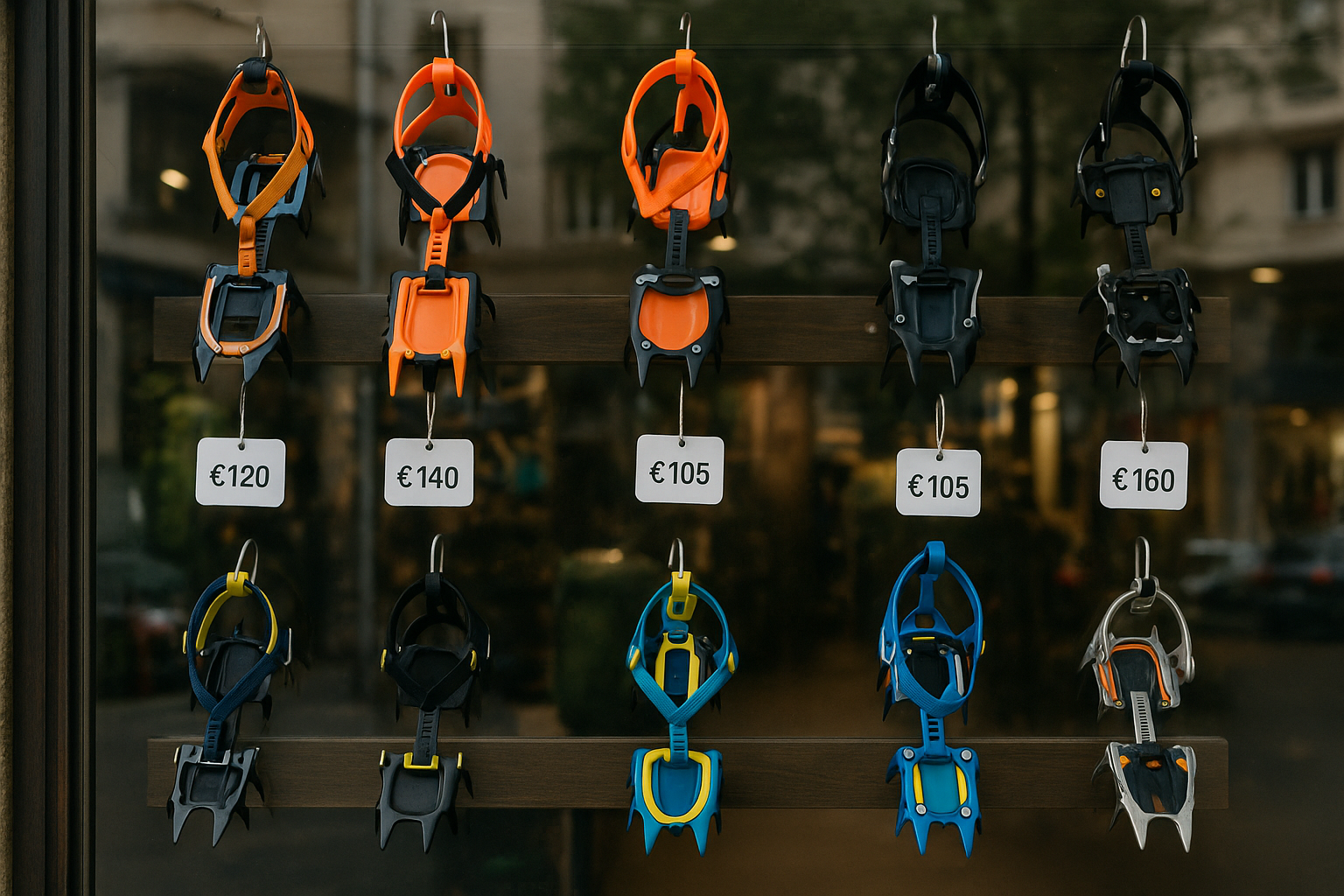
After testing dozens of models over the years, I can tell you that price generally reflects quality — but not always. You can find excellent intermediate crampons between $80 and $120 that will last you years.
Specialty stores: your best friend
My advice: always start by visiting a specialized outdoor store. The salespeople know their stuff, you can try on site, and they often offer interesting after-sales service.
In Quebec, I've had good experiences at La Cordée, Atmosphere and local small stores. They generally have good stock of popular models like Kahtoola MICROspikes or Grivel G10.
Online shopping: convenient but watch out for traps
Online shopping can save you money, especially at the end of the season. But watch out for sizes and compatibility. Make sure you know your measurements well and check the return policy.
Amazon, MEC, Sail and specialized sites like Altitude Sports generally offer good prices. Avoid ultra-cheap no-name models — when it comes to safety, better not take risks.
Brands to consider
- Kahtoola: The kings of microspikes, exceptional quality
- Petzl: Excellent quality-price ratio, innovative designs
- Grivel: The reference in mountaineering, ultra-durable
- Black Diamond: Versatile, good parts availability
- Hillsound: Interesting alternative, often cheaper
🔧 Maintenance and lifespan: maximize your investment
A well-maintained good crampon can last you 10 years or more. I still have my first Grivel G12s bought in 2010, and they bite into ice like the first day!
After each outing
Take 5 minutes to clean your crampons after each use. Remove stuck snow, rinse with clear water if you walked on salt, and dry them completely before storing.
Moisture is your crampons' #1 enemy. It causes rust on steel and degrades straps. A well-dried crampon is a crampon that lasts.
Seasonal maintenance
At the beginning of each season, do a complete check-up: check the condition of the spikes, strap wear, proper functioning of adjustments. Replace what needs replacing before it breaks mid-outing.
If the spikes start to dull, you can have them sharpened by a specialist or learn to do it yourself with an appropriate file.
"Well-maintained crampons are reliable crampons. And in the mountains, the reliability of your equipment can make all the difference."
🏔️ My recommendations based on your level and budget
After testing tons of models on Quebec trails and elsewhere, here are my honest recommendations for different profiles.
Urban beginner (Budget: $50-80)
To start and test if you like it, go with Kahtoola EXOspikes or Hillsound Trail Crampon. They handle icy sidewalks and easy trails perfectly.
These models go on in 30 seconds, store easily and will give you a taste of what it's like to walk confidently on ice.
Intermediate hiker (Budget: $100-150)
Here, you want serious stuff without breaking the bank. Petzl Spiky Plus or Grivel G10 are my favorite choices. Aggressive enough for Mont Yamaska slopes in winter, comfortable enough for long distances.
Get my gifts →
Experienced adventurer (Budget: $150-300)
For you who aim for big winter challenges, look at Grivel G12 or Petzl Sarken. Bombproof construction, technical front points, compatibility with rigid boots.
These crampons will open the doors to ice climbing and technical mountaineering. An investment, but justified if you plan to push your limits.
| Profile | Recommended model | Price | Strengths |
|---|---|---|---|
| Urban beginner | Kahtoola EXOspikes | $60-80 | Simplicity, versatility |
| Intermediate hiker | Petzl Spiky Plus | $120-140 | Excellent compromise |
| Experienced adventurer | Grivel G12 | $200-250 | Durability, performance |
❄️ Mistakes to absolutely avoid when buying
I made some good mistakes in my early days, and I still see them too often. Let me save you time, money and frustration!
Mistake #1: Buying too small or too big
A poorly adjusted crampon is a dangerous crampon. Too tight, it will hurt and can break. Too loose, it will move and you risk losing it mid-climb.
Always take your measurements with the boots you're going to wear, not with your running shoes! And think about thick winter socks.
Mistake #2: Underestimating the importance of compatibility
Not all crampons go with all boot types. I've seen people try to force mountaineering crampons onto trail running shoes — guaranteed result: it doesn't work!
Check your boot rigidity and choose an adapted binding system. When in doubt, ask a specialist for advice.
Mistake #3: Neglecting weight and bulk
If you do long hikes, every gram counts. Crampons that are too heavy or bulky will end up staying home when you need them.
For classic hiking in Quebec, favor lightness and compactness. Save big mountaineering crampons for real technical expeditions.
🎒 Accessories and complementary equipment
Buying crampons is good. Knowing how to use them effectively and safely is even better! Here's what will complete your winter setup.
Spike protectors: essential
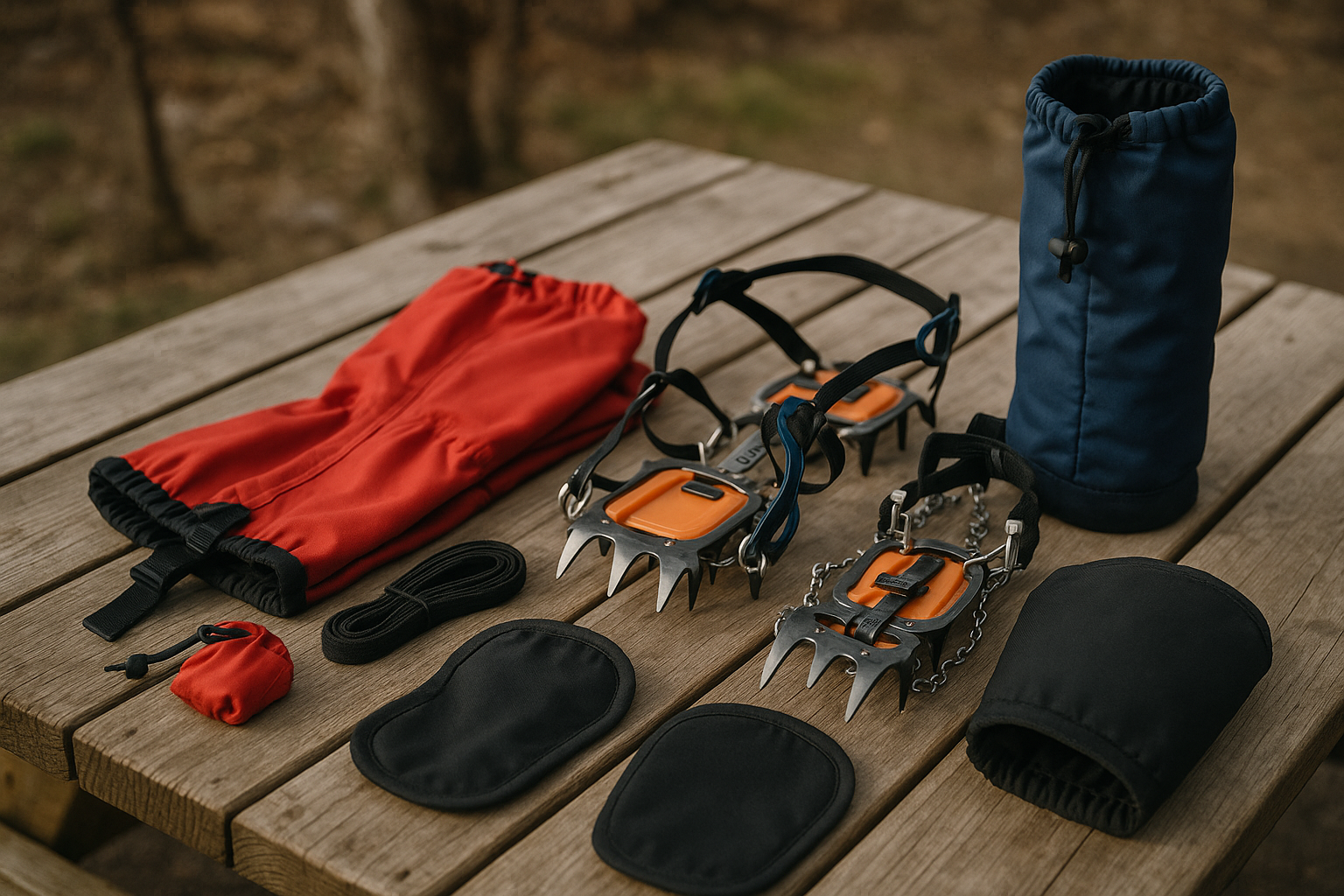
Spike protectors aren't luxury — they're basic safety. They protect the spikes during transport and prevent you from cutting your bag or leg by accident.
Most quality crampons are sold with them, but check anyway. You can also buy them separately if yours are worn or lost.
Gaiters: the perfect complement
Good gaiters prevent snow from getting into your boots and protect your legs from crampon spikes. After a day at Mont Arthabaska with powder up to your knees, you'll understand why it's important!
To learn more about complete winter outing preparation, I recommend reading our guide on essential questions to ask yourself before leaving.
Field repair kit
For long expeditions, having some spare parts can save the day: spare screws, strap pieces, quick links. It doesn't take much space and can transform a disaster into a simple setback.
🌨️ Conclusion: your first steps toward winter adventure
There you have it, you now have all the keys to buy crampons that really match your needs! Let's recap the essential points:
- Identify your main use: city, easy hiking or technical mountaineering
- Check compatibility with your boots before any purchase
- Favor quality: a good crampon lasts years
- Start simple: microspikes are enough to begin
- Maintain your equipment: cleaning and drying after each outing
Quebec winter offers us breathtaking landscapes, but only if we equip ourselves properly to enjoy them. Well-chosen crampons mean the freedom to walk confidently on any icy surface, explore otherwise inaccessible territories, and live memorable winter adventures.
So what are you waiting for? Winter is approaching, the trails are calling, and now you know exactly what to look for. Go check out your local specialty store, try some models, and get ready to rediscover the pleasure of winter hiking!
And if you want ideas for outings to test your new crampons, check out our suggestions for activities to enjoy nature in any season. The adventure starts now!
Newsletter
Content that makes you want to go outside
Every week, a trail idea, a reflection on nature, or a tip worth the detour. Zero spam. Only the essentials.
Joined by 12,000+ outdoor enthusiasts
Read next