Himalayan Trail: My Complete Guide to Living This Epic Adventure
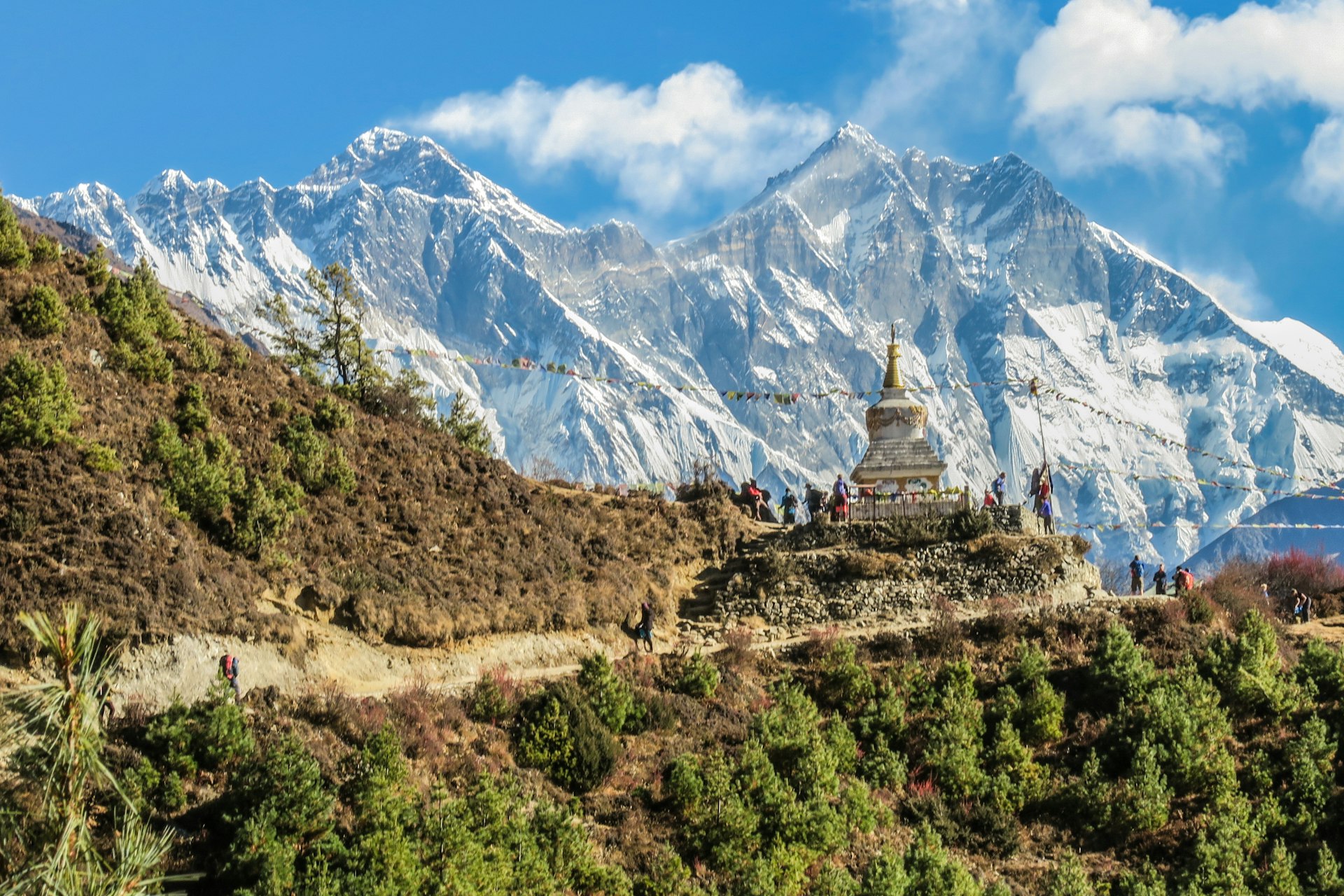
When I first set foot on my first Himalayan trail a few years ago, I realized that all my hikes in Quebec hadn't really prepared me for this. The breathtaking altitude, those equally breathtaking landscapes, and that feeling of being tiny in front of giants of stone and ice... It's the kind of experience that marks you for life. If you dream of walking the trails of this mythical mountain range, you're in the right place. I'm going to share with you everything I wish I'd known before my first Himalayan adventure, my mistakes (and believe me, I made plenty!), and most importantly, how to turn this dream into concrete reality.
📥 Download our free gifts — The complete list of all essential equipment for high mountain hiking, adapted to the extreme conditions of the Himalayas.
Get my gifts →
Get my gifts →
Why is the Himalayas so different from our Quebec mountains?
I've climbed Mont du Lac des Cygnes dozens of times, I've explored the Hautes-Gorges de la Malbaie, and I thought I was ready for the Himalayas. Big mistake! Altitude changes absolutely everything. From 3000 meters (9,800 feet), your body starts feeling the lack of oxygen. At 4000 meters (13,100 feet), every step becomes a conscious effort. And when you reach 5000 meters (16,400 feet) on some Himalayan passes, you understand why they talk about the "death zone" higher up. The weather is as unpredictable as a Quebec spring, but worse. I've experienced snowstorms in the middle of summer, 100 km/h winds that force you to crawl, and temperature variations of 40 degrees in a single day.
⚠️ Warning — Altitude sickness can affect anyone, regardless of your physical condition. I've seen marathoners give up at 3500m, and 65-year-old grandmothers reach Everest Base Camp.
What equipment to face a Himalayan trail?
After testing gear on all our Quebec trails, from Yamaska to Mont Arthabaska, here's what really works in the Himalayas:| Equipment | Himalayan Specificity | Why it's crucial |
|---|---|---|
| High mountain boots | Rigid sole, crampon-compatible | Rocky terrain, possible snow/ice |
| Sleeping bag -15°C minimum | Moisture resistant | Freezing nights even in summer |
| Layered clothing | Quick moisture wicking | Extreme temperature variations |
| Glacier glasses + UV50+ protection | Total UV protection | Intense snow/ice reflection |
| Portable water purifier | Effective against parasites | Water sources often contaminated |
💡 Pro tip — Test ALL your equipment before leaving. I always do my last training outings with the exact equipment I'll bring to the mountains, even for a hike at Mont Saint-Bruno.
How to choose your first Himalayan trail?
There are hundreds of Himalayan treks, from 5-day family treks to 2-month expeditions. Here's how I approach the choice:"Initiation" treks (3000-4000m)
These trails give you a taste without the extreme risks:Intermediate treks (4000-5000m)
Once you've tasted altitude:"The Himalayas don't forgive arrogance, but reward patience and humility. Start small, dream big."
How to prepare physically from Quebec?
The beauty of living in Quebec is that we have access to plenty of training grounds. Here's my Himalayan preparation routine:Phase 1: Build endurance (3-4 months before)
Phase 2: Get the body used to weight (2 months before)
Phase 3: Mental acclimatization (1 month before)
📌 Good to know — Our Quebec winters are actually excellent training for the Himalayas. The cold, changing conditions, the need to gear up... We already have the right habits!
What to expect in terms of weather and conditions?
I learned the hard way that Himalayan weather is like nothing we know here. Even our worst ice storms seem mild in comparison!Himalayan seasons
Spring (March-May): My favorite season| Altitude | Day temperature | Night temperature | Particularities |
|---|---|---|---|
| 2000-3000m | +10 to +20°C | +5 to -5°C | Temperate climate, forests |
| 3000-4000m | +5 to +15°C | -5 to -15°C | Alpine vegetation, first altitude effects |
| 4000-5000m | -5 to +10°C | -15 to -25°C | Desert zone, violent winds |
| 5000m+ | -10 to +5°C | -25 to -35°C | Extreme conditions, rare oxygen |
Nutrition and hydration at altitude
Food on Himalayan trails is quite a challenge! Forget your usual energy bars and nut mixes. Up there, your body has completely different needs.What really works
Complex carbohydrates: Your best friend at altitude
⚠️ Warning — Alcohol and caffeine dehydrate enormously at altitude. I learned this the hard way after a "cultural" evening with chang (local barley beer). The next day was... difficult.
My major food mistake
First trek: I'd brought lots of protein bars and nuts, like for my hikes at Canyon Sainte-Anne. Result? Constant nausea and total loss of appetite. At altitude, your digestive system slows down, and fatty foods become your enemies.The mental challenges of the Himalayan trail
We talk a lot about physical preparation, but nobody really warns you about the mental challenge. The Himalayas is 70% in your head.Managing constant discomfort
In the Himalayas, you're never really comfortable:Techniques that saved me
The small steps rule: When it gets hard, I focus on the next 10 steps. Then the next 10. And so on. 4-4-4 breathing: Breathe in for 4 counts, hold for 4 counts, breathe out for 4 counts. It calms the mind and optimizes oxygenation. Personal mantra: "Every step brings me closer to the summit." Simple, but effective when the brain wants to give up."In the Himalayas, your worst enemy is the little voice in your head telling you to give up. Learn to silence it."
Logistics and practical organization
Organizing a Himalayan trek from Quebec is quite a puzzle. Here's what I wish I'd known from the start:Option 1: Organized trek vs independent trek
Organized trek (what I did the first time)Permits and formalities
Each region has its rules:
💡 Pro tip — Book your flights 6-8 months in advance from Montreal. Prices can vary from $800 to $2500 depending on the season. I use price alerts to catch good deals.
Realistic budget (from Quebec)
| Expense item | Organized trek | Independent trek |
|---|---|---|
| Montreal-Kathmandu flight | $1200-1800 | $1200-1800 |
| Permits and visas | $100-200 | $100-200 |
| Trek (14 days) | $2000-3500 | $800-1500 |
| Equipment | $1000-2000 | $1000-2000 |
| Travel insurance | $150-300 | $150-300 |
| Total | $4450-7800 | $3250-5800 |
Safety and risk management
Safety in the Himalayas is no joke. I've seen situations that could have ended very badly, and I've experienced a few scares myself.The real dangers
Acute Mountain Sickness (AMS): The silent killerMy safety protocol
Communication:
⚠️ Warning — Standard travel insurance does NOT cover high mountain rescue. A helicopter evacuation can cost $15,000 USD. Get specialized mountain insurance.
To deepen your preparation, I recommend reading our essential questions to ask yourself before leaving and our tips from a seasoned traveler.
Capturing Himalayan magic
The Himalayas offer incredible photo opportunities, but extreme conditions make everything more complicated.Technical challenges at altitude
Batteries: The cold kills them in 30 minutesMy favorite photo spots
Sunrise on the 8000m peaks: Magical, but it means waking up at 4:30 am in -20°C. It's worth it, I promise! Local portraits: Always ask permission. A smile and a few words of Nepali open all doors. Backlit landscapes: The play of light in Himalayan valleys is unique in the world.Why every hiker should experience the Himalayas
After all these years exploring our magnificent Quebec trails, from Mont-Royal to the peaks of the Chic-Chocs, I can tell you that the Himalayas remains in a category of its own. It's not just about altitude or landscapes (even though they're spectacular). It's this feeling of being connected to something bigger, of touching the limits of what your body and mind can endure, and coming out transformed. The Himalayas taught me patience, humility, and gave me a completely different perspective on what we call "difficult" in our daily lives. When you've walked 8 hours in -15°C at 4500m altitude, your office problems suddenly seem very relative!In summary: Your next steps toward the Himalayas
Here's your action plan to turn this Himalayan dream into reality: • Start your training now: Minimum 6 months of intensive physical preparation • Test your equipment locally: Our Quebec winters are perfect for this • Choose your first trek: Start with an initiation trek like Langtang or Annapurna Base Camp • Plan your budget: Count $4000-6000 for a complete first experience • Book 8-10 months in advance: Especially for popular seasons (October-November, March-May) The Himalayas await you, with its challenges, its raw beauty, and its life lessons. It's not a destination like any other – it's a pilgrimage to your own limits and beyond. So, ready to temporarily trade our beautiful Quebec trails for the roofs of the world? The adventure of your life begins with a first step... and that one, you can take today by starting your preparation.
About the author
François Dumaine
Founder of Let's Go Play Outside
A passionate hiker, photographer and content creator, François has been hiking the trails of Quebec and Alberta since 2014. He founded Let's Go Play Outside to give you the information he wished he had before heading out.
Newsletter
Content that makes you want to go outside
Every week, a trail idea, a reflection on nature, or a tip worth the detour. Zero spam. Only the essentials.
Joined by 12,000+ outdoor enthusiasts
Read next
Continue the journey