

Ready to explore Bald Hills Trail? Here's everything you need to know before you go!
Discover the trail
Available trails
| TrailTrails | Dist.Distance | GainElevation | TimeDuration | Difficulty | GPX |
|---|---|---|---|---|---|
|
|
16.91 km | — | 4h | GPX |
GPX track: © OpenStreetMap contributors — ODbL 1.0
Trail description
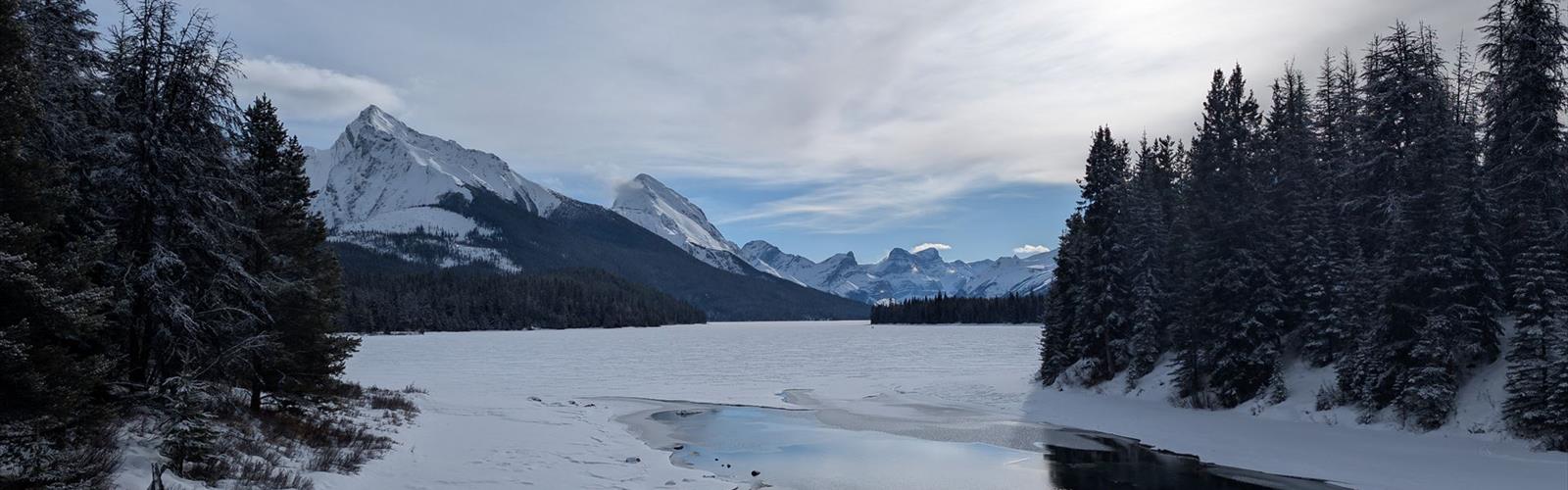
The Bald Hills Trail is one of Jasper National Park's most satisfying day hikes — the kind where the effort feels honest and the payoff is genuinely hard to beat. Starting from the Maligne Lake parking lot, the trail climbs steadily through dense subalpine forest before opening up into rolling alpine meadows with sweeping views over one of the most iconic lakes in the Canadian Rockies. At 5.4 km with 275 m of elevation gain, it's accessible enough for most hikers while still delivering a real sense of arrival when you reach the top.
Getting There
The trailhead sits at the Maligne Lake parking lot, 48 kilometers southeast of Jasper townsite along Maligne Lake Road. The drive itself takes roughly 45 minutes and passes several worthwhile stops — Maligne Canyon and Medicine Lake among them — so it's easy to build a full day around the area. The parking lot gets busy during peak summer months, and arriving early is the most reliable way to snag a spot without stress.
The Climb Through the Forest
From the parking lot, the trail pulls you away from the Maligne Lake crowds almost immediately. The first section winds through thick stands of Engelmann spruce and subalpine fir, where the air is cool and smells of pine and damp soil. The grade is consistent but never punishing — you're gaining elevation steadily, crossing small creek beds, stepping over roots and rocks, but nothing that requires scrambling or technical footing.
This forested section is quieter than you might expect given how popular Maligne Lake is. The canopy keeps things shaded and cool, and it's worth slowing down here rather than rushing toward the views. The forest has its own character, and it sets up the contrast nicely when things start to open up.
Where the Trees Give Way
Around the halfway point, the forest begins to thin. You start catching glimpses of surrounding peaks through the gaps, and the trail transitions into something more interesting — patches of alpine meadow appear, and the trees that remain are stunted and wind-sculpted into the kind of shapes that make you stop and look. This krummholz zone is a reliable sign that you're getting close to the good stuff.
Once you clear the treeline entirely, the Bald Hills open up in front of you. The name is accurate: these are rounded, grass-covered summits rather than dramatic rocky spires. That's not a disappointment — it's actually what makes the terrain up here feel so walkable and inviting. The alpine meadows are soft underfoot, dotted with small tarns that mirror the sky, and in midsummer they fill with wildflowers: Indian paintbrush, mountain avens, alpine forget-me-nots, and more. The trail becomes less defined across the open ground, but cairns keep you oriented toward the main viewpoint.
Wildlife in the Open
The exposed alpine terrain makes wildlife spotting easier than anywhere in the forest below. Hoary marmots are a near-constant presence — you'll hear their sharp whistles before you see them posted on boulders nearby. Pikas are equally vocal, their high-pitched calls echoing off the scattered rocks. Elk and deer graze in these high meadows, particularly during early morning and evening hours. This is also grizzly and black bear habitat, so carrying bear spray is strongly recommended and making noise on the trail is a good habit throughout.
The View Over Maligne Lake
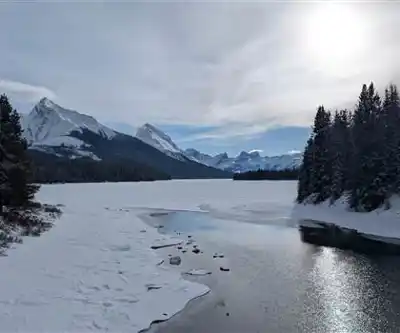
The main viewpoint is the trail's centerpiece, and it earns its reputation. From up here, Maligne Lake stretches out below you — nearly 22 kilometers of turquoise water created by glacial flour suspended in the lake. It's the largest natural lake in the Canadian Rockies, and seeing it from this elevation gives you a sense of its scale that you simply can't get from the lakeshore. On a clear day, Spirit Island is visible — the small, tree-covered islet that shows up in so many Canadian Rockies photographs.
The panorama extends well beyond the lake itself. The Maligne Range dominates to the south, with peaks like Mount Brazeau and Mount Warren on the horizon. To the north, the view reaches into Jasper's remote backcountry. The Queen Elizabeth Ranges stretch to the west. The layering of mountain ranges in every direction, with the lake anchoring the foreground, is the kind of view that changes character as the light shifts through the day.
Practical Notes
The trail is rated easy and most hikers complete the round trip in around 2 hours and 15 minutes, though spending time in the meadows or at the viewpoint will stretch that comfortably. The route is well-marked throughout, with cairns guiding the way across the open alpine sections where the path becomes less obvious.
Mountain weather moves fast at this elevation. Even on warm summer days, temperatures can drop quickly when clouds roll in, and afternoon thunderstorms are common. A waterproof layer is worth carrying regardless of the morning forecast. The exposed ridgeline amplifies wind and weather in ways the forest below doesn't.
The trail is typically snow-free by late June. Wildflowers peak through July and into early August. September brings fewer crowds, cooler air, and early autumn color in the lower elevations — a genuinely good time to visit if you don't mind the possibility of early snow higher up. The trail generally stays accessible into early October depending on conditions.
Bring enough water for the full round trip, especially during dry stretches when smaller streams along the route may not be running. The alpine environment here is fragile — the growing season is short, and vegetation damaged by foot traffic takes years to recover. Staying on established trails and following Leave No Trace principles matters more here than in more resilient ecosystems lower down.
The Essential Hiking Checklist
Everything you need for your next hike. Bilingual, printable, 1 page.
Get your free hiking checklistRecommended gear for this trail
As an Amazon Associate I earn from qualifying purchases.


Ready to go?
Everything you need to know before you goStarting Point
The bald hills trail is located in the Kananaskis Country area of Alberta. To get to the start of the trails, take Highway 40 south from Calgary to the Kananaskis Village area. Turn left onto the Kananaskis Lakes Trail and drive for about 5 km until you reach the signed trailhead parking lot on the right.
When?
How much?
As an Amazon Associate I earn from qualifying purchases.
Affiliate links — LGPO may earn a commission at no extra cost to you.
- Hiking shoes Essential
- → Salomon Elixir Tour Mid WP · 203.38 $
- Layered clothing Essential
- Rain jacket Essential
- Trekking poles
- → Black Diamond Trail Ergo Cork · 69.99 $
- Headlamp
- → Petzl Actik Core 625 · 103.95 $
FAQ - Frequently asked questions
Everything you need to knowSimilar hikes nearby
Discover other trails you might enjoy
Fossil Mountain
Canadian Rockies

Snake Indian Mountain
Canadian Rockies
Mushroom Peak
Canadian Rockies
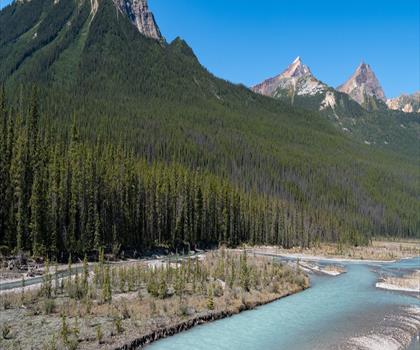
Mount Woolley
Canadian Rockies
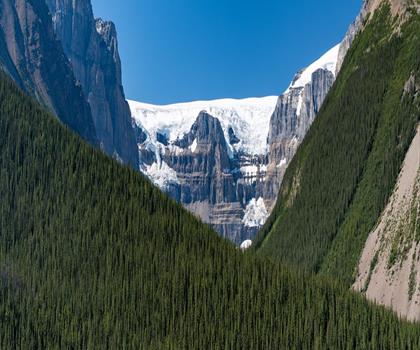
Stutfield Peak
Canadian Rockies
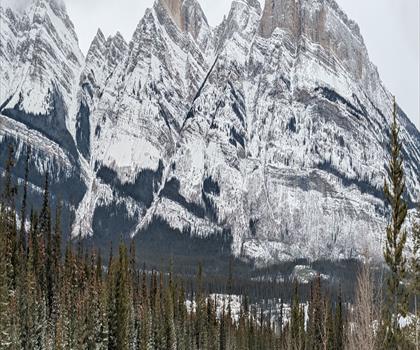
Mount Sarbach
Canadian Rockies
Hiking near Jasper
82 trails to explore ~33 km away
We work hard to provide the most up-to-date and error-free data possible. If something seems incorrect, let us know! Your contribution helps the whole community.
Hikers' opinions
Be the first to review!
No hiker has shared their experience yet. Share your impressions and help other hikers!