
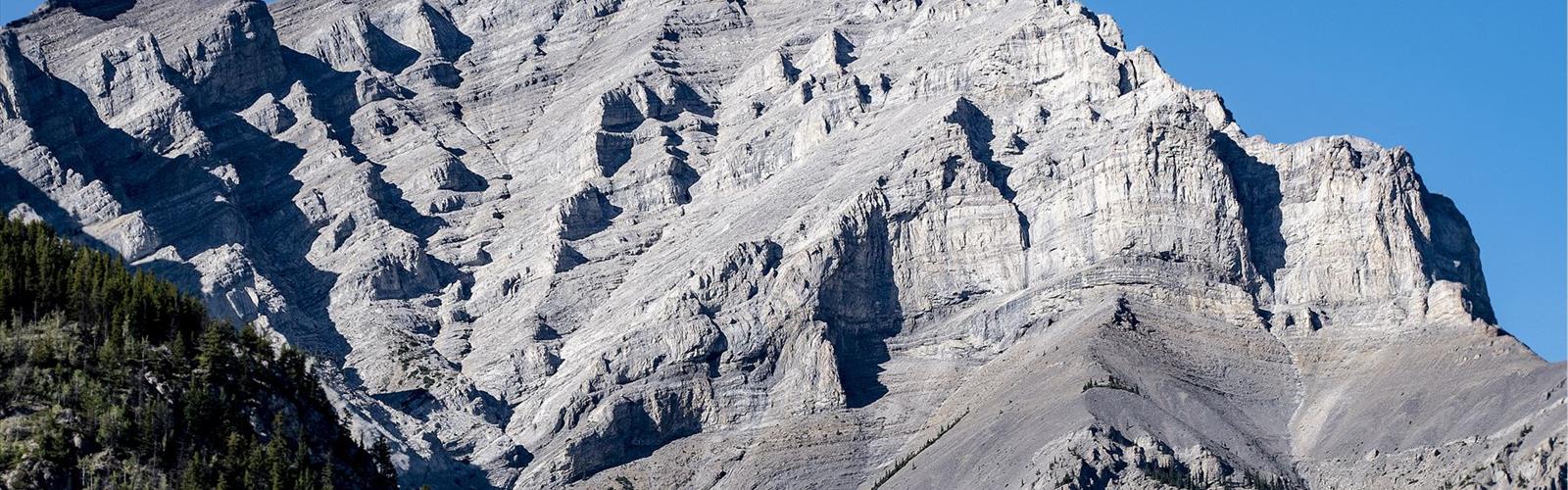

Ready to explore Mount Brewster? Here's everything you need to know before you go!
Discover the trail
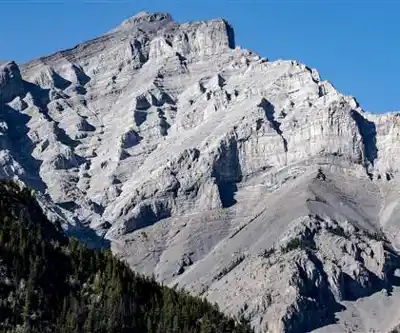
Photos: Ron Cogswell from Arlington, Virginia, USA — CC BY 2.0 (Wikimedia Commons)
Trail description
Mount Brewster tops out at 2,859 meters (9,380 feet) in the Canadian Rockies, making it one of the more serious summit objectives accessible from Banff. This is not a casual day hike — it's a full commitment that rewards experienced hikers with sweeping views across multiple valley systems and a genuine sense of accomplishment. The mountain's position in the front ranges gives it an exposed, commanding presence that you feel from the moment you start climbing.
The Climb
The route to the summit doesn't ease you in gently. From the trailhead near Banff, the trail gets steep early and stays that way, setting a tone that demands steady pacing and honest self-assessment. There's a significant elevation gain of 2,840 meters to work through, and the mountain makes you earn every meter of it.
The lower section moves through dense montane forest, where the tree cover offers some shade during the initial push. As you gain elevation, the forest transitions from valley-bottom species to subalpine growth, and the trail surface shifts from dirt to increasingly rocky ground. Foot placement starts to matter more here, and the pace naturally slows as the terrain demands more attention.
Breaking treeline is one of the defining moments of this hike. The mountain opens up, the views arrive, and you get your first real sense of how much vertical you've covered — and how much remains. Summer brings wildflowers to these open slopes: lupines, Indian paintbrush, and mountain avens among others, set against grey limestone and distant peaks. It's worth pausing here, both for the scenery and to gauge conditions above.
The upper mountain is where things get technical. Rocky outcrops, potentially loose scree, and sections that require using your hands for balance and progress define the final approach. Comfort with exposure is essential — this is scrambling terrain, not a maintained hiking trail. The route demands focus and confidence, particularly on the descent when tired legs make loose rock more consequential.
Wildlife and Alpine Ecology
The elevation range on Mount Brewster creates distinct ecological zones, each supporting its own wildlife. Mountain goats are the signature animals of the upper mountain, often spotted on cliff faces or picking their way along ridgelines with the kind of casual confidence that makes human scrambling look clumsy by comparison. Encounters closer to the trail are possible, though the goats generally keep their distance.
Marmots are a constant presence in the meadow zones. Their sharp warning whistles carry across the open slopes, and watching them navigate their burrow systems during a rest break is one of those small pleasures that makes alpine hiking worthwhile. Higher up, the wildlife thins out, but the landscape itself becomes the main attraction.
The vegetation tells the story of elevation clearly. Lower forest gives way to subalpine meadows, which give way to the sparse, hardy plants of the true alpine zone — species adapted to short growing seasons, intense UV exposure, and conditions that would finish off most lowland plants. These communities are fragile and slow to recover from damage, which is worth keeping in mind as you move through them.
Planning and Preparation
This hike is suited to experienced hikers who are comfortable with sustained steep climbing and basic scrambling. The combination of serious elevation gain, technical upper terrain, and the potential for rapid weather changes puts this firmly in the advanced category. It's not the place to test new gear or push beyond your current skill level.
Start early. The estimated time commitment is substantial, and an early departure gives you the best chance of clear summit views before afternoon clouds build, as well as a safety buffer against the thunderstorms that can develop quickly over exposed alpine terrain. Afternoon lightning on an open ridgeline is a situation you want to avoid entirely.
Gear selection matters on a route like this. Sturdy boots with solid ankle support and aggressive tread are essential — the combination of steep slopes, loose rock, and potentially wet surfaces punishes footwear that isn't up to the task. Ankle support is particularly important on the descent, when fatigue reduces stability and the consequences of a misstep increase. Layer your clothing system to handle the temperature swing between the trailhead and summit, and carry wind and rain protection regardless of how the morning looks. Conditions at elevation can change faster than forecasts suggest.
Carry more water and food than you think you'll need. The sustained effort and elevation gain drive up consumption, and having a buffer for unexpected delays or route-finding time is straightforward insurance. Check current weather forecasts before you leave, and take them seriously — what looks manageable from the valley can be genuinely dangerous at summit elevation.
Leaving It as You Found It
The alpine environment on Mount Brewster operates on timescales that make human visits feel brief. Vegetation damaged by foot traffic at these elevations can take decades to recover, which means the choices individual hikers make add up over time. Stay on rock or snow when traveling off-trail, pack out everything you brought in, and resist the impulse to build cairns or rearrange the landscape. The mountain doesn't need your improvements — it needs your restraint.
Wildlife here is adapted to natural food sources, and keeping that separation intact is part of responsible travel in this environment. Store food properly, don't feed animals, and give wildlife the space to behave naturally. These aren't abstract rules — they're what keeps places like this worth coming back to.
The Essential Hiking Checklist
Everything you need for your next hike. Bilingual, printable, 1 page.
Get your free hiking checklistRecommended gear for this trail
As an Amazon Associate I earn from qualifying purchases.


Ready to go?
Everything you need to know before you goStarting Point
The mount brewster trails are located in the Kananaskis Country area of Alberta. To get to the start of the trails, take Highway 40 south from Calgary and turn left onto the Smith-Dorrien/Spray Lakes Road (Highway 742). Continue on the Smith-Dorrien/Spray Lakes Road for about 36 kilometers until you reach the mount brewster trailhead parking lot on the right side of the road.
When?
How much?
As an Amazon Associate I earn from qualifying purchases.
Affiliate links — LGPO may earn a commission at no extra cost to you.
- Hiking shoes Essential
- → Salomon Elixir Tour Mid WP · 203.38 $
- Layered clothing Essential
- Rain jacket Essential
- Trekking poles
- → Black Diamond Trail Ergo Cork · 69.99 $
- Headlamp
- → Petzl Actik Core 625 · 103.95 $
FAQ - Frequently asked questions
Everything you need to knowSimilar hikes nearby
Discover other trails you might enjoy
Fossil Mountain
Canadian Rockies

Snake Indian Mountain
Canadian Rockies
Mushroom Peak
Canadian Rockies
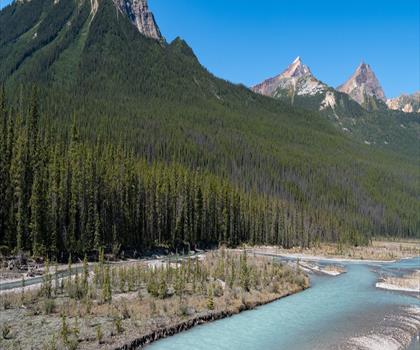
Mount Woolley
Canadian Rockies
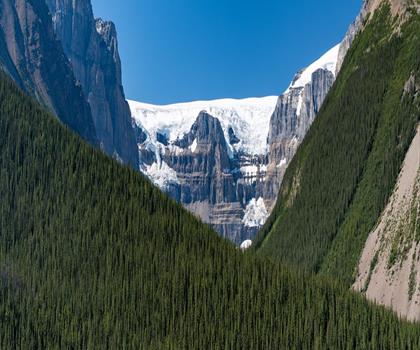
Stutfield Peak
Canadian Rockies
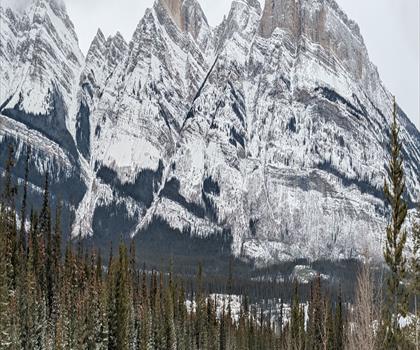
Mount Sarbach
Canadian Rockies
Hiking near Banff
187 trails to explore ~9 km away
We work hard to provide the most up-to-date and error-free data possible. If something seems incorrect, let us know! Your contribution helps the whole community.
Hikers' opinions
Be the first to review!
No hiker has shared their experience yet. Share your impressions and help other hikers!