
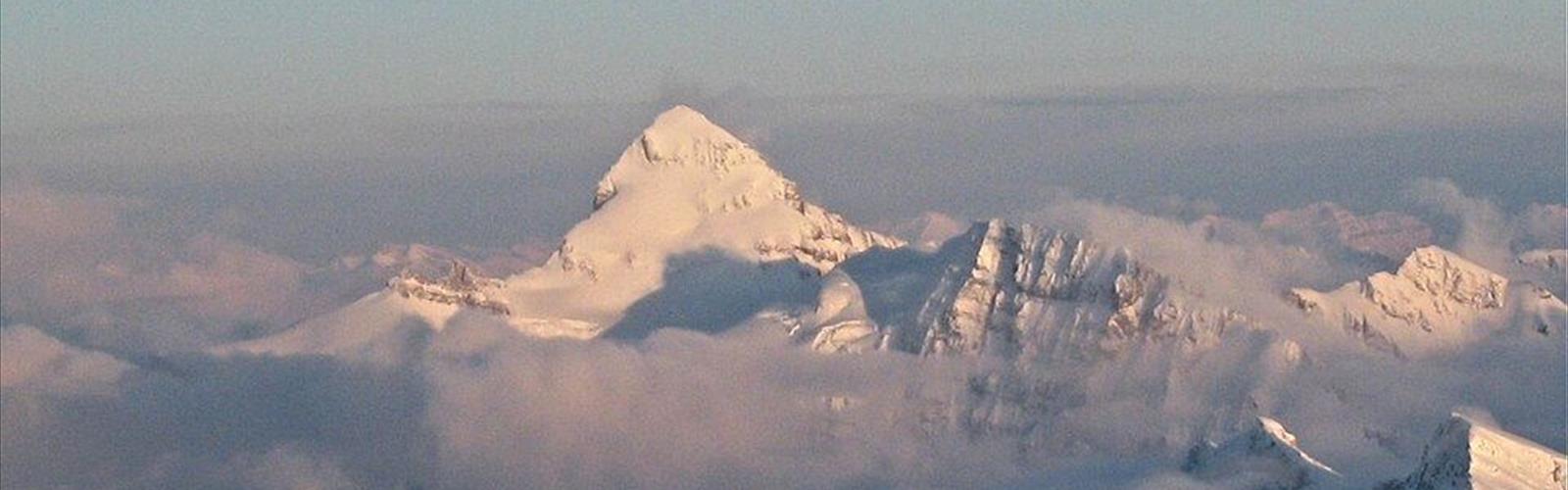

Ready to explore Mount Forbes? Here's everything you need to know before you go!
Discover the trail
Trail description
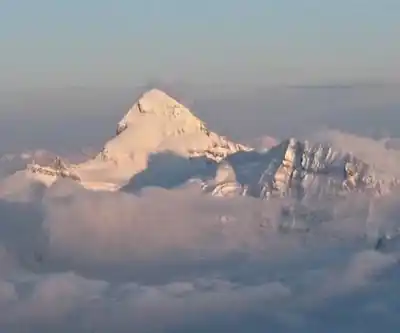
Mount Forbes is the highest peak entirely within Banff National Park and the seventh tallest mountain in the Canadian Rockies, topping out at 3,612 meters (11,850 feet). Named after Edward Forbes, a British naturalist, this remote giant sits deep in the backcountry and demands everything you've got — technical skills, proper gear, solid alpine experience, and a genuine respect for the mountain's scale and isolation.
This is not a trail you wander onto unprepared. At 32 kilometers with 2,134 meters of elevation gain, the route to Mount Forbes is rated very hard for good reason. The terrain involves glacier travel, route-finding across crevassed ice, and exposure to rapidly changing alpine weather. If you haven't tackled glaciated peaks before, this mountain represents a serious step up — even for experienced backcountry hikers.
The Approach
Getting to the base of Mount Forbes is already an expedition in itself. The approach winds through remote wilderness where trail markers are sparse and self-reliance is non-negotiable. You'll move through dense spruce and fir forests in the lower elevations, cross glacial streams, and pass through open valleys that bloom briefly with wildflowers during the short alpine summer. The scale of the surrounding landscape becomes increasingly apparent as you gain elevation — this is big, unforgiving country.
The remote location makes day trips impossible. Plan for a multi-day expedition with full camping gear, and build extra days into your schedule for weather delays. Conditions at this elevation can shift from clear skies to full storm in a matter of hours, and being pinned down for a day or two is a real possibility, not just a worst-case scenario.
The Technical Climb
Once you reach the glaciated zones, the character of the terrain changes completely. Shimmering ice fields stretch between massive rock faces, and the route requires confident navigation across glaciated terrain. You'll need crampons, ice axes, ropes, and avalanche safety gear as standard kit. Crevasse rescue skills aren't optional here — they're a baseline requirement.
The panoramic views from the upper mountain are extraordinary. Wave after wave of snow-capped summits extend in every direction, with the full sweep of the Canadian Rockies laid out around you. Alpine lakes far below reflect the jagged peaks, and on a clear day the sense of scale is genuinely humbling.
Wildlife and Wilderness
The region around Mount Forbes is active wildlife habitat. Mountain goats move through the steep rocky terrain above treeline, elk graze in the lower valleys during summer, and grizzly bears are present throughout the area. Proper food storage and solid bear awareness aren't just good practice here — they're essential. Keep your food secured in approved containers, know how to use your bear spray, and make noise while traveling through dense brush.
Planning an Expedition
Thorough preparation is what separates a successful climb from a dangerous one on a mountain like this. A few things to have locked in before you leave the trailhead:
- Permits: Backcountry camping permits are required for multi-day trips in Banff National Park. Register your climbing plan with park authorities before heading out.
- Gear: Full mountaineering kit — crampons, ice axe, rope, harness, helmet, avalanche transceiver, probe, and shovel. Don't cut corners on this list.
- Communication: Carry a reliable satellite communicator. Cell service is nonexistent in this area, and rescue operations in this remote terrain are slow and complicated.
- First aid: Bring a comprehensive kit and know how to use it. The nearest help is a long way away.
- Timing: The climbing season is short — late summer and early fall generally offer the most stable glacier conditions. Check current conditions with Parks Canada before committing to a departure date.
If Mount Forbes Is Beyond Your Current Level
The valleys and lower elevation terrain surrounding Mount Forbes offer legitimate multi-day backpacking routes that don't require mountaineering skills. You can explore dense forest, find hidden alpine lakes, and get excellent views of Mount Forbes and the surrounding peaks without ever setting foot on a glacier. These routes still demand solid backcountry experience and full self-sufficiency — this isn't casual hiking country at any elevation — but they're accessible to experienced hikers who aren't yet ready for technical alpine terrain.
Either way, the wilderness around Mount Forbes is some of the most untouched landscape in the Canadian Rockies, and the mountain itself is a defining objective for anyone serious about high-altitude mountaineering in Alberta.
The Essential Hiking Checklist
Everything you need for your next hike. Bilingual, printable, 1 page.
Get your free hiking checklistRecommended gear for this trail
As an Amazon Associate I earn from qualifying purchases.


Ready to go?
Everything you need to know before you goStarting Point
The mount forbes trailhead is located on the east side of Highway 22, about 9 km south of the town of Claresholm.
When?
How much?
As an Amazon Associate I earn from qualifying purchases.
Affiliate links — LGPO may earn a commission at no extra cost to you.
- Hiking shoes Essential
- → Salomon Elixir Tour Mid WP · 203.38 $
- Layered clothing Essential
- Rain jacket Essential
- Trekking poles
- → Black Diamond Trail Ergo Cork · 69.99 $
- Headlamp
- → Petzl Actik Core 625 · 103.95 $
FAQ - Frequently asked questions
Everything you need to knowSimilar hikes nearby
Discover other trails you might enjoy
Fossil Mountain
Canadian Rockies

Snake Indian Mountain
Canadian Rockies
Mushroom Peak
Canadian Rockies
Mount Woolley
Canadian Rockies
Stutfield Peak
Canadian Rockies
Mount Sarbach
Canadian Rockies
Hiking near Banff
187 trails to explore ~121 km away
We work hard to provide the most up-to-date and error-free data possible. If something seems incorrect, let us know! Your contribution helps the whole community.
Hikers' opinions
Be the first to review!
No hiker has shared their experience yet. Share your impressions and help other hikers!