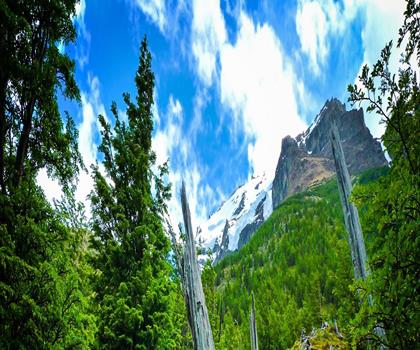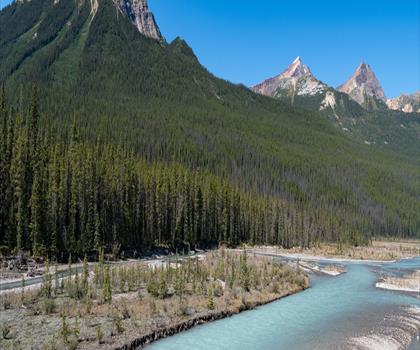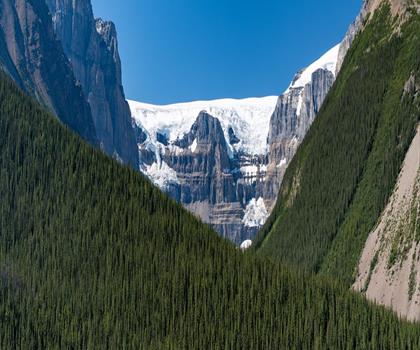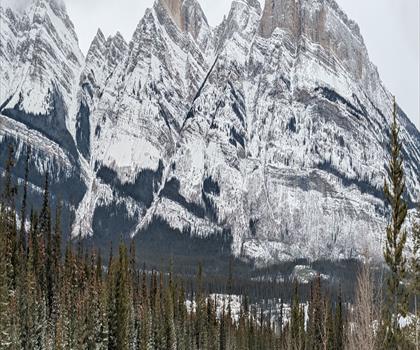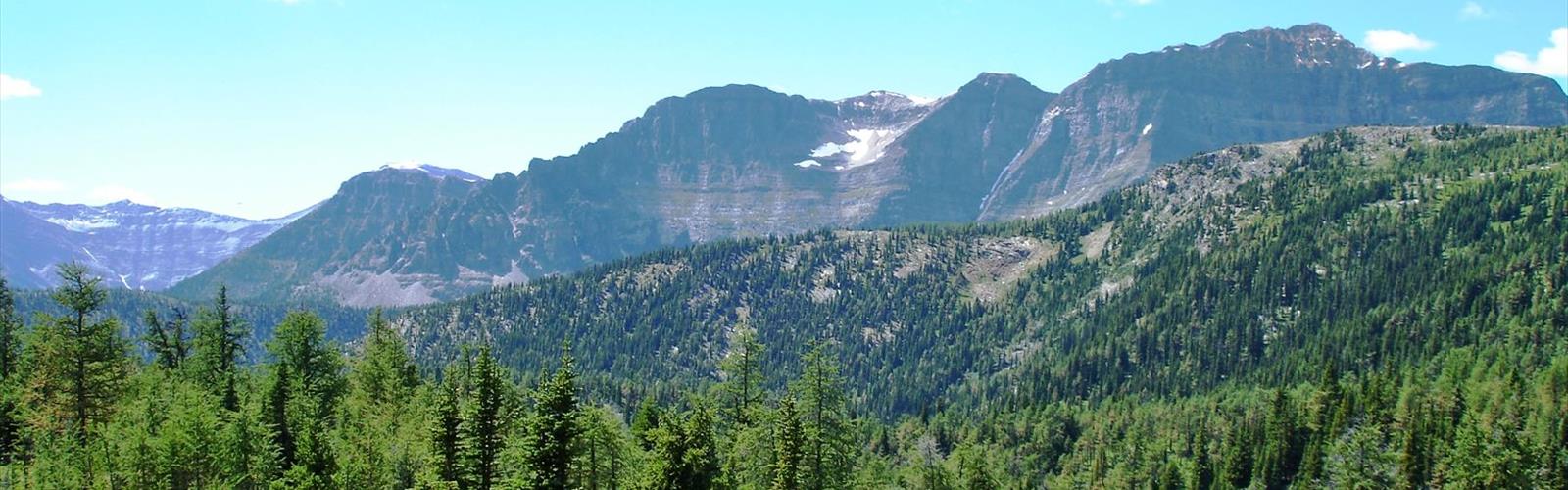
Hiking Mount Howard Douglas - panoramic view  tree outdoor landscape nature mountain sky autumn plant cloud background lake painting forest surrounded distance
--°C
Loading...
See forecast →

Hiking in the Mount Howard Douglas: trails, map and practical info

Canadian Rockies • Alberta

5.0 Appreciated by 36 hikers
François Dumaine
By François DumaineContributor since 2013Updated 31/05/2026
Difficulty
Easy
Distance
3 km
Elevation
2,877 m
Duration
39min
Max altitude
3,407 m

Tackle this 2.7 km alpine ascent in Alberta's Kananaskis Country for 39 minutes of relentless elevation gain. Located near Calgary, Mount Howard Douglas rewards climbers with 360-degree summit views across pristine northern wilderness—a remote peak that few hikers ever witness.

Recommended for :
Beginners

Ready to explore Mount Howard Douglas? Here's everything you need to know before you go!

Discover the trail
Oh no! We don't have any photos 😢

This trail hasn't been captured yet. Be the first to share your adventure!

Trail description

Description

Mount Howard Douglas stands as one of Alberta's most impressive northern peaks, rising to 2,877 meters above sea level in the heart of the Canadian Rockies. This towering summit offers hikers an accessible yet rewarding mountain experience, with a relatively short 2.7-kilometer trail that can be completed in under an hour for those maintaining a steady pace.

What makes Mount Howard Douglas particularly appealing is its combination of accessibility and dramatic alpine scenery. Despite being classified as an easy hike, the mountain's substantial elevation provides the kind of commanding views typically associated with much more challenging climbs. The peak sits in Alberta's northern wilderness, where you'll find fewer crowds and more authentic mountain solitude compared to the busier ranges further south.

The mountain's position in the northern Canadian Rockies creates a unique environment where boreal and alpine ecosystems meet. This transition zone supports diverse wildlife and plant communities, making every section of the trail offer something different to observe and experience.

Trail Experience and Terrain

The trail to Mount Howard Douglas takes you through a remarkable variety of terrain despite its relatively short distance. You'll start your journey in dense boreal forest, where towering spruce and fir trees create a cool, cathedral-like atmosphere. The forest floor here is typically soft underfoot, carpeted with moss and fallen needles that make for comfortable walking even in sturdy hiking boots.

As you gain elevation, the trail opens into expansive alpine meadows that provide your first real taste of the mountain's dramatic scenery. These open areas serve as natural viewpoints where you can pause to take in the surrounding peaks and valleys. During the growing season, these meadows come alive with hardy wildflowers adapted to the short mountain summer.

The upper sections of the trail traverse increasingly rocky terrain, where the path winds between boulder fields and across exposed ridges. Here, the mountain's true alpine character emerges, with weathered rock formations and sparse vegetation that have adapted to survive the harsh conditions at elevation. The final approach involves navigating loose scree and solid rock faces that require attention to foot placement, though the trail remains well-defined throughout.

From various points along the route, you'll enjoy panoramic views across northern Alberta's vast wilderness. The visibility on clear days extends for dozens of kilometers, revealing wave after wave of forested ridges that stretch to the horizon. The summit itself provides 360-degree views that showcase the true scale of this northern mountain landscape, offering perspectives that few people ever witness.

Wildlife and Natural Environment

Mount Howard Douglas supports an impressive variety of wildlife adapted to the northern mountain environment. The diverse elevation zones create different habitats that support everything from forest-dwelling species in the lower elevations to hardy alpine specialists near the summit.

Deer are commonly spotted throughout the trail system, particularly in the meadow areas where they come to feed during early morning and evening hours. Elk also inhabit this region, though they tend to be more elusive and are often detected by their tracks and signs rather than direct sightings. Both species are well-adapted to the mountain environment and play important roles in the local ecosystem.

The bird population is equally diverse, ranging from forest species in the lower elevations to alpine specialists that thrive in the harsh upper mountain environment. Hawks and eagles occasionally soar overhead, taking advantage of the thermal currents created by the mountain's steep faces and dramatic elevation changes. Smaller songbirds are abundant in the forested sections, while hardy mountain species can be found even in the exposed areas near the summit.

The plant communities change dramatically with elevation, creating distinct zones that reflect the varying growing conditions. The lower forest areas support typical boreal species, while the alpine zones feature plants with remarkable adaptations to wind, cold, and intense UV radiation. These hardy species often grow in compact cushions and low mats that can survive the challenging mountain environment.

Planning and Preparation

Even though Mount Howard Douglas is rated as an easy hike, the mountain environment demands proper preparation and respect. Weather conditions can change rapidly at elevation, so checking current forecasts and trail reports before your departure is essential. Mountain weather can be unpredictable, with sudden temperature drops, high winds, and precipitation that can make the upper elevations challenging for unprepared hikers.

Essential gear includes plenty of water, as natural sources become scarce at higher elevations. Pack energy-rich snacks and a substantial lunch to maintain your strength during the climb. Navigation tools like a map and GPS device provide important backup, especially if weather moves in and reduces visibility on the upper mountain.

Clothing should be layered to handle the significant temperature variation between trailhead and summit. Even on warm valley days, the summit can be cold and windy. Sturdy hiking boots with good ankle support are crucial for the rocky upper terrain, while trekking poles can provide valuable stability on steep sections and loose surfaces.

The substantial elevation gain makes this a physically demanding experience despite the short distance. Starting early allows plenty of time for both ascent and descent while helping you avoid afternoon weather patterns that often develop in mountain areas.

Access and Logistics

Mount Howard Douglas is accessible from major towns in northern Alberta, though reaching the trailhead involves traveling through remote country where services are limited. The trailhead provides adequate parking for day hikers, making it practical for those planning single-day ascents of this impressive peak.

The remote location means cell phone coverage is unreliable or nonexistent, so informing someone of your hiking plans and expected return time becomes a crucial safety precaution. This basic step becomes even more important on peaks like Mount Howard Douglas where weather and terrain can create serious situations quickly.

For those interested in extending their mountain experience, the surrounding area offers opportunities for multi-day adventures and backcountry exploration. The pristine wilderness setting provides an authentic northern mountain experience under some of the darkest night skies in the province, perfect for those seeking to combine hiking with stargazing or photography.

Ready to go?

Everything you need to know before you go

Where?

Address
Mount Howard Douglas, Alberta T0L 2C0, Canada
GPS coordinates
51.0855555, -115.735
Phone
Not available

Starting Point

The mount howard douglas trails are located in the Kananaskis Country area of Alberta. To get to the start of the trails, take Highway 40 south from Calgary and turn left onto the Kananaskis Trail (Highway 742). The trailhead is located about 9 km down the road.

When?

Opening hours
From sunrise to sunset
Varies by season
Best season
Fall
Spectacular colors
Best time
Early morning
Less crowded
Weather (next days)
Loading

How much?

Entry fees
Adult
Not available
Child
What to bring?
Gear
  • Hiking shoes Essential
  • Layered clothing Essential
  • Rain jacket Essential
  • Trekking poles
  • Headlamp
Download the PDF checklist
Water & food
2L minimum
No water point on the trail
Bring energy snacks for a 4h+ hike
Good to know
Park rules
No dogs
Safety
Download the GPX before you go
Limited cellular coverage on the trail
Slippery after rain
Be careful on rocky sections
In an emergency
Emergency
911
Parking GPS
51.0855555, -115.735
Center
Not available

Hikers' opinions

5.0
15 Reviews
S
Sarah
Nov 22, 2025
What an incredible technical adventure that pushes you to your limits! The rock quality improves significantly once you reach the alpine zone, and I was thrilled to spot mountain goats near the ridge line. The final approach involves serious exposure that definitely isn't suitable for anyone with height anxiety, but perfect weather conditions made this challenging scramble absolutely unforgettable.
J
Jake
Nov 8, 2025
Completely underestimated this deceptively short trail - the 2.7km distance is misleading when you're gaining that much vertical. Had to turn back around 1800m due to dangerous loose rock conditions in the upper sections. The parking fees are quite expensive and the access road gets congested early in the day. Would definitely recommend bringing a helmet for the technical portions.
M
Marcus
Sep 15, 2025
This trail is absolutely deceiving with its short 2.7km distance - the 2877m elevation gain makes it one of the most challenging scrambles I've ever attempted. The technical sections after halfway require genuine mountaineering skills and proper gear. Started before dawn and witnessed an incredible sunrise from the upper elevations, making every grueling step worthwhile for the alpine experience.
M
Marcus
Sep 15, 2025
This trail is absolutely brutal with nearly 3000m of elevation gain packed into just 2.7km! The scrambling sections are technically demanding and require genuine mountaineering experience. Started before dawn and the sunrise views from the upper elevations were absolutely spectacular. The rock quality improves significantly once you reach the alpine zone, making the climbing more secure.
M
Michael
Aug 30, 2025
Had to turn back around 1800m elevation due to dangerous loose rockfall conditions in the upper technical sections. The trail becomes extremely challenging after the first kilometer with serious scrambling required. Parking fees are quite expensive and the access road gets crowded early, so I'd strongly recommend starting extremely early and bringing a helmet for the exposed upper sections.

FAQ - Frequently asked questions

Everything you need to know
Easy
2877.00 M
3407.00 M
39min
No
No
The Mount Howard Douglas trail is rated as Hard difficulty. This challenging hike requires good physical fitness and mountain hiking experience due to the significant elevation gain and technical terrain.
The Mount Howard Douglas trail is 2.7 km in distance and typically takes about 6 hours and 30 minutes to complete. The duration reflects the challenging nature of this hard-rated trail with substantial elevation gain.
The Mount Howard Douglas trail has an elevation gain of 2,877 meters, making it an extremely challenging climb. This significant elevation change contributes to the trail's Hard difficulty rating and extended completion time.
No, dogs are not permitted on the Mount Howard Douglas trail. Plan to leave your pets at home when hiking this trail in the Canadian Rockies.
No, the Mount Howard Douglas trail is not suitable for beginners or children due to its Hard difficulty rating and extreme elevation gain of 2,877 meters. This trail requires experienced hikers with excellent physical conditioning and mountain hiking skills.
Didn't find your answer?
Free 1 pages

The Essential Hiking Checklist

Everything you need for your next hike. Bilingual, printable, 1 page.

Download the free checklist
Top 10 best hiking in Canadian Rockies
Our ranking based on hiker reviews

Hiking near Banff

187 trails to explore ~15 km away

View trails
Did you spot an error?

We work hard to provide the most up-to-date and error-free data possible. If something seems incorrect, let us know!

Update : June 2026