


Ready to explore Mount Louis? Here's everything you need to know before you go!
Discover the trail
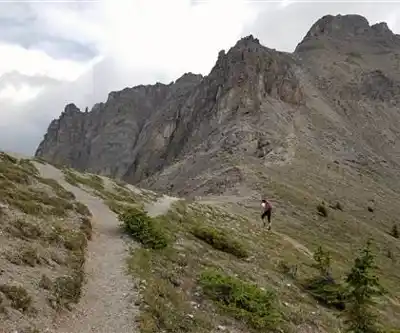
Trail description
Mount Louis is one of the most recognizable peaks in Banff National Park, rising as a narrow limestone spire above the Sawback Range. At 2,682 meters (8,799 feet), it stands apart from the broad, glaciated summits that define much of the Canadian Rockies — this is a tower of pale rock, steep on every side, and it looks the part from every angle. The mountain draws serious climbers, but the approach terrain is worth the trip even for those who have no intention of going vertical.
What to Expect on the Trail
The route to Mount Louis covers 11.2 km with 1,000 meters of elevation gain, and most parties should budget around 5 hours and 30 minutes for the full outing. That pace reflects the nature of the terrain — it starts manageable through forest and valley, then gets progressively more demanding as you gain elevation and the ground shifts from trail to talus.
The lower section moves through dense spruce and fir forest, the kind of old-growth that keeps things cool and quiet in the morning. Streams cross the path in a few spots, fed by snowmelt from the upper mountain. Once the trees thin out, you're into open alpine terrain with the spire of Mount Louis increasingly dominating the view ahead. The upper approach involves talus and loose rock, and this is where the Hard difficulty rating starts to make itself felt — footing requires attention, and the exposure increases as you gain height.
The classic line to the summit is the Kain Route, established by legendary Swiss-Canadian guide Conrad Kain in the early 20th century. It combines scrambling with technical climbing on limestone that ranges from solid to crumbly depending on the section. The upper faces are exposed, and the rock quality demands careful route-finding and solid footwork. This is not a scramble in the casual sense — parties attempting the summit should have climbing experience and appropriate gear.
The Mountain Itself
What makes Mount Louis unusual in the Canadian Rockies is its shape. Most peaks in this range are massive, multi-faceted things — ridges, glaciers, broad shoulders. Mount Louis is a spire. Its walls drop away sharply on all sides, and the summit is a genuinely narrow perch. This geometry is the result of differential erosion in the Sawback Range's limestone, where softer surrounding rock has worn away over millennia, leaving this harder tower standing alone.
That profile makes it one of the most photographed mountains in Banff, and from the approach trail you'll understand why. The spire catches light differently throughout the day, and the contrast between the pale limestone and the surrounding forest and sky is striking at almost any hour.
Wildlife and Alpine Environment
The approach corridor through Banff's backcountry passes through active wildlife habitat. Black bears and elk are commonly seen in the forested lower sections, particularly in the early morning. Higher up, mountain goats are frequently spotted on the rocky terrain near the base of the spire. The alpine meadows that open up mid-route support a short but dense wildflower season in summer, with the bloom window typically concentrated in July and early August.
The streams running down from the mountain's base are clear and cold, fed by snowpack that lingers on north-facing aspects well into summer. These are good spots to refill water if you're carrying a filter.
Historical Background
The mountain was named for King Louis-Philippe I of France by members of the Palliser Expedition, the mid-19th century survey mission that systematically mapped much of the Canadian West. Conrad Kain's first ascent via the route that now bears his name became a landmark moment in Canadian mountaineering history, and the Kain Route remains the standard line today. The mountain's climbing history tracks closely with the broader development of technical mountaineering in the Canadian Rockies, from the guided ascents of the railway era through to modern free climbing.
Practical Considerations
Mount Louis sits within Banff National Park, so a valid Parks Canada pass is required. The trailhead is accessible from the Bow Valley Parkway area. Afternoon thunderstorms are a real concern on the exposed upper terrain during summer — an early start is strongly recommended, and parties should be off the technical sections before midday if possible.
Snow can linger on north-facing slopes into late June, and early season conditions on the approach may require microspikes or careful route selection. Winter ascents are a serious undertaking requiring full mountaineering equipment and experience with high-exposure alpine terrain in severe conditions.
For those not attempting the summit, the approach itself offers a full and rewarding day — the views of the spire from the base, the alpine meadows, and the wildlife corridor through the lower forest make this a worthwhile objective on its own terms. Bring layers regardless of the forecast, as conditions at elevation can shift quickly, and sturdy footwear is essential once the trail gives way to talus.
Recommended gear for this trail
As an Amazon Associate I earn from qualifying purchases.


Ready to go?
Everything you need to know before you goStarting Point
The mount louis trails are located in Peter Lougheed Provincial Park, Alberta. The park is located approximately 2 hours northwest of Calgary, Alberta. From Calgary, take Highway 1 (Trans-Canada Highway) west to the town of Canmore. In Canmore, take the exit for Highway 40 (the Kananaskis Trail). Follow Highway 40 south into Peter Lougheed Provincial Park. The trailhead for the mount louis trails is located at the end of the Mount Shark Road.
When?
How much?
As an Amazon Associate I earn from qualifying purchases.
Affiliate links — LGPO may earn a commission at no extra cost to you.
- Hiking shoes Essential
- → Salomon Elixir Tour Mid WP · 203.38 $
- Layered clothing Essential
- Rain jacket Essential
- Trekking poles
- → Black Diamond Trail Ergo Cork · 69.99 $
- Headlamp
- → Petzl Actik Core 625 · 103.95 $
FAQ - Frequently asked questions
Everything you need to know
25 hikes under 2 hours from Montreal
Distance, elevation, parking and season for each one. The ones we go back to ourselves.
Get the guideSimilar hikes nearby
Discover other trails you might enjoy
Fossil Mountain
Canadian Rockies

Snake Indian Mountain
Canadian Rockies
Mushroom Peak
Canadian Rockies
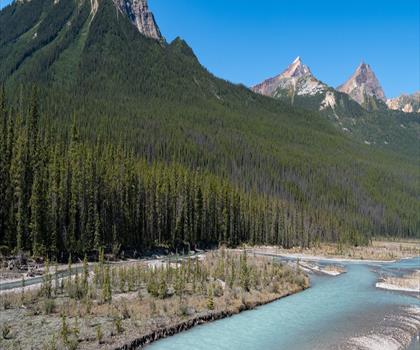
Mount Woolley
Canadian Rockies
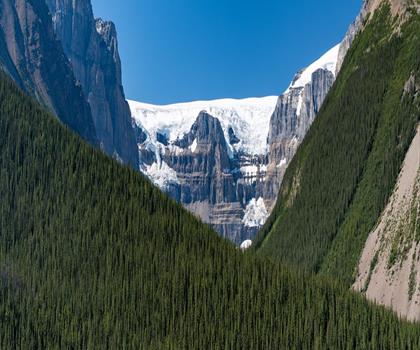
Stutfield Peak
Canadian Rockies
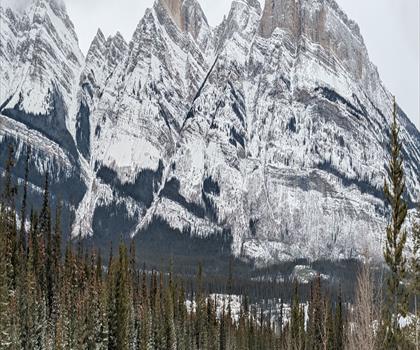
Mount Sarbach
Canadian Rockies
Hiking near Banff
187 trails to explore ~9 km away
We work hard to provide the most up-to-date and error-free data possible. If something seems incorrect, let us know! Your contribution helps the whole community.
Hikers' opinions
Be the first to review!
No hiker has shared their experience yet. Share your impressions and help other hikers!