

Ready to explore Mount Victoria? Here's everything you need to know before you go!
Discover the trail
Trail description
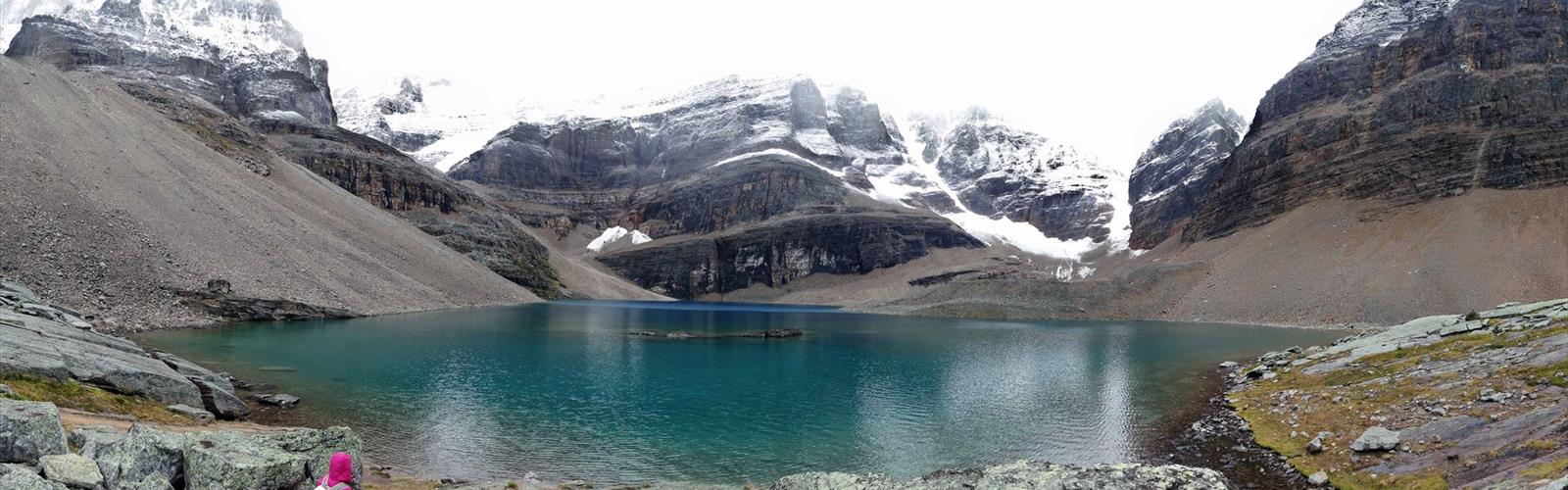
Mount Victoria rises to 3,467 meters at the continental divide between Alberta and British Columbia, forming the dramatic backdrop that makes Lake Louise one of the most iconic viewpoints in the Canadian Rockies. This is not a hiking destination in the traditional sense — it's a serious mountaineering objective that has drawn experienced climbers for well over a century. If you're standing at the lakeshore looking west, that imposing wall of rock, ice, and hanging glaciers is Mount Victoria. Getting to the top is a different matter entirely.
What to Expect on the Approach
The journey starts at the Lake Louise trailhead inside Banff National Park. Parking fills fast during summer, so arriving before 7 AM is a practical necessity, not just a suggestion. Parks Canada also operates a shuttle service during peak season, which takes some of the pressure off the parking situation.
The Plain of Six Glaciers Trail is the main approach route and the one most visitors will recognize. It follows the north shore of Lake Louise before climbing gradually into subalpine terrain, offering increasingly dramatic views of the glaciated peaks above. The historic Plain of Six Glaciers Teahouse sits along this route and operates seasonally — it's a legitimate rest stop with real food and a hard-earned view, not just a tourist gimmick. This section of trail is well-maintained and accessible to fit hikers, but it's only the beginning of what Mount Victoria demands.
For those pursuing the summit, the Abbot Pass Hut Route is the standard approach. The route climbs steeply to the Abbot Pass Hut at 2,925 meters, a stone structure built in 1922 and recognized as one of Canada's highest permanent buildings. The hut is managed by the Alpine Club of Canada and requires advance reservations. It functions as a base camp for summit attempts and provides critical shelter in an environment where conditions can deteriorate without warning.
Terrain and Technical Demands
The lower trail sections are straightforward, moving through montane and subalpine forest on a clear path. Above treeline, the character of the terrain shifts significantly. Loose scree, exposed rock, and snow or ice are all part of the picture, even in midsummer. The final push to the summit involves technical rock climbing — this is not a scramble that experienced hikers can improvise their way through. Ropes, helmets, and full mountaineering gear are required.
The route covers 11 km with 3,467 meters of elevation gain, and the estimated time of 8 hours 30 minutes reflects a realistic pace for a fit, experienced mountaineering party moving efficiently. Weather is a constant variable. Afternoon thunderstorms are common in summer, winds on the upper mountain can be severe, and snow is possible above 2,500 meters at any point in the year. Early season attempts typically require ice axes and crampons throughout.
The mountain's position on the continental divide means it catches weather moving in from the west. Clouds can build and visibility can drop quickly on the upper terrain, where route-finding errors carry serious consequences.
Wildlife Through the Elevation Zones
The ecosystems around Mount Victoria shift noticeably as you gain elevation. Lower on the approach, elk, deer, and black bears are common. Grizzly bears also frequent the area, particularly in late summer when berry crops are at their peak — bear spray is mandatory here, not optional. In the subalpine zones, mountain goats and bighorn sheep are regularly spotted on the rocky terrain, and hoary marmots are a near-constant presence on the upper slopes, announcing your arrival with their sharp whistles.
Pikas, ground squirrels, and a range of bird species adapted to alpine conditions round out the wildlife picture. In July and August, the subalpine meadows along the lower approach produce strong wildflower displays — Indian paintbrush, mountain avens, and alpine forget-me-nots among them, with timing depending on snowmelt and elevation.
Planning and Preparation
Mount Victoria is a multi-day objective for most parties. Staying overnight at the Abbot Pass Hut is the standard approach, and reservations through the Alpine Club of Canada should be secured well in advance, especially for the July-to-September climbing window. Conditions vary considerably from year to year, so checking Parks Canada's current reports and local climbing resources before committing to a date is essential.
Gear requirements go beyond what a typical alpine hiker carries. A full mountaineering kit — including rope, harness, helmet, ice axe, and crampons — is necessary for the summit route. Layering for rapidly changing conditions, high-calorie food, and sufficient water round out the essentials. A detailed topographic map and reliable navigation tools are not optional given how quickly visibility can deteriorate at elevation.
For those who aren't pursuing the summit, the Plain of Six Glaciers approach still delivers a genuinely rewarding day out. The views of Mount Victoria's faces and the surrounding glaciated terrain are exceptional, and the teahouse stop makes for a natural turnaround point that most hikers will find satisfying on its own terms.
The Essential Hiking Checklist
Everything you need for your next hike. Bilingual, printable, 1 page.
Get your free hiking checklistRecommended gear for this trail
As an Amazon Associate I earn from qualifying purchases.


Ready to go?
Everything you need to know before you goStarting Point
The mount victoria trails are located in the town of Canmore, Alberta. To get to the start of the trails, take the Trans-Canada Highway (Highway 1) to exit 118. Head west on Bow Valley Trail (Highway 742) for about 2 km until you reach the mount victoria trailhead parking lot on your right.
When?
How much?
As an Amazon Associate I earn from qualifying purchases.
Affiliate links — LGPO may earn a commission at no extra cost to you.
- Hiking shoes Essential
- → Salomon Elixir Tour Mid WP · 203.38 $
- Layered clothing Essential
- Rain jacket Essential
- Trekking poles
- → Black Diamond Trail Ergo Cork · 69.99 $
- Headlamp
- → Petzl Actik Core 625 · 103.95 $
FAQ - Frequently asked questions
Everything you need to knowSimilar hikes nearby
Discover other trails you might enjoy
Fossil Mountain
Canadian Rockies

Snake Indian Mountain
Canadian Rockies
Mushroom Peak
Canadian Rockies
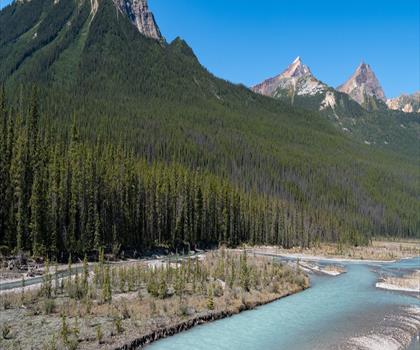
Mount Woolley
Canadian Rockies
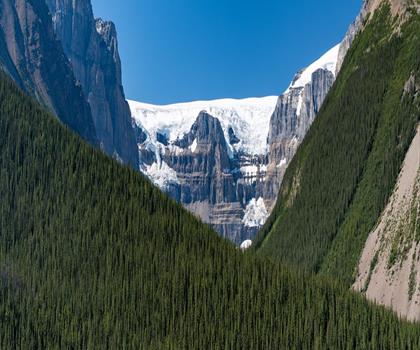
Stutfield Peak
Canadian Rockies
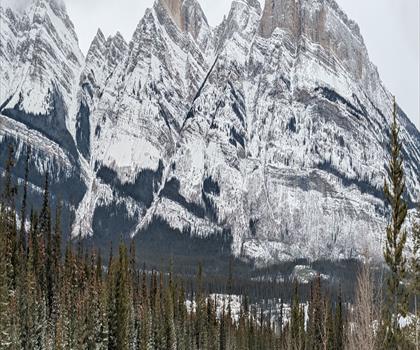
Mount Sarbach
Canadian Rockies
Hiking near Banff
187 trails to explore ~56 km away
We work hard to provide the most up-to-date and error-free data possible. If something seems incorrect, let us know! Your contribution helps the whole community.
Hikers' opinions
Be the first to review!
No hiker has shared their experience yet. Share your impressions and help other hikers!