
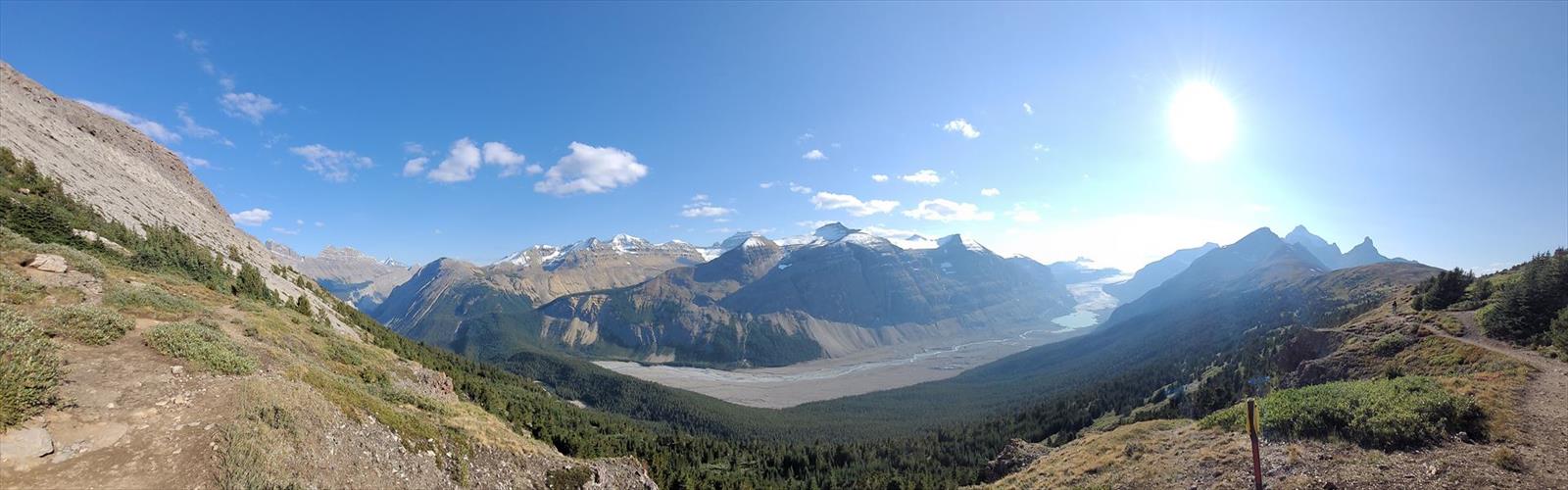

Ready to explore Parker Ridge Trail? Here's everything you need to know before you go!
Discover the trail
Available trails
| TrailTrails | Dist.Distance | GainElevation | TimeDuration | Difficulty | GPX |
|---|---|---|---|---|---|
|
|
5.56 km | — | 1h30 | GPX |
GPX track: Parks Canada — Open Government Licence – Canada
Trail description
Parker Ridge Trail delivers one of the most rewarding glacier viewpoints you can reach on foot in the Canadian Rockies, and it does so without demanding a full day or elite fitness. Located along the Icefields Parkway in Alberta, this trail punches well above its weight — 5.6 kilometres round trip, 250 metres of elevation gain, and you're standing on an exposed ridgeline staring down at the Saskatchewan Glacier, one of the major outlet glaciers flowing from the Columbia Icefield.
For a hike rated easy and clocking in around two and a half hours, the payoff is genuinely hard to beat anywhere in the Rockies.
The Trail Experience
The trailhead sits directly off the Icefields Parkway, so there's no complicated approach — you park, you walk, you climb. The trail starts climbing right away, working through subalpine forest dominated by Engelmann spruce and subalpine fir. This lower section is sheltered and gradual, a good warm-up before things open up.
As you gain elevation, the forest thins and gives way to open alpine meadows. In July and August, these meadows are genuinely spectacular — Indian paintbrush, mountain avens, and alpine forget-me-nots spread across the slopes, all framed by massive peaks on every side. It's the kind of scenery that makes you stop walking just to look around.
The upper section of the trail crosses rocky terrain and alpine tundra, where the vegetation gets sparse and low to the ground. Cushions of moss campion and purple saxifrage grow tucked into rock crevices — plants that have adapted to survive short growing seasons and brutal winters. The trail uses well-built switchbacks through this section, keeping the climb manageable even as the views start opening up dramatically.
When you reach the ridge, the Saskatchewan Glacier fills the valley below you. It's a striking sight — a wide river of ancient ice flowing between towering peaks, with the Columbia Icefield feeding it from above. On a clear day you can trace the glacier's full path through the valley, watching how it has carved the landscape over thousands of years. The ridge itself acts as a natural observation deck, with unobstructed sightlines in multiple directions.
Wildlife Along the Way
Hoary marmots are practically guaranteed trail companions on Parker Ridge. These large, stocky rodents are well adapted to the alpine environment and tend to be comfortable around hikers — you'll often find them sunning on boulders or hear their sharp whistling alarm calls echoing across the slopes. They're one of the more entertaining wildlife encounters in the Rockies precisely because they're so visible and unhurried.
Mountain goats occasionally show up on the steep cliff faces visible from the trail. Their white coats make them easy to spot against dark rock, and watching them move across terrain that looks completely impassable is always worth a pause. Binoculars help here.
Geology Worth Noticing
The rocks underfoot on Parker Ridge have a story worth knowing. The layered limestone and shale formations you walk across were once sediments on ancient ocean floors, later thrust upward during the mountain-building events that created the Rockies. The glacier below is part of that ongoing story — still actively carving and shaping the valley, just on a timescale that's hard to fully grasp from a single afternoon on the ridge.
Seasons and Conditions
The reliable hiking window on Parker Ridge runs from July through September. July and August bring snow-free trails, wildflowers in full bloom, and the best odds of clear skies for glacier views. June is possible but often means snow patches on the upper trail and near the ridge, which can require more careful footing.
September shifts the mood — the wildflowers are done, but early snowfall on the peaks creates dramatic contrast, and if the timing is right, alpine larches in the surrounding area turn a vivid golden yellow. It's a different kind of beautiful.
Weather on this trail can change fast. Afternoon thunderstorms are common in summer, and temperatures at the ridge run noticeably colder than at the trailhead — often 10 to 15 degrees cooler, with wind adding to the chill. Starting early in the day gives you the best weather window and the best light for photography.
What to Bring
Layering is non-negotiable on Parker Ridge. A moisture-wicking base layer, an insulating mid-layer, and a waterproof shell cover most conditions you'll encounter. Even on warm summer days, the ridge can be cold and windy, so don't leave the shell in the car.
- Water: At least one litre per person — more on hot days. The elevation gain means your body works harder than the distance suggests.
- Snacks: High-energy food helps maintain your pace on the climb and makes the time on the ridge more enjoyable.
- Camera or charged phone: The combination of wildflowers, glacier views, and mountain scenery gives you a lot to work with. Early morning light is particularly good on the ridge.
- Microspikes: Worth packing in June or after early-season snowfall on the upper trail.
On the Ground
Parking at the trailhead fills up on summer weekends, so arriving early is a practical move rather than just a photography tip. The alpine vegetation throughout this trail is fragile — short growing seasons mean even light trampling can set plants back significantly. Staying on the marked trail matters here more than on lower-elevation hikes where vegetation recovers quickly.
Pack out everything you bring in, give wildlife the space they need, and the ridge will look the same for the next person who makes the climb.
The Essential Hiking Checklist
Everything you need for your next hike. Bilingual, printable, 1 page.
Get your free hiking checklistRecommended gear for this trail
As an Amazon Associate I earn from qualifying purchases.


Ready to go?
Everything you need to know before you goStarting Point
The parker ridge trail is located in the Kananaskis Country area of Alberta. To get to the start of the trails, take Highway 40 south from Calgary and turn left onto the Smith-Dorrien/Spray Lakes Road. Continue on this road for about 26 kilometers until you reach the parking lot for the trailhead.
When?
How much?
As an Amazon Associate I earn from qualifying purchases.
Affiliate links — LGPO may earn a commission at no extra cost to you.
- Hiking shoes Essential
- → Salomon Elixir Tour Mid WP · 203.38 $
- Layered clothing Essential
- Rain jacket Essential
- Trekking poles
- → Black Diamond Trail Ergo Cork · 69.99 $
- Headlamp
- → Petzl Actik Core 625 · 103.95 $
FAQ - Frequently asked questions
Everything you need to knowSimilar hikes nearby
Discover other trails you might enjoy
Fossil Mountain
Canadian Rockies

Snake Indian Mountain
Canadian Rockies
Mushroom Peak
Canadian Rockies
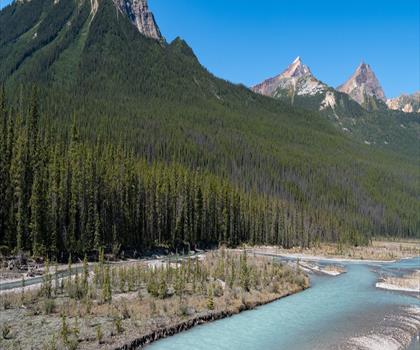
Mount Woolley
Canadian Rockies
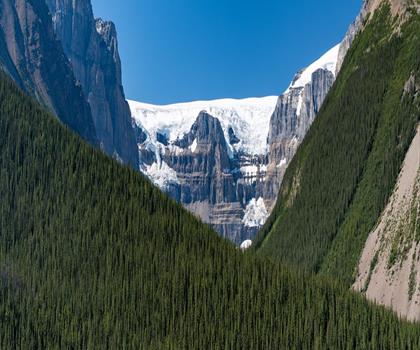
Stutfield Peak
Canadian Rockies
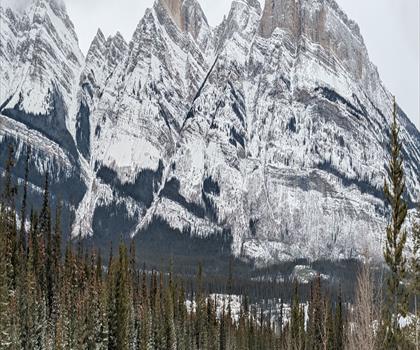
Mount Sarbach
Canadian Rockies
Hiking near Jasper
82 trails to explore ~102 km away
We work hard to provide the most up-to-date and error-free data possible. If something seems incorrect, let us know! Your contribution helps the whole community.
Hikers' opinions
Be the first to review!
No hiker has shared their experience yet. Share your impressions and help other hikers!