
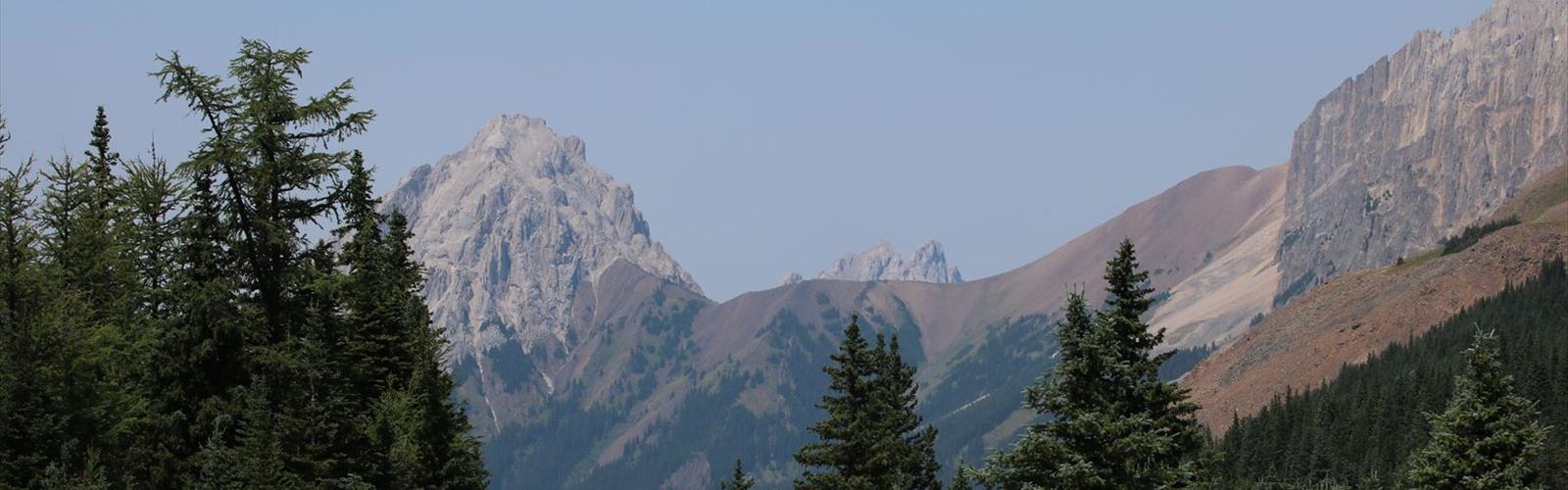

Ready to explore Pocaterra Ridge Trail? Here's everything you need to know before you go!
Discover the trail
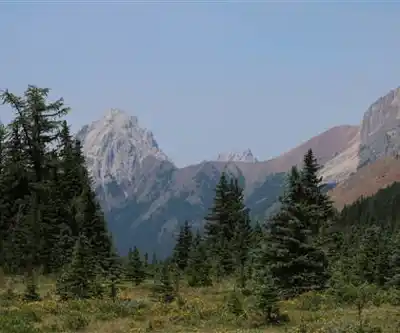
Photos: Thank you for visiting my page from Canada — CC BY 2.0 (Wikimedia Commons)
Trail description
The Pocaterra Ridge Trail is one of Kananaskis Country's most satisfying alpine hikes — the kind that earns its views through genuine effort and rewards you with a ridgeline experience that's hard to match in the Canadian Rockies. At 9.8 km with 600 m of elevation gain, it's a solid day out that sits firmly in the hard category, but the terrain variety and the quality of what you find at the top make every uphill step worthwhile.
How the Trail Unfolds
Pocaterra Ridge doesn't throw everything at you at once. The hike begins in dense montane forest, where the trail is well-established and the canopy keeps things cool. The footing here involves the usual mix of roots and rocky steps — nothing technical, but enough to keep you paying attention. It's a good warm-up section before things get more serious.
As you gain elevation, the forest starts to open up. The transition into subalpine meadows is gradual, but you'll notice it — the trees thin out, the sky gets bigger, and the views start to hint at what's coming. This middle section is where the trail begins to steepen in earnest. The elevation gain isn't evenly distributed: there are flatter stretches where you can recover, followed by more aggressive pitches that will test your legs and your lungs. Pacing yourself through these sections matters, especially if you're not used to sustained uphill hiking.
By the time you clear treeline and enter the alpine zone, you're walking through a completely different landscape than where you started. The rocky terrain becomes more exposed, the footing less predictable, and the sense of being genuinely up in the mountains kicks in fully.
The Ridge
The ridgeline is what people come here for, and it delivers. Once you top out, you get 360-degree views of the surrounding peaks — Mount Tyrwhitt and Grizzly Peak are the dominant features on clear days, their rocky faces shifting in character as the light changes throughout the day. You're not limited to a single viewpoint either; the ridge stretches out and offers multiple angles, so you can keep moving and find the perspective that works best for you.
Wind is almost always a factor up here. The same exposure that makes the views so expansive means there's nothing to block the breeze, and temperatures drop noticeably compared to the valley. That said, standing on the ridge and looking down into the valleys below — and across to neighboring peaks at eye level — is the kind of moment that makes you understand why people keep coming back to Kananaskis.
Wildlife Along the Way
The varied ecosystems on Pocaterra Ridge support a good range of wildlife. Marmots are a regular presence in the alpine zone — you'll often hear their sharp whistles before you spot them. Pikas are common in the talus fields near the ridge, darting between rocks and letting out their distinctive high-pitched calls. Golden eagles use the thermals rising from the valleys below, and watching one soar at roughly eye level while you're standing on the ridge is a genuine highlight. As with all wildlife in Kananaskis Country, give animals plenty of space and observe from a distance.
The subalpine meadows put on a wildflower show in mid-summer, with peak blooms typically running through July and into early August. The contrast between the delicate flowers and the surrounding rocky terrain makes for some of the most photogenic stretches of the hike.
What to Bring
Sturdy hiking boots with solid ankle support are the right call here. The terrain covers enough ground — roots, rocks, loose gravel, potentially muddy sections — that footwear matters. A layering system for clothing is equally important: you'll want to shed layers during the steep climbs and add them back once you hit the exposed ridge.
There are no reliable water sources along the trail, so carry everything you'll need for the full 9.8 km. The ridge is a natural place to linger — the views invite it — so pack enough food and water to account for extra time up top. Plan your hike around an early start if possible, since afternoon thunderstorms can develop quickly in summer and being on an exposed ridge during lightning activity is a situation you want to avoid entirely. Check the forecast before you head out and be ready for conditions to shift.
Seasons and Timing
The trail is typically hikeable from late June through early October, though snowpack and weather patterns can shift those windows in either direction. Early season hikers may encounter snow patches in shaded sections and on the ridge itself. Late season brings more variable weather but also fewer people on the trail, and the possibility of larch trees showing their golden fall color adds a different kind of reward to the experience. Mid-summer offers the most reliable conditions and the wildflower displays at their best, but also the highest trail traffic.
The Essential Hiking Checklist
Everything you need for your next hike. Bilingual, printable, 1 page.
Get your free hiking checklistRecommended gear for this trail
As an Amazon Associate I earn from qualifying purchases.


Ready to go?
Everything you need to know before you goStarting Point
The pocaterra ridge trail is located in the Peter Lougheed Provincial Park, Alberta. To get to the start of the trails, take Highway 40 to the Kananaskis Village turnoff. Follow the signs to the park. The trailhead is located at the end of the road.
When?
How much?
As an Amazon Associate I earn from qualifying purchases.
Affiliate links — LGPO may earn a commission at no extra cost to you.
- Hiking shoes Essential
- → Salomon Elixir Tour Mid WP · 203.38 $
- Layered clothing Essential
- Rain jacket Essential
- Trekking poles
- → Black Diamond Trail Ergo Cork · 69.99 $
- Headlamp
- → Petzl Actik Core 625 · 103.95 $
FAQ - Frequently asked questions
Everything you need to knowSimilar hikes nearby
Discover other trails you might enjoy
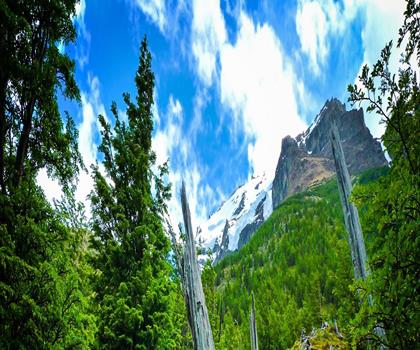
Fossil Mountain
Canadian Rockies

Snake Indian Mountain
Canadian Rockies
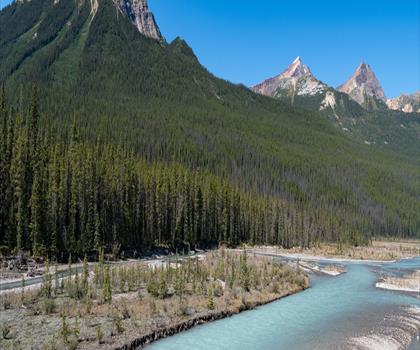
Mushroom Peak
Canadian Rockies
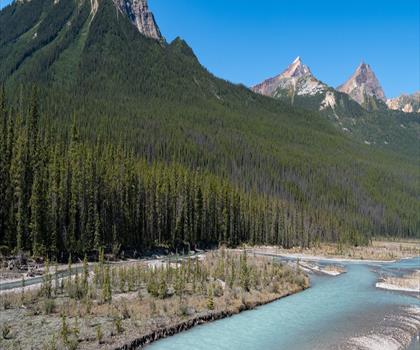
Mount Woolley
Canadian Rockies
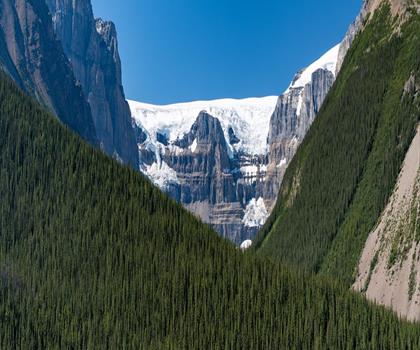
Stutfield Peak
Canadian Rockies
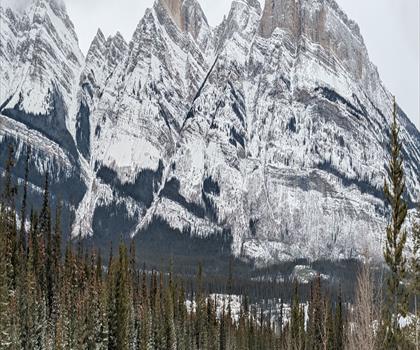
Mount Sarbach
Canadian Rockies
Hiking near Canmore
200 trails to explore ~60 km away
We work hard to provide the most up-to-date and error-free data possible. If something seems incorrect, let us know! Your contribution helps the whole community.
Hikers' opinions
Be the first to review!
No hiker has shared their experience yet. Share your impressions and help other hikers!