
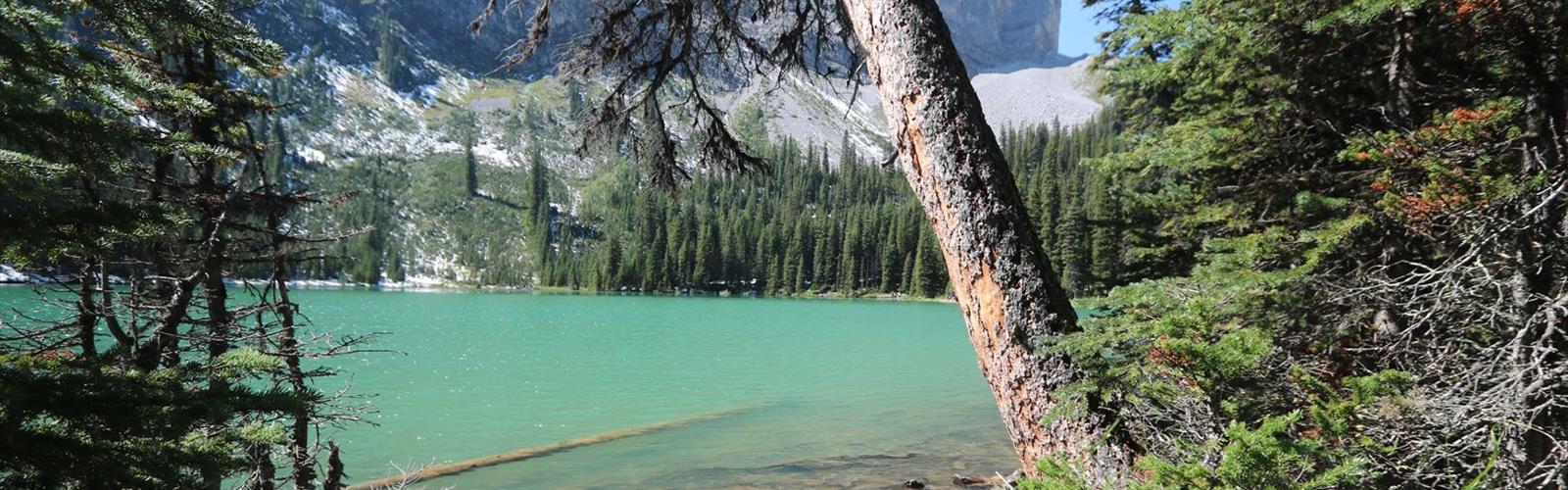

Ready to explore Ribbon Lake? Here's everything you need to know before you go!
Discover the trail
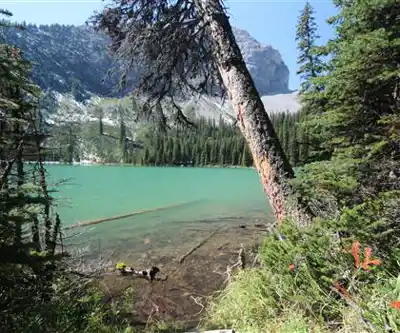
Photos: Thank you for visiting my page from Canada — CC BY 2.0 (Wikimedia Commons)
Trail description
Ribbon Lake sits tucked into the Canadian Rockies in Alberta, and it earns its name in the most literal way possible. The lake stretches out in a long, narrow band through the mountain landscape, its shape carved directly by the glacial forces that shaped this entire region over thousands of years. When massive glaciers pushed through this valley, they ground deeper into softer rock layers while leaving harder formations intact. Those tougher rock bars now act as natural dams on either end of the basin, holding the water in that distinctive elongated form you see when you finally crest the ridge and get your first view.
The water itself has that unmistakable turquoise colour that stops people in their tracks throughout the Rockies. Rock flour — finely ground sediment suspended in glacial meltwater — is responsible for that vivid blue-green tone. On calm days, the surrounding peaks reflect off the surface with almost unsettling clarity. It's the kind of scene that makes you stop hiking and just stand there for a minute.
The Trail
Getting to Ribbon Lake is a serious undertaking. The route covers 14 km with 1,400 metres of elevation gain, and most hikers should budget around 6 hours 30 minutes for the full trip. This is rated a hard hike, and the elevation gain alone tells you why — 1,400 metres is a significant climb that will test your legs and lungs regardless of your fitness level.
The trail works through several distinct zones as you gain elevation. Lower down, you're moving through dense coniferous forest — spruce, fir, and pine closing in on either side, the forest floor covered in moss and, depending on the season, scattered wildflowers. It's pleasant hiking, shaded and relatively sheltered from wind. As you climb higher, the trees thin out and the terrain opens up. Views start appearing between the gaps, and you get your first real sense of the scale of the surrounding peaks and valleys.
The upper sections involve rockier terrain, and depending on when you're out there, you may encounter seasonal snowfields even well into summer. The final push to the lake requires some attention to footing, but nothing that demands technical gear under normal summer conditions. When the lake finally comes into view, the payoff is immediate — that ribbon of turquoise water framed by steep mountain walls rising directly from the shoreline.
What Makes This One Stand Out
The Canadian Rockies are full of spectacular alpine lakes, so it takes something specific to make one memorable. Ribbon Lake's defining characteristic is its shape. Most alpine lakes sit in rounded cirque basins or broad valley floors. This one is different — the elongated form gives it a different visual rhythm as you move along the shoreline, with the perspective shifting constantly and the far end of the lake always drawing you forward. The steep walls that drop directly into the water on both sides add to the sense of being enclosed in something dramatic and specific.
The geological story written into the landscape around the lake is also worth paying attention to. The rock bars that contain the water are composed of more resistant limestone and quartzite, while the deeper basin was carved from softer shale and sandstone layers. You can read that contrast in the terrain as you hike — the harder formations standing proud while the softer material has been worn away over millennia.
Seasonal Considerations
The window for hiking to Ribbon Lake without specialized gear is roughly mid-July through September, though this varies year to year depending on snowpack. Spring runoff peaks in late May and early June, and while the waterfalls are impressive during this period, trails at this elevation are often snow-covered, muddy, or unstable. Early season attempts require solid route-finding skills and appropriate footwear at minimum.
Summer is the most reliable window. July and August bring the best trail conditions and the peak of alpine wildflower season, with colour appearing in the meadows and open slopes as you gain elevation. September is worth considering for those who want fewer people on the trail — temperatures drop and early snow is possible, but the alpine larch trees that appear on some of the surrounding slopes turn gold in late September, adding a different kind of visual reward to the trip.
Weather in the Canadian Rockies changes fast and without much warning. Afternoon thunderstorms are common in summer, and temperatures at elevation can drop sharply even on days that start warm and clear. Bring layers, rain gear, and enough food and water for a longer day than you're planning on.
Practical Notes
- Distance: 14 km
- Elevation gain: 1,400 m
- Estimated time: 6 hours 30 minutes
- Difficulty: Hard
- Start early to avoid afternoon weather and to give yourself buffer time on a long day
- Carry bear spray — this is active wildlife habitat throughout the Canadian Rockies
- Check current trail conditions before heading out, particularly for early and late season trips
- Verify current fishing regulations and licensing requirements if you plan to fish the lake
The 1,400 metres of climbing means this isn't a casual outing, but for hikers comfortable with sustained elevation gain and a full day on the trail, Ribbon Lake delivers the kind of destination that justifies every step of the approach.
The Essential Hiking Checklist
Everything you need for your next hike. Bilingual, printable, 1 page.
Get your free hiking checklistRecommended gear for this trail
As an Amazon Associate I earn from qualifying purchases.


Ready to go?
Everything you need to know before you goStarting Point
The ribbon lake trailhead is located in the Kananaskis Valley, approximately 60 km west of Calgary. From Calgary, take the Trans-Canada Highway (Hwy 1) west to the Kananaskis Village turnoff (Exit 118). Turn left onto the Kananaskis Lakes Trail and follow it for approximately 15 km to the ribbon lake parking lot.
When?
How much?
As an Amazon Associate I earn from qualifying purchases.
Affiliate links — LGPO may earn a commission at no extra cost to you.
- Hiking shoes Essential
- → Salomon Elixir Tour Mid WP · 203.38 $
- Layered clothing Essential
- Rain jacket Essential
- Trekking poles
- → Black Diamond Trail Ergo Cork · 69.99 $
- Headlamp
- → Petzl Actik Core 625 · 103.95 $
FAQ - Frequently asked questions
Everything you need to knowSimilar hikes nearby
Discover other trails you might enjoy
Fossil Mountain
Canadian Rockies

Snake Indian Mountain
Canadian Rockies
Mushroom Peak
Canadian Rockies
Mount Woolley
Canadian Rockies
Stutfield Peak
Canadian Rockies
Mount Sarbach
Canadian Rockies
Hiking near Canmore
200 trails to explore ~24 km away
We work hard to provide the most up-to-date and error-free data possible. If something seems incorrect, let us know! Your contribution helps the whole community.
Hikers' opinions
Be the first to review!
No hiker has shared their experience yet. Share your impressions and help other hikers!