
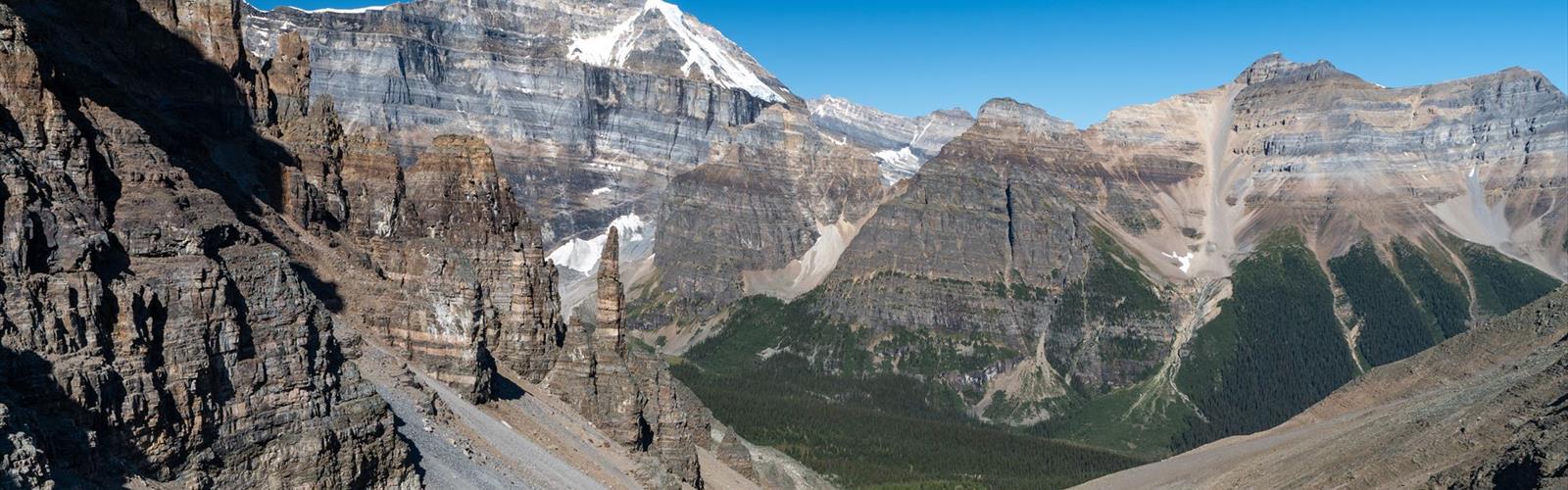

Ready to explore Sentinel Pass? Here's everything you need to know before you go!
Discover the trail
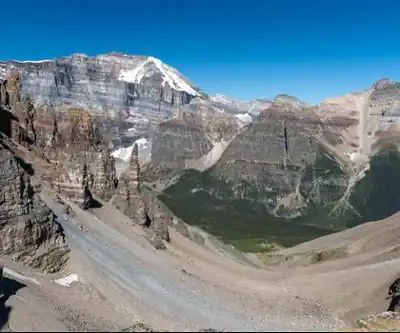
Photos: Christoph Strässler from Oberdorf BL, Schweiz — CC BY-SA 4.0 (Wikimedia Commons)
Available trails
| TrailTrails | Dist.Distance | GainElevation | TimeDuration | Difficulty | GPX |
|---|---|---|---|---|---|
|
|
2.81 km | — | 37min | GPX |
GPX track: © OpenStreetMap contributors — ODbL 1.0
Trail description
Seasonal Note: Due to avalanche hazard, this trail is not recommended between mid-October and mid-June. The hiking season runs from late June through early October.
Sentinel Pass stands as one of Banff National Park's most rewarding alpine adventures, delivering the kind of mountain scenery that defines the Canadian Rockies. This challenging hike takes you from the iconic turquoise waters of Moraine Lake through golden larch forests to a high mountain pass where the views stretch endlessly across some of Alberta's most dramatic peaks.
The round-trip distance is 11.6 kilometers with approximately 750-817 meters of elevation gain, typically requiring 4-6 hours to complete. The trail begins at the bustling Moraine Lake parking lot, but don't let the crowds deter you—most visitors stick to the lakeshore, leaving the upper reaches of this hike surprisingly peaceful. You'll start on the well-maintained Larch Valley Trail, which immediately begins its steady climb through dense subalpine forest. The path is wide and well-marked, making navigation straightforward even for those unfamiliar with the area.
The first portion of your hike winds through enchanting forests dominated by Engelmann spruce and subalpine fir, with the occasional glimpse of towering peaks through the canopy. As you gain elevation, the forest gradually transitions, and you'll begin to encounter the larch trees that give this valley its name. These deciduous conifers create one of the Rockies' most spectacular seasonal displays—their needles turn brilliant gold in late September and early October, transforming the entire valley into a glowing amphitheater.
The trail maintains a steady but manageable grade through this section, gaining elevation consistently without any particularly steep or technical sections. You'll cross several small streams and pass through areas where avalanche activity has created natural clearings, offering your first real views of the surrounding peaks. The well-engineered trail surface handles foot traffic well, with strategically placed rocks and drainage features that keep the path in good condition even during wet weather.
After reaching Larch Valley proper, the forest opens up into expansive alpine meadows where many hikers turn around, satisfied with the beautiful views of the Ten Peaks that surround the valley. However, continuing to Sentinel Pass itself rewards you with even more spectacular vistas and a true sense of accomplishment.
The final push to the pass involves a series of well-constructed switchbacks that zigzag up the steep headwall. This section is more demanding than the approach, but the engineering of the trail keeps the grade manageable. As you climb, the views behind you become increasingly dramatic, with Moraine Lake shrinking to a brilliant blue jewel far below and the Valley of the Five Lakes stretching into the distance.
At the pass itself, you'll find yourself standing in a narrow saddle between towering rock walls, creating a natural window that frames the peaks beyond. On clear days, you can see deep into Paradise Valley, with its own collection of pristine alpine lakes and glaciated peaks stretching toward the continental divide. The sense of accomplishment here is palpable—you've truly earned these views through your effort.
The round trip journey offers an exceptional variety of mountain environments compressed into a single day hike. You'll experience dense montane forest, open alpine meadows, and stark high-alpine terrain, each with its own character and wildlife. The contrast between the deep blue of Moraine Lake at the start and the expansive mountain vistas from the pass creates a sense of journey that few day hikes can match.
The Ten Peaks, which form the dramatic backdrop to Moraine Lake, reveal their true scale and character from the elevated perspective of Sentinel Pass. Peaks like Mount Temple, Mount Deltaform, and Mount Tuzo show their full alpine architecture, with hanging glaciers, steep rock faces, and knife-edge ridges clearly visible. The perspective shift from lake level to alpine pass fundamentally changes how you understand this iconic landscape.
Wildlife sightings add another dimension to the experience. The larch forests and alpine meadows support populations of pikas, marmots, and ground squirrels, while the area's bird life includes gray jays, Clark's nutcrackers, and occasionally golden eagles soaring on thermals above the peaks. During wildflower season in July and August, the meadows burst with Indian paintbrush, mountain avens, and alpine forget-me-nots.
The trail surface varies significantly as you progress through different elevation zones. The lower sections feature well-packed dirt with occasional root systems and rocky steps. As you enter the alpine zone, the trail becomes rockier with more exposed stone and occasional loose scree. Good traction becomes increasingly important, especially on the switchbacks leading to the pass where morning frost or afternoon moisture can create slippery conditions.
Stream crossings are generally straightforward, with most featuring either bridges or well-placed stepping stones. However, early season snowmelt can make these crossings more challenging, and hikers should be prepared for potentially wet feet during peak runoff periods.
Early season hiking in June and July offers the best wildflower displays and the most reliable weather, though snow patches may linger in shaded areas near the pass. August provides the most stable conditions with warm days and generally clear skies. September and early October bring the famous larch display, when the entire valley glows gold against the backdrop of snow-dusted peaks. This is the most popular time to visit, so expect more company on the trail and plan accordingly for parking.
The Moraine Lake parking lot fills extremely early during peak season, often by 6 AM on weekends and holidays. Starting your hike early not only ensures parking but also provides the best lighting for photography and the calmest weather conditions. Afternoon thunderstorms are common in the high country, making early starts both safer and more comfortable.
Proper preparation is essential for this alpine environment. Sturdy hiking boots with good ankle support are necessary for the rocky terrain near the pass. Weather conditions can change rapidly at elevation, so layered clothing including a warm jacket and rain protection should be standard equipment. Bring more water than you think you'll need—the dry mountain air and steady climbing can lead to dehydration faster than expected.
The trail requires no special permits beyond Banff National Park entry, but visitors should follow Leave No Trace principles strictly. Pack out all trash, stay on designated trails to protect fragile alpine vegetation, and maintain appropriate distances from wildlife. The pristine nature of this area depends on every visitor's commitment to responsible recreation.
The Essential Hiking Checklist
Everything you need for your next hike. Bilingual, printable, 1 page.
Get your free hiking checklistRecommended gear for this trail
As an Amazon Associate I earn from qualifying purchases.


Ready to go?
Everything you need to know before you goStarting Point
The sentinel pass is located in Banff National Park, Alberta. The easiest way to get there is to drive to the town of Lake Louise and then take the Lake Louise Gondola up to the pass.
When?
How much?
As an Amazon Associate I earn from qualifying purchases.
Affiliate links — LGPO may earn a commission at no extra cost to you.
- Hiking shoes Essential
- → Salomon Elixir Tour Mid WP · 203.38 $
- Layered clothing Essential
- Rain jacket Essential
- Trekking poles
- → Black Diamond Trail Ergo Cork · 69.99 $
- Headlamp
- → Petzl Actik Core 625 · 103.95 $
FAQ - Frequently asked questions
Everything you need to knowSimilar hikes nearby
Discover other trails you might enjoy
Fossil Mountain
Canadian Rockies

Snake Indian Mountain
Canadian Rockies
Mushroom Peak
Canadian Rockies
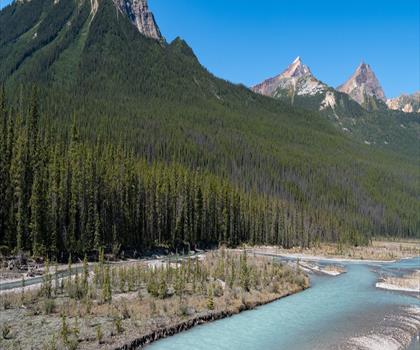
Mount Woolley
Canadian Rockies
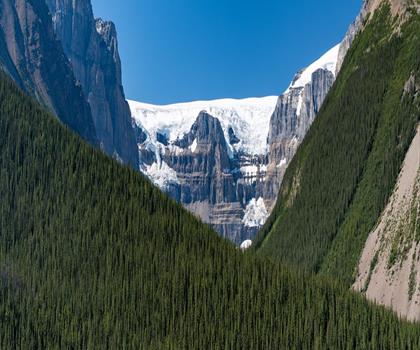
Stutfield Peak
Canadian Rockies
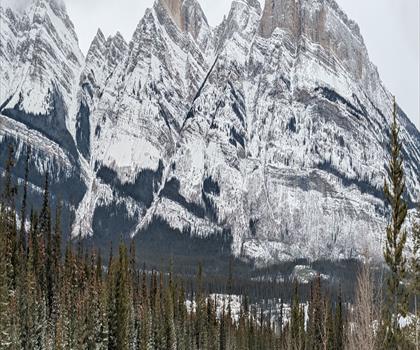
Mount Sarbach
Canadian Rockies
Hiking near Banff
187 trails to explore ~49 km away
We work hard to provide the most up-to-date and error-free data possible. If something seems incorrect, let us know! Your contribution helps the whole community.
Hikers' opinions
Be the first to review!
No hiker has shared their experience yet. Share your impressions and help other hikers!