

Ready to explore Tower Of Babel? Here's everything you need to know before you go!
Discover the trail
Trail description
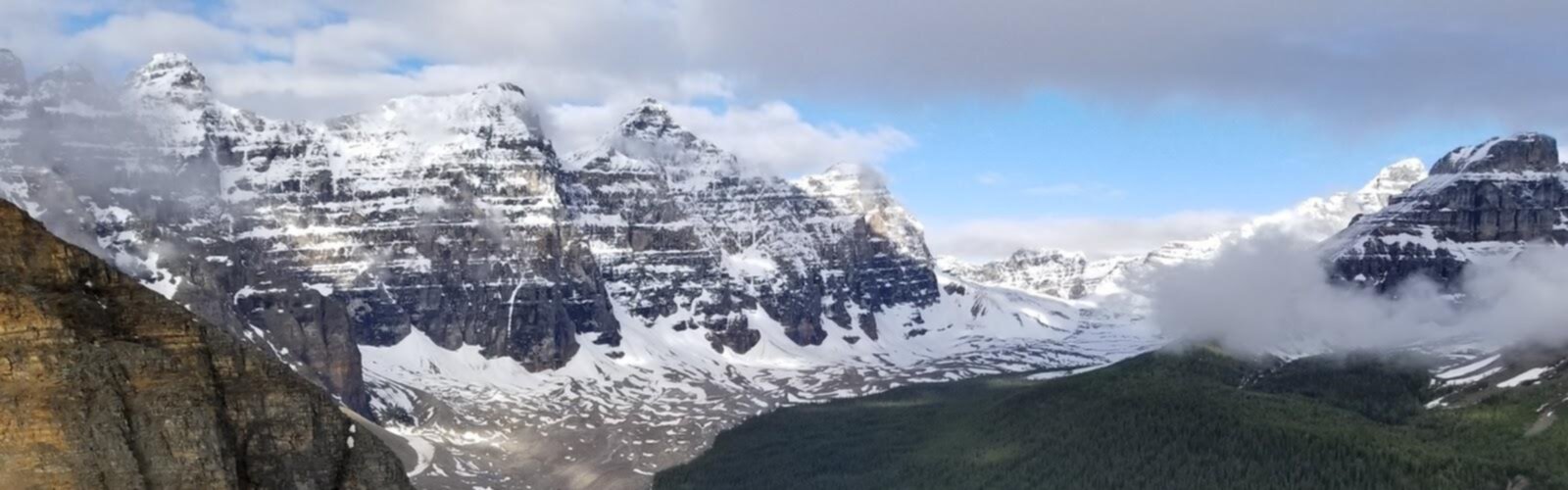
The Tower of Babel is one of the most striking scrambling objectives in Banff National Park, rising sharply above Moraine Lake in the Valley of the Ten Peaks. This prominent limestone tower is hard to miss from the lakeshore — it's the steep, angular formation that looks almost too dramatic to be real. For hikers ready to move beyond standard trails, it delivers a genuine alpine challenge and some of the best views in the Canadian Rockies.
At just 4.3 kilometers round trip, the distance sounds manageable. The 1,070 meters of elevation gain tells the real story. This is a steep, relentless climb that transitions from subalpine forest to open scree to exposed limestone scrambling. Plan for around 4.5 hours to complete the route safely, especially if you're newer to scrambling terrain.
Getting There
The route starts at the Moraine Lake parking lot, which is one of the most congested trailheads in Banff during summer. On weekends and holidays, the lot fills well before 6 AM. Parks Canada operates a shuttle service from the Lake Louise overflow parking area, and that's often the most practical option during peak season. Arriving before dawn is the other reliable strategy. Either way, plan your access before you plan your climb.
Moraine Lake Road typically opens in late May or early June and closes in October. The Tower of Babel route itself is generally accessible from late June through September, depending on lingering snow on the upper sections.
The Route
From the parking lot, the trail starts on a well-defined path through subalpine forest. This section is straightforward, but it doesn't last long. The terrain opens up quickly and the angle increases as you move toward the base of the tower. What begins as hiking transitions into scrambling — loose scree gives way to limestone slabs, and the route demands your full attention.
The upper sections require three-point contact with the rock in several places. You'll be using handholds, testing footholds, and making deliberate moves rather than just walking uphill. No technical climbing gear is needed, but this is not a casual summit. If you're uncomfortable with exposure or haven't scrambled before, this route will feel serious.
Rock quality changes as you gain elevation. The lower limestone is generally solid with good holds. Higher up, some sections are looser, and you'll want to test holds before committing your weight. This is standard scrambling practice, but it's worth knowing in advance.
What You'll See
About halfway up, Moraine Lake appears below you — that unmistakable turquoise color set against the surrounding peaks. The view keeps expanding as you climb. From the summit, you're looking down at the entire Valley of the Ten Peaks, with Mount Temple, Mount Fay, and the ridgeline stretching toward the Continental Divide all visible from a single vantage point. It's a perspective you simply can't get from the lakeshore or any of the standard viewpoints in the area.
The contrast between the glacial valley below and the exposed rock you're standing on is part of what makes this summit feel earned. You're not just looking at a postcard — you're above it.
Safety and Gear
Footwear matters more on this route than on most Banff hikes. Sturdy hiking boots with solid grip are the minimum. Approach shoes or light mountaineering boots perform better on the limestone slabs. Whatever you wear, make sure it's broken in and provides good ankle support.
A helmet is a smart addition. Rockfall is a real hazard on scrambling routes, and the steep terrain means a slip has consequences. Carry more water than you think you need — the sustained elevation gain and high-altitude sun increase dehydration faster than most people expect.
Wet rock changes everything on this route. Rain or morning dew on the limestone slabs makes the upper sections significantly more dangerous. Check the forecast before you go, and don't hesitate to turn around if conditions deteriorate. Early season attempts may also encounter snow and ice on the upper scrambling sections, which requires a different skill set entirely.
Before heading out, check current conditions with Parks Canada or a local outfitter in Lake Louise. Recent rockfall, trail closures, or unusual weather can all affect route safety in ways that aren't obvious from a distance.
Wildlife
Bears are active throughout the Moraine Lake area. Carry bear spray and keep it accessible — not buried in your pack. Make noise through the forested lower section of the route. Mountain goats occasionally appear on the rocky terrain near the tower. They're generally calm around people, but give them space and don't approach them.
Who This Route Is For
The Tower of Babel is best suited for hikers who are already comfortable on steep, uneven terrain and want to take a step into scrambling. If you've done routes like the Plain of Six Glaciers or the Big Beehive and found them easy, this is a natural progression. If you've never scrambled before, it's worth getting some experience on lower-angle rocky terrain first.
The combination of a relatively short distance, exceptional views, and genuine scrambling challenge makes the Tower of Babel one of the more rewarding objectives in the Banff area for those ready to take it on.
The Essential Hiking Checklist
Everything you need for your next hike. Bilingual, printable, 1 page.
Get your free hiking checklistRecommended gear for this trail
As an Amazon Associate I earn from qualifying purchases.


Ready to go?
Everything you need to know before you goStarting Point
The tower of babel is located in the David Thompson Provincial Park, Alberta. The park is about a 4-hour drive from Calgary, Alberta.
When?
How much?
As an Amazon Associate I earn from qualifying purchases.
Affiliate links — LGPO may earn a commission at no extra cost to you.
- Hiking shoes Essential
- → Salomon Elixir Tour Mid WP · 203.38 $
- Layered clothing Essential
- Rain jacket Essential
- Trekking poles
- → Black Diamond Trail Ergo Cork · 69.99 $
- Headlamp
- → Petzl Actik Core 625 · 103.95 $
FAQ - Frequently asked questions
Everything you need to knowSimilar hikes nearby
Discover other trails you might enjoy
Fossil Mountain
Canadian Rockies

Snake Indian Mountain
Canadian Rockies
Mushroom Peak
Canadian Rockies
Mount Woolley
Canadian Rockies
Stutfield Peak
Canadian Rockies
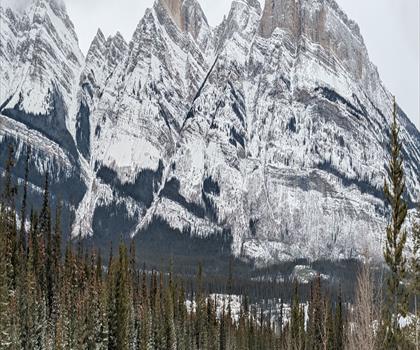
Mount Sarbach
Canadian Rockies
Hiking near Banff
187 trails to explore ~45 km away
We work hard to provide the most up-to-date and error-free data possible. If something seems incorrect, let us know! Your contribution helps the whole community.
Hikers' opinions
Be the first to review!
No hiker has shared their experience yet. Share your impressions and help other hikers!