

Ready to explore Twins Tower? Here's everything you need to know before you go!
Discover the trail
Trail description
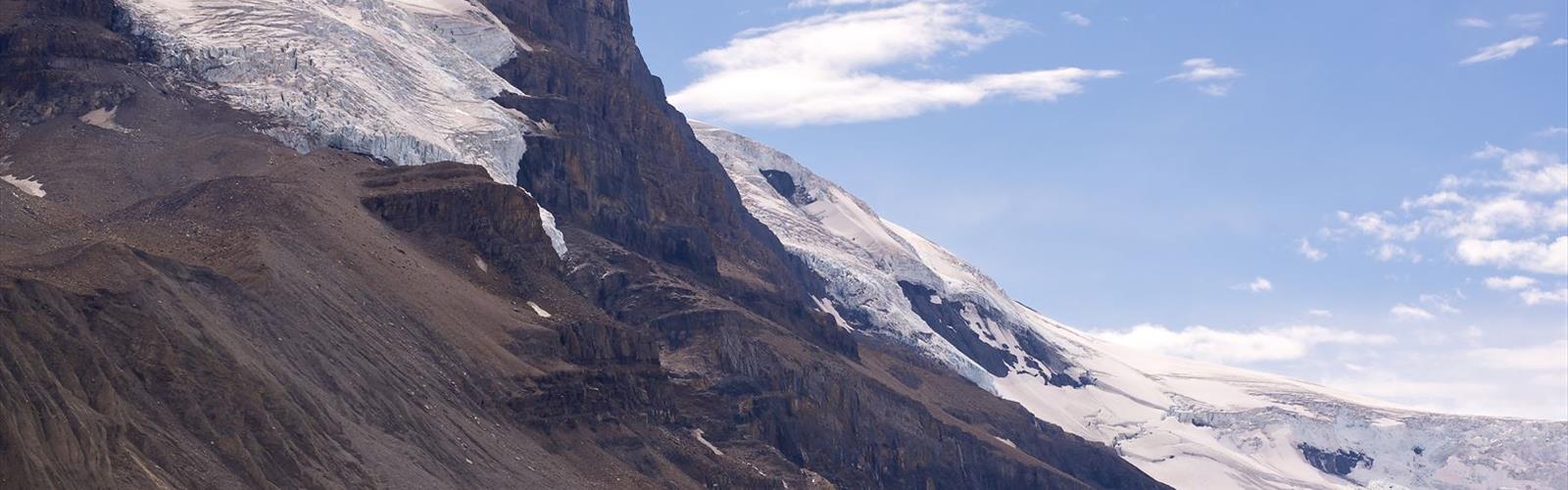
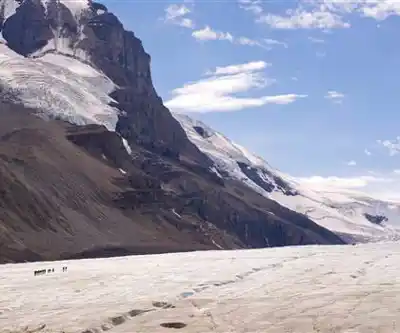
North Twin stands as the third highest peak in the Canadian Rockies at 3,684 meters, forming part of The Twins massif alongside the lower South Twin (3,566 m) at the northeast corner of the Columbia Icefield in Jasper National Park. This imposing mountain complex represents some of the most challenging and spectacular alpine terrain in Alberta, drawing serious mountaineers to its technical routes and dramatic glaciated faces.
The massif earned its name in 1898 when explorers J. Norman Collie and Hugh M. Stutfield first surveyed the area, though the decision to designate the peaks separately wasn't officially approved until February 28, 1980. The naming reflects the visual relationship between these two towering summits, which dominate the skyline when viewed from the Icefields Parkway and surrounding valleys.
The Twins Tower Route
The 16-kilometer approach to Twins Tower, a northern subpeak of North Twin at 3,627 meters, represents one of the more demanding day hikes accessible in this region. This challenging route gains 1,400 meters of elevation over approximately 8 hours and 30 minutes, requiring strong fitness and mountain experience. The subpeak, officially named in 1984, sits dramatically atop the famed north face of the massif, offering unparalleled views of the Columbia Icefield and surrounding peaks.
The trail begins through dense subalpine forest, where hikers navigate root-laden paths and occasional creek crossings. As elevation increases, the forest gradually thins, revealing glimpses of the massive north face ahead. The terrain transitions from forest floor to alpine meadows dotted with wildflowers during peak summer months, before entering the stark, rocky landscape characteristic of high-altitude approaches in the Canadian Rockies.
The upper sections demand careful route-finding across loose scree and potentially snow-covered terrain, even in summer months. Weather conditions can change rapidly at this elevation, with afternoon thunderstorms common during summer months. The final approach to Twins Tower involves scrambling over increasingly technical terrain, where basic mountaineering skills become essential.
Terrain and Conditions
The north face of The Twins massif creates a dramatic backdrop throughout the ascent, with its steep glaciated walls and hanging seracs visible from multiple vantage points along the route. This face represents some of the most technical climbing in the Canadian Rockies, though the Twins Tower approach follows a more moderate line up the mountain's flanks.
Hikers encounter diverse terrain types, from the soft forest floor of lower elevations to the sharp limestone and quartzite formations typical of this region's geology. Stream crossings become more frequent as the route approaches the glacial runoff zones, where snowmelt creates temporary but significant water obstacles. The alpine zone above treeline exposes hikers to the full force of mountain weather, with limited shelter available.
Snow conditions vary dramatically by season and recent weather patterns. Even during peak summer months, snow patches persist in shaded areas and couloirs, requiring microspikes or light traction devices. Early season attempts often encounter significant snow coverage above 2,500 meters, while late season conditions may include new snowfall that can arrive as early as late August.
Navigation and Safety
The route to Twins Tower requires strong navigation skills, particularly in the upper alpine sections where the trail becomes less defined. Weather can deteriorate quickly, creating whiteout conditions that make route-finding extremely challenging. GPS devices and detailed topographic maps are essential, as are the skills to use them effectively in poor visibility.
The technical difficulty increases significantly in the final approaches to Twins Tower, where loose rock and exposure require mountaineering experience. This is not a hiking trail in the traditional sense, but rather an alpine ascent that demands respect for mountain hazards including rockfall, sudden weather changes, and the physical demands of high-altitude exertion.
Emergency evacuation from the upper reaches of this route would be extremely difficult and time-consuming. Hikers should travel in groups, carry emergency communication devices, and inform others of their detailed plans including expected return times. The remote location and technical terrain make self-rescue skills particularly important.
Seasonal Considerations
The optimal window for attempting Twins Tower typically runs from mid-July through early September, though conditions vary significantly year to year. Early season attempts face extensive snow coverage and increased avalanche risk, while late season brings the possibility of sudden winter storms and rapidly deteriorating conditions.
Summer weather patterns in this region include frequent afternoon thunderstorms, making early morning starts essential for safety. The high elevation and exposure to weather systems moving across the Columbia Icefield create conditions that can shift from clear skies to dangerous storms within hours.
Daylight hours become a critical factor for planning, particularly for early and late season attempts. The technical nature of the upper route makes headlamp travel inadvisable, requiring careful timing to ensure descent during daylight hours. The 8.5-hour estimated duration assumes good conditions and strong fitness levels.
Access and Logistics
Access to the Twins Tower route requires navigation through Jasper National Park's backcountry regulations and permit systems. The trailhead location and specific access requirements should be confirmed with Parks Canada, as conditions and regulations can change based on wildlife activity, trail conditions, and seasonal closures.
The remote location means limited or no cell phone coverage throughout most of the route. Satellite communication devices provide the only reliable means of emergency communication. Resupply opportunities do not exist along the route, requiring hikers to carry all necessary food, water, and emergency supplies for the full duration of the attempt.
The Essential Hiking Checklist
Everything you need for your next hike. Bilingual, printable, 1 page.
Get your free hiking checklistRecommended gear for this trail
As an Amazon Associate I earn from qualifying purchases.


Ready to go?
Everything you need to know before you goStarting Point
The twins tower is located in the Kananaskis Country region of Alberta. To get to the start of the trails, take the Trans-Canada Highway to the exit for Kananaskis Country. Follow the signs to Nakiska Ski Resort, and then continue on the road until you reach the parking lot for the twins tower.
When?
How much?
As an Amazon Associate I earn from qualifying purchases.
Affiliate links — LGPO may earn a commission at no extra cost to you.
- Hiking shoes Essential
- → Salomon Elixir Tour Mid WP · 203.38 $
- Layered clothing Essential
- Rain jacket Essential
- Trekking poles
- → Black Diamond Trail Ergo Cork · 69.99 $
- Headlamp
- → Petzl Actik Core 625 · 103.95 $
FAQ - Frequently asked questions
Everything you need to knowSimilar hikes nearby
Discover other trails you might enjoy
Fossil Mountain
Canadian Rockies

Snake Indian Mountain
Canadian Rockies
Mushroom Peak
Canadian Rockies
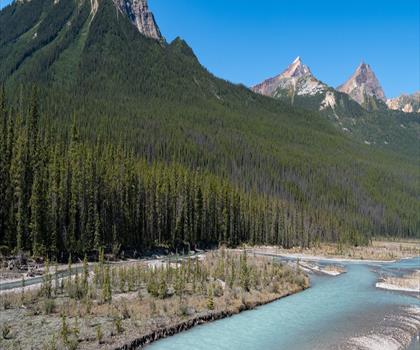
Mount Woolley
Canadian Rockies
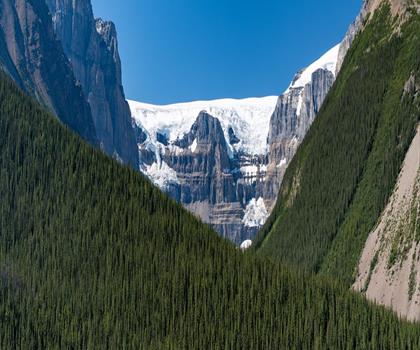
Stutfield Peak
Canadian Rockies
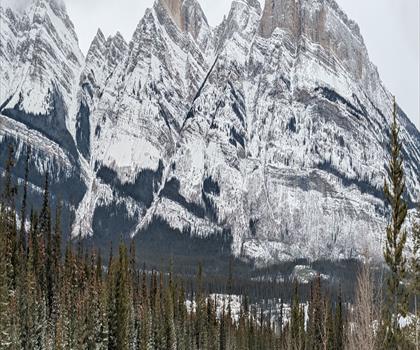
Mount Sarbach
Canadian Rockies
Hiking near Jasper
82 trails to explore ~83 km away
We work hard to provide the most up-to-date and error-free data possible. If something seems incorrect, let us know! Your contribution helps the whole community.
Hikers' opinions
Be the first to review!
No hiker has shared their experience yet. Share your impressions and help other hikers!