
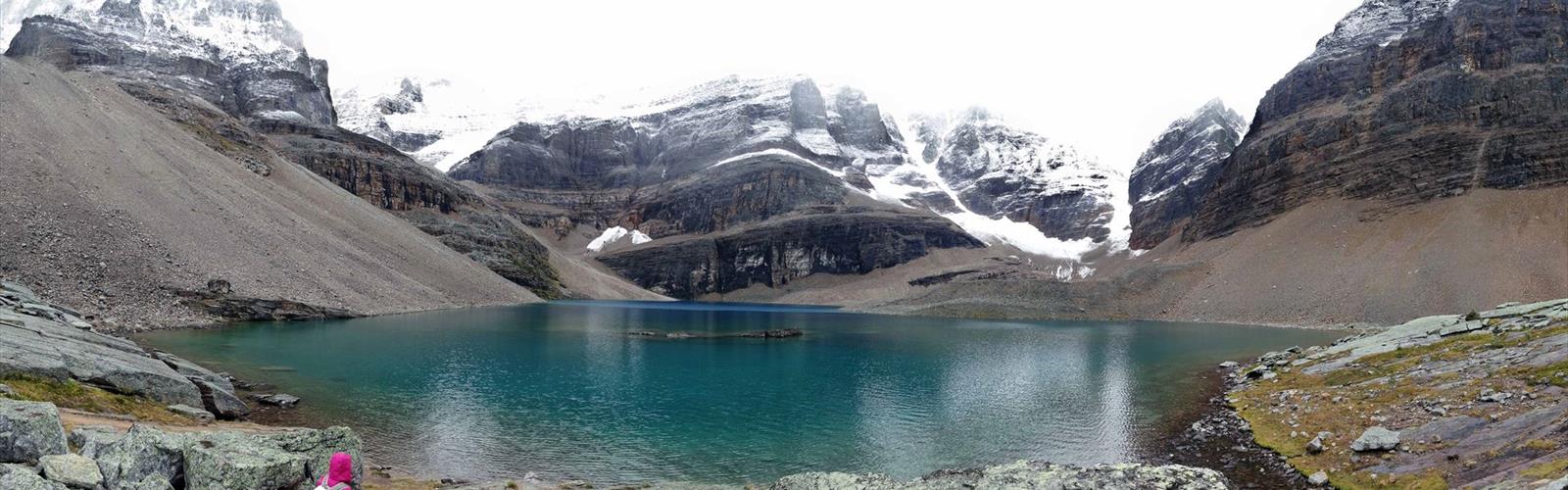

Ready to explore Wenkchemna Peak? Here's everything you need to know before you go!
Discover the trail
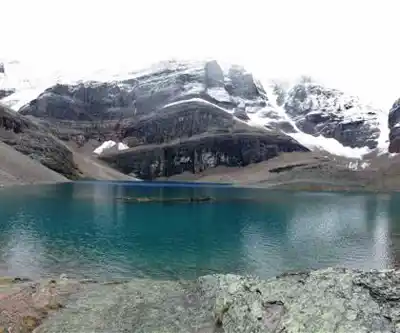
Trail description
Wenkchemna Peak towers at 3,170 meters (10,400 feet) in the heart of Banff National Park's Valley of the Ten Peaks, forming part of the iconic Ten Peaks range that creates the dramatic backdrop for Moraine Lake. This imposing mountain represents one of the most recognizable landmarks in the Canadian Rockies, though reaching its summit requires serious mountaineering skills and technical climbing experience.
The peak's name comes from the Stoney Nakoda word meaning "ten," reflecting its place in the legendary Ten Peaks formation. From the valley floor, Wenkchemna Peak presents a formidable wall of limestone and quartzite that catches the morning light in spectacular fashion, creating the postcard-perfect scenes that have made this area famous worldwide.
Trail Options and Terrain
While the summit of Wenkchemna Peak itself is reserved for experienced mountaineers with proper technical gear, the surrounding area offers excellent hiking opportunities that showcase the mountain's impressive presence. The terrain here transitions from dense subalpine forest near Moraine Lake through open alpine meadows to stark, rocky high-alpine environments.
The Larch Valley Trail serves as the most popular route for experiencing Wenkchemna Peak's grandeur up close. This trail winds through diverse ecosystems, starting in the cool shade of Engelmann spruce and subalpine fir before emerging into the open meadows of Larch Valley. During summer months, these meadows explode with color from Indian paintbrush, mountain avens, and alpine forget-me-nots. The trail's moderate grade makes it accessible to most hikers, though the elevation gain becomes noticeable as you climb higher into the alpine zone.
From Larch Valley, the turquoise waters of Moraine Lake spread out below, framed by the entire Ten Peaks range with Wenkchemna Peak dominating the southern end of the formation. The contrast between the lake's brilliant blue-green color and the gray limestone cliffs creates one of the most photographed vistas in the Canadian Rockies.
For hikers seeking a more challenging experience, the Sentinel Pass Trail extends beyond Larch Valley, climbing through a series of switchbacks carved into the steep mountainside. This route demands good fitness and sure footing, especially on the loose scree sections near the pass. The effort pays off with expansive views that encompass both Larch Valley and Paradise Valley, offering a unique perspective on Wenkchemna Peak's massive south face.
The terrain on the Sentinel Pass route becomes increasingly rugged as you gain elevation. Expect to navigate rocky sections, cross seasonal snowfields even in summer, and deal with rapidly changing weather conditions typical of high-alpine environments. The final approach to the pass involves scrambling over loose rock, requiring careful foot placement and attention to route-finding.
What Makes This Area Special
The Valley of the Ten Peaks represents one of the most concentrated displays of alpine grandeur in North America. Wenkchemna Peak anchors the southern end of this formation, its steep faces and sharp ridges exemplifying the dramatic geology that defines the Canadian Rockies. The mountain's layered limestone and quartzite structure tells the story of ancient sea floors thrust skyward, creating the vertical relief that makes this landscape so compelling.
Wildlife viewing opportunities abound in the area surrounding Wenkchemna Peak. Golden-mantled ground squirrels are common in the alpine meadows, while pikas call from the rockslides with their distinctive chirping. Mountain goats occasionally appear on the steep cliffs, and both black bears and grizzly bears frequent the valley, particularly during berry season in late summer.
The area's unique microclimate, influenced by the surrounding peaks' elevation and orientation, creates distinct growing conditions that support specialized alpine plant communities. In late September and early October, the larch trees that give Larch Valley its name transform into brilliant gold, creating a stunning contrast against Wenkchemna Peak's gray limestone walls.
Seasonal Considerations
The optimal window for exploring the Wenkchemna Peak area runs from late June through early October, though conditions vary significantly within this period. Early season hiking, from late June through July, often involves navigating snowfields and muddy trail conditions, particularly in Larch Valley and on the approach to Sentinel Pass. However, this period offers the advantage of fewer crowds and spectacular wildflower displays.
August and early September provide the most stable weather conditions, with warm days, cool nights, and generally clear skies that showcase Wenkchemna Peak's impressive profile. This is peak season for both hiking and photography, so expect company on the trails and full parking areas at Moraine Lake.
Late September and early October bring the famous larch display, when the alpine larches turn golden yellow before dropping their needles. This brief but spectacular show typically lasts only two to three weeks, making timing crucial for those hoping to witness this natural phenomenon against Wenkchemna Peak's dramatic backdrop.
Practical Considerations
All hiking in the Wenkchemna Peak area begins from the Moraine Lake parking area, which fills early during peak season. Arriving before 6 AM is often necessary to secure parking during July, August, and the larch season in late September. The parking area sits at 1,885 meters elevation, so visitors should be prepared for cooler temperatures even on warm valley days.
Weather conditions can change rapidly in this high-alpine environment. Even on clear mornings, afternoon thunderstorms are common, particularly during July and August. Lightning poses a serious risk on exposed ridges and passes, making early starts essential for longer hikes like the Sentinel Pass route.
Proper footwear is crucial for hiking in the Wenkchemna Peak area. While the Larch Valley Trail can be managed with sturdy hiking shoes, the Sentinel Pass route requires boots with good ankle support and aggressive tread for the loose scree sections. Trekking poles prove invaluable for stability on steep descents and when crossing seasonal snowfields.
When exploring this pristine wilderness, follow Leave No Trace principles by staying on designated trails, packing out all waste, and maintaining safe distances from wildlife. The fragile alpine environment around Wenkchemna Peak recovers slowly from damage, making careful travel essential for preserving this spectacular landscape for future visitors.
The Essential Hiking Checklist
Everything you need for your next hike. Bilingual, printable, 1 page.
Get your free hiking checklistRecommended gear for this trail
As an Amazon Associate I earn from qualifying purchases.


Ready to go?
Everything you need to know before you goStarting Point
The wenkchemna peak trails are located in the Banff National Park, Alberta. To get to the start of the trails, take the Trans-Canada Highway to the town of Banff. From there, take the Bow Valley Parkway (Hwy 1A) west to the Sunshine Village turnoff. Take the turnoff and drive up to the village. The trailhead is located at the end of the village.
When?
How much?
As an Amazon Associate I earn from qualifying purchases.
Affiliate links — LGPO may earn a commission at no extra cost to you.
- Hiking shoes Essential
- → Salomon Elixir Tour Mid WP · 203.38 $
- Layered clothing Essential
- Rain jacket Essential
- Trekking poles
- → Black Diamond Trail Ergo Cork · 69.99 $
- Headlamp
- → Petzl Actik Core 625 · 103.95 $
FAQ - Frequently asked questions
Everything you need to knowSimilar hikes nearby
Discover other trails you might enjoy
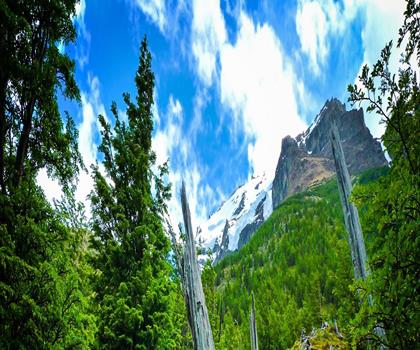
Fossil Mountain
Canadian Rockies

Snake Indian Mountain
Canadian Rockies
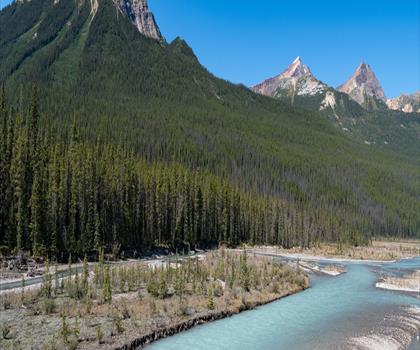
Mushroom Peak
Canadian Rockies
Mount Woolley
Canadian Rockies
Stutfield Peak
Canadian Rockies
Mount Sarbach
Canadian Rockies
Hiking near Banff
187 trails to explore ~52 km away
We work hard to provide the most up-to-date and error-free data possible. If something seems incorrect, let us know! Your contribution helps the whole community.
Hikers' opinions
Be the first to review!
No hiker has shared their experience yet. Share your impressions and help other hikers!