
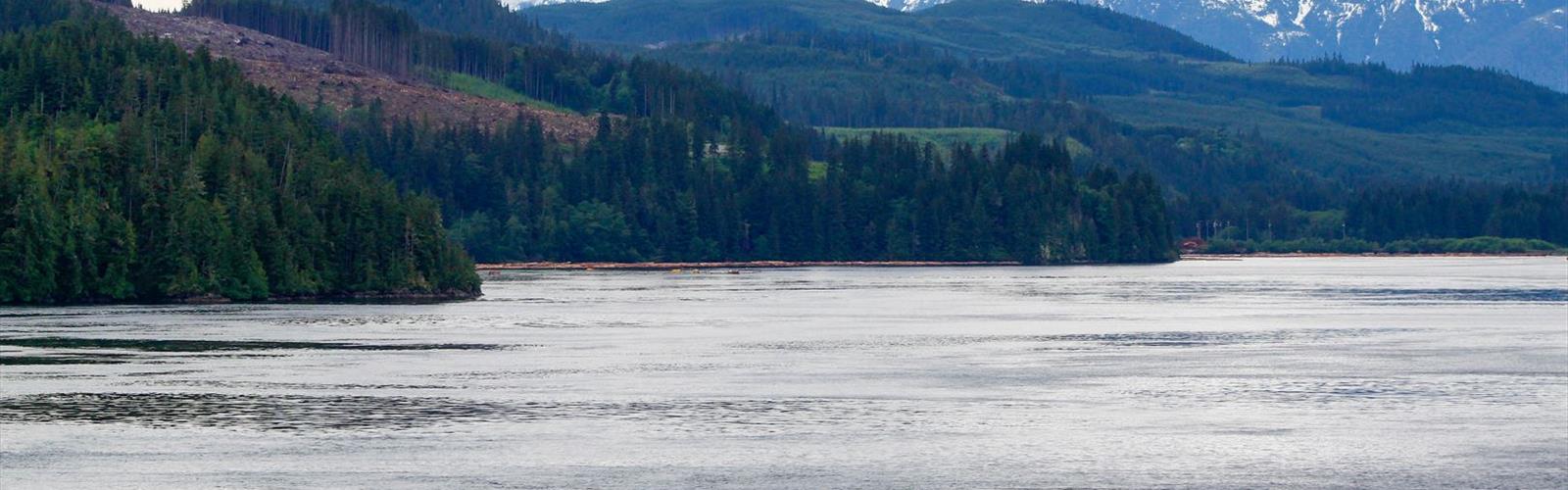

Ready to explore Johnstone Strait? Here's everything you need to know before you go!
Discover the trail
Trail description
Johnstone Strait is one of British Columbia's most dramatic marine corridors — a narrow, powerful channel that cuts between northeastern Vancouver Island and the mainland coast. For anyone drawn to wild coastlines, remote wilderness, and the kind of scenery that makes you stop paddling just to stare, this is a place that earns its reputation.
What Is Johnstone Strait?
Johnstone Strait is a long, narrow marine passage located in the Vancouver Coast Mountains region of British Columbia. It connects the waters of the Discovery Islands to the north end of Vancouver Island, running roughly northwest to southeast. The strait is flanked by steep, forested slopes that drop sharply into cold, tidal waters — the kind of terrain that reminds you how raw the BC coast can be.
This isn't a hiking trail in the traditional sense. Johnstone Strait is primarily known as a wilderness destination for sea kayakers, boaters, and wildlife watchers. The surrounding coastline and the waters themselves are the attraction. The area sits within and adjacent to several protected zones, making it one of the more ecologically significant stretches of the BC coast.
Wildlife: The Main Draw
Johnstone Strait is world-renowned for its orca population. Northern resident killer whales return to these waters reliably during summer months, drawn by the salmon runs that move through the strait. The rubbing beaches at Robson Bight — a protected ecological reserve within the area — are among the only known locations where orcas regularly come to rub against smooth pebble beaches. This behaviour is unique and has made Robson Bight one of the most closely studied and carefully protected orca habitats on the planet.
Beyond orcas, the strait supports a rich marine ecosystem. Humpback whales, Dall's porpoises, Pacific white-sided dolphins, Steller sea lions, and harbour seals are all regularly spotted here. Bald eagles are a constant presence along the shoreline, and the old-growth forests that back the coast provide habitat for a wide range of bird species.
The Landscape and Terrain
The coastline along Johnstone Strait is rugged and largely undeveloped. Steep mountains rise directly from the water on both sides, covered in dense coastal temperate rainforest — cedar, hemlock, and fir draped in moss and lichen. The tidal currents through the strait are strong and can be unpredictable, which is part of what makes this area both challenging and compelling for paddlers.
The shoreline alternates between rocky headlands, small gravel beaches, and sheltered coves. There are few roads accessing the strait directly, which means most visitors arrive by boat or kayak. This remoteness is a defining feature of the experience — you're genuinely out there, away from infrastructure and crowds.
Access and Getting There
The most common access points for Johnstone Strait are through communities on northeastern Vancouver Island, including Telegraph Cove and Port McNeill. Telegraph Cove in particular serves as a major launching point for kayak expeditions and whale-watching tours into the strait. Water taxis and guided tour operators also operate out of this area.
There is no road that runs along the strait itself, so independent access requires either a private vessel or a kayak put-in from one of the coastal communities. If you're planning a multi-day paddle, route planning around tides and currents is essential — the strait's tidal flows are significant and need to be factored into any itinerary.
Kayaking and Paddling
Sea kayaking is the primary way most people experience Johnstone Strait up close. Multi-day expeditions through the strait are a bucket-list trip for experienced paddlers in BC. The route offers a combination of challenging open-water crossings, sheltered passages, and remote camping on Crown land beaches.
This is not beginner territory. The tidal currents, exposed crossings, and distance from help make Johnstone Strait a destination for paddlers with solid open-water skills and proper gear. That said, guided trips are available for those who want to experience the area without going fully independent. Several outfitters based in Telegraph Cove and the surrounding area run multi-day kayak tours specifically focused on the strait and its wildlife.
Whale Watching
For those who aren't paddlers, whale-watching tours out of Telegraph Cove and Port McNeill offer a more accessible way to get onto the water and into orca territory. Summer is the peak season for whale activity, when the northern resident pods are most reliably present. These tours operate on motorized vessels and can cover significant ground across the strait.
It's worth noting that Robson Bight Ecological Reserve — the orca rubbing beach area — is closed to the public to protect the whales. Responsible operators maintain respectful distances and stay outside the reserve boundaries. If you're booking a tour, look for operators who follow established whale-watching guidelines.
Camping and Overnight Options
For kayakers doing multi-day trips, camping along the strait is typically done on Crown land beaches and in a handful of designated sites. There are no developed campgrounds with facilities directly on the strait — this is wilderness camping, and you need to be fully self-sufficient. Leave No Trace principles apply throughout, and given the ecological sensitivity of the area, minimizing impact is especially important here.
For those based on land, Telegraph Cove and Port McNeill have accommodation options ranging from campgrounds to lodges, and serve as comfortable bases for day trips onto the water.
Best Time to Visit
Summer — roughly June through September — is the primary season for visiting Johnstone Strait. This is when the orcas are most reliably present, when weather conditions are most favourable for paddling, and when tour operators are running full schedules. The shoulder seasons can still offer good experiences, but wildlife sightings become less predictable and weather more variable.
A Few Things to Know Before You Go
- Tidal currents are serious: Plan any paddling around tide tables and be prepared for strong flows through the strait.
- Robson Bight is protected: The ecological reserve is off-limits to the public — respect the closure.
- This is remote wilderness: Cell coverage is limited or nonexistent in much of the area. File a float plan and carry appropriate safety gear.
- Wildlife viewing etiquette matters: Keep respectful distances from all marine mammals, whether you're on a guided tour or paddling independently.
- Telegraph Cove is the main hub: Most services, outfitters, and tour operators are based here or in Port McNeill.
The Essential Hiking Checklist
Everything you need for your next hike. Bilingual, printable, 1 page.
Get your free hiking checklistRecommended gear for this trail
As an Amazon Associate I earn from qualifying purchases.


Ready to go?
Everything you need to know before you goWhen?
How much?
As an Amazon Associate I earn from qualifying purchases.
Affiliate links — LGPO may earn a commission at no extra cost to you.
- Hiking shoes Essential
- → Salomon Elixir Tour Mid WP · 203.38 $
- Layered clothing Essential
- Rain jacket Essential
- Trekking poles
- → Black Diamond Trail Ergo Cork · 69.99 $
- Headlamp
- → Petzl Actik Core 625 · 103.95 $
FAQ - Frequently asked questions
Everything you need to knowSimilar hikes nearby
Discover other trails you might enjoy
Sandbar Trail
Vancouver Island
Old Baldy Mountain Trail
Vancouver Island
Wittys Lagoon
Vancouver Island

Mount Cain
Vancouver Island
Kings Peak
Vancouver Island
Buttle Lake
Vancouver Island
Hiking near Nanaimo
212 trails to explore ~222 km away
We work hard to provide the most up-to-date and error-free data possible. If something seems incorrect, let us know! Your contribution helps the whole community.
Hikers' opinions
Be the first to review!
No hiker has shared their experience yet. Share your impressions and help other hikers!