
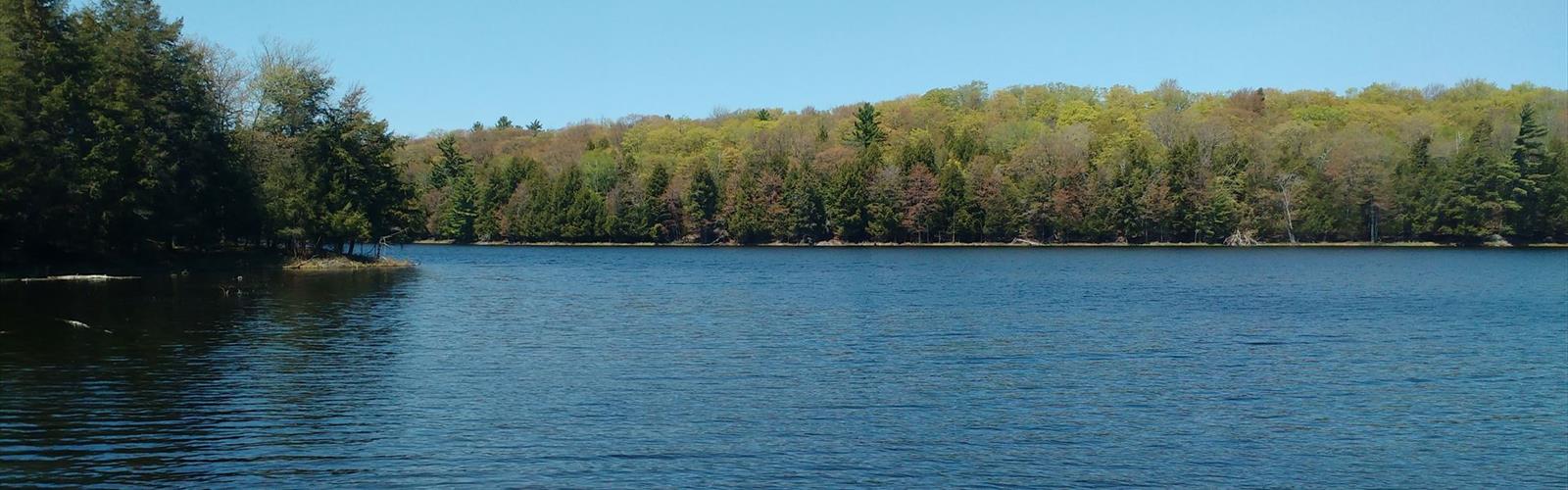

Ready to explore The Massasauga? Here's everything you need to know before you go!
Discover the trail
Trail description
The Landscape
The Massasauga sits along the eastern shore of Georgian Bay, and the terrain here is classic Shield country: exposed pink granite, wind-sculpted pines, shallow boggy depressions, and a shoreline that breaks apart into hundreds of rocky inlets and islands. The landscape is raw and honest. There's no gentle rolling here — you're scrambling over rock faces, threading through dense boreal forest, and picking your way along shorelines where the water is impossibly clear.
The area takes its name from the Massasauga rattlesnake, an endangered species that shelters in this area along with other reptiles and amphibians. This is a protected wilderness ecosystem. The rattlesnake shares the landscape with a wide range of other wildlife, and the wetlands and granite outcrops create a patchwork of habitats that support everything from nesting loons to snapping turtles.
Getting Around
Access to The Massasauga is part of what makes it special — and part of what makes it demanding. Much of the interior is only reachable by water, which means canoe or kayak is the primary way people explore the backcountry. However, there are land-based access points that allow hikers to get into the park without a boat, and day hiking is absolutely possible from these entry points.
The trail network winds through a mix of terrain types. You'll move from open granite slabs where you navigate by cairns, into shaded forest corridors, and back out to exposed ridgelines with sweeping views over the bay and surrounding wetlands. The footing is uneven throughout — this isn't a groomed path, and that's the point. Hikers should be comfortable with route-finding and prepared for surfaces that shift quickly from solid rock to soft, rooty ground.
What to Expect on the Trail
Hiking in The Massasauga rewards patience and attention. The views don't always announce themselves — sometimes you push through a dense stand of jack pine and suddenly you're standing on a granite shelf above the bay with nothing between you and the horizon. Those moments are what people come back for.
The wetland areas are worth slowing down for. Pitcher plants, sundews, and other carnivorous plants grow in the boggy sections, and the transition zones between open rock and forest are rich with detail. Birding is strong throughout the area, particularly during migration seasons.
Because the terrain is genuinely rugged, the experience can feel more committing than the distance alone might suggest. Rocky scrambles, wet crossings, and the absence of continuous marked trail in some sections mean you should budget more time than you might for a comparable distance on a groomed trail. Solid footwear with ankle support is a practical necessity, not just a recommendation.
Practical Information
- Access: The Massasauga has land-based access points for day hikers, but much of the park is water-access only. Check current access routes before heading out.
- Footwear: Waterproof hiking boots with ankle support are strongly recommended. The terrain shifts between wet, rooty ground and dry exposed rock frequently.
- Navigation: Sections of trail are marked by cairns on open rock. Carry a map and know how to use it — cell service is unreliable in the interior.
- Wildlife awareness: The endangered Massasauga rattlesnake shelters in this park. Stay on trail, watch where you step and place your hands, and give any snake you encounter plenty of space.
- Water: Carry enough water for your full outing. Georgian Bay water is visually stunning but requires treatment before drinking.
- Leave No Trace: This is a protected wilderness area. Pack out everything you bring in, and stay on established routes where they exist to protect the fragile lichen and vegetation on the granite.
What Sets The Massasauga Apart
In a province with no shortage of good hiking, The Massasauga occupies its own category. The combination of Canadian Shield geology, Georgian Bay shoreline, and genuine ecological sensitivity creates an experience that's harder to find than people expect. The landscape isn't dramatic in the way of mountain terrain — it's quieter than that, and more intricate. The reward here is in the details: the texture of lichen on warm granite, the sound of a loon carrying across still water, the way the light hits the bay in the late afternoon.
It's also a place that asks something of you. The lack of amenities, the variable trail marking, and the presence of protected wildlife mean you need to show up prepared and paying attention. Hikers who do will find one of the most authentic wilderness experiences available in Southwest Ontario.
Before You Go
Check with Ontario Parks for current conditions, permit requirements, and any seasonal closures before your visit. Entry fees and reservation requirements can apply, and it's worth confirming access point availability ahead of time, especially during peak summer months when the park sees higher use from both land and water visitors.
The Essential Hiking Checklist
Everything you need for your next hike. Bilingual, printable, 1 page.
Get your free hiking checklistRecommended gear for this trail
As an Amazon Associate I earn from qualifying purchases.


Ready to go?
Everything you need to know before you goWhen?
How much?
As an Amazon Associate I earn from qualifying purchases.
Affiliate links — LGPO may earn a commission at no extra cost to you.
- Hiking shoes Essential
- → Salomon Elixir Tour Mid WP · 203.38 $
- Layered clothing Essential
- Rain jacket Essential
- Trekking poles
- → Black Diamond Trail Ergo Cork · 69.99 $
- Headlamp
- → Petzl Actik Core 625 · 103.95 $
FAQ - Frequently asked questions
Everything you need to knowSimilar hikes nearby
Discover other trails you might enjoy
Opeongo Lake
Algonquin Park, Almaguin Highlands, Muskoka and Parry Sound
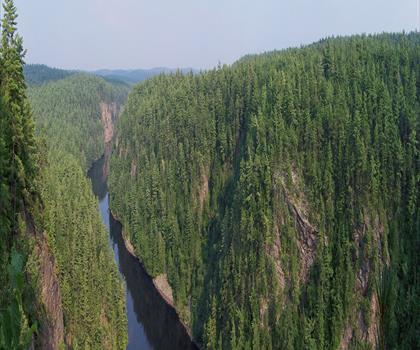
Barron Canyon
Algonquin Park, Almaguin Highlands, Muskoka and Parry Sound
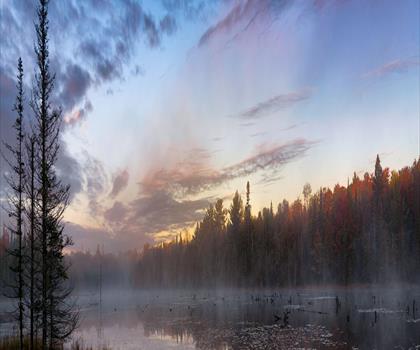
Doe Lake
Algonquin Park, Almaguin Highlands, Muskoka and Parry Sound
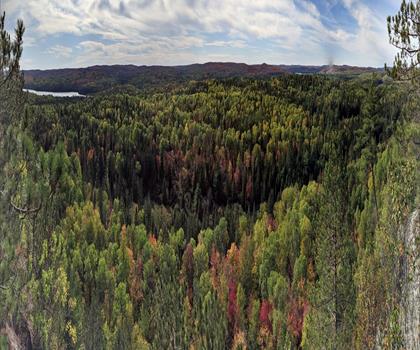
Centennial Ridges Trail
Algonquin Park, Almaguin Highlands, Muskoka and Parry Sound
Hardy Lake
Algonquin Park, Almaguin Highlands, Muskoka and Parry Sound
Whitestone Lake
Algonquin Park, Almaguin Highlands, Muskoka and Parry Sound
Hiking near Barrie
146 trails to explore ~90 km away
We work hard to provide the most up-to-date and error-free data possible. If something seems incorrect, let us know! Your contribution helps the whole community.
Hikers' opinions
Be the first to review!
No hiker has shared their experience yet. Share your impressions and help other hikers!