
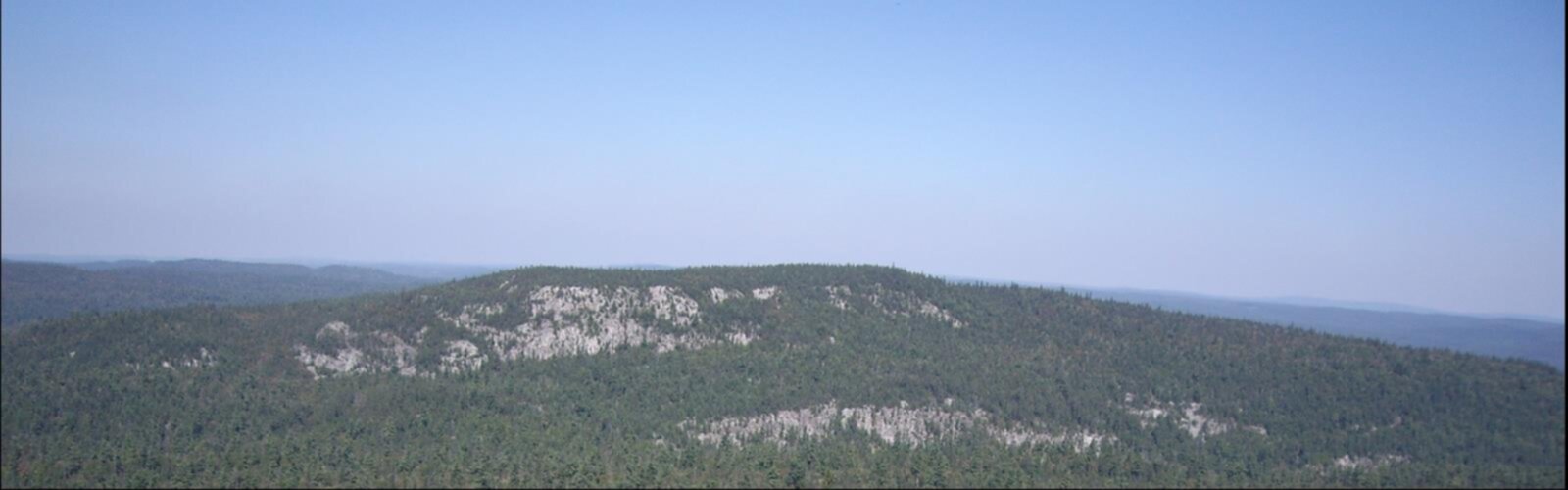

Ready to explore Ishpatina Ridge, Ontario? Here's everything you need to know before you go!
Discover the trail
Oh no! We don't have any photos 😢
This trail hasn't been captured yet. Be the first to share your adventure!Available trails
| TrailTrails | Dist.Distance | GainElevation | TimeDuration | Difficulty | GPX |
|---|---|---|---|---|---|
|
|
6.62 km | — | 1h30 | GPX |
GPX track: © OpenStreetMap contributors — ODbL 1.0
Trail description
Ishpatina Ridge stands as Ontario's highest point at 693 meters (2,274 feet), offering one of the province's most rewarding wilderness hiking experiences. Located within Lady Evelyn-Smoothwater Provincial Park in northeastern Ontario, this remote peak delivers the kind of backcountry adventure that serious hikers dream about—complete solitude, pristine wilderness, and panoramic views that stretch across the Canadian Shield.
What sets Ishpatina Ridge apart from other Ontario hiking destinations isn't just its elevation record, but its genuine remoteness. This isn't a trail you'll stumble upon by accident or tackle on a whim. The ridge sits deep within protected wilderness, accessible only by water crossing and requiring real commitment to reach. Despite being classified as an easy hike in terms of technical difficulty, the 6-kilometer route demands respect for its wilderness setting and the logistics required to get there.
Getting There and Trail Access
The adventure begins before you even start hiking. Reaching the trailhead requires crossing Smoothwater Lake by canoe or boat, immediately setting this apart from typical day hikes. This water crossing isn't just a novelty—it's an integral part of the wilderness experience and adds a layer of planning complexity that keeps casual visitors away.
Once you've made the crossing and located the trailhead, you'll find yourself at the start of a route through some of Ontario's most untouched terrain. While the trail is considered easy from a technical standpoint, it still demands navigation skills and wilderness experience, as this isn't a maintained path with regular blazes and signage like you'd find in more developed parks.
The Hiking Experience
The 6-kilometer route to Ishpatina Ridge's summit typically takes around 2.5 hours to complete, but the experience feels much richer than those numbers suggest. You'll traverse dense boreal forest where towering pines create a cathedral-like canopy overhead. The terrain varies as you gain the 693 meters of elevation—expect to cross sparkling streams that cut through the landscape, navigate sections of rocky terrain that require careful foot placement, and push through areas where the trail becomes less defined.
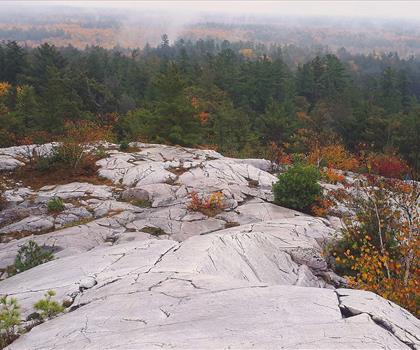
The forest composition changes as you climb, with the dense mixed woods gradually giving way to more exposed areas near the summit. Rocky outcrops become more frequent, offering glimpses of the views to come while providing natural rest stops to catch your breath and take in your surroundings. The relatively easy grade makes this accessible to hikers with moderate fitness levels, though the wilderness setting means you need to be comfortable with self-reliance.
What makes this hike particularly rewarding is the sense of genuine wilderness immersion. Unlike many popular hiking destinations, you won't encounter crowds or hear traffic noise. The sounds are purely natural—wind through the pines, bird calls echoing across the forest, and the crunch of your boots on the forest floor. This solitude is part of what makes reaching Ontario's highest point feel like such a personal achievement.
Summit Views and Rewards
Reaching Ontario's highest point delivers breathtaking panoramic views that justify every challenging step of the journey to get there. From the summit, you'll look out over an endless expanse of Canadian Shield wilderness—rolling forested hills, pristine lakes, and untouched landscape stretching to the horizon. On clear days, the views seem to go on forever, offering a perspective on the true scale of Ontario's northern wilderness that's impossible to grasp from ground level.
The summit itself provides a sense of accomplishment that goes beyond typical hiking achievements. Standing at the province's highest point, surrounded by wilderness in every direction, creates a connection to the landscape that's hard to replicate elsewhere in Ontario. The rocky summit area provides plenty of space to rest, take photos, and soak in the achievement before beginning your descent.
Wildlife and Natural Environment
Lady Evelyn-Smoothwater Provincial Park supports diverse ecosystems that make wildlife encounters a highlight of any visit to Ishpatina Ridge. Moose are among the most impressive residents—these majestic animals thrive in the park's wetland and forest habitats, and spotting one during your hike creates an unforgettable wilderness moment. Their tracks are commonly seen along the trail, especially in muddy sections near water sources.
The park's waterways support healthy populations of otters, whose playful behavior provides entertainment if you're lucky enough to observe them during your lake crossing or near streams along the trail. Birdwatchers will find plenty to appreciate, with numerous species calling the area home throughout different seasons. The deep forest provides habitat for everything from tiny songbirds to larger species like ravens and hawks.
The vegetation reflects the region's boreal character, with towering pines dominating the canopy and vibrant wildflowers adding seasonal color to the forest floor. The plant communities change with elevation and moisture levels, creating varied habitats that support the area's wildlife diversity. Near the summit, the forest opens up to reveal hardy species adapted to the more exposed conditions at Ontario's highest elevation.
Planning and Preparation
Ishpatina Ridge's remote location within Lady Evelyn-Smoothwater Provincial Park demands thorough preparation and self-sufficiency, even for what's technically an easy hike. Pack adequate food and water for your entire trip, as there are no facilities or resupply opportunities once you're on the trail. Navigation tools are essential—bring a map, compass, and GPS device, and know how to use them confidently.
Weather conditions in this part of northeastern Ontario can change rapidly and dramatically. Dressing in layers allows you to adapt to temperature swings, while rain gear protects against sudden storms that are common in the region. The elevation gain means conditions at the summit can differ significantly from those at the trailhead, especially regarding wind and temperature.
The water crossing adds another layer of complexity that requires careful planning. You'll need to arrange boat transportation across Smoothwater Lake, which means coordinating with outfitters or bringing your own watercraft. This logistical requirement, combined with the wilderness setting, means this adventure is best suited for experienced hikers comfortable with backcountry travel and navigation.
Given the remote location and the commitment required just to reach the trailhead, most visitors plan this as part of a longer wilderness trip rather than a simple day hike. The seasonal timing of your visit will significantly impact your experience, with different times of year offering distinct advantages and challenges in terms of weather, water conditions for the lake crossing, and trail conditions on the ridge itself.
The Essential Hiking Checklist
Everything you need for your next hike. Bilingual, printable, 1 page.
Get your free hiking checklistRecommended gear for this trail
As an Amazon Associate I earn from qualifying purchases.


Ready to go?
Everything you need to know before you goStarting Point
To access the hiking trails, you can start from several trailheads. One common starting point is the Montreal River Access Point, which can be reached by driving north from Capreol on Highway 805 until it turns into a gravel road. Continue following this road to the river access area. Another option is to begin at the Gervais Road Trailhead, accessible via Sultan Industrial Road off Highway 144. Both routes require navigating through remote and rugged terrain, so ensure your vehicle is suitable for such conditions.
When?
How much?
As an Amazon Associate I earn from qualifying purchases.
Affiliate links — LGPO may earn a commission at no extra cost to you.
- Hiking shoes Essential
- → Salomon Elixir Tour Mid WP · 203.38 $
- Layered clothing Essential
- Rain jacket Essential
- Trekking poles
- → Black Diamond Trail Ergo Cork · 69.99 $
- Headlamp
- → Petzl Actik Core 625 · 103.95 $
FAQ - Frequently asked questions
Everything you need to knowSimilar hikes nearby
Discover other trails you might enjoy

Wolf Lake Mountain, Ontario
Northeastern Ontario
Daisy Lake
Northeastern Ontario
Mount Ararat
Northeastern Ontario
Ghost Range
Northeastern Ontario
The Crack Killarney
Northeastern Ontario
Halfway Lake Provincial Park
Northeastern Ontario
Hiking near Barrie
146 trails to explore ~336 km away
We work hard to provide the most up-to-date and error-free data possible. If something seems incorrect, let us know! Your contribution helps the whole community.
Hikers' opinions
Be the first to review!
No hiker has shared their experience yet. Share your impressions and help other hikers!