
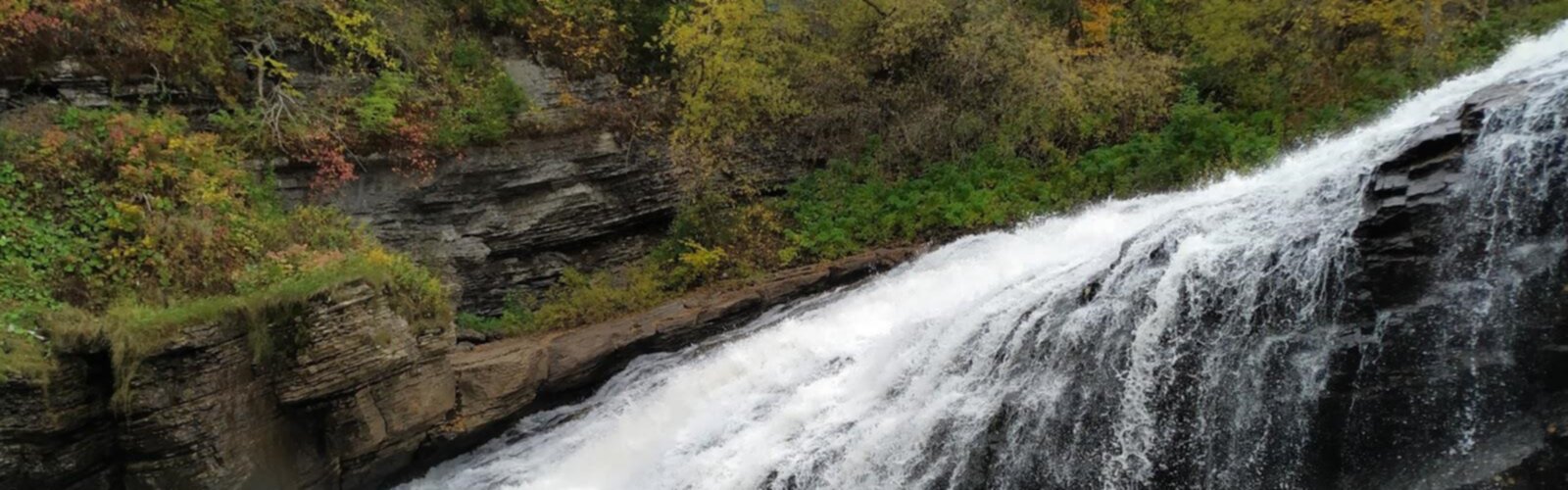

Ready to explore Parc De La Falaise Et De La Chute Kabir Kouba? Here's everything you need to know before you go!
Discover the trail
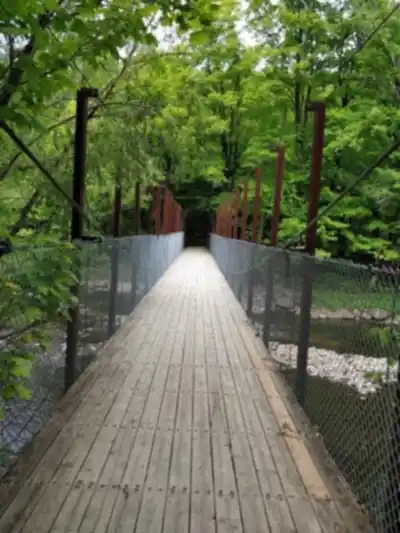
Trail description
Parc de la Falaise et de la Chute Kabir Kouba is a compact but genuinely impressive outdoor spot in the Quebec City region. It's the kind of place that punches well above its weight: you're not committing to a long drive or a full-day outing, but you still get dramatic scenery that feels nothing like a casual stroll through a city park. If you're based in Quebec City or passing through, it's an easy call for a morning or afternoon out.
What makes this park worth visiting
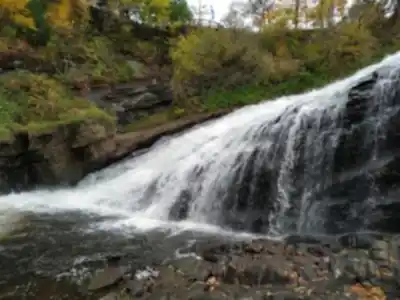
The centerpiece is the Kabir Kouba waterfall, a 28-meter cascade set against rugged cliffs and dense forest. It's the kind of waterfall that earns its reputation not just from the drop itself, but from the whole setting around it — the exposed rock faces, the tight gorge-like feel, and the way the sound of the water builds as you get closer on the trail. The falls are tied to the region's geological history, and the landscape around them reflects that: this isn't a gentle, pastoral scene. It's rocky, layered, and visually interesting in a way that holds your attention.
Beyond the waterfall, the park moves between lush forest sections and more open, cliff-influenced terrain with panoramic views. Those transitions are part of what makes the walk feel varied despite the short distance. One moment you're under a canopy with filtered light and quiet underfoot; the next, you're at an exposed lookout with a wide view and a noticeable drop below. That contrast is what gives the park its character.
Trail details and terrain
The main route at Parc de la Falaise et de la Chute Kabir Kouba covers 1.5 km with 28 meters of elevation change, and most people complete it in around 45 minutes. It's rated easy, and that's accurate for the overall experience — the trail is well-maintained and the route is clear, so you're not dealing with route-finding challenges or rough backcountry conditions.
That said, "easy" doesn't mean completely flat or featureless. Near the cliffs and the waterfall corridor, the ground gets more uneven, and there are spots where you'll want to watch your footing, especially if the rock is wet. Comfortable walking shoes with decent grip are a smarter choice than sandals or casual sneakers. The trail works well for a wide range of visitors — people who hike regularly will find it a satisfying quick outing, and those who prefer a more relaxed pace can move slowly, stop often, and still cover the full route without feeling rushed.
Interpretive panels and what you'll learn along the way
One of the practical strengths of this park is the presence of interpretive panels placed along the trail. These cover the area's flora, fauna, and geological features, and they add real context to what you're seeing. The geological story is particularly relevant here — the cliffs and the waterfall didn't just appear, and the panels help connect the visual landscape to the processes behind it.
If you're visiting with kids, the panels are a natural way to keep them engaged. You can turn the walk into a loose scavenger hunt based on what the signs describe — specific plants, rock types, or wildlife to look for. For adults, they're simply a good reason to slow down and look more carefully at what's around you rather than moving straight from trailhead to waterfall and back.
Wildlife and birdwatching
The park is recognized as a diverse ecosystem, and birdwatching is specifically noted as an activity here. The combination of forested sections and cliff habitat creates conditions that can attract a variety of species. If you're hoping to spot birds or other wildlife, the usual approach applies: move at a slower pace, keep noise down, and pay attention to the edges of the trail and the tree canopy rather than just the path ahead. The quieter forest stretches, away from the waterfall, tend to be where you'll hear the most activity.
Photography opportunities
This is a genuinely good park to bring a camera. The waterfall offers the obvious shot, but the real variety comes from the different environments packed into a short distance — forest light filtering through the canopy, rock textures on the cliff faces, and wider compositions from the panoramic viewpoints. Because the trail is compact and well-maintained, it's easy to stop frequently without disrupting your pace or anyone else's. You don't need to rush past anything to make it to the next landmark.
Who this park suits best
Parc de la Falaise et de la Chute Kabir Kouba works well for a broad range of visitors. It's a strong fit for families with kids who need something engaging but not exhausting, for solo visitors who want a quiet nature break close to the city, and for mixed groups where not everyone hikes at the same level. The short distance and easy rating make it accessible, while the waterfall, cliffs, and viewpoints give it enough visual interest to feel like a real outing rather than just a walk around the block.
Its proximity to downtown Quebec City is a genuine advantage. You don't need to plan around a long drive or pack for a full day — a few hours is enough to do the trail properly, spend time at the falls and the lookouts, and read through the interpretive panels at a comfortable pace.
What to bring
Pack light but practical: comfortable walking shoes with grip, water, and a camera or phone if you want to photograph the falls and viewpoints. Binoculars are worth throwing in if you're interested in birdwatching. The trail is short enough that you don't need to overthink gear, but the rocky sections near the cliffs and waterfall are a good reminder that this isn't a paved path — footwear matters more than it might seem for a 1.5 km route.
The Essential Hiking Checklist
Everything you need for your next hike. Bilingual, printable, 1 page.
Get your free hiking checklistRecommended gear for this trail
As an Amazon Associate I earn from qualifying purchases.


Ready to go?
Everything you need to know before you goStarting Point
To get to the parc de la falaise et de la chute kabir kouba trails, you must go to chemin de la Chute Kabir Kouba in Sainte-Foy.
The Parc De La Falaise trailhead is located at the intersection of Saint-Charles Street and Rue du Parc in Quebec City.
When?
How much?
As an Amazon Associate I earn from qualifying purchases.
Affiliate links — LGPO may earn a commission at no extra cost to you.
- Hiking shoes Essential
- → Salomon Elixir Tour Mid WP · 203.38 $
- Layered clothing Essential
- Rain jacket Essential
- Trekking poles
- → Black Diamond Trail Ergo Cork · 69.99 $
- Headlamp
- → Petzl Actik Core 625 · 103.95 $
FAQ - Frequently asked questions
Everything you need to knowSimilar hikes nearby
Discover other trails you might enjoy
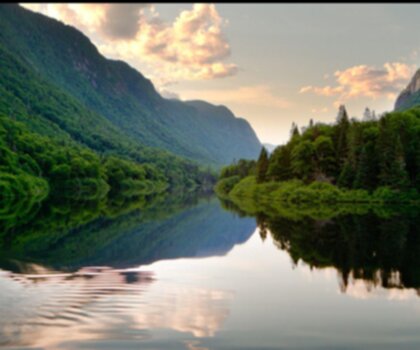
Parc National De La Jacques Cartier
Québec City Region
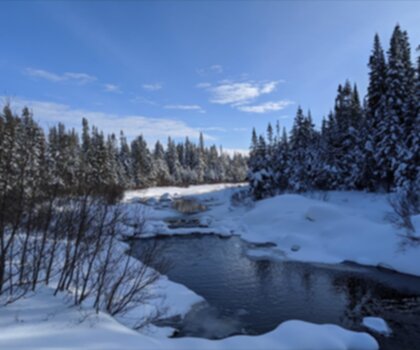
Camp Mercier
Québec City Region
Parc Chauveau
Québec City Region

Mont Sainte-Anne
Québec City Region

Les Marais Du Nord
Québec City Region

Parc De La Forêt Ancienne Du Mont Wright
Québec City Region
Hiking near Quebec City
40 trails to explore ~12 km away
We work hard to provide the most up-to-date and error-free data possible. If something seems incorrect, let us know! Your contribution helps the whole community.
Hikers' opinions
Be the first to review!
No hiker has shared their experience yet. Share your impressions and help other hikers!