
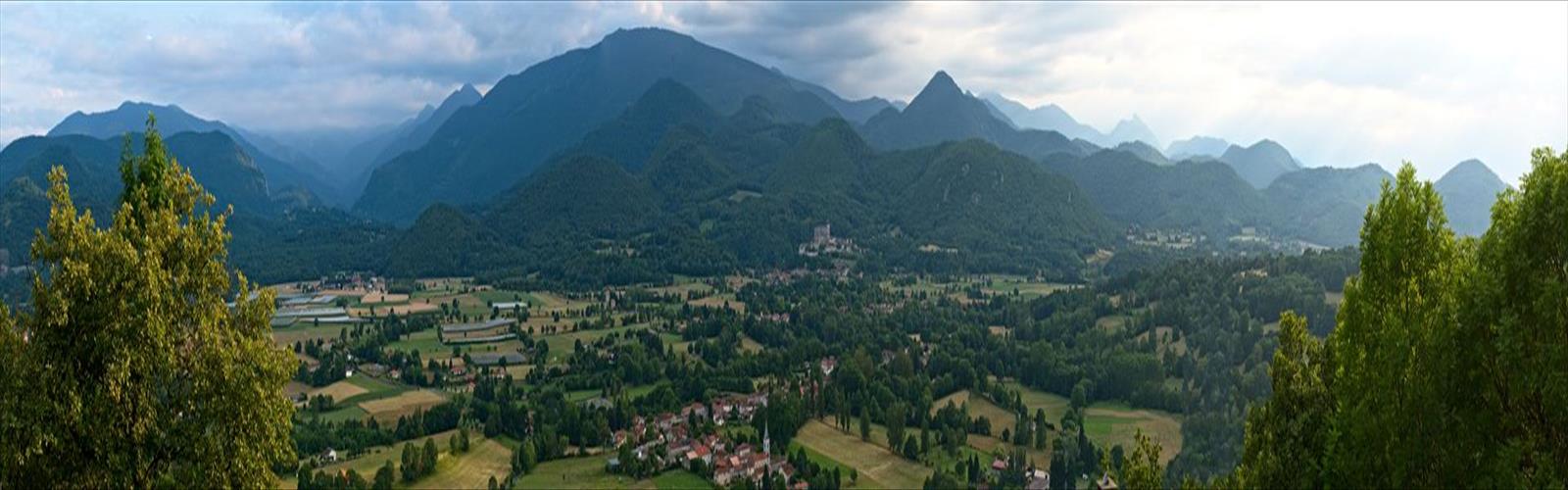

Ready to explore Lac de Montréjeau? Here's everything you need to know before you go!
Discover the trail
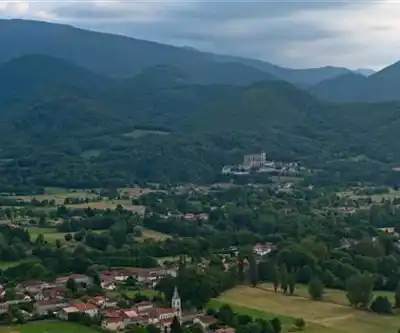
Trail description
The Lac de Montréjeau trail is a solid half-day hike in the Haute-Garonne that earns its moderate rating honestly. At 6.4 kilometers with 300 meters of elevation gain, it takes most hikers around 2 hours and 15 minutes to complete — enough to feel like a real outing without demanding a full day or elite fitness. The destination, a quiet lake tucked into the hills above the town of Montréjeau, makes the effort feel worthwhile from the moment you arrive at the water's edge.
This is the kind of hike that works well for people who want more than a flat walk but aren't ready to commit to a full mountain day. The terrain is varied, the climb is sustained but never brutal, and the lake at the top gives you a clear reason to push through the steeper middle section.
Getting Started: The Lower Trail
The trailhead sits at the edge of the foothills where the Haute-Garonne landscape starts shifting from agricultural flatlands toward something wilder. Within the first few minutes, you leave cultivated fields behind and enter mixed deciduous forest — oak and beech dominate here, with a dense understory of ferns and seasonal wildflowers that fills in the gaps between the larger trees.
The first kilometer is deliberately gentle. The path is well-worn dirt, easy to follow, and gives your legs time to settle into a rhythm before the real climbing starts. The canopy overhead keeps things cool in summer, and in spring the whole section feels alive with new growth. It's a good warm-up stretch that doesn't feel like a chore.
The Middle Section: Where the Work Happens
Past the initial forest section, the trail opens into pastoral clearings where livestock — sheep and cattle — often graze. These meadows break up the forest nicely and give you your first real views across the surrounding hills. They're also natural spots to catch your breath and take in the wider countryside before the trail tightens up again.
Fair warning: these meadow sections can get muddy. Spring is the worst for it, when snowmelt and rain combine with livestock traffic to churn up the path. Waterproof boots aren't overkill here — they're genuinely useful for a good chunk of the year.
The most demanding part of the hike comes in the middle, where the trail switchbacks up a steeper hillside through mixed pine and hardwood. Rocky outcroppings start appearing, the soil takes on a more alpine character, and the vegetation begins to shift toward mountain species. This section requires steady effort, but the switchbacks keep it manageable. There's no scrambling or technical terrain — just consistent uphill hiking that rewards a measured pace over rushing.
The Approach and the Lake
As you near the top, the trail levels out and follows a ridgeline through the trees. The forest closes in for a stretch, then opens abruptly onto Lac de Montréjeau — and that transition is genuinely satisfying. After the enclosed climb, the sudden view of open water surrounded by wooded hills lands well.
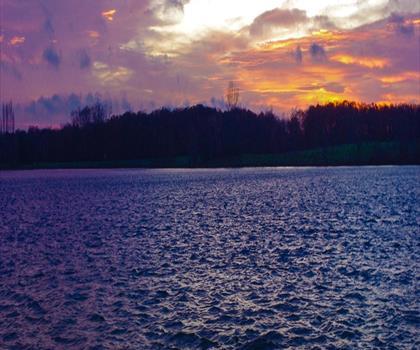
The lake sits in a natural depression, calm and clear, with gentle forested slopes rising on all sides. On still days, the surface reflects the surrounding trees and sky almost perfectly. The shoreline has several comfortable spots to stop — grassy banks, flat areas suitable for a picnic, and large boulders that work well as seats or photography platforms. The water stays cool throughout the hiking season, which makes it refreshing to sit beside even if you're not planning to swim.
Wildlife around the lake is worth paying attention to. Waterfowl visit regularly, especially during spring and fall migration. Herons show up in the shallower areas. The surrounding forest supports deer, wild boar, and smaller mammals, and birdwatchers will find early morning arrivals particularly rewarding when activity is highest.
Seasonal Notes
Spring brings the forest to life — wildflowers through the understory, fresh canopy overhead, and a tunnel effect along several sections of trail. It's beautiful, but it's also the muddiest season by a significant margin. Plan your footwear accordingly.
Summer offers the most reliable conditions. The forest sections provide shade during the warmer parts of the day, and the lake makes the destination feel especially worthwhile when temperatures climb. The exposed ridgeline section can get warm at midday, so an early start pays off.
Fall is arguably the best season for this hike. The mixed deciduous forest turns yellow, orange, and red, the air is cooler, and visibility tends to be at its clearest. Daylight hours shrink as the season progresses, so keep that in mind when planning your start time.
Winter hiking is possible but requires more preparation. Ice can develop on the steeper switchback sections, and snow complicates route-finding in spots. The lake often freezes partially or fully during cold spells, which creates a different but striking atmosphere for those willing to gear up for it.
Practical Details
The trail surface is primarily packed dirt with occasional rocky sections — sturdy hiking boots are the right call, not trail runners or casual footwear. Navigation is straightforward throughout; the main path stays well-defined with few confusing junctions. That said, carrying a map or GPS device is always a reasonable precaution, particularly if weather rolls in and visibility drops.
- Distance: 6.4 km
- Elevation gain: 300 m
- Estimated time: 2h15
- Difficulty: Moderate
- Footwear: Waterproof hiking boots recommended
Water sources along the route are limited. Carry enough for the full hike — the lake provides water, but you'd need to treat it before drinking. The exposed sections offer little shelter if a storm moves in quickly, so checking the forecast before heading out is worth the two minutes it takes.
Parking at the trailhead is available but limited. On weekends and during peak hiking periods, spaces fill up faster than you'd expect — an early start solves both the parking problem and puts you at the lake during the best light of the day.
The Essential Hiking Checklist
Everything you need for your next hike. Bilingual, printable, 1 page.
Get your free hiking checklistRecommended gear for this trail
As an Amazon Associate I earn from qualifying purchases.


Ready to go?
Everything you need to know before you goWhen?
How much?
As an Amazon Associate I earn from qualifying purchases.
Affiliate links — LGPO may earn a commission at no extra cost to you.
- Hiking shoes Essential
- → Salomon Elixir Tour Mid WP · 203.38 $
- Layered clothing Essential
- Rain jacket Essential
- Trekking poles
- → Black Diamond Trail Ergo Cork · 69.99 $
- Headlamp
- → Petzl Actik Core 625 · 103.95 $
FAQ - Frequently asked questions
Everything you need to knowSimilar hikes nearby
Discover other trails you might enjoy
Hiking near Sydney
22 trails to explore ~4715 km away
We work hard to provide the most up-to-date and error-free data possible. If something seems incorrect, let us know! Your contribution helps the whole community.
Hikers' opinions
Be the first to review!
No hiker has shared their experience yet. Share your impressions and help other hikers!