
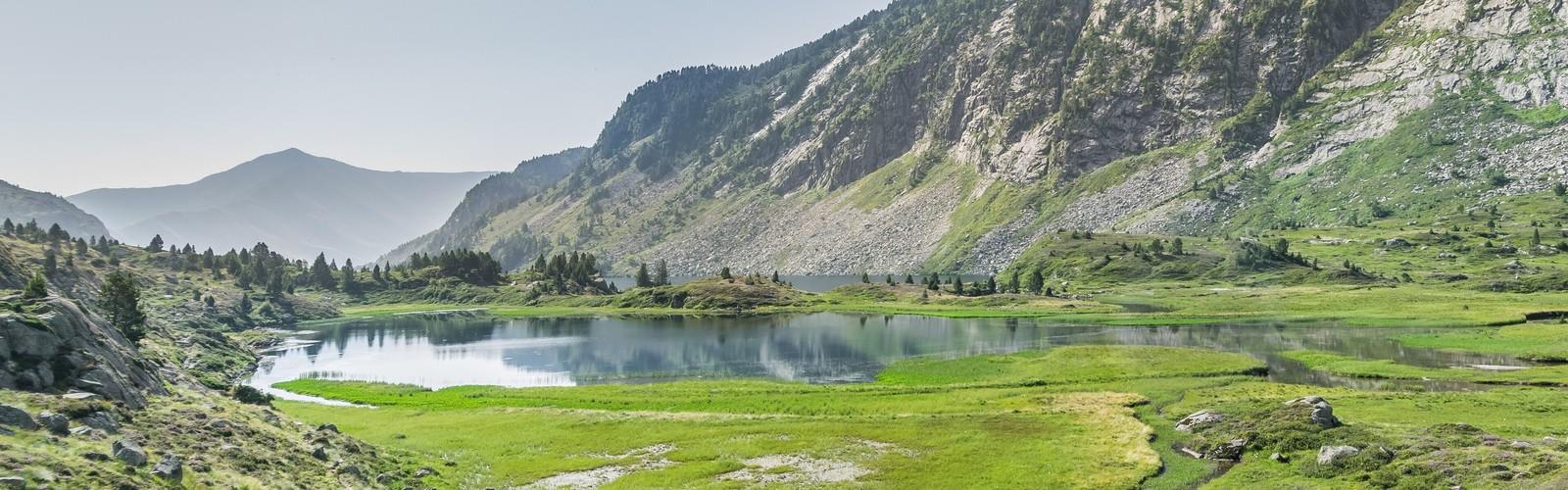

Ready to explore Parc naturel régional des Pyrénées Ariégeoises? Here's everything you need to know before you go!
Discover the trail
Oh no! We don't have any photos 😢
This trail hasn't been captured yet. Be the first to share your adventure!Trail description
The Parc Naturel Régional des Pyrénées Ariégeoises stretches across the mountainous core of Ariège, in the Occitanie region of southern France. This protected landscape brings together dramatic peaks, dense forests, carved river valleys, and a layered cultural history that makes it one of the most compelling hiking destinations in the French Pyrenees. The park's main trail covers 4.8 kilometers with 300 meters of elevation gain, rated moderate and typically completed in around 2 hours and 30 minutes — enough of a challenge to feel rewarding without demanding elite fitness.
What genuinely sets this park apart is its position at the convergence of three distinct ecological zones. As you move through the terrain, the landscape, vegetation, and even the air shift noticeably — it's one of those places where a single hike can feel like passing through several different environments in one outing.
Three Ecological Zones in One Park
The Pyrenean zone occupies the park's higher elevations. This is classic mountain terrain: steep ridges, rocky outcrops, and dense stands of fir and pine. The trail here winds through coniferous forest with occasional clearings that open onto wide views of the surrounding peaks. Footing requires attention, particularly on granite sections after rain, when the rock surface gets slick.
Drop into the Mediterranean zone and the landscape shifts considerably. The hills roll more gently, the valleys cut deeper, and the vegetation switches to drought-adapted species. You'll notice the change in temperature and air quality, especially in summer. Ancient stone terraces appear along the valley floors — quiet evidence of centuries of human presence in these mountains.
The Atlantic zone rounds out the park's ecological range with broader terrain and pristine mountain lakes. The paths here are generally well-maintained and easier underfoot, skirting lake shorelines where the water reflects the surrounding ridgelines. Early morning is particularly good in this section, when mist sits on the surface and the light is soft.
Rivers, Gorges, and the Terrain They Shaped
Four major rivers — the Tarn, Garonne, Aude, and Ariège — have spent millennia cutting through this landscape, and their work shows. The gorges they've carved are among the park's most striking features: towering limestone walls that form natural corridors and amphitheaters, with cliff faces that provide nesting habitat for several bird species. Designated viewing areas along certain trails give you a good vantage point for spotting them.
The river-carved topography also means elevation changes can catch you off guard on trails that look flat on a map. Stream crossings come up regularly throughout the park. Most have bridges or stepping stones, but waterproof footwear is a practical choice, especially during spring snowmelt or after heavy rain. Along riverside sections, the constant sound of moving water becomes a natural backdrop that makes for a genuinely meditative stretch of trail.
Wildlife and Plant Life
The overlap of three climate zones has produced an unusually rich ecosystem. As you move between elevations and zones, the vegetation changes in ways that are easy to notice even without a field guide — alpine flowers at higher elevations, Mediterranean herbs lower down, and the full range of deciduous and coniferous forest in between.
Wildlife viewing is best in the early morning or late afternoon, when animals are most active. The varied habitats support species adapted to mountain, Mediterranean, and Atlantic conditions, which means the range of potential sightings is broader here than in parks with a single dominant ecosystem. Seasonal shifts alter the experience significantly: spring brings wildflower displays that vary by elevation, and autumn turns the deciduous sections into something worth timing a trip around.
Historical Landmarks Along the Trail
The park carries a substantial historical weight that adds real depth to a day on the trail. The medieval castle of Montségur is one of the most visible landmarks — its ruins sit on a rocky outcrop that's visible from multiple points along the trail system. As a former Cathar stronghold, it carries a history that gives the surrounding landscape a different kind of resonance once you know the context.
The cave of Niaux adds another layer entirely. It contains prehistoric art representing thousands of years of human presence in these mountains. The cave itself requires separate arrangements to visit, but several hiking trails pass near the site, and interpretive signage along those routes fills in the archaeological background. Between Montségur and Niaux, the park's trail network regularly surfaces ancient pathways, stone structures, and traditional mountain architecture — the kind of details that reward hikers who slow down and pay attention.
Trail Conditions and Practical Notes
The moderate difficulty rating is an honest one. The 300 meters of elevation gain is distributed across the route rather than stacked into a single steep climb, which keeps the ascent manageable for hikers with basic mountain experience. That said, the terrain varies enough between zones that different sections present different challenges — rocky and technical in the Pyrenean zone, more straightforward in the Atlantic zone.
Higher elevation sections can hold snow into late spring, so trail conditions depend on when you're visiting. The Mediterranean zone trails are generally accessible year-round. The park's terrain also supports mountain biking, climbing, and rafting, and some lower-elevation paths are shared with cyclists — worth keeping in mind on busier weekends.
The 2.5-hour estimated duration makes this a solid half-day outing, which fits well if you're using the park as one stop among several in the broader Ariège region. It's enough time to move through meaningfully different terrain and get a real sense of what makes this protected area worth the detour.
The Essential Hiking Checklist
Everything you need for your next hike. Bilingual, printable, 1 page.
Get your free hiking checklistRecommended gear for this trail
As an Amazon Associate I earn from qualifying purchases.


Ready to go?
Everything you need to know before you goStarting Point
The trailhead for the Ariegean Pyrenees Regional Nature Park is located in Saint-Lizier, in the Occitanie region.
When?
How much?
As an Amazon Associate I earn from qualifying purchases.
Affiliate links — LGPO may earn a commission at no extra cost to you.
- Hiking shoes Essential
- → Salomon Elixir Tour Mid WP · 203.38 $
- Layered clothing Essential
- Rain jacket Essential
- Trekking poles
- → Black Diamond Trail Ergo Cork · 69.99 $
- Headlamp
- → Petzl Actik Core 625 · 103.95 $
FAQ - Frequently asked questions
Everything you need to knowSimilar hikes nearby
Discover other trails you might enjoy

Hiking near Sydney
22 trails to explore ~4775 km away
We work hard to provide the most up-to-date and error-free data possible. If something seems incorrect, let us know! Your contribution helps the whole community.
Hikers' opinions
Be the first to review!
No hiker has shared their experience yet. Share your impressions and help other hikers!