


Ready to explore Le Sentier des Ocres? Here's everything you need to know before you go!
Discover the trail
Trail description
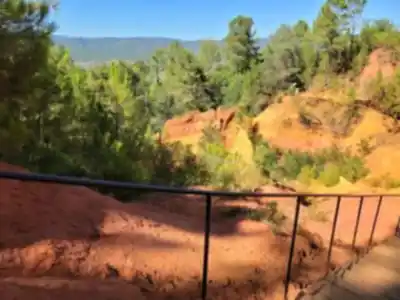
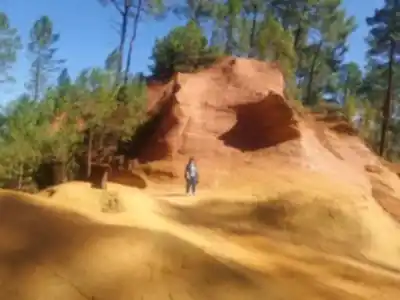
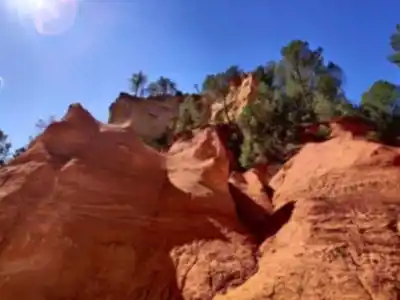
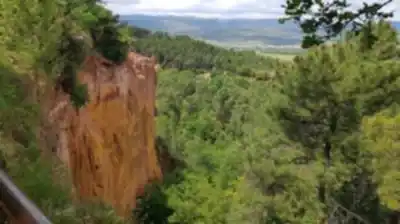
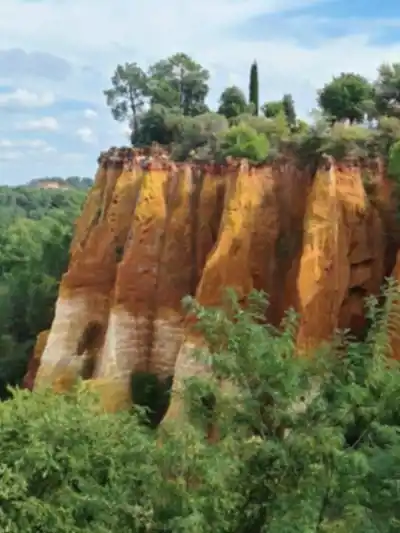
Le Sentier des Ocres cuts through one of the most visually striking geological landscapes in all of Provence. Located in the heart of Vaucluse, this 1.5-kilometer trail winds through a former ochre mining area where centuries of extraction — followed by decades of natural reclamation — have produced something genuinely hard to describe until you're standing in the middle of it. Rust-red cliffs, golden pinnacles, amber canyons, and narrow passages between walls that shift from pale cream to deep crimson: it looks like somewhere else entirely, not southern France.
The trail follows routes that once served the mining operations, and that history is still readable in the landscape. The dramatic vertical faces, the cathedral-like excavated spaces, the exposed color bands in the rock — none of that happened by accident. Human industry revealed what geology had been building for millions of years, and the result is a place that manages to feel both ancient and completely unexpected.
Trail Experience and Terrain
At 1.5 kilometers with only 30 meters of elevation gain, this is a genuinely easy hike. The estimated 45 minutes is realistic for most people, though you'll likely want more time if you're stopping to photograph the formations — and you will be stopping. The trail is accessible to hikers of all fitness levels, including families with kids and older adults who are comfortable on uneven ground.
The terrain is where you need to pay attention. The surface shifts between packed earth and sections of exposed ochre sediment that can be loose and sandy underfoot. The ochre itself is soft and crumbly, which means footing requires some care, particularly on sloped sections or anywhere the path narrows between formations. When wet, the ochre becomes noticeably slick, so if you're visiting after rain, take it slow.
Some sections of the trail follow narrow ridges with ochre canyons dropping away on either side, while others descend directly into former quarry sites. The variety keeps the walk interesting even at this short distance. You're not just walking past the formations — you're moving through them, which is a different experience altogether.
One practical note that every trail description for this place mentions because it's genuinely unavoidable: the ochre dust will get on everything. Your boots, your pants, your camera bag. Skip the white clothing. The dust works its way into zippers and camera equipment, so if you're bringing gear, a small brush and a plastic bag for dusty items are worth the extra weight.
Light, Color, and the Best Time to Visit
The ochre formations are photogenic at any hour, but the colors are at their most intense in early morning and late afternoon when low-angle sunlight hits the rock faces directly. Midday light flattens the texture and washes out some of the depth. In summer, there's also a practical reason to visit early or late: the exposed ochre areas absorb and radiate heat significantly, making midday visits genuinely uncomfortable when temperatures are high.
The interplay of light and shadow changes the character of the trail throughout the day. Morning visits tend to be quieter and cooler; late afternoon brings out the most luminous quality in the rock. Both are worth experiencing if you have the flexibility.
Geological Features
The ochre deposits here formed over millions of years as iron-rich sediments accumulated in ancient seas. The range of colors — from pale yellow through golden amber to deep red-brown — reflects different concentrations of iron oxides in the sediment layers. Where the mining exposed these layers, you can read the geological record directly in the color bands visible on the cliff faces.
Erosion is still actively shaping the landscape. Wind and rain continue to carve new patterns into the soft deposits, which means the formations are slowly but constantly changing. The crumbly nature of the ochre makes it particularly responsive to weathering, and the ongoing process is part of what gives the place its dynamic quality — nothing here feels entirely finished or static.
Flora and Wildlife
The ochre environment is harsher than it looks, but Mediterranean species have adapted well to the mineral-rich soil. Oak and pine have reclaimed large sections of the former mining site, and aromatic herbs — thyme, rosemary — grow in patches between the ochre deposits. On warm days, the combination of heated mineral earth and wild herbs produces a scent that's distinctly Provençal and hard to forget.
The vegetation growing on and around the ochre cliffs provides habitat for songbirds, and raptors use the elevated formations as hunting perches. The relative distance from major roads keeps the area quiet enough that wildlife is present and observable if you're moving at a relaxed pace. Lizards are a common sight on the warm ochre surfaces, particularly in the middle of the day when the rock is at its hottest.
Cultural and Historical Context
Ochre mining was a significant part of this region's economy for generations. The pigments extracted here ended up in house paint, fine art, and industrial applications across Europe. The mining techniques were straightforward — extraction of ochre-rich earth followed by washing and refining to separate the pigments — but effective enough that the operations continued well into the 20th century.
Walking Le Sentier des Ocres connects you directly to that industrial history. The dramatic excavated faces that now serve as the trail's main visual attractions were created by that work, not by natural processes alone. What's remarkable is how thoroughly nature has moved back in — the pine forest, the herbs, the birds — while the evidence of human activity remains clearly legible in the landscape. The area continues to draw painters and photographers, maintaining an artistic connection to the ochre tradition that predates the mining era itself.
Getting the Most Out of the Visit
- Footwear: Closed-toe shoes or hiking boots with decent traction. The loose ochre surface makes sandals a poor choice.
- Clothing: Avoid anything light-colored that you care about. The ochre dust stains and it will find its way onto your clothes.
- Timing: Early morning or late afternoon for the best light and, in summer, more comfortable temperatures.
- Wet conditions: The ochre becomes slippery when wet. Extra caution on any sloped sections after rain.
- Camera gear: Bring a brush and a sealable bag. The fine dust gets into zippers and equipment more aggressively than typical trail dust.
Le Sentier des Ocres is short enough to fit into a half-day itinerary, but the landscape is distinctive enough that most visitors find themselves moving slowly and staying longer than the 45-minute estimate suggests.
Recommended gear for this trail


Ready to go?
Everything you need to know before you goWhen?
Tuesday: 9:30 AM – 6:30 PM
Wednesday: 9:30 AM – 6:30 PM
Thursday: 9:30 AM – 6:30 PM
Friday: 9:30 AM – 6:30 PM
Saturday: 9:30 AM – 6:30 PM
Sunday: 9:30 AM – 6:30 PM
How much?
- Hiking shoes Essential
- → Salomon Elixir Tour Mid WP · 203.38 $
- Layered clothing Essential
- Rain jacket Essential
- Trekking poles
- → Black Diamond Trail Ergo Cork · 69.99 $
- Headlamp
- → Petzl Actik Core 625 · 103.95 $
FAQ - Frequently asked questions
Everything you need to know
25 hikes under 2 hours from Montreal
Distance, elevation, parking and season for each one. The ones we go back to ourselves.
Get the guideHiking near Sydney
22 trails to explore ~5017 km away
We work hard to provide the most up-to-date and error-free data possible. If something seems incorrect, let us know! Your contribution helps the whole community.
Hikers' opinions
Be the first to review!
No hiker has shared their experience yet. Share your impressions and help other hikers!