

Ready to explore Pont du Gard? Here's everything you need to know before you go!
Discover the trail
Trail description
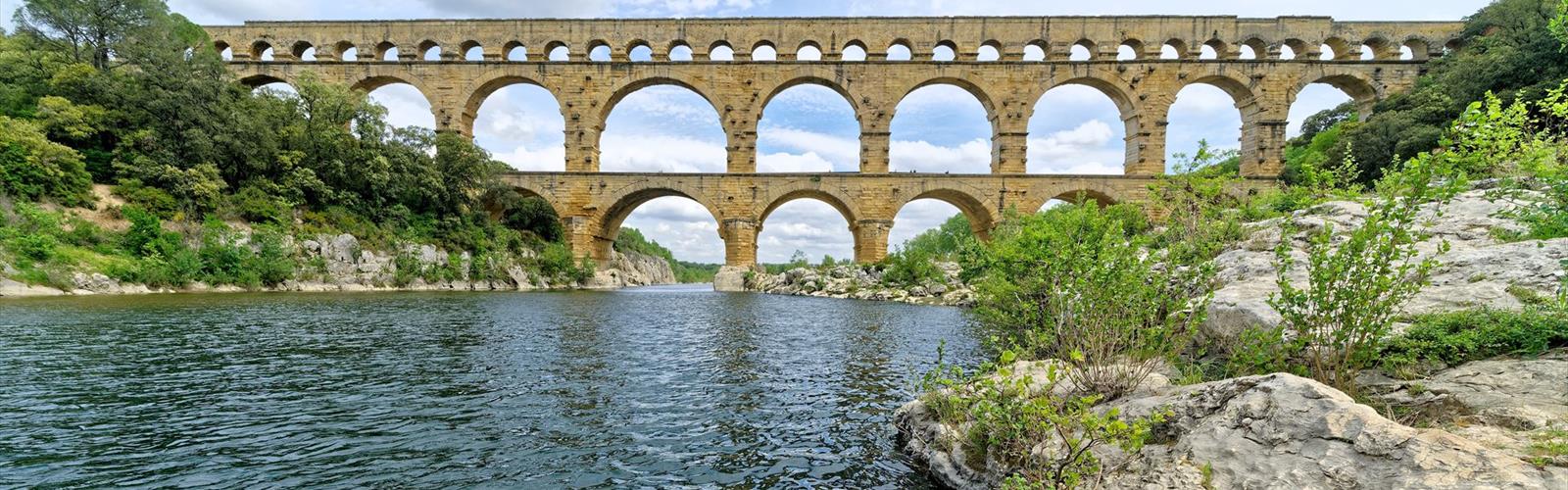
The Pont du Gard is one of those places that genuinely stops you in your tracks. Standing on the bank of the Gardon River in the Gard department of Occitanie, you're looking at a Roman aqueduct bridge that has been standing for nearly 2,000 years — and it still looks like it was built to last another 2,000. UNESCO recognized it as a World Heritage Site in 1985, and once you see it in person, that designation makes complete sense.
What makes this site special isn't just the monument itself — it's the way the hiking trail wraps around it, takes you through the surrounding garrigue landscape, and gives you multiple perspectives on the structure from different elevations and angles. This is a hike where the destination is visible the entire time, yet it keeps revealing new dimensions as you move through it.
The Monument
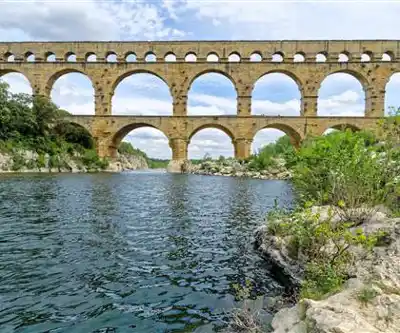
The Pont du Gard is the highest Roman bridge-aqueduct ever built. It spans the Gardon River using three tiers of stone arches stacked on top of each other. The lowest arch reaches 49.20 meters above the riverbed — roughly the height of a 16-story building — while the largest arch stretches 49.50 meters across and 18.90 meters wide. The second tier's arches measure 38.40 meters long and 15.30 meters wide. The entire structure was assembled without mortar, relying entirely on the precision of the stonecutting and the weight of the blocks to hold everything together. That engineering detail alone is worth pausing on.
Built in the 1st century AD, the aqueduct was part of a 50-kilometer system designed to carry fresh water to the Roman city of Nîmes. The Pont du Gard was the most technically demanding section of that system, requiring the builders to maintain an almost perfectly level gradient across a deep river valley.
The Trail
The hiking loop around the Pont du Gard covers 6.4 kilometers with 300 meters of elevation gain, and most people complete it in around 2 hours and 15 minutes. The difficulty is rated moderate — there's enough climbing to get your heart rate up, but nothing that requires technical skill or specialized gear. Sturdy trail shoes are recommended over casual sneakers, especially on the rockier sections through the garrigue.
The terrain alternates between riverside paths close to the Gardon and higher ground through the scrubland above the valley. The garrigue — the low, aromatic Mediterranean shrubland typical of this part of Occitanie — covers much of the upper sections of the trail. You'll be walking through patches of rosemary, thyme, and holm oak, with the limestone underfoot giving the landscape that characteristic pale, sun-bleached look of southern France.
The trail offers several distinct viewpoints of the aqueduct. From the riverbank, you get the classic straight-on view that appears in every photograph. From the higher sections of the loop, you see the structure from above and at an angle, which gives you a much better sense of its scale relative to the valley it crosses. Early morning and late afternoon light hit the stone differently, so the experience genuinely changes depending on when you arrive.
What to Expect on the Ground
The site is well-managed and sees significant visitor traffic, particularly in summer. The trail itself is clearly marked and easy to follow. The area around the monument has proper infrastructure — parking, visitor facilities, and interpretive signage — but once you move away from the main access points and into the garrigue sections of the loop, it quiets down considerably.
The Gardon River runs directly beneath the aqueduct, and depending on the season and recent rainfall, the water level varies significantly. In summer, the river is typically calm and shallow enough that some visitors wade across at the base of the monument. After heavy rain or during spring snowmelt, the Gardon can run fast and high — worth checking conditions before you go if you're planning to get close to the water.
Sun exposure is a real consideration here. The garrigue sections of the trail offer very little shade, and the limestone reflects heat effectively. Bring more water than you think you'll need, apply sunscreen before you start, and wear a hat if you're hiking between late morning and mid-afternoon in warmer months.
Practical Information
- Distance: 6.4 km
- Elevation gain: 300 m
- Difficulty: Moderate
- Estimated time: 2h15
- Location: Gard, Occitanie, France
The Pont du Gard site is managed as a protected heritage area. Access to the monument and surrounding trails is regulated, and there are entry fees for the site. Parking is available on both banks of the Gardon. The visitor center on the left bank includes exhibits on the history and construction of the aqueduct, which are worth a look either before or after your hike.
Getting the Most Out of the Visit
If you want to avoid the densest crowds, aim for early morning on a weekday. The light is better for photography, the trails are quieter, and the experience of standing beneath the aqueduct with few other people around is genuinely different from arriving mid-afternoon in peak season.
The full loop gives you a much richer experience than simply walking to the monument and back. The elevated sections through the garrigue put the engineering achievement in geographic context — you can see the valley the Romans had to cross, understand why this particular spot required such an ambitious structure, and appreciate the scale of the project in a way that's hard to grasp from the riverbank alone.
The Pont du Gard sits in a landscape that has changed relatively little since Roman times, and the combination of a well-preserved ancient monument, a living river, and the wild Mediterranean scrubland makes this one of the more distinctive hikes in the Gard.
The Essential Hiking Checklist
Everything you need for your next hike. Bilingual, printable, 1 page.
Get your free hiking checklistRecommended gear for this trail
As an Amazon Associate I earn from qualifying purchases.


Ready to go?
Everything you need to know before you goStarting Point
The Pont du Gard trailhead is located a few kilometers from Remoulins, in the Occitanie region. To get there, take the direction of Remoulins and follow the signs for the Pont du Gard.
When?
How much?
As an Amazon Associate I earn from qualifying purchases.
Affiliate links — LGPO may earn a commission at no extra cost to you.
- Hiking shoes Essential
- → Salomon Elixir Tour Mid WP · 203.38 $
- Layered clothing Essential
- Rain jacket Essential
- Trekking poles
- → Black Diamond Trail Ergo Cork · 69.99 $
- Headlamp
- → Petzl Actik Core 625 · 103.95 $
FAQ - Frequently asked questions
Everything you need to knowSimilar hikes nearby
Discover other trails you might enjoy
Hiking near Sydney
22 trails to explore ~4960 km away
We work hard to provide the most up-to-date and error-free data possible. If something seems incorrect, let us know! Your contribution helps the whole community.
Hikers' opinions
Be the first to review!
No hiker has shared their experience yet. Share your impressions and help other hikers!