
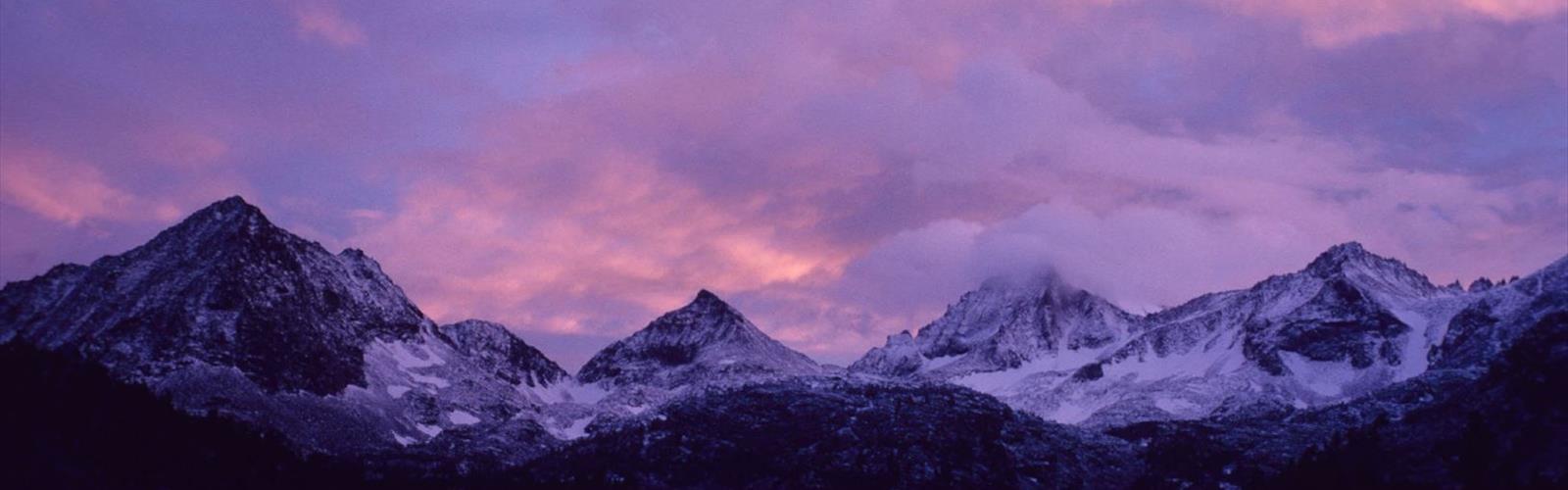

Ready to explore Mount Mills, California? Here's everything you need to know before you go!
Discover the trail

Trail description
Mount Mills is one of the more compelling high-altitude objectives in the Sierra Nevada, a peak that rewards climbers with serious mountain terrain and sweeping views across one of California's most dramatic alpine landscapes. Sitting in the heart of the Sierra Nevada range, it draws experienced mountaineers and peak baggers who are comfortable on technical terrain and ready for a genuine wilderness experience.
The Peak and Its Character
Mount Mills belongs to a cluster of impressive summits in the Sierra Nevada that define the skyline along the range's high crest. The mountain has the rugged, no-nonsense character that the Sierra Nevada is known for — exposed granite, steep approaches, and the kind of silence you only find when you're genuinely far from the trailhead. This isn't a casual day hike destination. It's a climbing objective, and the approach and route reflect that.
The terrain here is classic Sierra high country: talus fields, snowfields that can linger well into summer, and rocky ridgelines that demand careful route-finding. The granite is solid and grippy in dry conditions, which is part of what makes the Sierra Nevada such a beloved destination for climbers. On Mount Mills, you'll move through open alpine zones where the rock dominates and vegetation thins out to scattered patches of hardy plants clinging to whatever soil they can find.
What to Expect on the Climb
Reaching the summit of Mount Mills is a committing undertaking. The approach involves navigating Sierra Nevada backcountry terrain, and the climbing itself requires route-finding skills and comfort on steep, exposed ground. Depending on the season and conditions, snow travel and basic mountaineering skills — including the use of an ice axe and crampons — may be necessary, particularly earlier in the season when snowfields are still substantial.
The views from the upper mountain are a genuine payoff. You're looking out across a sea of Sierra Nevada peaks, with the scale of the range becoming fully apparent from that elevation. On a clear day, the panorama stretches in every direction, with granite summits, glacially carved valleys, and high alpine lakes visible across the landscape.
Route-finding is a real part of the experience here. There's no maintained trail to the summit, and the mountain rewards those who come prepared with a map, a compass or GPS, and the experience to read the terrain. Conditions can change quickly in the Sierra Nevada, and afternoon thunderstorms are a real consideration during summer months — an early start is standard practice for any serious Sierra climb.
Getting There
Access to Mount Mills follows the patterns typical of Sierra Nevada high-country objectives — a drive to a trailhead in the range, followed by a backcountry approach that puts you into genuine wilderness terrain. The Sierra Nevada has several access corridors depending on which side of the range you're approaching from, and the specific trailhead and approach route for Mount Mills should be confirmed with current beta from reliable mountaineering sources before your trip.
Wilderness permits are a standard requirement for overnight travel in the Sierra Nevada backcountry, and quota systems are in place for many popular entry points. If you're planning an overnight approach — which is common for peaks like Mount Mills — securing your permit well in advance is essential, especially for summer travel.
Gear and Preparation
Mount Mills is not a peak to approach casually. Beyond standard Sierra Nevada hiking gear — layers, sun protection, plenty of water and food — climbers should assess current conditions before committing to a route. Snow conditions, rockfall hazard, and weather windows all factor into a safe and successful ascent.
- Navigation tools: A detailed topographic map and GPS device are essential. There is no marked trail to the summit.
- Mountaineering gear: Depending on the season, an ice axe and crampons may be required for safe travel on snowfields.
- Layers and weather protection: Sierra Nevada weather can shift quickly. A hardshell jacket and warm layers are standard even in summer.
- Sun protection: At high elevation, UV exposure is intense. Sunscreen, sunglasses, and a hat are non-negotiable.
- Water treatment: Water sources exist in the Sierra backcountry, but all water should be treated before drinking.
- Permit documentation: Carry your wilderness permit and be aware of any fire restrictions in effect for the area.
The Sierra Nevada Context
Mount Mills sits within one of North America's most celebrated mountain ranges. The Sierra Nevada stretches roughly 400 miles through California, and its high crest is home to some of the continent's most spectacular alpine terrain. The range has a long history as a destination for mountaineers, and peaks like Mount Mills represent the kind of objective that draws climbers back to the Sierra year after year.
The high Sierra is also a place of genuine ecological richness. Above treeline, the landscape is stark and beautiful — granite and sky, with marmots, pikas, and the occasional golden eagle making their presence known. The clarity of the air and the quality of the light at elevation give the Sierra Nevada a visual character that's hard to match anywhere in North America.
Best Season
The Sierra Nevada high country is typically accessible for climbing from late June or July through September or October, depending on the snowpack in any given year. Heavy snow years push the accessible window later, while low-snow years can open routes earlier. Checking current conditions through the Sierra Nevada backcountry community and local ranger stations before your trip will give you the most accurate picture of what to expect on the mountain.
Early season climbs on Mount Mills may involve significant snow travel and require full mountaineering gear. Late season ascents, once the snowfields have melted back, shift more toward technical scrambling on rock. Both have their appeal, and both demand respect for the terrain and the conditions.
The Essential Hiking Checklist
Everything you need for your next hike. Bilingual, printable, 1 page.
Get your free hiking checklistRecommended gear for this trail
As an Amazon Associate I earn from qualifying purchases.


Ready to go?
Everything you need to know before you goWhen?
How much?
As an Amazon Associate I earn from qualifying purchases.
Affiliate links — LGPO may earn a commission at no extra cost to you.
- Hiking shoes Essential
- → Salomon Elixir Tour Mid WP · 203.38 $
- Layered clothing Essential
- Rain jacket Essential
- Trekking poles
- → Black Diamond Trail Ergo Cork · 69.99 $
- Headlamp
- → Petzl Actik Core 625 · 103.95 $
FAQ - Frequently asked questions
Everything you need to knowSimilar hikes nearby
Discover other trails you might enjoy

Coso Range Wilderness Trail
Sierra Nevada
Bloody Mountain, California
Sierra Nevada
Mount Lyell, California
Sierra Nevada
California Hot Springs
Sierra Nevada
Mount Hopkins, California
Sierra Nevada
Vernal and Nevada Falls (The Mist) Trail
Sierra Nevada
Hiking near Victoria
93 trails to explore ~1281 km away
We work hard to provide the most up-to-date and error-free data possible. If something seems incorrect, let us know! Your contribution helps the whole community.
Hikers' opinions
Be the first to review!
No hiker has shared their experience yet. Share your impressions and help other hikers!