
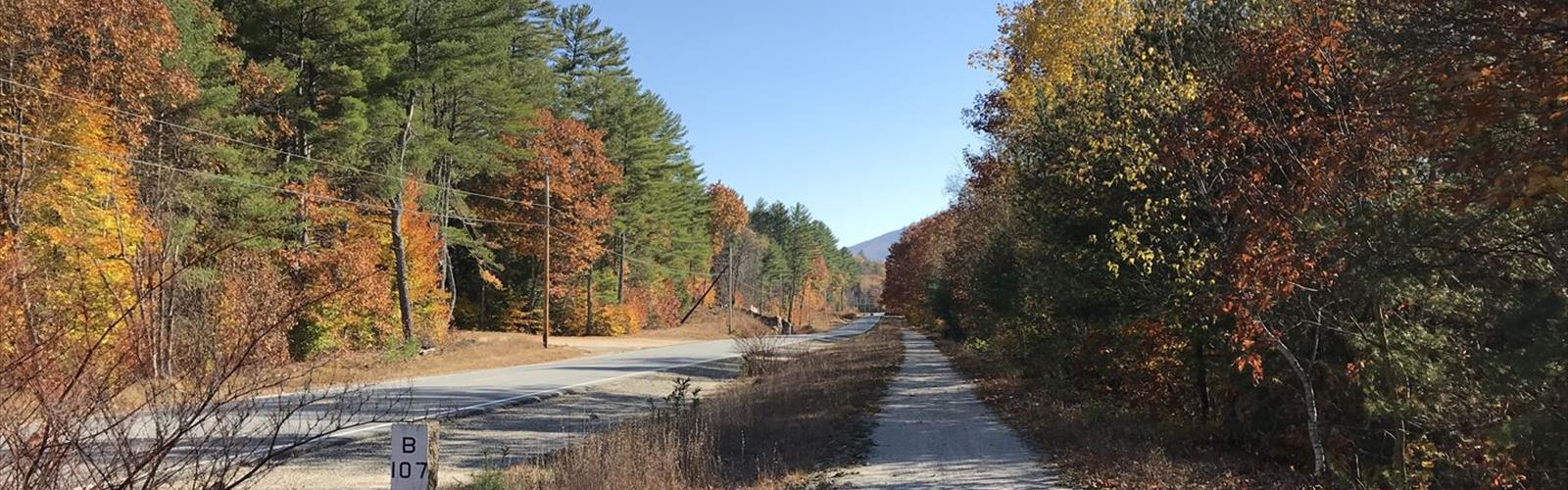

Ready to explore Danbury Bog? Here's everything you need to know before you go!
Discover the trail

Trail description
Danbury Bog is one of those quiet, off-the-beaten-path natural areas that rewards curious visitors willing to slow down and pay attention. Located in the Dartmouth–Lake Sunapee region of New Hampshire, this bog is a genuine ecological gem — the kind of place where the landscape itself tells a story that stretches back thousands of years to the last ice age.
What Kind of Place Is This?
Danbury Bog is a peatland ecosystem, which makes it fundamentally different from your typical woodland trail or lakeside walk. Bogs form in low-lying areas where water accumulates and drainage is poor, creating acidic, nutrient-poor conditions that support a very specialized community of plants and wildlife. What you'll find here isn't dramatic elevation or sweeping vistas — it's something subtler and, for the right visitor, far more fascinating.
The ground itself is part of the experience. Sphagnum moss forms thick, spongy mats that hold enormous amounts of water, giving the bog its characteristic soft, almost bouncy feel underfoot. This moss is the foundation of the entire ecosystem, slowly building up layers of peat over centuries. Walking near or through a bog like this, you're essentially walking on a living, slowly accumulating archive of organic material.
The Ecology Up Close
One of the main draws of Danbury Bog is the plant life, which is genuinely unusual by New Hampshire standards. Bogs support carnivorous plants — most notably pitcher plants (Sarracenia purpurea), which trap and digest insects to compensate for the lack of nutrients in the soil. If you visit during the warmer months, keep your eyes low and you're likely to spot their distinctive reddish-green, pitcher-shaped leaves pooling with water and the occasional unfortunate insect.
Sundews are another carnivorous species you might encounter — small, low-growing plants with sticky, glandular hairs that glisten in the light and trap tiny insects. Both species are perfectly adapted to the bog's harsh chemistry and are a highlight for anyone with even a passing interest in botany.
Beyond the carnivorous plants, the bog supports a range of other specialized vegetation including leatherleaf, bog rosemary, Labrador tea, and various sedges and rushes. Tamarack (also called eastern larch) often grows at the edges of New Hampshire bogs — one of the few conifers that drops its needles in fall, turning a brilliant gold before going bare for winter.
Wildlife
The combination of open water, dense shrubs, and surrounding forest makes Danbury Bog attractive to a wide range of wildlife. Birdwatchers will find it worth a visit, particularly during migration seasons when waterfowl and shorebirds may use the wetland as a stopover. The shrubby edges are good habitat for warblers and other songbirds during spring and early summer.
Amphibians thrive in bog environments — frogs and salamanders are common, and the acidic water actually provides some protection from certain predators and pathogens. If you visit on a warm spring evening, the calling of frogs can be surprisingly loud for such a quiet-looking place.
White-tailed deer, moose, and other mammals use the bog and its surrounding habitat as well. Moose in particular are drawn to wetland areas, especially in early morning and at dusk, so keep that in mind if you're visiting at those times.
What to Expect on the Ground
Danbury Bog is not a destination for high-mileage hikers looking to rack up elevation. This is a place for slow, attentive exploration. The terrain around a bog can be wet and uneven, and the edges of the open peat mat require careful footing — the sphagnum surface can be deceptively soft and unstable in places.
Waterproof footwear is strongly recommended. Even on dry days, the ground near the bog margin tends to stay saturated, and stepping off firmer ground can mean wet feet quickly. Rubber boots or waterproof hiking boots will make the visit significantly more comfortable.
Bring binoculars if you have them — scanning the open bog surface from the edge is often more productive (and less damaging to the ecosystem) than trying to walk out onto the peat mat itself. Bogs are fragile environments, and the vegetation can take decades to recover from foot traffic.
Best Times to Visit
Late spring through early fall is generally the most rewarding time to visit Danbury Bog. The carnivorous plants are most visible and active during the warmer months, and bird activity peaks during spring migration (May) and again in late summer and early fall. Wildflowers associated with bog edges — including various orchid species that sometimes occur in New Hampshire peatlands — tend to bloom in late spring and early summer.
Fall brings its own appeal: the tamarack trees, if present at the bog edges, turn golden in October, and the sphagnum moss itself takes on rich red and orange tones as temperatures drop. Winter visits are possible but the bog loses much of its ecological activity under snow and ice.
Bug season is real in wetland environments. Mosquitoes and black flies can be intense from late May through June, so insect repellent is a practical necessity if you're visiting during that window.
Practical Notes
- Footwear: Waterproof boots are strongly recommended regardless of recent weather.
- Insects: Bring repellent, especially in late spring and early summer.
- Fragility: Stay on firm ground or established paths where possible — bog vegetation is slow to recover from trampling.
- Photography: The bog offers excellent macro photography opportunities — carnivorous plants, mosses, and insects are all photogenic subjects.
- Leave No Trace: Do not pick or collect any plants. Carnivorous plants and other bog species are protected in New Hampshire and are already under pressure from habitat loss.
Who Will Enjoy Danbury Bog Most
This spot is ideal for naturalists, birders, photographers, and anyone who finds genuine satisfaction in observing a rare and functioning ecosystem. It's a great destination for families with curious kids who are into plants and wildlife — pitcher plants and sundews have a way of making botany feel exciting. It's not the right fit if you're looking for a long trail workout or panoramic views, but if you come with the right expectations, Danbury Bog delivers an experience that's genuinely hard to find anywhere else in the region.
The Essential Hiking Checklist
Everything you need for your next hike. Bilingual, printable, 1 page.
Get your free hiking checklistRecommended gear for this trail
As an Amazon Associate I earn from qualifying purchases.


Ready to go?
Everything you need to know before you goWhen?
How much?
As an Amazon Associate I earn from qualifying purchases.
Affiliate links — LGPO may earn a commission at no extra cost to you.
- Hiking shoes Essential
- → Salomon Elixir Tour Mid WP · 203.38 $
- Layered clothing Essential
- Rain jacket Essential
- Trekking poles
- → Black Diamond Trail Ergo Cork · 69.99 $
- Headlamp
- → Petzl Actik Core 625 · 103.95 $
FAQ - Frequently asked questions
Everything you need to knowSimilar hikes nearby
Discover other trails you might enjoy
Mt Moosilauke
Dartmouth-Lake Sunapee
AMC Cardigan Lodge
Dartmouth-Lake Sunapee

Cardigan Mountain State Park
Dartmouth-Lake Sunapee

Moose Mountain Shelter
Dartmouth-Lake Sunapee
Welton Falls
Dartmouth-Lake Sunapee
Big Sugarloaf Mountain
Dartmouth-Lake Sunapee
Hiking near Concord
0 trails to explore ~42 km away
We work hard to provide the most up-to-date and error-free data possible. If something seems incorrect, let us know! Your contribution helps the whole community.
Hikers' opinions
Be the first to review!
No hiker has shared their experience yet. Share your impressions and help other hikers!