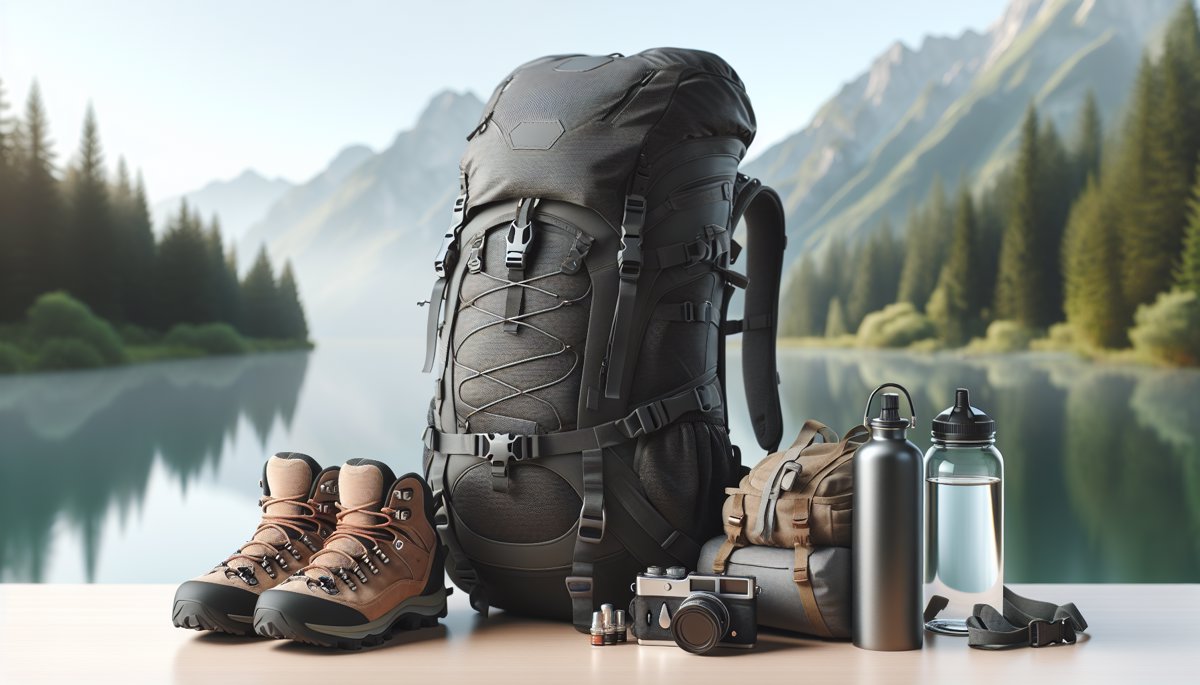

I've hauled the Osprey Atmos AG 65 over more than 500 kilometers of Quebec trails, from the Laurentides to Charlevoix, and I can tell you this pack surprised me more than once. When I first unpacked this 65-liter behemoth, I'll admit I had some doubts — was the Anti-Gravity system really going to make a difference, or was it just marketing? After testing it on 3-day trips to Parc national des Hautes-Gorges-de-la-Rivière-Malbaie and shorter but intense treks, I have my answer.
If you're shopping for a large-capacity pack for your multi-day adventures, you'll discover in this field test everything I learned about this flagship Osprey model: its real strengths, minor weaknesses, and most importantly whether it's worth the investment for your outings.
Get my gifts →
🎒 The Anti-Gravity System: Revolution or Simple Marketing Gimmick?
Alright, let's talk about the famous AG (Anti-Gravity) system that makes this pack's reputation. After carrying traditional packs for years, I can tell you the difference is felt from the first kilometers.
The principle? A suspended back panel that perfectly follows your back's shape without ever really touching it. Result: constant air circulation that avoids that soaked back feeling we all know after 2-3 hours of hiking.
What really works well:
- Ventilation is exceptional, even in hot and humid weather
- Weight seems better distributed than with a traditional pack
- Fewer uncomfortable pressure points
- The "floating" sensation is real when the pack is properly adjusted
Minor drawbacks:
- The system adds weight to the pack (about 200g more than a classic equivalent)
- More fragile — I've seen mesh tear with intensive use
- Difficult to repair on trail if something breaks
My verdict after 500 km? The AG system isn't just marketing. On my long outings to Mont du Lac des Cygnes, the comfort difference at the end of the day was notable compared to my old pack.
📏 Capacity and Organization: 65 Well-Designed Liters
With 65 liters of capacity, we're clearly in the large volume category. To give you an idea, I easily fit equipment for 4-5 days of complete autonomy, including tent, sleeping bag, stove and food.
| Compartment | Capacity | Optimal Use |
|---|---|---|
| Main compartment | ~50L | Sleeping bag, clothes, food |
| Bottom compartment (removable) | ~15L | Sleeping bag, dirty laundry |
| Expandable front pocket | ~8L | Extra layers, snacks |
| Hip belt pockets | 2 x 0.5L | Phone, energy bars |
| Side pockets | 2 x 1L | Water bottles, poles |
Organization that makes the difference:
The removable divider between the top and bottom compartments is genius. You can remove it to have one large uniform volume, or keep it to separate your clean clothes from dirty ones. I mainly use it to isolate my sleeping bag at the bottom.
The expandable side pockets easily swallow my 1L water bottles, even when the pack is well loaded. A detail, but one that avoids many frustrations on the trail.
What impresses me is the front zipper access. Gone are the days when you had to empty the entire pack to retrieve something from the bottom. A game-changer for multi-day outings.
🥾 Carrying Comfort: My 500-Kilometer Test
Let's talk about the real test: comfort after hours of walking with 18-20 kg on your back. I've hauled this pack over all types of Quebec terrain, from the well-maintained trails of Mont Yamaska to the more technical passages of Charlevoix.
The shoulder straps and hip belt:
The shoulder straps are generously padded without being too thick. Even after 8 hours of walking, no painful pressure points. The foam keeps its shape well, unlike some packs where it sags after a few months.
The hip belt really does its job. Wide and well-sculpted, it takes on a good portion of the weight. The integrated pockets are perfect for keeping frequently used items within reach.
« After a 25 km day with elevation gain in the Hautes-Gorges, my back hurt less than with my old pack on a 15 km outing. »
System adjustment:
Osprey offers three sizes (S, M, L) based on your torso length. I have the M, and the fit is precise. The shoulder strap adjustment system allows fine-tuning that makes all the difference.
Observed weak points:
- The pack becomes less comfortable when under-loaded (less than 12-15 kg)
- Side compression straps can rub on arms during technical passages
- The AG system loses efficiency if you wear a backpack over it (for photos, for example)
Having tested this pack on outings ranging from 2 to 5 days, I can confirm that comfort remains constant even when fatigue accumulates. That's where you see the difference from an entry-level pack.
Weight Distribution: The Science Behind Comfort
What impressed me most is how the weight seems to "disappear" when everything is properly adjusted. The pack's center of gravity is positioned to naturally match your walking posture.
The load lifter straps allow you to bring the weight closer to your back depending on terrain. On technical climbs, I tighten them. On long flat distances, I loosen them slightly for more freedom of movement.
🔧 Durability and Build Quality
After 500 km of intensive use, including some passages where I wasn't gentle with the gear, here's what I observed about this pack's durability.
Materials:
Osprey uses 210D nylon fabric for main areas and 420D for stress zones. It's a good weight/resistance compromise. The fabric resists well to branch snags and rock abrasion.
What held up well:
- All zippers still work perfectly
- Seams are impeccable, no signs of weakness
- The strap system hasn't moved a millimeter
- Plastic buckles took it all without flinching
Signs of wear after 500 km:
- Some small pilling on the main fabric (normal)
- Slight sagging of shoulder strap padding
- A small 2 cm tear in the AG system mesh (repairable)
- Stubborn stains on light-colored areas
Osprey warranty:
An often-forgotten strong point: Osprey offers a lifetime warranty on manufacturing defects. I had to use it once for another model, and the service was impeccable. That counts when you invest in gear in this price range.
Weather Resistance
The fabric has a DWR (Durable Water Repellent) treatment that repels light drizzle well. However, don't count on it for real rain. The pack comes with an integrated rain cover in a small pocket at the bottom of the pack.
I tested this cover under torrential downpours in the Hautes-Gorges, and it does its job perfectly. Easy to install even with gloves, and it covers the entire pack well.
💰 Value for Money: Is It Worth the Investment?
Let's be frank: the Osprey Atmos AG 65 isn't cheap. We're talking about an investment of around $400-450 CAD depending on promotions. The question you're probably asking: is it really worth this price?
Compared to the competition:
| Model | Approximate Price | Main Advantages |
|---|---|---|
| Osprey Atmos AG 65 | $400-450 CAD | AG system, comfort, durability |
| Deuter Aircontact 65+10 | $350-400 CAD | Robustness, price, modular capacity |
| Gregory Baltoro 65 | $420-480 CAD | Custom fit, comfort |
| MEC Supercontinent 65 | $250-300 CAD | Affordable price, Canadian brand |
When it's worth the investment:
- You plan regular multi-day outings (5+ per year)
- You've had comfort problems with other packs
- You prioritize comfort over minimal weight
- You want a pack that will last 10+ years
When you can look elsewhere:
- You're a beginner and unsure of your needs
- You mainly do day hikes
- Weight is your absolute priority
- Your budget is tight
My personal calculation:
After my 500 km test, I'd say this pack has already "paid for" its price difference in comfort. The days when I arrived at camp less tired, that's priceless. For someone who does serious trekking, the investment is justified.
However, if you're starting out in multi-day hiking, I suggest first looking at our advice in our ultimate beginner's guide to properly identify your needs before investing.
Alternatives to Consider
If price holds you back, the Osprey Atmos AG 50 offers 85% of the experience for about $50 less. For tight budgets, the MEC Supercontinent remains an excellent Canadian option.
For those who want the best of the best and price doesn't matter, the Gregory Baltoro offers even more personalized fit, but it's really a detail at this level.
🎯 Who This Pack Is (and Isn't) For
After hauling this pack all over Quebec and observing how it performs in different conditions, I have a pretty clear idea of the ideal profile for the Atmos AG 65.
You'll love this pack if:
- You do 3-7 day treks several times per year
- You tend to have back pain with other packs
- You sweat a lot and ventilation is important to you
- You like having easy access to your gear (front zipper)
- You prioritize comfort over minimal weight
- You want a pack that will last for years
Look elsewhere if:
- You mainly do day hiking
- Minimal weight is your priority (the pack weighs 2.3 kg empty)
- You're into ultralight hiking
- Your budget is tight (under $300)
- You're under 5'3" (even the Small might be too big)
The typical profile I observe:
My friends who are most satisfied with their Atmos AG 65 are generally intermediate to advanced hikers who do 4-8 multi-day outings per year. They've already tried other packs and know they prioritize comfort.
Conversely, beginners I've seen buy this pack directly are sometimes disappointed, not by the quality, but because they realize they don't really need all this capacity and features.
Body Types and Fit
Osprey has done good work with different sizes, but a few observations after seeing this pack on different body types:
- Women: Osprey makes a specific version (Ariel AG 65) better adapted to female morphology
- Short people: Even the Small can seem imposing if you're under 5'3"
- Long torsos: The Large accommodates well, but make sure to try it first
- Broad shoulders: Straps adapt well, but watch for arm rubbing
My advice? Try it in store with weight in it. Most good outdoor gear stores have sandbags to simulate a real load.
🏁 My Verdict After 500 Kilometers of Use
After hauling the Osprey Atmos AG 65 from the mountains of Saint-Bruno to the peaks of Charlevoix, here's what I take away from this intensive test:
This pack really excels at:
- Carrying comfort — The Anti-Gravity system really works
- Ventilation — No more soaked back after a few hours
- Organization — Front access is a game-changer for long treks
- Durability — Solid construction that inspires confidence
- Fit — When properly adjusted, the pack almost disappears
Compromises to accept:
- Weight — 2.3 kg empty isn't light
- Price — A significant investment
- Complexity — More adjustments to master than a basic pack
« If you do serious trekking and comfort matters more than grams, it's an excellent choice. Otherwise, you can probably find better for your needs. »
My final recommendation:
The Osprey Atmos AG 65 is worth its price if you fit the profile: regular hiker who does multi-day outings and prioritizes comfort. It's a pack you'll keep for 10+ years and that will make your adventures more enjoyable.
However, if you're a beginner or unsure of your needs, start with something cheaper and simpler. You can always upgrade later when you have more experience.
To properly choose your equipment according to your level, check out our guide on the 10 beginner mistakes — it will help you avoid investing in gear you don't really need.
In the end, the best pack is the one that makes you want to go on adventures. And on that point, the Atmos AG 65 is definitely among the models that give confidence to tackle big projects. Whether it's exploring the lesser-known trails of Canyon Sainte-Anne or launching into your first 5-day trek, this pack won't limit you.
Now, it's up to you to see if it fits with your adventure projects. The important thing is to get outside and enjoy what our magnificent regions have to offer!
Newsletter
Content that makes you want to go outside
Every week, a trail idea, a reflection on nature, or a tip worth the detour. Zero spam. Only the essentials.
Joined by 12,000+ outdoor enthusiasts
Read next