You know what completely changed my way of seeing nature? Bird watching in Quebec. I still remember my first "official" outing with my brand new binoculars at parc du Mont-Royal. I was there, frozen like a post, trying to understand why this little gray bird didn't look like any of the photos in my guide. Spoiler: it was a house sparrow, probably the most common species in Montreal!
But you know what? This beginner's "mistake" was the beginning of a passion that now accompanies me on all my trails. Ornithology is much more than identifying species — it's learning to truly observe the nature around us. And Quebec, with its 400+ bird species, is an absolutely fantastic playground for beginners.
Get my gifts →
🐦 Why is bird watching so popular in Quebec?
Let me tell you why our beautiful province is a true paradise for ornithology. First, we have completely crazy habitat diversity: boreal forests, wetlands, prairies, mountains, St. Lawrence River... Each ecosystem attracts its own species.
Then, there are the seasonal migrations. In spring and fall, it's literally an aerial highway here! Thousands of birds cross Quebec to reach their nesting or wintering areas. I've seen days where you can observe 30, 40, even 50 different species in just a few hours.
What fascinates me most is that ornithology can be practiced everywhere. No need to go to the other side of the world or drive for hours. My favorite spot for introducing beginners? parc du Mont-Royal, right in the heart of Montreal. In one morning, you can easily observe about fifteen species there.
🔭 What equipment to start bird watching?
Ah, the famous equipment question! How many times I've seen beginners get discouraged because they thought they had to invest a fortune. Let me reassure you: you can start with almost nothing.
The essentials to begin
Honestly, your eyes and ears are your first tools. I spent my first outings simply listening and looking, without even knowing what I was observing. That's already huge learning!
| Equipment | Priority | Approximate budget | My recommendations |
|---|---|---|---|
| Identification guide | Essential | $25-40 | Peterson or Sibley Guide |
| Binoculars | Very important | $150-300 | 8x42 to start |
| Mobile app | Very useful | Free | Merlin Bird ID or eBird |
| Observation notebook | Useful | $10-20 | Or use your phone |
Choosing binoculars: my field advice
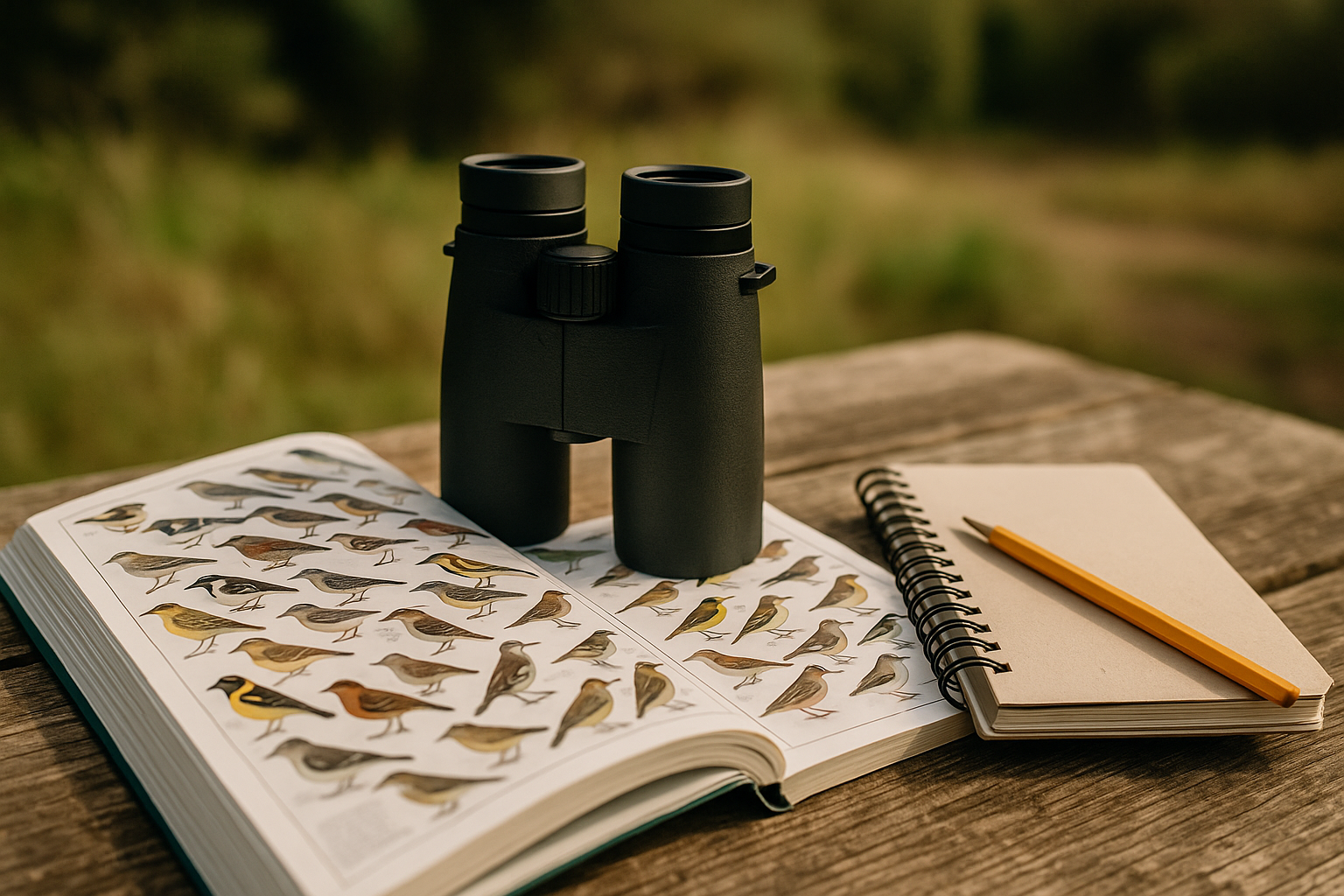
After testing dozens of models, I always recommend 8x42 binoculars for beginners. The "8x" is the magnification (8 times larger), and the "42" is the objective diameter in millimeters. This format offers an excellent compromise between brightness, stability and weight.
My trick for testing binoculars before buying? Go to a specialized store in the late afternoon and look through the window. You want the image to be sharp, bright, and your eyes not to tire quickly.
🌍 Where to watch birds in Quebec: my favorite sites
After years of traveling the province, I have my little secret spots... that I'm going to share with you! Each region of Quebec has its star species and its best times of the year.
Montreal region
To start, nothing beats urban parks. parc du Mont-Royal remains my number one choice: easy access, diverse, and you can observe woodpeckers, warblers, blue jays, and even peregrine falcons that nest on skyscrapers!
parc national du Mont-Saint-Bruno is perfect for a half-day outing. Its lakes attract a nice variety of ducks and aquatic birds, especially in spring.
Quebec City region
If you're in the Capitale-Nationale, don't miss chutes Jean-Larose. The mixed forest environment attracts both resident and migratory birds. I've observed pileated woodpeckers, nuthatches and even a pair of red-shouldered hawks there.
Charlevoix and its hidden treasures
For a wilder experience, head to Charlevoix! parc national des Hautes-Gorges-de-la-Rivière-Malbaie offers breathtaking landscapes and bird fauna typical of the boreal forest.
My little secret? mont du Lac-des-Cygnes. The name says it all: a magical spot to observe aquatic birds, and if you're lucky, maybe even tundra swans in migration!

🎯 How to identify your first birds: my field method
I'm going to share the technique I've been using for years and that I teach to all the beginners who accompany me. It's what we call the "field marks" method, and believe me, it will change your way of observing.
The 5 essential questions
When you see a bird, always ask yourself these questions in order:
- What is its size? Compare it to birds you know (sparrow, crow, duck)
- What is its general shape? Stocky, slender, long or short beak, long legs?
- What are its main colors? Start with the most obvious ones
- How does it behave? Hops on the ground, climbs trees, swims, dives?
- Where did you see it exactly? In water, at the top of a tree, on the ground in grass?
My "easy" species to start with
Here's my list of birds that every beginner should learn to recognize first. They're common, highly visible, and have distinctive characteristics:
| Species | Where to see it | Distinctive sign | Best period |
|---|---|---|---|
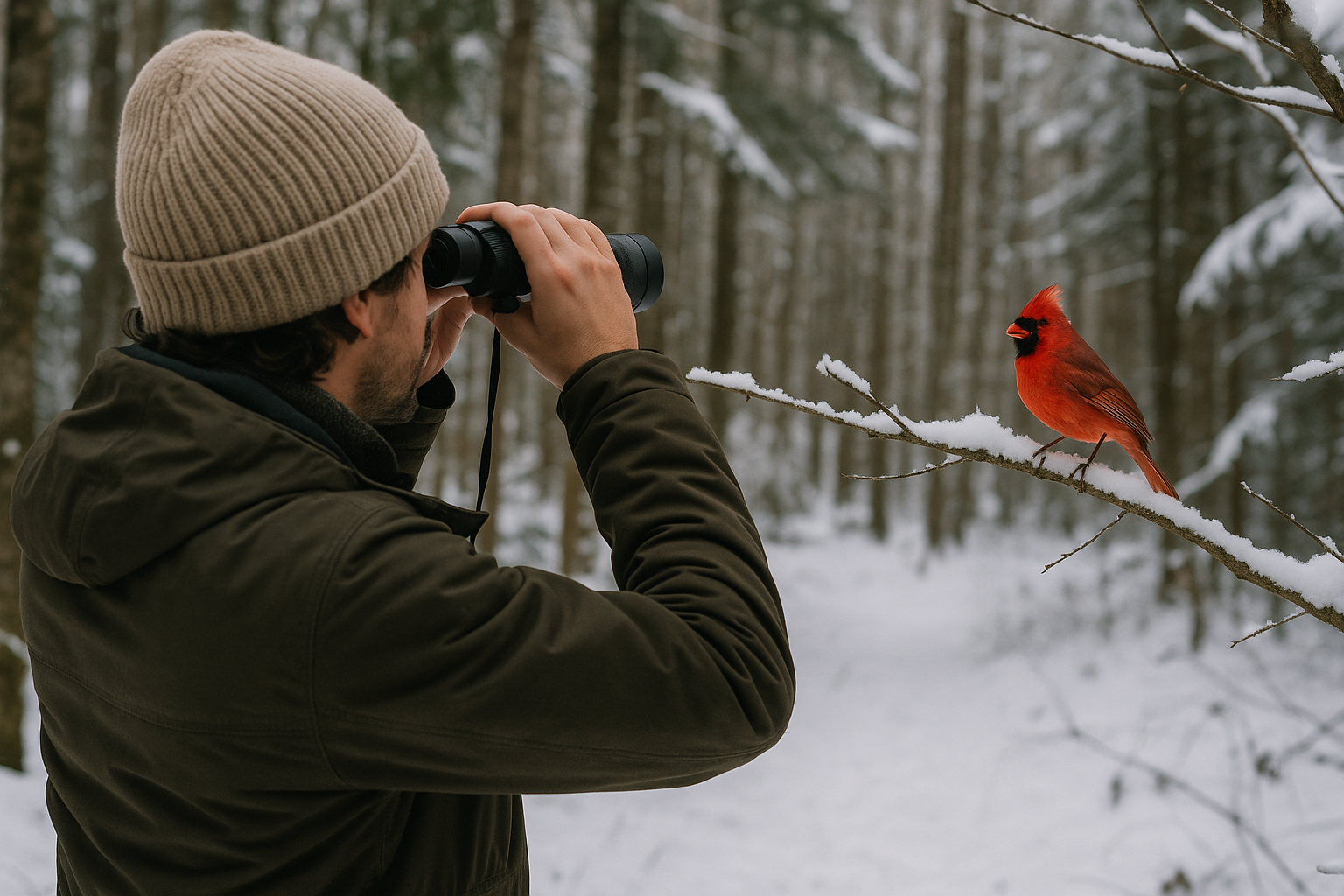
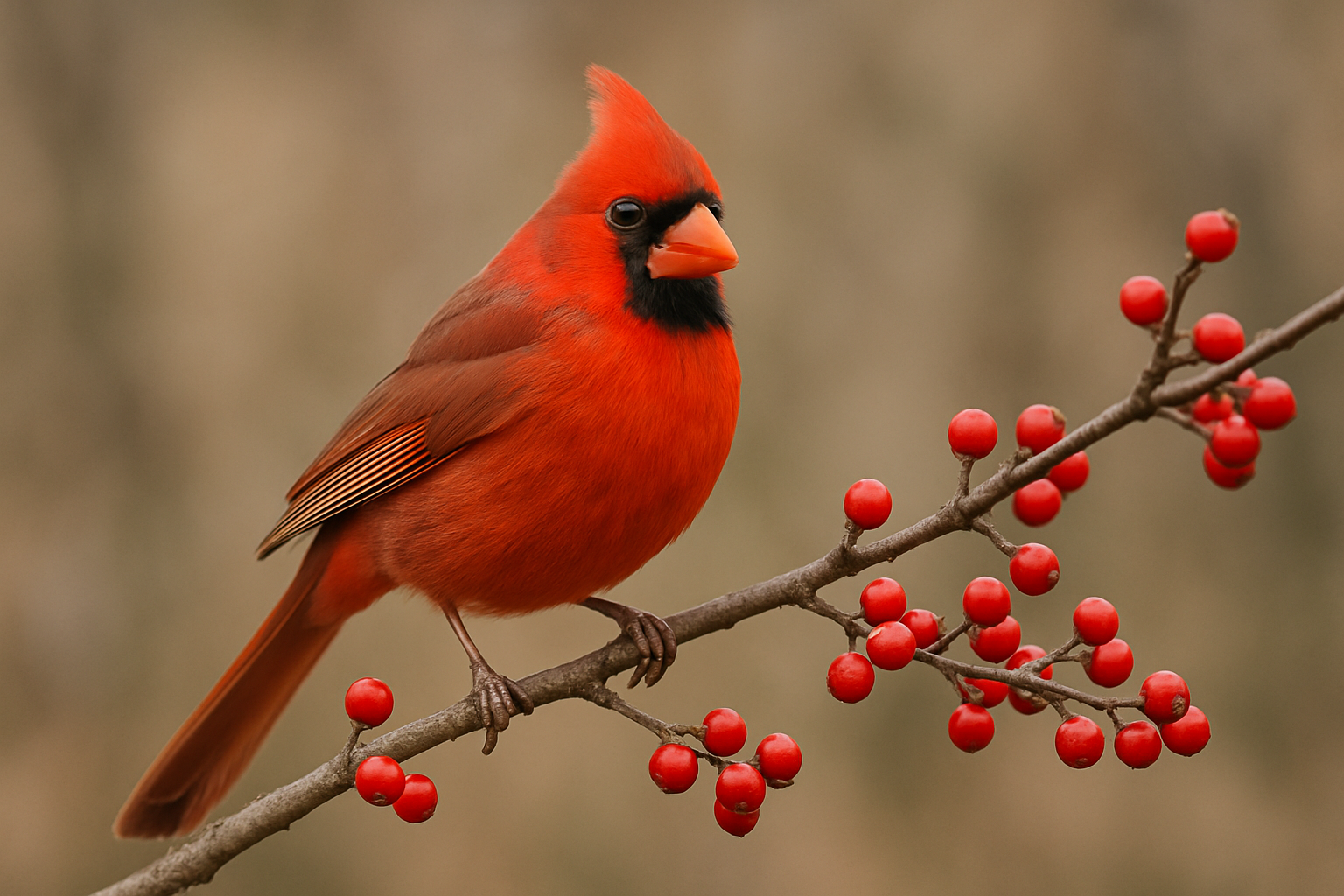
| Northern cardinal | Urban parks, feeders | Male entirely red, crest | Year-round |
| Blue jay | Mixed forests, parks | Bright blue, very noisy | Year-round |
| Downy woodpecker | Tree trunks | Black and white, drums | Year-round |
| American robin | Lawns, edges | Orange breast, runs on ground | April to October |
| American goldfinch | Fields, feeders | Bright yellow (male), undulating flight | May to September |
The art of listening: don't neglect songs
You know what really made my ornithology skills take off? Learning to recognize songs. Often, you'll hear a bird long before you see it, especially in dense forest.
My favorite app for that? Merlin Bird ID from Cornell Lab. It can even identify songs in real time! You record 10 seconds, and it tells you which species it detects. It's amazing.
📅 When to observe: the Quebec ornithologist's calendar
Each season in Quebec has its magical moments for bird watching. After 15 years of recording my observations, I've developed my own "ornithological calendar" that I'm going to share with you.
Spring (March to May): the season of arrivals
This is MY favorite season! Migrants return from the south, males are in bright breeding plumage, and everyone sings to attract females. The action starts in mid-March with the first robins and crows, then it's an explosion in May.
"The first yellow warbler of spring is like meeting a friend you haven't seen in months." — My observation notebook, May 15, 2023
My key dates to remember:
- Mid-March: Return of crows and first robins
- Early April: Massive arrival of waterfowl
- Mid-May: Peak warbler migration (the show of the year!)
- Late May: Settlement of the last migrants
Summer (June to August): the family season
Summer is quieter migration-wise, but it's fantastic for observing behaviors. Birds feed their young, teach them to fly, to search for food. You'll see heartwarming scenes!
Fall (September to November): the great departure
Fall is migration in the other direction. Less spectacular than spring (birds sing less), but you can observe impressive concentrations of species gathering before the great journey south.
It's also the perfect season to start! Birds are less wary, more concerned with building their reserves than fleeing observers.
Winter (December to February): the resistants
Quebec winter is the kingdom of cold specialists. Fewer species, but those that stay are fascinating to observe. And with snow, they're often easier to spot!
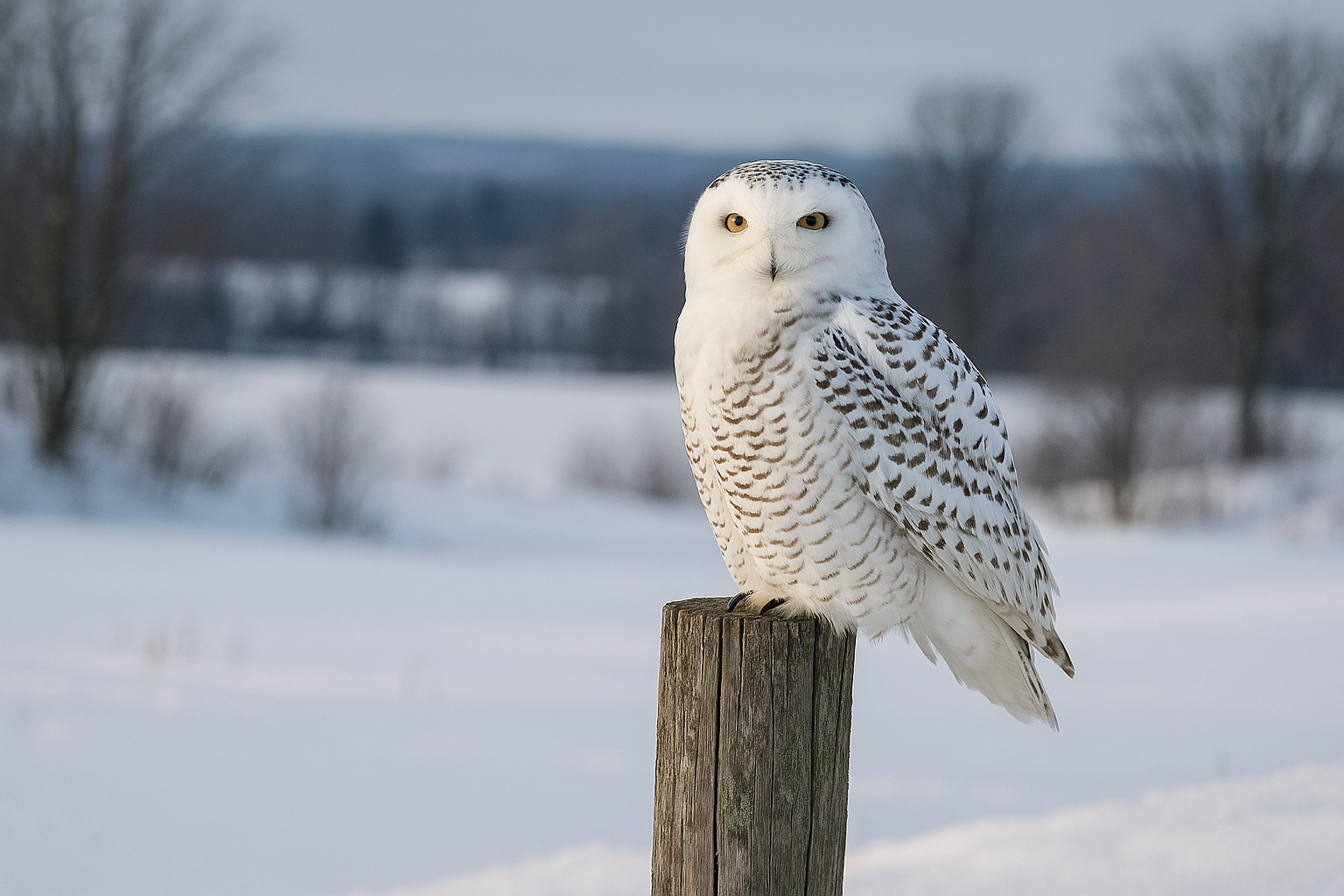
My winter favorites: woodpeckers (who drum even at -20°C), chickadees (always in groups), and if you're lucky, snowy owls that come down from the Arctic.
🎒 My practical tips for your first outings
Alright, let's get serious! Here are all my field tricks accumulated over the years. Small details that make all the difference between a frustrating outing and a memorable one.
Preparation changes everything
Unlike hiking where you can leave on a whim, bird watching requires a minimum of planning. No need for a mission plan worthy of NASA, but a few minutes of preparation will save you hours in the field.
My routine before each outing:
- Check the weather: avoid very windy days (birds hide)
- Consult eBird: this app shows you what other observers have seen recently in your area
- Check sunrise/sunset times: bird activity follows these rhythms
- Prepare your equipment the night before: nothing worse than binoculars with dirty lenses!
In the field: the art of active patience
Bird watching is 20% technique and 80% intelligent patience. I emphasize "intelligent" because staying motionless like a statue isn't effective. You have to move, but move smart.
My golden rules in the field:
- Move slowly: pause every 20-30 meters to scan the surroundings
- Use your ears first: a song or call will guide you to the bird
- Avoid noisy clothing: forget the rain jacket that crackles with every movement
- Respect distances: if a bird flies away when you approach, you were too close
How to keep an observation notebook (without going crazy)
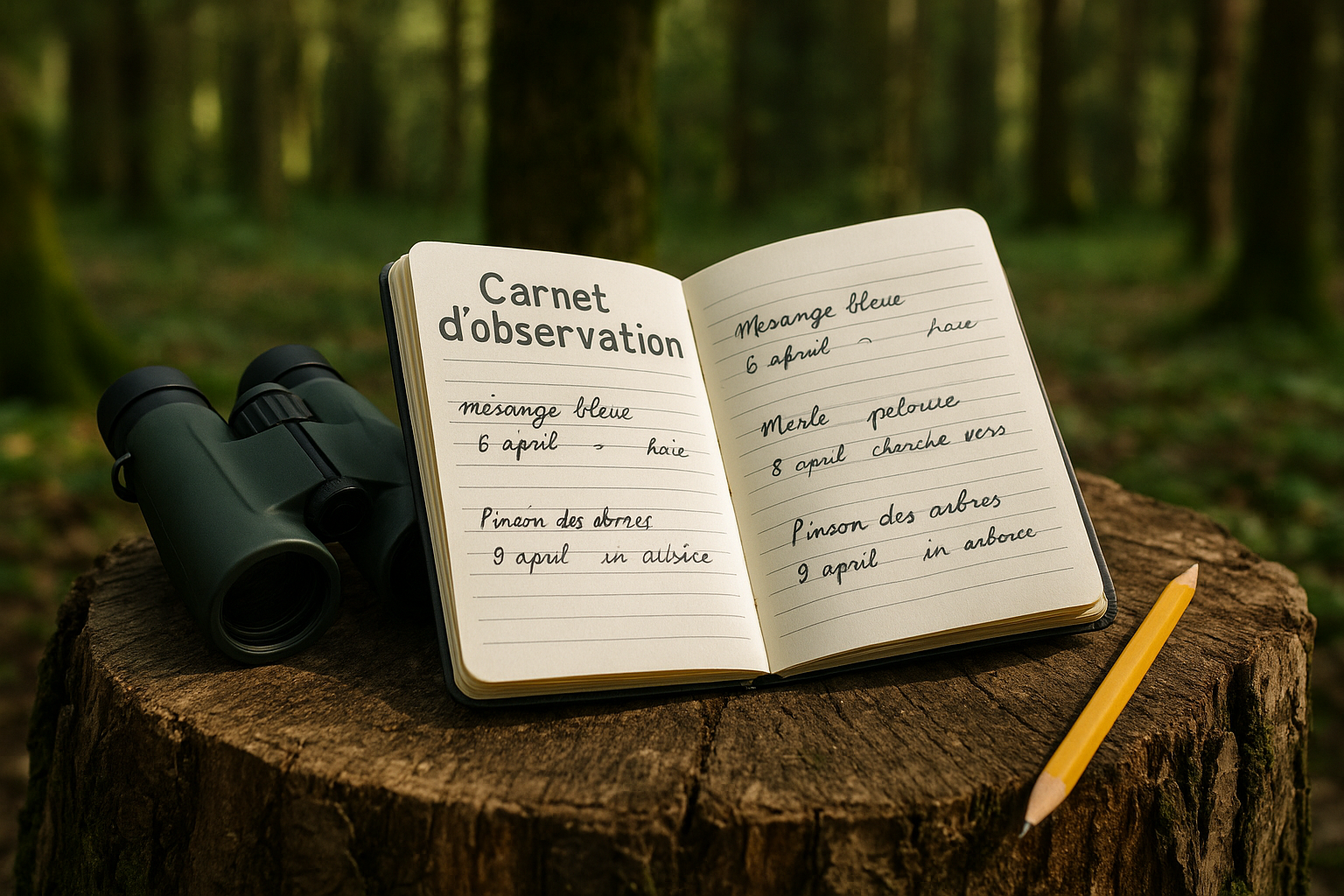
At first, I tried to note everything in a detailed notebook. Result? I spent more time writing than observing! Now, I've developed my own simplified method:
| Information | Why it's important | How to note quickly |
|---|---|---|
| Date and time | Seasonal patterns | Short format: 15/05 - 7:30am |
| Precise location | Find good spots again | GPS or landmark |
| Species | Personal tracking | French name or code (NOCA = Northern Cardinal) |
| Number | Relative abundance | 1, 2-5, 5-10, 10+ |
| Notable behavior | Learning | Keywords: feeding young, singing, etc. |
To start bird watching, I always recommend consulting our ultimate beginner's guide to hiking in Quebec, as both activities share many basic principles.
🚀 Moving to the next level: from beginner to enthusiast
You're starting to recognize your first birds? Perfect! Now, let me show you how to deepen your passion and join the Quebec ornithology community.
Joining a birding club
Honestly, this is the advice I give to all beginners who want to progress quickly. Birding clubs organize group outings, conferences, and you can learn in a few months what took me years to discover alone.
In Quebec, we're lucky to have active clubs in all regions:
- Club des ornithologues de Québec (COQ)
- Société de biologie de Montréal
- Club d'ornithologie de l'Outaouais
- Regional clubs in practically every city
The advantage? You go out with people who know the best spots, the best times, and who can help you identify difficult species in the field.
Participating in citizen science
What's fantastic about modern ornithology is that your observations really count. Every time you identify a bird and record it in eBird, you contribute to a global database used by researchers.
I even discovered that some of my "mundane" observations turned out to be important for documenting range changes related to climate change. Not bad for a guy who couldn't even recognize a sparrow at the beginning!
Exploring new habitats
Once you master the birds in your area, it's time to broaden your horizons. Each habitat in Quebec has its specialists:
- Wetlands: herons, ducks, aquatic warblers
- Boreal forest: woodpeckers, northern warblers, grouse
- Prairies and fields: sparrows, bobolink, meadowlark
- Coastal environments (Gaspésie, Côte-Nord): seabirds, shorebirds
My personal challenge this year? Documenting bog birds. A habitat we often neglect, but which shelters fascinating species like the palm warbler.
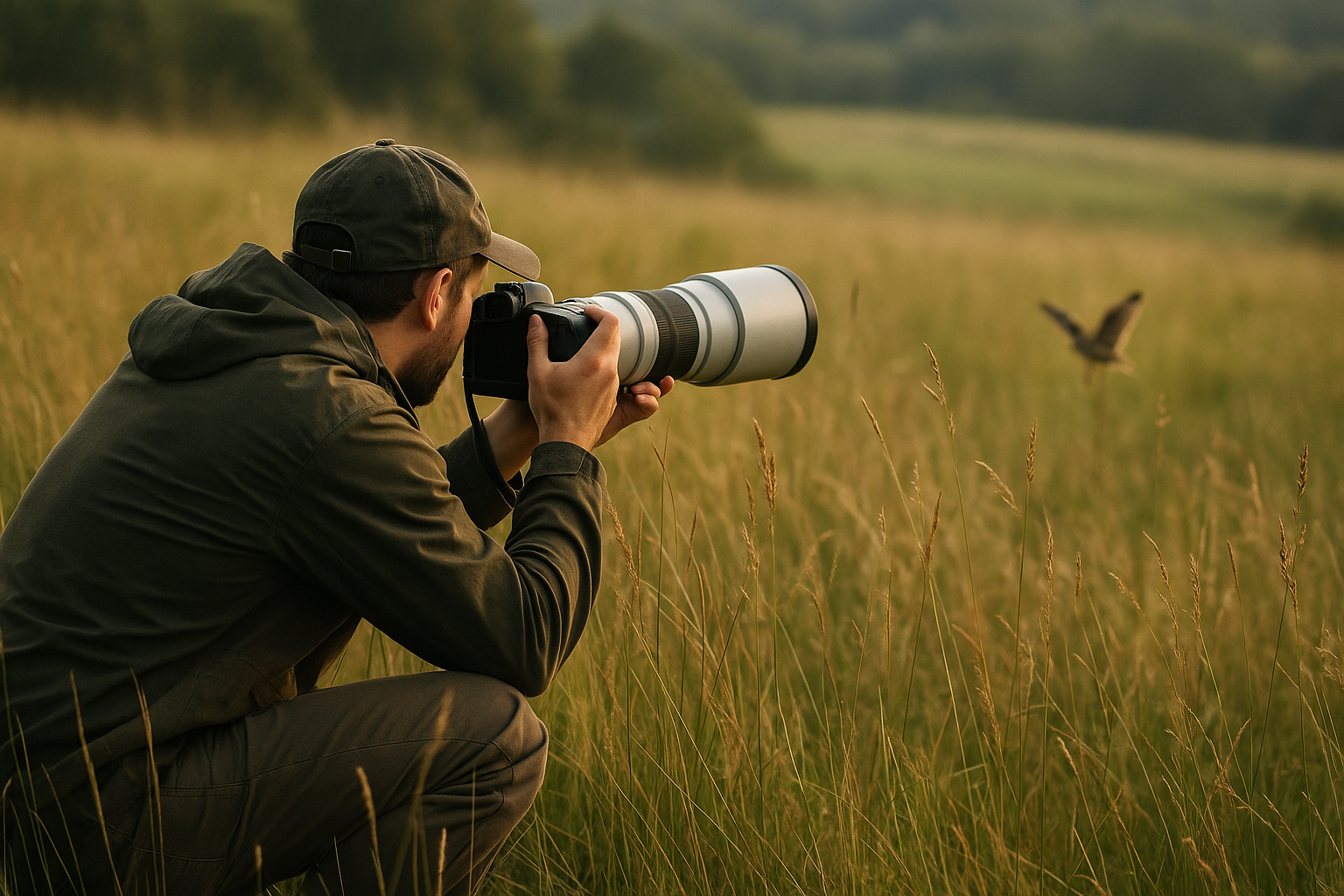
Bird photography: a new challenge
Warning, it's a trap! Once you start photographing birds, it's hard to stop. It adds a creative dimension to observation, but it also completely changes the approach.
If you want to get into it, start simple: a 300mm telephoto lens, patience, and lots of practice. And above all, never forget that the bird's welfare comes before the photo.
🌟 My beginner mistakes (so you can avoid them!)
Alright, it's time for embarrassing confessions! If I can save you from some of the blunders I made in my early days, this article will have been worth writing.
Mistake #1: Wanting to identify ALL birds
My first year, I was obsessed with identification. Every little brown bird HAD to have a name, even if I only saw it for 2 seconds in a bush. Result? Total frustration and zero pleasure.
The solution: Accept that there will always be "little brown birds unidentified" in your outings. Focus on a few species at a time and learn them really well.
Mistake #2: Neglecting "common" birds
I was so focused on rare species that I completely ignored robins, crows, sparrows. Big mistake! These common birds are perfect for learning the basics: behaviors, songs, seasonal variations.
Now, I always tell beginners: "Master your 20 most common species before looking for rarities."
Mistake #3: Going out only in good weather
For months, I only went out in bright sunshine and no wind. I missed so many opportunities! Some of the best observation moments happen just before or after storms, in overcast weather, or even under light drizzle.
Mistake #4: Forgetting to look up
How many raptors I missed because I always looked at eye level or toward the ground! Hawks, accipiters, falcons often pass high in the sky. Now, I do regular "aerial checks" during my outings.
Mistake #5: Not recording my observations
"I'll remember," I told myself. Of course! Two weeks later, impossible to remember where I had seen that hairy woodpecker or on what exact date. An observation notebook, even basic, is essential for progress.
By the way, if you're starting outdoors in general, take a look at our article on 10 beginner mistakes in hiking. Several tips also apply to ornithology!
There you have it, you now have all the keys to start bird watching in Quebec! This passion will transform your nature outings, I'm certain. You'll develop a new eye for details, a zen patience you didn't suspect, and above all, a deeper connection with our incredible wildlife.
My key points to remember:
- Start simple: 8x42 binoculars, identification guide, and lots of curiosity
- Favor morning outings in varied habitats like urban parks
- Learn common species first before looking for rarities
- Record your observations and contribute to citizen science via eBird
- Join a local club to accelerate your learning
You know what? Next time you go on a trail, take 5 minutes to stop and really listen to what's happening around you. You'll be surprised to discover all this bird life that surrounded you without you realizing it. And who knows? Maybe in a few months, you'll be the one explaining to others the difference between a downy woodpecker and a hairy woodpecker!
So, ready for your first real observation outing? The birds of Quebec are waiting for you!

About the author
François Dumaine
Founder of Let's Go Play Outside
A passionate hiker, photographer and content creator, François has been hiking the trails of Quebec and Alberta since 2014. He founded Let's Go Play Outside to give you the information he wished he had before heading out.
Newsletter
Content that makes you want to go outside
Every week, a trail idea, a reflection on nature, or a tip worth the detour. Zero spam. Only the essentials.
Joined by 12,000+ outdoor enthusiasts
Read next