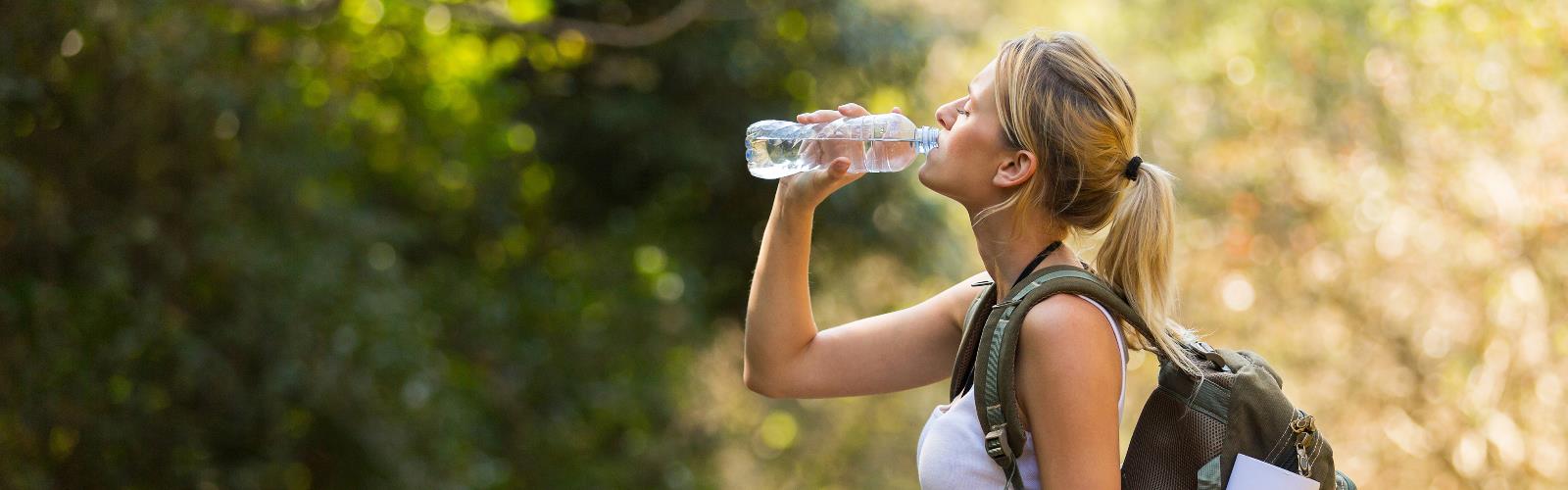
You know what struck me most during my first real multi-day hike in the Hautes-Gorges de Charlevoix? It wasn't the beauty of the landscapes or the difficulty of the trail. It was the splitting headache that hit me on the second day, followed by fatigue that kept me stuck in place for a good hour. I had underestimated the importance of proper hydration while hiking.
Fifteen years and hundreds of kilometers of trails later, I can tell you that hydration is literally what can make or break your outing. Whether you're heading out for a short walk at Parc National du Mont Saint-Bruno or tackling a more challenging trek, your body needs water to perform.
In this guide, we'll break down together why your body demands so much water outdoors, how to calculate your real needs according to your activity, and most importantly, how to avoid the traps I've experienced myself on the trail.
Why Your Body Demands So Much Water While Hiking
Your body is an incredible machine, but one that runs on water. While hiking, this machine runs at full capacity, and demand explodes.
Sweating, your natural cooling system, can make you lose between 0.5 and 3 liters of water per hour depending on effort intensity and conditions. I once weighed my clothes after climbing Mont Yamaska in the middle of July: 2 kilos difference!
But it's not just about sweating. Every vital function of your body depends on water:
- Nutrient transport to your hard-working muscles
- Waste elimination produced by effort
- Joint lubrication that absorbs every step
- Blood pressure maintenance for optimal circulation
At altitude, it's even worse. Drier air and faster breathing increase your needs. Even a small climb like the one at Parc du Mont Arthabaska can surprise you if you're not well prepared.
"Dehydration begins well before you feel thirsty. When your brain sends the thirst signal, you've already lost 1-2% of your body weight in water."
Warning Signals Your Body Sends You
Your body is pretty smart at telling you when something's wrong. The problem is that we often ignore its signals or attribute them to something else.
The first signs of dehydration are often subtle:
- Unusual fatigue - You feel sluggish for no apparent reason
- Slight decrease in concentration - You make navigation errors you normally wouldn't
- Slightly dry mouth - Not yet intense thirst, just a weird sensation
- Darker urine - It should be very pale yellow, almost clear
I experienced this personally during an outing at Canyon Sainte-Anne. I was so focused on taking photos that I forgot to drink for 3 hours. Result: a migraine that ruined the end of the day.
More serious signs require immediate action:
| Symptom | Level | Required Action |
|---|---|---|
| Intense thirst, very dry mouth | Moderate | Drink immediately, take a break |
| Headaches, nausea | Serious | Stop activity, rest in shade |
| Confusion, dizziness | Critical | Medical emergency, descend |
How to Calculate Your Real Water Needs
Forget the "8 glasses a day" rule. While hiking, your needs are completely different and depend on many factors.
The basic formula I use after years of experience:
- Easy hiking (flat terrain, cool weather): 500 ml per hour
- Moderate hiking (elevation gain, normal weather): 750 ml per hour
- Difficult hiking (big elevation gain, heat): 1 liter per hour
But be careful, this is just a starting point. Several factors can change the game:
Factors that increase your needs:
- High temperature - Add 250 ml per hour if it's above 25°C
- High humidity - Your body sweats more but evaporation works poorly
- Altitude - Add 15-20% to your needs above 2000m
- Heavy pack - A pack over 15 kg increases effort and sweating
- Medications - Certain diuretics or antihistamines affect hydration
For an outing like Parc National des Hautes-Gorges de la Rivière Malbaie, with elevation gain and potentially heat, I always leave with at least 3 liters for a full day.
Best Hydration Strategies on the Trail
Having water is good. Knowing when and how to drink it is better. I've developed my own techniques over the years.
The golden rule: drink before you're thirsty. I literally program an alarm on my watch every 20-30 minutes. It may seem excessive, but it's what prevents me from hitting the wall.
My hydration routine while hiking:
- Start: 250 ml in the first 15 minutes
- While walking: 150-200 ml every 20-30 minutes
- During breaks: 300-400 ml, even if I'm not thirsty
- At meals: 500 ml minimum, spread before, during and after
The idea is to drink little but often. Your stomach can absorb about 200-250 ml every 15-20 minutes. If you drink 1 liter at once, a good portion will end up... in the bushes 30 minutes later.
"Hydration is like feeding a fire: better to add kindling regularly than try to catch up with a big log when it's too late."
Types of water and their advantages:
| Water Type | Advantages | Disadvantages |
|---|---|---|
| Pure water | Basic hydration, light | No electrolytes |
| Water with electrolytes | Replaces lost salts | More expensive, sometimes artificial taste |
| Natural spring water | Fresh, natural minerals | Risk of contamination |
Electrolytes: When Your Body Needs More Than Water
Here's a lesson I learned the hard way during a long summer hike: drinking lots of water is essential, but sometimes it's not enough.
After 6 hours of intensive walking with 4 liters of pure water, I started getting cramps in my calves. The problem? I had diluted my electrolytes by drinking too much water without replacing them.
What are electrolytes exactly? They're the minerals your body loses when sweating:
- Sodium - Maintains water balance and nerve function
- Potassium - Essential for muscle contractions
- Magnesium - Prevents cramps and aids recovery
- Calcium - Important for bones and muscles
When do you need electrolytes?
- Efforts lasting more than 2 hours
- Temperatures above 20°C
- Heavy sweating (soaked clothes)
- Multi-day hikes
My favorite solutions on the trail:
- Electrolyte tablets - Easy to carry, precise dosing
- Powder in the bottle - Economical, variety of flavors
- Coconut water - Natural, but heavier to carry
- Dried fruits and salted nuts - Double function: energy + electrolytes
Get my gifts →
Recovery and Rehydration After Exercise
Your hike is over, but your hydration work isn't finished. Recovery is as important as performance on the trail.
Within 30 minutes after your hike, your body is in an optimal window to replenish its reserves. This is the time to hit hard.
My personal rule: drink 150% of the weight lost in water. If I lost 2 kilos, I drink 3 liters in the following hours. Why 150%? Because part of what you drink will be eliminated before being truly absorbed.
Signs that your recovery is going well:
- Urine becomes clear again within 2-4 hours
- Energy returns gradually
- No headache the next day
- Normal appetite at the next meal
My homemade recovery drink (which I often prepare after big outings):
- 500 ml of water
- 1 teaspoon of sea salt
- 2 tablespoons of lemon juice
- 1 tablespoon of honey
It's much more economical than commercial drinks and just as effective.
Water Sources in Nature: Opportunities and Precautions
Sometimes, even with the best planning, you can run out of water. Knowing where and how to resupply in nature is a valuable skill.
The best natural water sources:
- Mountain springs - Generally the safest, fresh and clear water
- Fast streams - Moving water is less likely to be contaminated
- High-altitude lakes - Less human pollution, but watch out for animals
My preferred treatment methods:
| Method | Effectiveness | Time Required | Weight |
|---|---|---|---|
| Purification tablets | Very good | 30 minutes | Very light |
| Portable filter | Excellent | Immediate | Medium |
| Boiling | Perfect | 10-15 minutes | Stove required |
| UV (SteriPen) | Excellent | 2 minutes | Light |
For day trips like to , I always carry a few purification tablets as backup. They weigh nothing and can save your day.
Warning signs to avoid:
- Stagnant or bad-smelling water
- Presence of excessive algae or moss
- Cloudy or colored water
- Animal carcasses upstream
- Intensive human activity in the area
Seasonal Hydration: Adapting Your Strategy
Hydration isn't just a summer issue. Each season has its particular challenges, and I've had to adapt my strategy over the years.
Summer: the obvious challenge
This is the season when we naturally think about drinking more, but it's also when we make the most mistakes. Quebec's hot and humid days can be treacherous.
- Start drinking 2-3 hours before departure
- Favor early morning starts
- Add electrolytes from 1 hour of effort
- Seek shade for your breaks
Winter: the hidden trap
This is where most people mess up. "It's cold, I'm not sweating, I don't need to drink as much." Wrong! I once got dehydrated in the middle of a snowstorm.
- Keep your water warm (thermos or insulated bottle)
- Drink regularly even if you're not thirsty
- Avoid excessive alcohol and caffeine
- Eat water-rich foods (fruits, soups)
Fall and spring: the variable seasons
These seasons are particularly tricky because conditions change rapidly. You can start in the cool morning and end under blazing afternoon sun.
For outings like to , I always leave with more water than expected. Better to have too much than not enough.
My Most Costly Hydration Mistakes (and How to Avoid Them)
After 15 years on the trail, I've made pretty much every possible hydration mistake. Let me share my blunders so you don't repeat them.
Mistake #1: Relying only on natural sources
I had left for a 2-day hike thinking "there are plenty of streams on the map, I'll travel light." Except it was September after a dry summer, and half the sources had dried up. I spent a very uncomfortable night.
Lesson learned: Always leave with at least 75% of your water needs, even if you plan to resupply along the way.
Mistake #2: Neglecting hydration the day before
I was so focused on the day itself that I forgot to hydrate well the day before. Result: I was already starting with a hydration deficit. It's like trying to catch up in a race by starting 100 meters behind the others.
Mistake #3: Drinking only at meals
At first, I treated hydration like meals: 3 times a day, in large quantities. Bad idea. Your body can't store water like it stores calories.
Mistake #4: Ignoring subtle signals
Fatigue, decreased motivation, irritability... I attributed this to effort when it was often the beginning of dehydration. Now, as soon as I feel "off," I drink 300 ml and wait 15 minutes. It solves the problem 80% of the time.
Mistake #5: Underestimating alcohol's impact
A beer at the summit is part of the hiking pleasure, I agree. But I learned that alcohol dehydrates even more at altitude and in hot weather. Now, it's a beer AFTER drinking a large glass of water.
These mistakes cost me ruined days, discomfort and sometimes even dangerous situations. But they also taught me to develop a smarter approach to hydration.
To avoid these traps, I always recommend consulting comprehensive preparation guides, like our article on essential questions to ask yourself before leaving.
Hydration is ultimately like everything in hiking: you learn it on the trail, but it's better to start with the right basics. Your body will thank you, and your outdoor adventures will only be more enjoyable.
Now that you know why water is so crucial for your outings, it's time to plan your next adventure. Whether it's a family walk or a more challenging endeavor, you now have all the tools to stay well hydrated from start to finish.
- Calculate your needs according to effort and conditions - No magic formula, but solid basics
- Drink regularly, before you're thirsty - Your body will thank you
- Adapt your strategy according to season - Winter dehydrates as much as summer
- Prepare the day before - Hydration starts before even putting on boots
- Listen to your body - It's talking to you, you just need to know how to hear it
Water is literally what can transform an ordinary hike into a memorable adventure. So next time you pack your bag, think of François who learned the hard way: better to carry a little more weight than to drag your feet on the trail.
Come on, fill your bottle and go explore! Quebec is full of trails just waiting for you.

About the author
François Dumaine
Founder of Let's Go Play Outside
A passionate hiker, photographer and content creator, François has been hiking the trails of Quebec and Alberta since 2014. He founded Let's Go Play Outside to give you the information he wished he had before heading out.
Newsletter
Content that makes you want to go outside
Every week, a trail idea, a reflection on nature, or a tip worth the detour. Zero spam. Only the essentials.
Joined by 12,000+ outdoor enthusiasts
Read next
Continue the journey