Bugs. Those little winged vampires that turn our beautiful outdoor adventure into an obstacle course! You know, after 15 years exploring Quebec's trails, I've learned the hard way that 10 ways to protect yourself from bug attacks can make the difference between a memorable hike and a stinging nightmare. I still remember that trip to Parc National des Hautes-Gorges de la Rivière Malbaie where I spent more time scratching than admiring the scenery!
Whether you're the type to flee at the first black fly or you like to brave clouds of mosquitoes, these proven strategies will let you fully enjoy your outdoor adventures.
Why do bugs love us so much?
Before going to war against our little winged enemies, it's worth understanding why we attract them like magnets! Mosquitoes and black flies detect our presence through the CO2 we exhale, our body heat, and even certain odors from our skin.
Some people are real walking buffets for bugs. If you're part of this unlucky category, you already know that going out without protection is signing your death warrant!
In Quebec, we mainly deal with mosquitoes, black flies, no-see-ums, and horse flies. Each has its preferences: black flies love hot, humid days, while mosquitoes prefer areas near stagnant water.
Repellents: your anti-bug shield
Bug spray is your best friend in the forest! But be careful, not all repellents are created equal. After testing pretty much everything on the market, here's what really works:
DEET-based repellents
DEET remains the gold standard for repelling bugs. A concentration between 20% and 30% is sufficient for most outings. I personally use 25% DEET for my day hikes, and it does the job.
| DEET Concentration | Protection | Ideal for |
|---|---|---|
| 10-15% | 2-4 hours | Short outings, few bugs |
| 20-30% | 6-8 hours | Day hikes |
| 30%+ | 8-12 hours | Camping, heavily infested areas |
Natural alternatives
If you prefer to avoid chemicals, citronella oil and lemon eucalyptus can help. But let's be honest: in the woods of Mont Yamaska during peak black fly season, you're going to need heavy artillery!
The art of dressing to discourage bugs
Your clothing choice can literally make or break your outing. Bugs have their clothing preferences, and we can play with that!
Color matters
Dark colors attract bugs like magnets. Go for light tones: white, beige, pale gray. I've noticed a huge difference since I traded my black t-shirts for neutral colors.
Covering your skin
The more skin you cover, the less landing surface you give bugs! Here's my proven strategy:
- Long pants in light, breathable fabric
- Long sleeves with UV protection
- High socks tucked into pants
- Cap or hat with bug net if needed
For my outings to Parc National du Mont-Saint-Bruno in June, I always wear hiking pants and a long-sleeved shirt, even when it's 25°C (77°F). Trust me, you'll suffer less from heat than from bites!
Perfect timing: when to go out to avoid invasion
Timing is everything! Bugs have fairly predictable office hours, and knowing their habits can save your skin - literally.
Critical hours to avoid
Bugs are generally more active:
- Early morning (5am to 9am)
- Late afternoon (4pm to 7pm)
- In humid weather without wind
- Near stagnant water sources
My favorite trick? Start hiking around 10am-11am. The bugs are napping, and you get to enjoy sunshine and a light breeze that discourages them.
Choosing your playgrounds strategically
Not all trails are equal when it comes to bugs! After years exploring Quebec's corners, I've learned to read the terrain to anticipate invasion levels.
Areas to avoid (or approach with caution)
Certain environments are real bug nurseries:
- Swamps and bogs
- Lake and river shores with slow flow
- Dense, humid forests
- Shaded areas with little air circulation
That doesn't mean you should avoid these magical places! Just that you need to prepare accordingly. My trips to Mont du Lac des Cygnes are spectacular, but I know I'll need to bring out the heavy artillery protection-wise.
More forgiving terrain
Conversely, certain types of trails offer natural protection:
- Exposed summits with wind
- Rocky, dry terrain
- High-altitude trails
- Coastal areas with sea breeze
Get my gifts →
Anti-bug camping strategies
Camping is where the war against bugs gets really serious! When you spend the night outside, you're on their territory 24/7. Here's how to hold the fort:
Choosing your site
Your campsite location can make all the difference:
- Avoid low areas where humid air stagnates
- Look for windy spots on ridges or clearings
- Stay away from stagnant water sources
- Favor dry, well-drained terrain
Anti-bug camping equipment
Your camping arsenal should include:
| Equipment | Purpose | Priority |
|---|---|---|
| Tent with bug screen | Night protection | Essential |
| Bug shelter | Protected living space | Very useful |
| Treated clothing | Long-term protection | Recommended |
| Mosquito coils | Protection perimeter | Useful |
Using natural elements to your advantage
Mother Nature sometimes gives us a helping hand against her own creations! Learning to read conditions and use them strategically is a game-changer.
Wind, your #1 ally
Wind is bugs' natural enemy. As soon as there's a 10-15 km/h (6-9 mph) breeze, you can almost put away your bug spray! I've spent magical evenings on windy summits without a single bite.
My favorite spots to enjoy natural breeze:
- Exposed summits like at Parc du Mont Arthabaska
- Large lake shores with offshore wind
- Ridges and passes where air circulates naturally
- Open clearings without wind obstacles
Smoke: an ancestral barrier
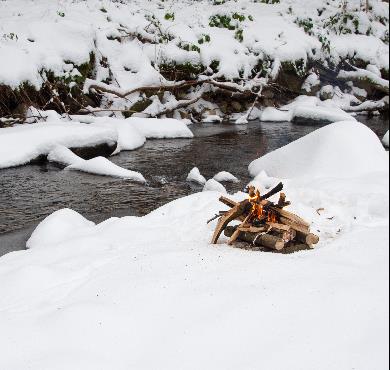
Our ancestors understood it: smoke repels bugs! If you make a campfire (legally and safely), position yourself downwind to benefit from this natural protection.
Application and reapplication techniques
Having good repellent is good. Knowing how to use it effectively is better! I've seen too many hikers get devoured because they applied their protection incorrectly.
The perfect application technique
Here's my proven 5-step method:
- Apply sunscreen first, wait 15 minutes
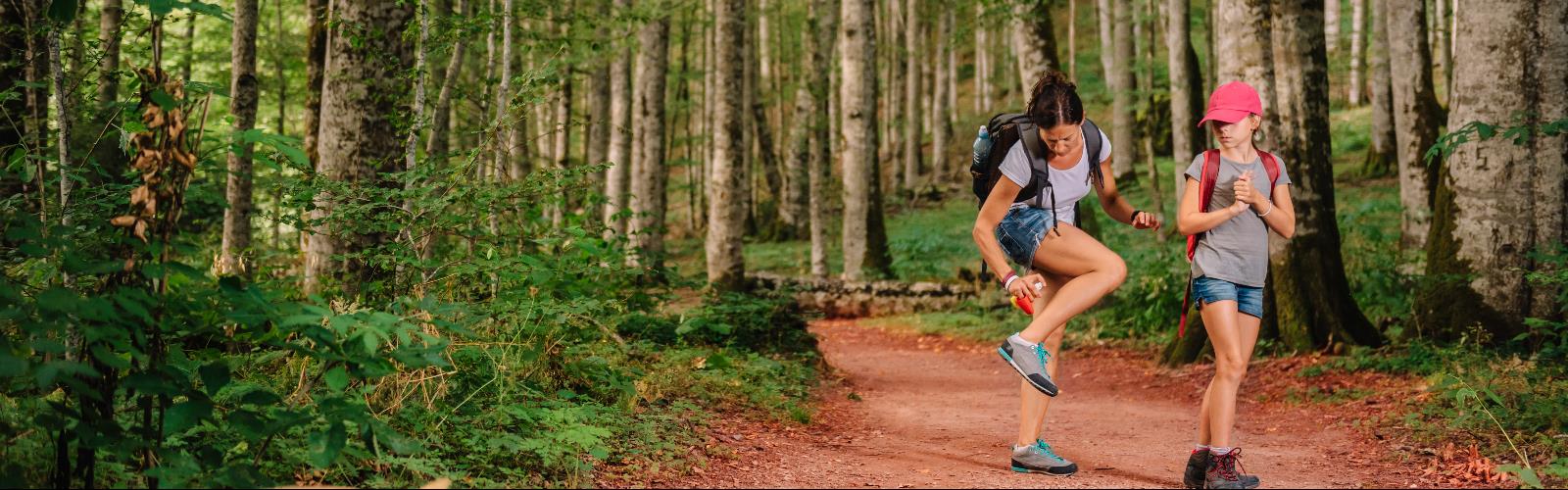
- Spray repellent on your hands, then spread on skin
- Cover all exposed areas without forgetting behind ears
- Avoid eye area and mouth
- Also treat your clothing at wrists and ankles
When and how to reapply
Reapplication is crucial! Sweat, rain, and time reduce your repellent's effectiveness. General rule:
- Every 4-6 hours for DEET
- Every 2-3 hours for natural products
- After swimming or sweating heavily
- If you start getting bitten again!
"The best bug protection is the one you apply correctly and renew regularly!"
What to do when you're already under attack?
Sometimes, despite all your precautions, you find yourself in a cloud of hungry bugs. Don't panic! I have a few tricks up my sleeve for these emergency situations.
Strategic escape techniques
When the attack is massive, you need to know how to retreat intelligently:
- Look for a windy spot: summit, clearing, exposed shore
- Pick up the pace to create your own wind
- Avoid stopping in problem areas
- Cover up quickly with whatever you have on hand
First aid for bites
If you got caught despite everything, here's how to limit damage:
- Clean bites with clean water
- Apply ice or cold water to reduce swelling
- Avoid scratching to prevent infection
- Use an antihistamine if you have one handy
Natural solutions and home remedies
For those who prefer to avoid chemicals, several natural alternatives exist. Well, let's be clear: they're less effective than DEET, but they can make a difference in certain situations.
Repellent essential oils
Certain essential oils have recognized repellent properties:
| Essential Oil | Effectiveness | Application |
|---|---|---|
| Lemon eucalyptus | Good | Diluted on skin |
| Citronella | Moderate | Diffusion or dilution |
| Peppermint | Weak | On clothing |
| Lavender | Weak | Soothing post-bite effect |
Grandma's remedies that work
A few tricks I've tested that can help:
- Garlic in diet: some swear it changes body odor
- Vitamin B1: controversial, but some hikers swear by it
- Citronella-scented soap: for washing before outings
- Apple cider vinegar: topical application after bites
Blacklegged ticks can transmit Lyme disease, a serious bacterial infection. In Quebec, the most affected regions are Montérégie, Estrie, and southern Laurentides. After each forest outing, do a complete body inspection (armpits, groin, scalp). If you find an attached tick, remove it with fine tweezers by pulling straight without twisting, and keep it in a bag. Consult a doctor if you develop a bull's-eye rash or flu-like symptoms within 3 to 30 days. Info: Quebec.ca/lyme-disease
Conclusion: your personalized anti-bug strategy
There you have it, you now have all the arsenal needed to declare war on bugs! Let's recap the essential points to remember:
- DEET-based repellent remains your best ally for effective protection
- Your clothing is your first line of defense: light colors, tight fabrics, maximum coverage
- Timing matters: avoid bug peak hours (early morning and late afternoon)
- Choose your terrain strategically and use wind to your advantage
- Prepare differently depending on whether you're going day hiking or camping
Remember that the best strategy combines multiple approaches. For my summer outings in the Laurentides, I systematically apply DEET, wear long sleeves, and plan my breaks in windy spots. This lets me fully enjoy the beauty of our natural spaces without spending my time scratching!
Bugs are part of the ecosystem, and we must learn to coexist with them. But that doesn't mean we have to serve as their feast! With these 10 strategies in your pocket, you're now ready to reconquer Quebec's trails, even during peak mosquito season.
"Never let bugs decide when you can go out and enjoy nature!"
So, what will your next adventure be? Whether it's a morning hike at Parc du Mont-Royal or a multi-day trek, you now have all the tools to ensure bugs never ruin your outings again. Prepare your equipment, choose your trail, and go create unforgettable memories outdoors!

About the author
François Dumaine
Founder of Let's Go Play Outside
A passionate hiker, photographer and content creator, François has been hiking the trails of Quebec and Alberta since 2014. He founded Let's Go Play Outside to give you the information he wished he had before heading out.
Newsletter
Content that makes you want to go outside
Every week, a trail idea, a reflection on nature, or a tip worth the detour. Zero spam. Only the essentials.
Joined by 12,000+ outdoor enthusiasts
Read next
Continue the journey