Winter Safety — Dangers to Know
Snowshoeing and winter hiking are safe activities, but cold can become dangerous if you're not prepared. Here are the risks to watch for.
Hypothermia
Hypothermia occurs when your body temperature drops below 35°C (95°F). Early signs: uncontrollable shivering, confusion, difficulty speaking, loss of coordination. If you notice these symptoms in yourself or a partner, act immediately: remove wet clothing, shelter from wind, and warm up gradually with dry layers and a hot drink (no alcohol).
Frostbite
Extremities (fingers, toes, nose, ears) are most vulnerable. With wind chill, a temperature of -15°C (5°F) can cause frostbite in less than 30 minutes. Wear warm mittens (not thin gloves), merino wool socks, and cover your face in extreme cold. If an area becomes white and numb, warm it gently with your hand — never rub.
Essential Winter Equipment
- Light crampons — for ice hidden under snow
- Multiple layers — synthetic or merino base + insulation + windbreaker
- Thermos with hot drink — water freezes quickly
- Whistle and headlamp — winter days are short
- Emergency blanket — 16 hours of sunlight in summer vs 8 in winter
Snowshoeing in the Woods: Your Guide to Discovering the Magic of Quebec Winter
There's something magical about snowshoeing in the woods in winter. The muffled silence, snow crunching under your feet, crisp air that awakens your lungs... After 15 years exploring Quebec trails, I can tell you it's one of the most authentic ways to experience our winter. You don't need to be an athlete or have pro equipment to start. If you can walk, you can snowshoe! In this guide, I'll share everything I've learned on the trails so you can fully enjoy this winter adventure, whether it's your first step in snowshoes or you're looking to improve your experience.Get my gifts →
Why Choose Snowshoes to Explore the Winter Woods?
Snowshoeing is the democratization of the winter mountain. Unlike cross-country skiing which requires technique, or mountaineering which needs years of experience, snowshoeing gives you immediate access to the wonders of Quebec winter. I discovered this about fifteen years ago during my first outing at Parc National du Mont Saint-Bruno. I was skeptical, I admit. "Walking with snowshoes on your feet must be complicated!" Well, after 10 minutes, I had found my rhythm. And after 2 hours, I was completely hooked.The Unique Advantages of Snowshoeing
• Instant learning: no learning curve, you master it in minutes • Total access: explore areas inaccessible in summer due to dense vegetation • Perfect cardio: burns between 400 and 600 calories per hour depending on intensity • Total silence: animals are less fearful, perfect for observation • Economical: a pair of snowshoes lasts decades with minimal maintenanceHow to Choose Your Snowshoes and Essential Equipment?
After testing about ten models over the years, I can tell you there are no perfect snowshoes, but there are certainly snowshoes perfect for you. The choice depends on your weight, walking style and conditions you plan to tackle.Snowshoe Size Guide
| Total Weight (body + equipment) | Recommended Size | Ideal Terrain |
|---|---|---|
| Under 70 kg (154 lbs) | 20-22 inches | Packed trails, compact snow |
| 70-90 kg (154-198 lbs) | 22-25 inches | Versatile, most conditions |
| Over 90 kg (198 lbs) | 25-30 inches | Deep snow, off-trail |
Essential Complementary Equipment
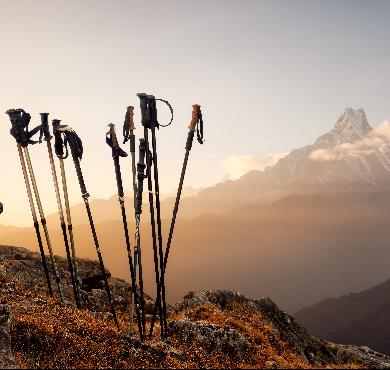
Boots: forget construction boots! Go for insulated winter boots with a rigid sole. Your feet will thank you after 3 hours on the trail. Poles: non-negotiable in my opinion. They help you maintain balance, reduce leg fatigue by 25%, and save you on icy descents. Gaiters: this small detail makes all the difference. They prevent snow from entering your boots and keep your legs dry.Best Techniques for Walking Efficiently in the Forest
Snowshoeing is a subtle art. At first, we all tend to spread our legs too wide or lift our feet too high. Result: we get tired quickly and lose the pleasure of the experience.The Basic Technique That Changes Everything
Modified duck walk: spread your feet slightly (as if following two parallel lines 15 cm apart), keep knees flexible, and let the snowshoe glide slightly on the snow rather than lifting it completely. Breathing rhythm: adopt the 3-3 rhythm (3 steps inhale, 3 steps exhale) on flat terrain, and 2-2 going uphill. It sounds technical put like that, but it becomes natural after a few outings.Managing Different Types of Snow
Powder snow: sink your snowshoes straight down and use a "pedaling" movement to advance. It's more demanding, but what a sensation! Crusted snow: the classic trap! The surface seems solid, then you sink suddenly. Always test with your pole before stepping. Icy snow: use your snowshoe crampons by pressing firmly. On slopes, adopt the "duck step" technique with feet in a V.Where to Discover Quebec's Most Beautiful Snowshoe Trails?
After hundreds of outings, I have my favorite spots for snowshoeing in the woods. Each has its personality, challenges, and unique rewards.My Favorites for Beginners
Parc du Mont-Royal remains my #1 recommendation for a first experience. Accessible by metro, well-marked trails, and that view of Montreal that reminds you why you love this city. For a wilder experience, Mont du Lac des Cygnes in Charlevoix offers breathtaking panoramas. Be careful though, it's more demanding!Trails for Intermediate Adventurers
Parc National des Hautes-Gorges de la Rivière Malbaie offers dream routes with interesting elevation gains. In winter, it's another world!"Winter reveals the secret architecture of the forest. What was hidden under leaves suddenly becomes visible, accessible, magical."
How to Choose Your Trail According to Your Level
Beginner (0-2 outings): favor trails under 5 km (3.1 miles), with elevation under 200 meters (656 feet). Choose parks with services (toilets, plowed parking). Intermediate (3-10 outings): you can tackle 5-10 km (3.1-6.2 miles) routes with up to 400 meters (1,312 feet) elevation. Loop trails are perfect for varying landscapes. Advanced (10+ outings): the world is yours! 10+ km (6.2+ miles) outings, significant elevation gains, even off-trail becomes accessible.How to Dress and Stay Comfortable in All Weather?
Dressing for snowshoeing is quite an art! I've made every possible mistake: too hot at the start, frozen when stopped, soaked with sweat after 30 minutes... Today, I master the layering system like a chef.The 3-Layer System Explained Simply
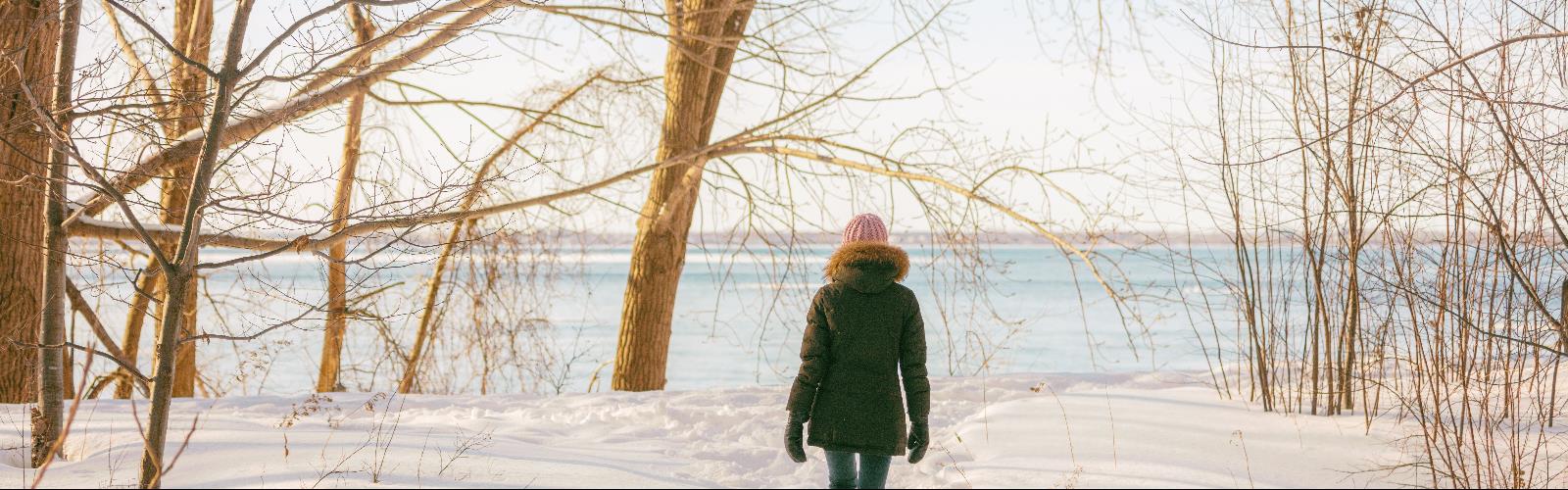
Base layer: wicks moisture. Merino wool or synthetic, never cotton! I recommend medium weight (200 g/m²) for most conditions. Middle layer: insulates and regulates temperature. A light fleece or compressible down jacket you can remove easily. Outer layer: protects from wind and snow. Breathable windbreaker or softshell depending on conditions.Temperature Management While Moving
Here's my trick: start cold. If you're warm in the parking lot, you'll overheat in the first kilometers. Ideally, be slightly cold the first 10 minutes, then find your thermal balance. During stops: immediately put on an extra layer. Your body cools very quickly when you stop, even if you're warm. For extremities: two pairs of gloves (thin ones underneath, warm ones on top), breathable hat, and spare socks in your pack.| Temperature | Base Layer | Middle Layer | Outer Layer |
|---|---|---|---|
| 0°C to -10°C (32°F to 14°F) | Light merino | Thin fleece | Windbreaker |
| -10°C to -20°C (14°F to -4°F) | Medium merino | Thick fleece | Softshell |
| Below -20°C (-4°F) | Thick merino | Light down | Technical parka |
Beginner Mistakes That Can Ruin Your Outing (and How to Avoid Them)
Let me tell you about my first real snowshoeing outing. I had left with friends to Parc du Mont Arthabaska, confident as could be. Result: calf cramps after 1 hour, soaked feet, and a memorable descent... for the wrong reasons!Mistake #1: Underestimating Physical Effort
Snowshoeing looks easy from the outside. But walking in snow requires 30% more energy than in summer. Start with short outings (2-3 km/1.2-1.9 miles) and increase gradually.Mistake #2: Miscalculating Required Time
In snowshoes, count on 1 km/h less than summer hiking. On a trail you do in 2h in summer, plan 3h in winter. And that's not counting photo stops (because trust me, you'll take them!) and stops to admire the scenery.Mistake #3: Neglecting Hydration and Nutrition
In winter, we're less thirsty, but we dehydrate just as much! Drink regularly, even if you don't feel the need. For food, favor energy-rich snacks: nuts, dried fruits, energy bars.Mistake #4: Leaving Without Checking Conditions
Always check weather forecasts and trail conditions before leaving. Several parks publish winter condition bulletins on their websites.Mistake #5: Forgetting Safety Essentials
Even for a 2-hour outing, bring: headlamp (sun sets early!), survival blanket, whistle, and tell someone where you're going and when you'll return.Safety and Wildlife: Sharing the Winter Forest in Harmony
Winter completely transforms wildlife dynamics. Some animals hibernate, others are more active, and all have developed fascinating survival strategies you can observe if you know where to look.Possible Encounters and How to React
White-tailed deer: much more visible in winter as they group in deer yards. Keep your distance (minimum 30 meters/98 feet) and avoid sudden movements. Winter birds: woodpeckers, chickadees, blue jays... They're less fearful in winter. Perfect for observation and photography! Tracks in snow: an open book on wildlife! Learn to recognize prints of hares, squirrels, foxes. It's fascinating.Golden Rules of the Respectful Snowshoer
• Stay on marked trails: protect fragile vegetation under snow • Respect tranquility: speak softly, avoid shouting • Never feed animals: it disrupts their natural cycle • Pack out your trash: even an orange peel takes months to decompose in extreme coldCapturing the Magic: Photography and Snowshoes
There's nothing like a snowshoeing outing for spectacular winter photos! Light, contrasts, textures... everything conspires to create memorable images. But photographing while snowshoeing requires some adjustments.Photo Equipment Adapted to Cold
Battery: cold kills batteries! Keep spare batteries warm in your inner pocket. I learned this the hard way during an outing at Canyon Sainte-Anne where my camera died after 30 minutes... Humidity protection: when you go from outdoor cold to warmth (shelter, car), condensation can damage your equipment. Use waterproof bags or let your camera acclimate slowly.Magical Moments Not to Miss
Winter golden hour: shorter than in summer, but what intensity! Plan your outings to take advantage of this warm light on snow. After snowfall: the 24 hours following a snowstorm offer the most beautiful conditions. Loaded branches, pristine snow, perfect crystals. Details: close-ups of ice crystals, snow textures, frozen drops... Winter reveals unsuspected micro-beauty.Planning Your First Outing: Beginner Snowshoer Checklist
Ready to get started? Perfect! Here's my proven checklist to make your first outing a total success. I've refined it over the years accompanying dozens of beginners.Before Leaving: Preparation
Choose your trail: start with a 3-5 km (1.9-3.1 miles) route maximum, well-marked, with services. Provincial parks are perfect for beginners. Check weather: avoid storms, freezing rain, and very windy days. A beautiful cold, sunny day is ideal! Inform someone: leave your itinerary and expected return time with someone close. Basic outdoor rule!Basic Equipment for Your First Outing
• Snowshoes (rented or borrowed to start) • Hiking or ski poles • Warm, waterproof winter boots • Gaiters to keep snow out of boots • Clothing according to layering system • 20-30L backpack with water, snacks, extra layer • Sunglasses (snow glare is intense!) • Sunscreen for faceDuring the Outing: Good Reflexes
Start slowly: take 15 minutes to find your rhythm and adjust equipment. Take regular breaks: every 30-45 minutes at first. It's normal to get tired faster! Listen to your body: thirst, hunger, fatigue, cold... don't ignore any signals. Enjoy the moment: stop, breathe, admire. That's the real wealth of snowshoeing!Conclusion: The Call of the Winter Forest Awaits You
Snowshoeing in the woods in winter is much more than a simple physical activity. It's a way to reconcile with our Quebec winter, discover transformed nature, and experience moments of pure magic. Here's what to remember for successful first outings: • Start simple: basic equipment, easy trails, short outings • Master the layering system to stay comfortable in all weather • Respect your pace and listen to your body, especially the first times • Prepare well: weather, equipment, itinerary, and always inform someone • Enjoy every moment: the beauty of Quebec winter is waiting for you Winter is no longer a season to endure, but an invitation to adventure. Every falling snowflake is a promise of new discoveries. So lace up your boots, strap on your snowshoes, and see for yourself why thousands of Quebecers have fallen in love with this activity. The snowy forest awaits you. It has secrets to whisper, panoramas to reveal, and memories to engrave in your mind. All you have to do is take that first step... in snowshoes! For more practical advice before your first outing, check out our guide on essential questions to ask yourself before leaving. And don't hesitate to explore our trail suggestions to find your next winter playground!
About the author
François Dumaine
Founder of Let's Go Play Outside
A passionate hiker, photographer and content creator, François has been hiking the trails of Quebec and Alberta since 2014. He founded Let's Go Play Outside to give you the information he wished he had before heading out.
Newsletter
Content that makes you want to go outside
Every week, a trail idea, a reflection on nature, or a tip worth the detour. Zero spam. Only the essentials.
Joined by 12,000+ outdoor enthusiasts
Read next
Continue the journey