What if "getting old" was just an opportunity to "become young again"
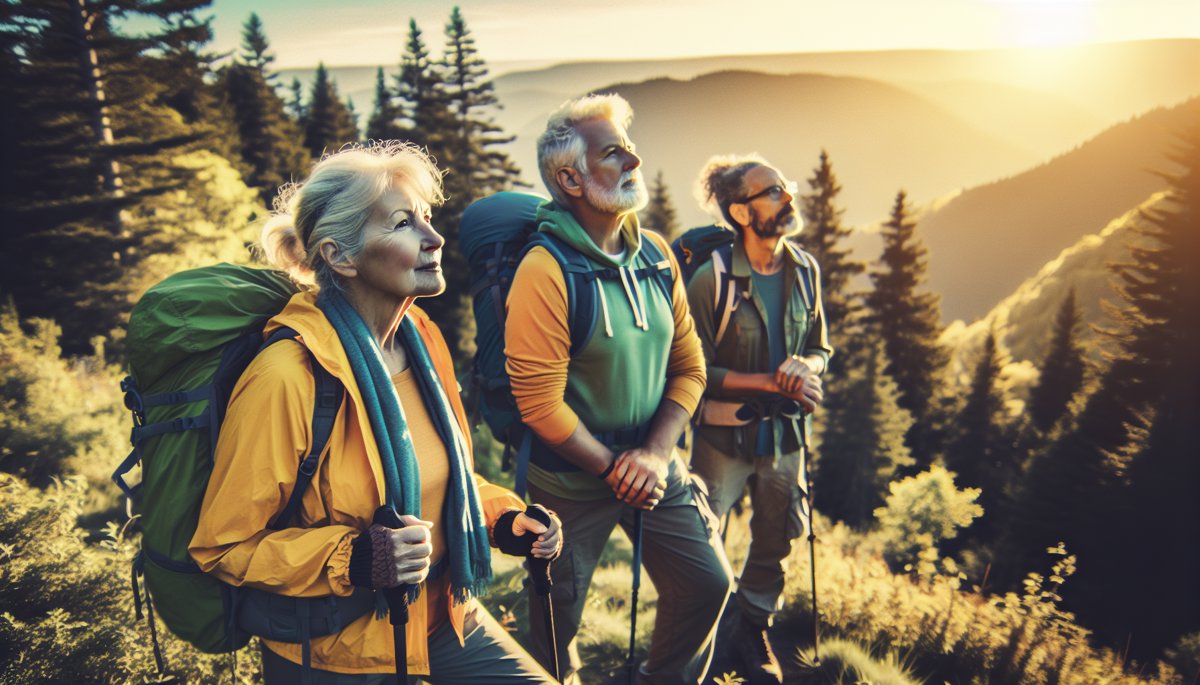
When do we become old?
Everyone asks themselves this question.
Aging is inevitable, and there are unmistakable signs: physical exhaustion, joint pain when it rains, brown spots that you notice more and more on your softening skin, the hair from your scalp migrating en masse to your nose and ears…
At some point, there's like a bell that rings inside you announcing that somewhere, you're heading toward the end.
It's when the body throws back in your face the irrefutable signs of your aging that another question arises: When will it be too late?
Too late to travel, to get back in shape, to find yourself more often in nature, to be more present for your family, too late to love and be truly loved, without conditions?
Tai Chi
The image of a group of elderly people doing tai chi has always made me smile. And when you think about it, it's very revealing of how our society considers this famous period we call the "golden age."
From the moment the first signs of aging make themselves felt, we want to stretch time by moving slower, trying to reduce the impact of supposedly inevitable pain and discomfort as life's hourglass runs out... A bit as if there was a point of no return, a moment when it was too late to have dreams, to consider that we still have an active and meaningful role to play on this Earth.
We try to slow down time, when deep down, now freed from most of our professional and family responsibilities, we have more time to do what we truly love.
Biological Clock
This seems inevitable to us. Most people will experience around age 60 a loss of muscle mass, a decrease in bone density while gaining a natural ability to accumulate fat mass.
There's certainly a bio"logical" truth behind these phenomena. Signs of aging occur more insistently when humans reach a point in their life where their body is no longer available for reproduction. The rate of reproduction-related hormones drops, causing a series of upheavals whose impact differs from person to person.
Because there are also genetic conditions, accidents, stress, and lifestyle habits that explain the effects of aging on the body. Not to mention the comfort of the modern world and dependence on technology that promote sedentary behavior.
But looking more closely, it's primarily how we mentally approach the question of aging that determines how the body will react to time.
Cruel Reality
Due to their harmful lifestyle habits, some people who believe themselves to be "young" actually have the physical condition of people 20 to 30 years older (You remember, it happened to me: see other text). In short, they are already "old" and must continue to assume the responsibilities of active life.
Should we be surprised that an ever-growing number of people suffer from depression? Should we be surprised that there are more and more burnouts? That heart problems and cancers are increasingly frequent among ever-younger segments of the population?
A Growing Number of Senior Athletes
On the contrary, some active people seem to defy time's grip. They are living proof that one can maintain excellent physical condition past 70 and even 80 years old.
There's no age limit for regularly engaging in physical activities. Medical recommendations for elderly athletes are similar to those for their younger counterparts: You must take it step by step to avoid overtraining.
With age, you must expect more intense muscle fatigue that must be compensated by allowing for a longer recovery period. This shouldn't be a problem, since usually, the more we advance in age in our lives, the more time we have for ourselves.
Moreover, while many senior athletes remain very competitive in their hearts, performance criteria become less important with maturity.
As we age, we compare ourselves less to others and it's much easier to focus on the simple pleasures that a healthy body provides. People who remain physically active even at an advanced age are usually not only well in their bodies, they are also well in their minds.
Several studies tend to prove this link between physical activity and cognitive abilities. What basically happens in the body of an active person is that the different systems in the organism adapt to movement by producing more cells, which increases the number of neural connections in the brain. These conditions ultimately improve memory and concentration, but also the ability to recover during sleep and therefore more efficient repair of worn tissues.
It's Never Too Late
The human body is made to move, but its extraordinary ability to adapt is also felt during long periods without activity. The good news is that, with an adequate approach, regardless of age, everyone can turn things around.
To restart the machine, it's important to go very gently while being forgiving with yourself. You can't expect optimal mobility after decades of sedentary behavior, as ligaments won't be as flexible as before. Some muscles may suddenly complain about being forgotten and signs of old injuries may also resurface. It's therefore important to stay tuned to what's happening inside.
When aiming for fitness at an advanced age, it's important to be followed by a doctor by doing a comprehensive health assessment before undertaking your program. You should also consult a kinesiologist so they can guide you on activities that suit you based on your limitations. These precautions are necessary to have an overview of the impact of our lifestyle habits on our fitness project.
Reducing harmful habits like alcohol and tobacco are also always actions that normally fit into a fitness program, particularly when advancing in age.
Overcoming Your Fears
Besides personal fears related to past physical or emotional injuries, you must expect to overcome certain popular beliefs to persevere in your project.
For example, the fear of making your heart pump too hard may restrict you to activities that will have little impact on your fitness. You need to feel a little out of breath when practicing moderate activities to feel positive effects of physical activity. You must dare!
However, it's preferable to be supervised by a professional when our ambitions push us to want to surpass ourselves in more intense activities. The important thing is to always progress while knowing how to recognize your limits.
Activities to Prioritize
Age shouldn't impose limits on the type of activities you want to practice. Some seniors practice extreme sports with as much recklessness as if they were still teenagers. It's important to rediscover a certain pleasure in physical activity and in this sense, stay tuned to the emotions that inhabit us when we practice a sport.
However, you must be realistic and play within your means, as reflexes are no longer the same and the body doesn't heal as easily from injuries. It's not certain that skateboarding or ski jumping constitute good starting points for those who wish to get back in shape after a long period of inactivity.
On this subject, walking, cycling, dancing, golf, and swimming represent low-risk activities for injuries that are within reach of most people. Yoga is also gaining followers, as its regular practice brings a lot of flexibility to the body, which greatly improves the mobility necessary for practicing other activities.
Furthermore, finding yourself in nature as often as possible to practice these activities concretely contributes to amplifying the pleasure.
It has been proven that interaction with nature plays a vital role in human mental and physical well-being. Becoming aware of sounds, smells, touching living things allows us to activate life reflexes within us. Finding yourself outdoors as often as possible to move, sharing your happiness in group activities promotes maintaining our good habits in the long term.
Conclusion
If there's one certainty in life, it's that we're all going to die someday. You can't choose how you're going to die, but you can choose how you're going to live.
As long as you do what brings sparks to your eyes, you'll have the right to be happy. As long as you have your mind to guide you, your body will adapt to the limits you impose on it, regardless of your age.
If youth brings enthusiasm and energy to realize major projects, it's only with experience that one can truly understand that happiness is the sum of these small victories won along the way.
When we age, we understand the urgency of living.
It's time to return to the essential.
Nature is the best context to make this rebirth concrete.
25 hikes under 2 hours from Montreal
Distance, elevation, parking and season for each one. The ones we go back to ourselves.
Get the guide
About the author
François Dumaine
Founder of Let's Go Play Outside
A passionate hiker, photographer and content creator, François has been hiking the trails of Quebec and Alberta since 2014. He founded Let's Go Play Outside to give you the information he wished he had before heading out.
Get our best guides
One article per week to level up your outdoor game. No spam, promise.
You might be interested in
🥾 AlexHike.ca: A Website That Left Its Mark on Quebec Hikers
🧭 Bougex.com: When Community Was at the Heart of the Outdoors
10 Amazing Camping Spots You Should Discover


Back to Basics
Breaking In Your Shoes
Complete 3-Day Bivouac Story on the Sentier National in Mauricie: Unforgettable Adventure, Challenges and Discoveries