

Ready to explore Parc De La Falaise Et De La Chute Kabir Kouba? Here's everything you need to know before you go!
Discover the trail
Trail description
Description
Parc de la falaise et de la chute Kabir Kouba delivers a surprisingly rich outdoor experience in a compact package, making it one of the most accessible nature escapes in the Quebec City area. Located just minutes from downtown, this park proves you don't need to drive hours to find dramatic scenery and quality trail time. The 1.5-kilometer route can be completed in about 45 minutes, but most visitors find themselves lingering longer at the viewpoints and waterfall.
What sets this park apart is how quickly you transition from urban surroundings into a landscape shaped by geological forces. The terrain here tells a story—steep cliffs, rushing water, and rock formations that create a setting that feels much wilder than its proximity to the city would suggest. It's the kind of place that works equally well for a solo morning walk, a family outing, or a quick nature break when you're visiting Quebec City and want to see something beyond the usual tourist spots.
The Kabir Kouba waterfall experience
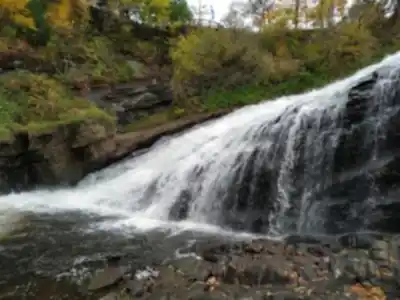
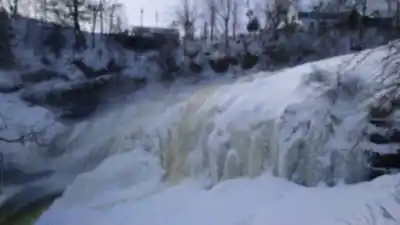
The park's centerpiece is the 28-meter Kabir Kouba waterfall, a powerful cascade that's as much about the dramatic setting as the water itself. The falls drop through a narrow gorge framed by steep rock walls, creating a natural amphitheater that amplifies the sound of rushing water. Standing near the base, you get a real sense of the geological forces that carved this landscape over thousands of years.
The waterfall viewing area is well-positioned for both photography and simply taking in the scene. The rock formations surrounding the falls show clear layering and weathering patterns that the interpretive panels help explain. It's not just a pretty waterfall—it's a window into the region's geological history, and the signage does a good job of connecting what you're seeing to the broader story of how this landscape formed.
Trail character and what to expect underfoot
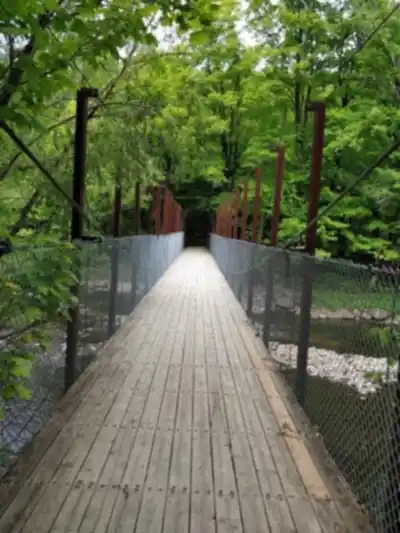
The trail system here is well-maintained without feeling overly manicured. You'll find clear paths and good signage, but the terrain itself varies significantly as you move through different sections of the park. The forest portions offer softer footing with the typical mix of roots, packed earth, and occasional rocks that you'd expect on any woodland trail.
Where things get more interesting is near the cliff areas and waterfall approaches. Here, the trail becomes more technical—not difficult, but requiring more attention to foot placement. The rock can be slippery when wet, and there are sections where you're walking close enough to drop-offs that you'll want to keep kids close and watch your step. The 28 meters of elevation gain is spread throughout the route, so you're not facing any steep climbs, but rather a gentle rolling terrain that keeps the walk engaging.
The easy difficulty rating is accurate for most visitors, though the cliff sections and waterfall areas require basic trail awareness. If you're comfortable walking on uneven surfaces and don't mind being near drop-offs with appropriate caution, you'll handle this trail without issues.
Forest ecosystems and wildlife watching
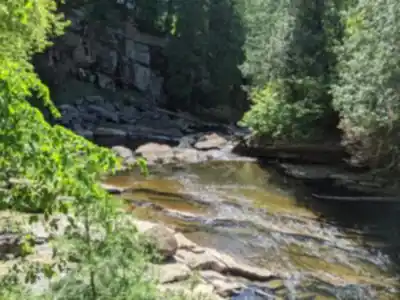
The park protects a diverse ecosystem that benefits from the varied terrain and microclimates created by the cliffs and waterfall. The forest sections feature mature trees that create a canopy environment quite different from the exposed cliff areas. This habitat diversity is part of what makes the park interesting for birdwatching—different species prefer different parts of the landscape.
The interpretive panels along the trail provide specific information about local flora and fauna, helping you identify what you're seeing and understand how different species use the various habitats within the park. The combination of forest, cliff, and water environments creates opportunities to spot species that might not all be present in a more uniform landscape.
For wildlife watching, early morning and late afternoon tend to be most productive. The forest sections are good for listening—bird calls carry well in the enclosed canopy areas, and moving quietly increases your chances of spotting movement in the trees or understory.
Panoramic viewpoints and photography opportunities
Beyond the waterfall, the park offers several panoramic viewpoints that take advantage of the cliff-top terrain. These overlooks provide expansive views across the surrounding landscape, giving you a sense of how the park fits into the broader Quebec City region. The contrast between the intimate forest sections and these wide-open vistas is one of the trail's highlights.
Photography opportunities are abundant throughout the park. The waterfall offers classic cascade shots, while the cliff viewpoints provide landscape compositions. The forest sections can be good for detail work—interesting rock formations, tree textures, and the interplay of light and shadow through the canopy. Because the trail is well-maintained and the distances are short, it's easy to carry camera gear without feeling burdened.
The interpretive panels themselves can be useful for macro photography or as elements in wider shots that show how the park balances natural preservation with visitor education.
Educational value and interpretive features
The interpretive panels throughout the park are genuinely informative rather than just decorative. They cover the area's geological features in detail, explaining how the waterfall and cliffs formed and continue to evolve. For visitors interested in natural history, these panels connect the visual drama of the landscape to the underlying processes that created it.
The botanical information is equally useful, helping you identify common and notable plant species as you walk. This educational component makes the park particularly good for families—kids can turn the hike into a learning adventure, looking for specific plants or geological features mentioned on the signs.
Planning your visit and practical considerations
The park's location in the Quebec City region makes it extremely accessible for both locals and visitors. The short distance and moderate time commitment mean you can easily fit a visit into a morning or afternoon without it dominating your entire day. This flexibility makes it particularly valuable when you want outdoor time but have other commitments or limited daylight.
Footwear should be appropriate for mixed terrain—comfortable walking shoes with decent grip are sufficient for most conditions, though the rocky areas near cliffs can be slippery when wet. The well-maintained trails mean you don't need hiking boots, but flip-flops or dress shoes would be inappropriate for the more technical sections.
The park works well for solo visits when you want a peaceful nature experience, and equally well for groups with mixed hiking abilities. The variety in terrain and multiple viewpoints means faster hikers can explore more thoroughly while others take a more leised pace, and everyone can regroup at the major landmarks like the waterfall and panoramic overlooks.
Ready to go?
Everything you need to know before you goStarting Point
To get to the parc de la falaise et de la chute kabir kouba trails, you must go to chemin de la Chute Kabir Kouba in Sainte-Foy.
The Parc De La Falaise trailhead is located at the intersection of Saint-Charles Street and Rue du Parc in Quebec City.
When?
How much?
- Hiking shoes Essential
- Layered clothing Essential
- Rain jacket Essential
- Trekking poles
- Headlamp
FAQ - Frequently asked questions
Everything you need to knowThe Essential Hiking Checklist
Everything you need for your next hike. Bilingual, printable, 1 page.
Download the free checklistSimilar hikes nearby
Discover other trails you might enjoy
Parc National De La Jacques Cartier
Québec City Region
Camp Mercier
Québec City Region
Parc Chauveau
Québec City Region

Mont Sainte-Anne
Québec City Region

Les Marais Du Nord
Québec City Region

Vallée Bras-du-nord, Coop De Solidarité
Québec City Region
Hiking near Quebec City
40 trails to explore ~12 km away
We work hard to provide the most up-to-date and error-free data possible. If something seems incorrect, let us know! Your contribution helps the whole community.
Hikers' opinions