
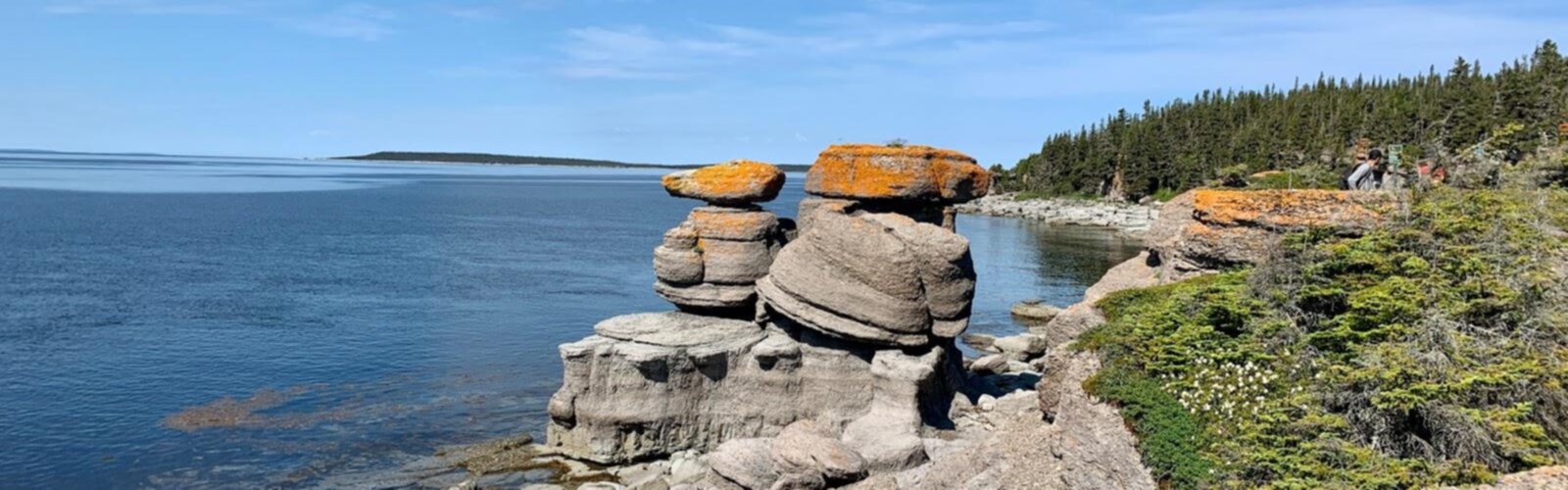

Ready to explore Réserve de parc national de l'Archipel-de-Mingan? Here's everything you need to know before you go!
Discover the trail
Trail description
Réserve de parc national de l'Archipel-de-Mingan is a standout hiking and nature destination in Quebec’s Côte-Nord - Duplessis region. Set out in the Gulf of St. Lawrence, this park reserve protects a dramatic archipelago where the ocean, wind, and time have shaped the landscape into something you don’t see in many other places in Canada.
What makes Mingan feel different
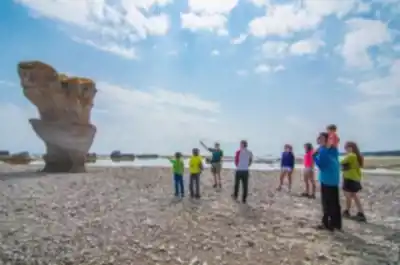
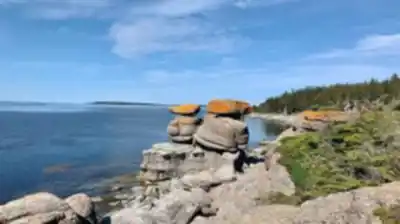
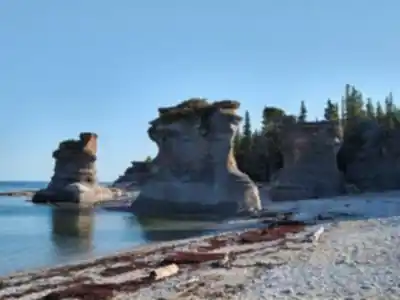
The first thing most visitors notice is the geology: towering limestone monoliths rising straight from the sea. These formations have been sculpted by centuries of wind and waves, and they give the islands a rugged, almost otherworldly shoreline. On foot, you’re moving through a place where rock, water, and sky dominate the view—often with wide-open sightlines and the constant background of surf.
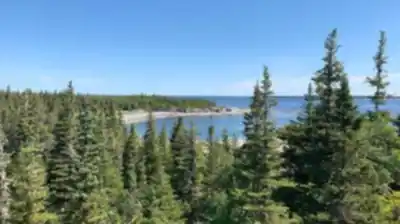
The park isn’t only about rock, though. As you hike, you also pass through contrasting ecosystems packed into a coastal setting: vibrant wildflowers in season, stretches of lush boreal forest, and coastal areas where the sounds of the Gulf of St. Lawrence are never far away. That mix of sea air, forest cover, and exposed shoreline is a big part of what makes hiking here feel so distinctive.
Trail experience and terrain
The park reserve offers well-maintained trails that suit a range of hikers. You can keep things simple with a leisurely walk along the coastline, staying close to the shore where the limestone features and ocean views stay front and centre. If you’re looking for something with a more rugged feel, there are also paths that ask a bit more of you, where footing can feel more uneven and the landscape more raw as you move between exposed coastal sections and forested stretches.
No matter which route you pick, the overall experience is about steady, immersive scenery rather than chasing a single viewpoint. Expect a lot of visual variety in a short span of time—shoreline textures, open water, wind-shaped vegetation, and the occasional transition into boreal forest where the atmosphere can shift from bright and breezy to sheltered and quiet.
Distance, elevation, and overall difficulty
- Trail name: Réserve de parc national de l'Archipel-de-Mingan
- Region: Côte-Nord - Duplessis
- Distance: 79.3 km
- Elevation gain: 20 m
- Difficulty: Easy
Wildlife viewing (bring your patience and your binoculars)
One of the best parts of hiking in the Mingan Archipelago is how often wildlife becomes part of the day. Along the trails and shoreline, keep an eye out for Atlantic puffins—often a highlight for birders and first-time visitors alike. Seals are another frequent sight, especially when they’re basking on rocky shores. And if you’re scanning the water from the coast, you may even spot whales breaching in the distance.
Because the park setting includes ocean channels and exposed shorelines, wildlife viewing can change quickly with light, wind, and tide. Even on a calm hike, it’s worth slowing down at open viewpoints, watching the water for a few minutes, and listening—sometimes you notice movement offshore before you see it.
Camping on the islands
If you want more than a quick visit, camping is an option on one of the islands. Spending the night changes the pace completely: once day visitors thin out, the quiet feels deeper and the natural soundscape—wind, water, and distant seabirds—becomes the main soundtrack. Camping under the stars here is less about amenities and more about being present in a remote setting where the surrounding scenery is still the main event.
The real appeal of these campsites is the sense of tranquility. With the archipelago around you and the Gulf of St. Lawrence close at hand, it’s an easy place to slow down, take in the evening light, and feel immersed in the landscape.
Guided tours and learning on the trail
Guided tours are available, and they’re a strong option if you want a fuller understanding of what you’re seeing. The Mingan Archipelago’s rock structures have a story, and hearing it while you’re standing in front of those formations can make the scenery feel even more meaningful. Guides also help put names and context to the flora and fauna that thrive in this coastal environment, from the wildflowers and boreal forest species to the birds and marine life.
If you enjoy hiking with a bit of interpretation—understanding why the landscape looks the way it does, and how the ecosystems fit together—this is one of those places where a guided outing can add a lot without changing the pace of the day.
What to expect during your visit
Whether you’re planning a day trip or giving yourself more time to explore, expect a hiking experience shaped by ocean weather and the rhythm of island landscapes. The scenery is often big and open, and the limestone features are the kind of landmark you’ll want to stop for, circle around, and view from a few angles. On the ground, the feel of the hike shifts between shoreline walking and sections where vegetation and boreal forest take over, creating a steady back-and-forth between exposed and sheltered terrain.
Above all, this park reserve stands out because the archipelago setting is always present. Even when you’re in the trees, you’re never far from salt air and the sound of waves, and when the trail opens up, you get that unmistakable mix of rock formations, Gulf views, and chances to spot wildlife out on the water.
The Essential Hiking Checklist
Everything you need for your next hike. Bilingual, printable, 1 page.
Get your free hiking checklistRecommended gear for this trail
As an Amazon Associate I earn from qualifying purchases.


Ready to go?
Everything you need to know before you goStarting Point
To access the hiking trails, you can start from several possible trailheads. The main entry point is typically through Havre-Saint-Pierre, where you can find parking and visitor services. From there, boat transportation is often required to reach specific islands within the area. Another option is Longue-Pointe-de-Mingan, which also offers access to boat tours that lead to various trailheads on different islands. Ensure to check local ferry or boat schedules for precise departure points and times.
When?
Tuesday: 8:30 AM – 12:00 PM, 1:00 – 5:30 PM
Wednesday: 8:30 AM – 12:00 PM, 1:00 – 5:30 PM
Thursday: 8:30 AM – 12:00 PM, 1:00 – 5:30 PM
Friday: 8:30 AM – 12:00 PM, 1:00 – 5:30 PM
Saturday: 8:30 AM – 12:00 PM, 1:00 – 5:30 PM
Sunday: 8:30 AM – 12:00 PM, 1:00 – 5:30 PM
How much?
As an Amazon Associate I earn from qualifying purchases.
Affiliate links — LGPO may earn a commission at no extra cost to you.
- Hiking shoes Essential
- → Salomon Elixir Tour Mid WP · 203.38 $
- Layered clothing Essential
- Rain jacket Essential
- Trekking poles
- → Black Diamond Trail Ergo Cork · 69.99 $
- Headlamp
- → Petzl Actik Core 625 · 103.95 $
FAQ - Frequently asked questions
Everything you need to knowSimilar hikes nearby
Discover other trails you might enjoy

Boisé De La Pointe Saint-gilles
North Shore

Parc Nature De Pointe-aux-outardes
North Shore
Réserve faunique de Port-Cartier-Sept-Îles
North Shore

Parc National D'anticosti
North Shore

Centre De Vacances Ferme 5 Étoiles
North Shore

Sentier Pédestre De Portneuf-sur-mer
North Shore
Hiking near Charlottetown
11 trails to explore ~444 km away
We work hard to provide the most up-to-date and error-free data possible. If something seems incorrect, let us know! Your contribution helps the whole community.
Hikers' opinions
Be the first to review!
No hiker has shared their experience yet. Share your impressions and help other hikers!