


Ready to explore Parc national des Calanques? Here's everything you need to know before you go!
Discover the trail
Trail description
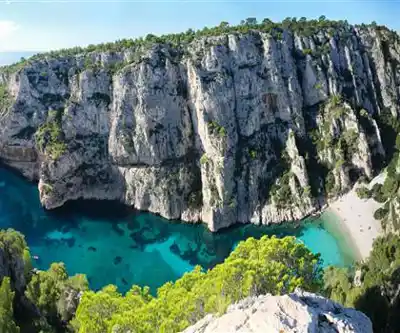
Parc national des Calanques covers nearly 52,000 hectares (comprising around 8,500 hectares of terrestrial area and around 43,500 hectares of marine area) of some of the most dramatic Mediterranean coastline anywhere in France, sitting about 15 kilometers south of Marseille in the Bouches-du-Rhône department. The park takes in the calanques of Marseille, Cassis, La Ciotat, and Bandol — those narrow, fjord-like inlets carved into towering limestone cliffs that drop straight into water so clear it looks almost tropical. The rock formations took millions of years of erosion to reach their current shape, producing the knife-edge ridges, hidden coves, and sheer cliff faces that make this place unlike anything else in France.
What sets this park apart from most hiking destinations is the combination of elements that shouldn't logically coexist: a near-desert landscape of sun-bleached white limestone sitting directly above some of the clearest water in the Mediterranean. You're essentially hiking through a coastal wilderness that feels simultaneously harsh and inviting, stark and beautiful. The extensive trail network spread across this terrain gives you plenty of ways to experience that contrast.
Trail Network and Terrain
The trail system here doesn't follow a single character — it shifts constantly depending on where you are in the park. Some sections follow old goat paths and fishermen's routes that hug cliff edges with the sea always in view. Others drop steeply into the calanques themselves, requiring careful footwork on loose scree and exposed rock faces. The elevation gain distributed across the park tends to arrive in short, concentrated bursts rather than long sustained climbs, which catches a lot of hikers off guard. The coastal setting creates a false sense of ease that the terrain quickly corrects.
The limestone underfoot is sharp and uneven, and it demands proper footwear. Sturdy hiking boots with good ankle support make a real difference, especially on descents toward the water where the rock becomes loose and unpredictable. The same white limestone that makes the landscape so visually striking also reflects heat intensely — by midday in summer, the rock surface becomes genuinely hot, and shade is scarce on most routes. Early morning starts aren't just a suggestion here; they're the practical difference between an enjoyable hike and a grueling one.
Duration varies considerably depending on which section of the park you're exploring and how many calanques you want to reach. Some routes work well as half-day outings, while others require full days or multi-day planning.
What Each Calanque Offers
Each inlet has its own personality, and part of what makes hiking here interesting is moving between those different experiences. Some calanques feel enclosed and almost cathedral-like, with limestone walls rising on three sides and the sea framed at the opening. Others break open into wide panoramic views of the Mediterranean stretching toward the horizon. The shift between those two scales — intimate and vast — happens repeatedly throughout a day's hiking and never really gets old.
The water clarity in many of the calanques is remarkable. From clifftop viewpoints, you can see the rocky bottom at significant depths, the color shifting from pale turquoise in the shallows to deep blue further out. Swimming is possible in many of the inlets, though reaching the water typically involves scrambling down rocky shores, and beach space is often limited. It's one of the few places where you can legitimately combine serious hiking with a swim in genuinely clear water.
Flora and Wildlife
The park's biodiversity is richer than the stark landscape initially suggests. The garrigue — the low Mediterranean scrubland that covers much of the terrain — is dense with aromatic plants. Wild thyme, rosemary, and lavender grow along the trails, and you'll smell them before you see them as you brush past on narrow paths. Oleander blooms in bright pink clusters in many areas, and holm oak manages to establish itself in rocky crevices where almost nothing else can survive, providing occasional patches of shade that feel genuinely valuable on a hot day.
Spring transforms the park significantly. The typically brown and grey landscape fills in with wildflower color before the summer heat takes over, making it one of the better seasons to visit if you want to see the vegetation at its most varied. Birdlife is active throughout the park, with seabirds nesting on cliff faces and raptors working the thermals that rise from the heated limestone. The clear water below supports diverse marine life that's often visible from above.
Access and Practical Considerations
The park is accessible from multiple points along the coast, with trailheads reachable from Marseille, Cassis, and other nearby towns. Parking is a genuine constraint, particularly on summer weekends when demand far exceeds available spots at the most popular access points. Arriving early — well before 9 a.m. during peak season — gives you the best chance of finding parking and getting onto the trails before they fill with other hikers.
Sun protection is non-negotiable on most routes. The reflective limestone amplifies UV exposure, and sunburn can happen faster than expected even on partly overcast days. A wide-brimmed hat, high-SPF sunscreen, and more water than you think you'll need are the baseline kit for any outing here. There are very few places to refill water along the trails, so carrying enough from the start matters.
Weather along this exposed coastline can shift quickly. The mistral wind is a real factor — it can make hiking along cliff edges genuinely hazardous when it picks up, and it arrives with little warning. Summer heat becomes oppressive by late morning on most days. Spring and fall offer the most comfortable conditions overall, with moderate temperatures, better parking availability, and fewer people competing for the same viewpoints and swimming spots.
Getting the Most Out of the Park
With extensive trail networks spread across the park, it's worth being deliberate about which sections you tackle and in what order. The terrain rewards hikers who take their time rather than rushing between calanques. The light changes dramatically throughout the day — the same cliff face looks completely different at 7 a.m. versus noon — and the park's visual appeal is closely tied to those shifts in light and shadow on the white rock.
The combination of serious hiking terrain, genuine wildlife habitat, and access to clear Mediterranean water makes Parc national des Calanques one of the more complete outdoor destinations in southern France, with enough variety here to reward multiple visits across different seasons.
Recommended gear for this trail


Ready to go?
Everything you need to know before you goStarting Point
The trailhead for the Calanques National Park is located in Marseille, in the Bouches-du-Rhône.
When?
How much?
- Hiking shoes Essential
- → Salomon Elixir Tour Mid WP · 203.38 $
- Layered clothing Essential
- Rain jacket Essential
- Trekking poles
- → Black Diamond Trail Ergo Cork · 69.99 $
- Headlamp
- → Petzl Actik Core 625 · 103.95 $
FAQ - Frequently asked questions
Everything you need to know
25 hikes under 2 hours from Montreal
Distance, elevation, parking and season for each one. The ones we go back to ourselves.
Get the guideHiking near Sydney
22 trails to explore ~5062 km away
We work hard to provide the most up-to-date and error-free data possible. If something seems incorrect, let us know! Your contribution helps the whole community.
Hikers' opinions
Be the first to review!
No hiker has shared their experience yet. Share your impressions and help other hikers!