I had my first real forest emergency about fifteen years ago, on an isolated trail in Charlevoix. My hiking partner had just deeply gashed his leg on a sharp rock, blood was flowing heavily, and we were 8 km from the parking lot. No cell signal. That's the day I realized that forest emergency how to survive the most serious injuries isn't just a theoretical question – it's a skill that can literally save a life.
Since then, I've seen too many hikers head out on trails with just a small bandage in their pack, thinking that "it only happens to other people." Spoiler: it happens to everyone, and often when you least expect it.
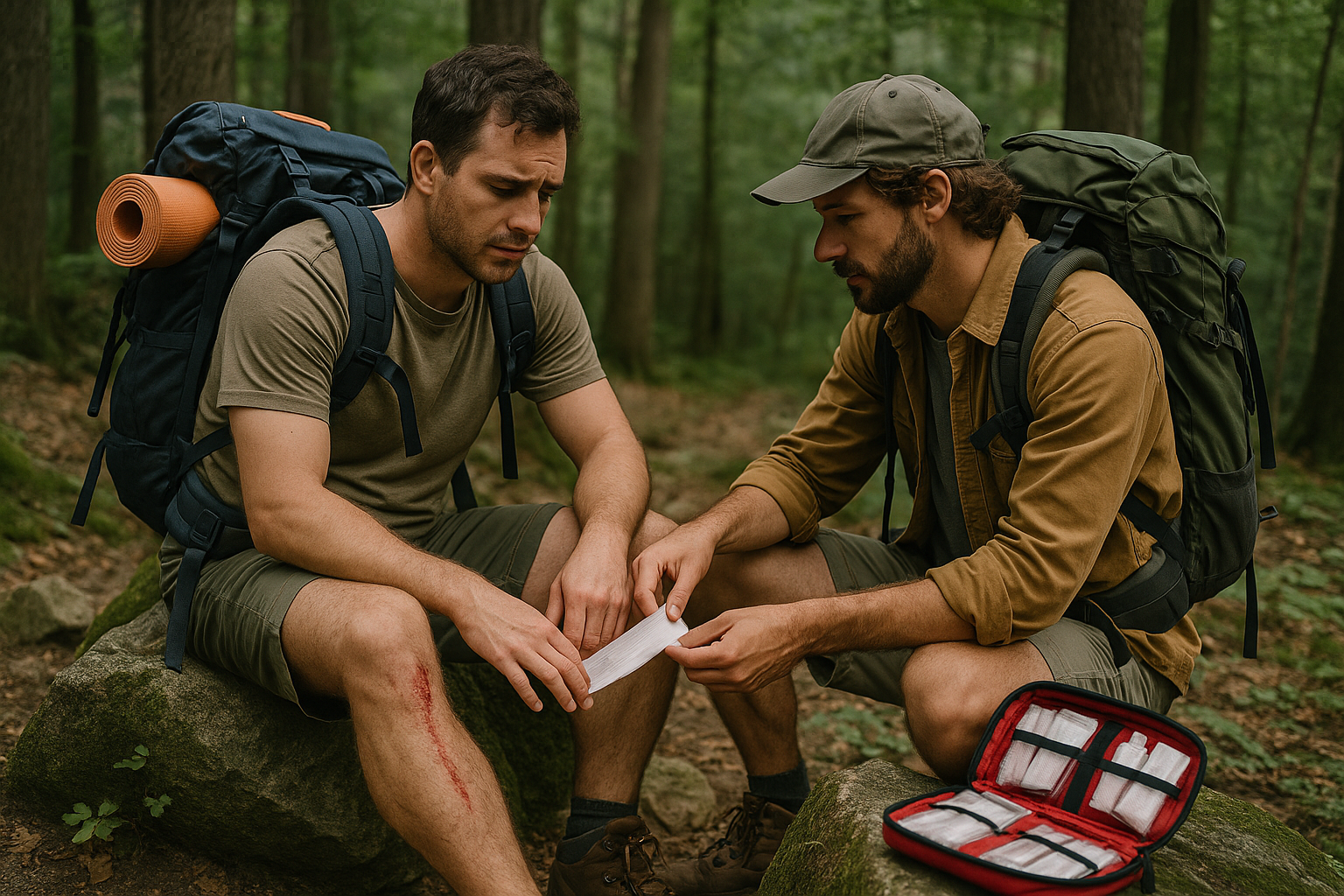
Today, I'm going to share what I've learned in the field – the real techniques that work when it counts, not armchair theory. Because in the forest, when things go wrong, you're the one who makes the difference.
Get my gifts →
The 5 Most Dangerous Forest Injuries (and How to React)
After hundreds of outings and some pretty stressful situations, here are the injuries that can really go wrong if you don't know what to do:
1. Major Hemorrhages
This is the scenario that scares most, and for good reason. A severed artery can drain someone of their blood in minutes. The absolute priority: stop the bleeding.
- Direct pressure: Press hard on the wound with whatever you have (bandage, t-shirt, even your bare hands if necessary)
- Elevation: If possible, raise the injured limb above the heart
- Direct pressure (PRIORITY #1): Apply firm pressure with a clean cloth for at least 10 minutes without releasing. This is the most important technique — it stops 90% of hemorrhages
- Tourniquet as last resort: Only if you risk losing the person, and note the exact time
2. Open Fractures
Bone piercing the skin is a double nightmare: fracture + open wound + major infection risk.
- Don't move the bone: Immobilize in the position found
- Cover without pressing: Protect the wound with a sterile bandage, without pressure on the bone
- Wide immobilization: Block the joints ABOVE AND below the fracture
- Monitor circulation: Regularly check pulse and color downstream from the injury
3. Head Trauma
A fall on rocks, a branch that hits hard... The brain doesn't forgive. Signs that should alarm you:
- Loss of consciousness (even brief)
- Repeated vomiting
- Confusion, disorientation
- Pupils of different sizes
- Clear fluid flowing from nose or ears
4. Severe Hypothermia
More insidious than a visible injury, but just as deadly. I've seen people go from "I'm a little cold" to "I can't move" in 30 minutes.
| Stage | Symptoms | Immediate Action |
|---|---|---|
| Mild | Shivering, goosebumps | Additional layers, activity |
| Moderate | Violent shivering, clumsiness | Active rewarming, shelter |
| Severe | No more shivering, confusion | Urgent evacuation, passive rewarming |
5. Severe Allergic Reactions
Insect sting, contact with a plant... Anaphylaxis in the forest is hell because you're far from everything.
Warning signs: difficulty breathing, face/throat swelling, generalized hives, blood pressure drop.
Action: EpiPen immediately if available, semi-sitting position, urgent evacuation even if it seems to improve.
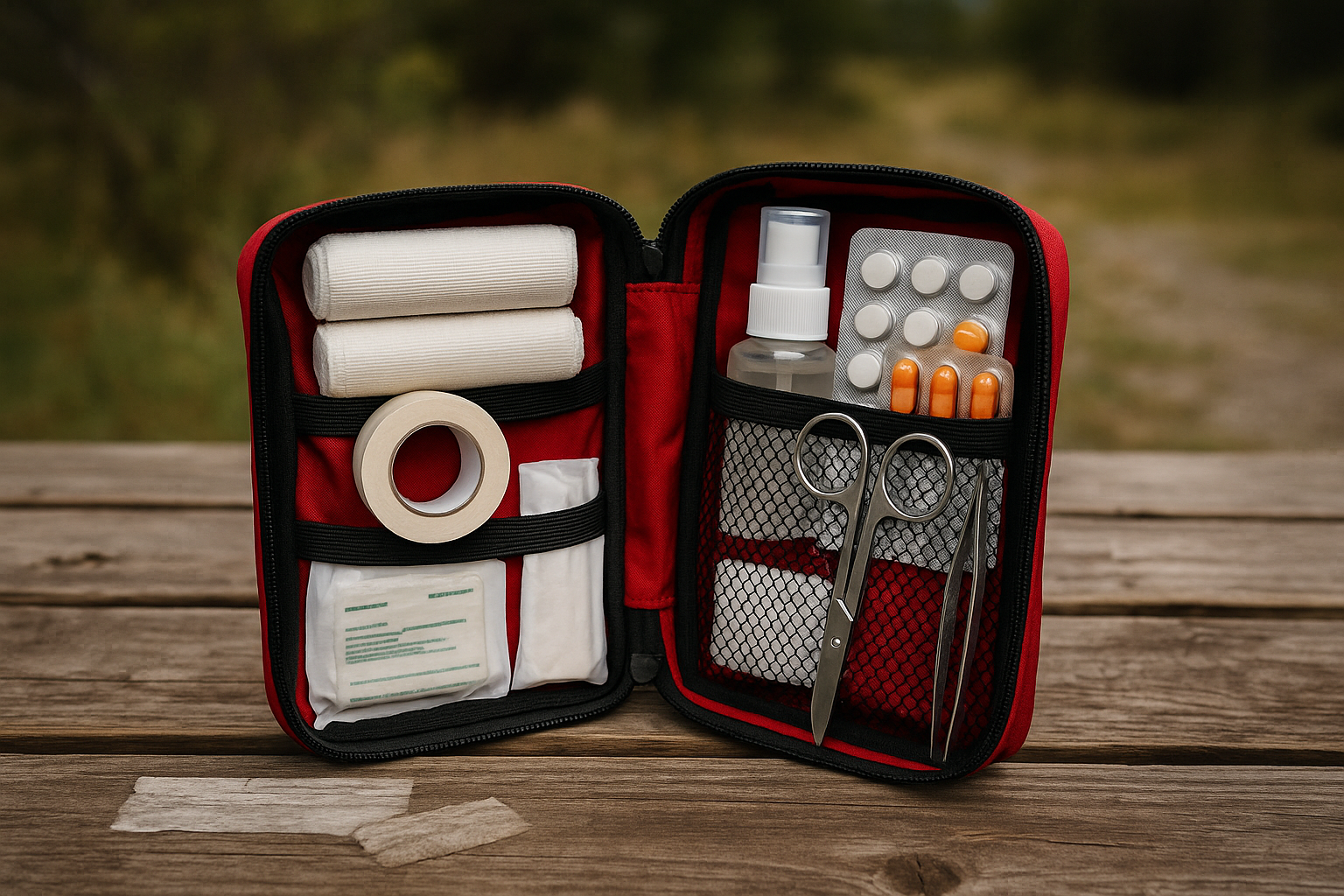
The Survival Kit That Really Saves Lives
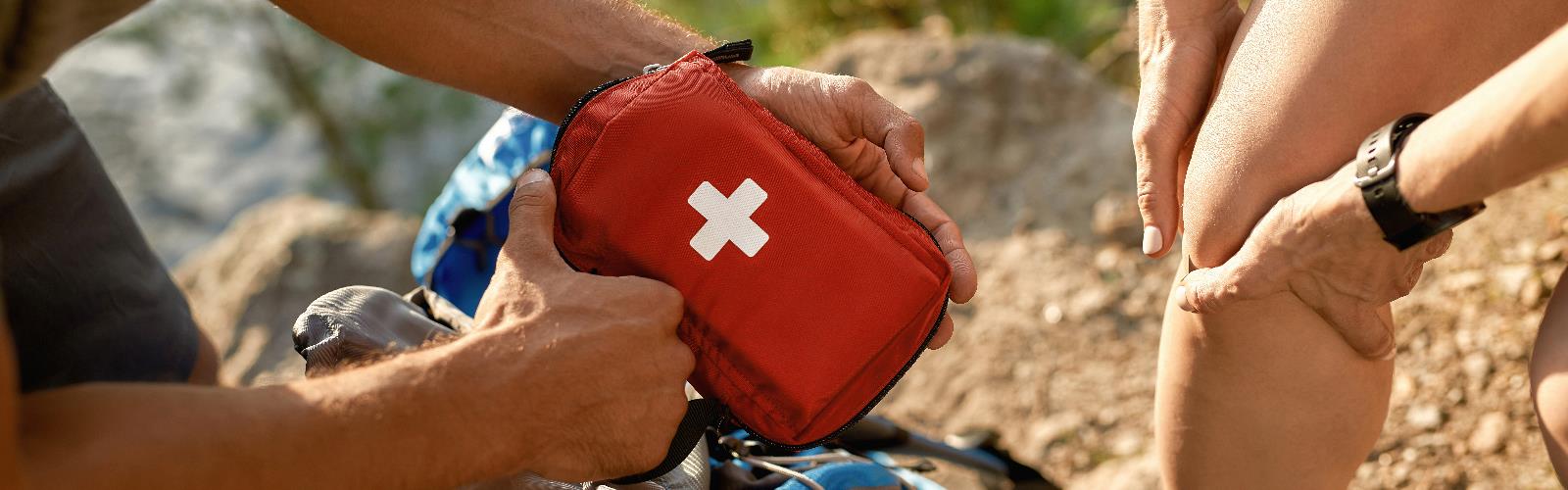
Forget the small pharmacy kits you find in stores. After testing quite a few configurations, here's what really works when it counts:
Hemorrhage Essentials
- Compression bandages: At least 2 of different sizes
- Sterile gauze: 10x10 cm minimum, several packages
- Medical tape: That sticks even when wet
- Improvised tourniquet: A wide strap + a solid stick
Immobilization and Protection
- Inflatable splint: Light and super effective
- Arm triangle: For shoulders and forearms
- Survival blanket: Against hypothermia and shock
- Disposable gloves: Protection for you and the victim
Basic Medications
- Strong painkiller: Ibuprofen AND acetaminophen
- Antihistamine: Benadryl for allergies
- Disinfectant: Iodine or chlorhexidine
- EpiPen: If someone in the group has known allergies
Essential Tools
- Emergency scissors: To cut clothing and bandages
- Tweezers: For splinters and debris
- Emergency headlamp: Because emergencies don't wait for daylight
- Whistle: To signal your position to rescuers
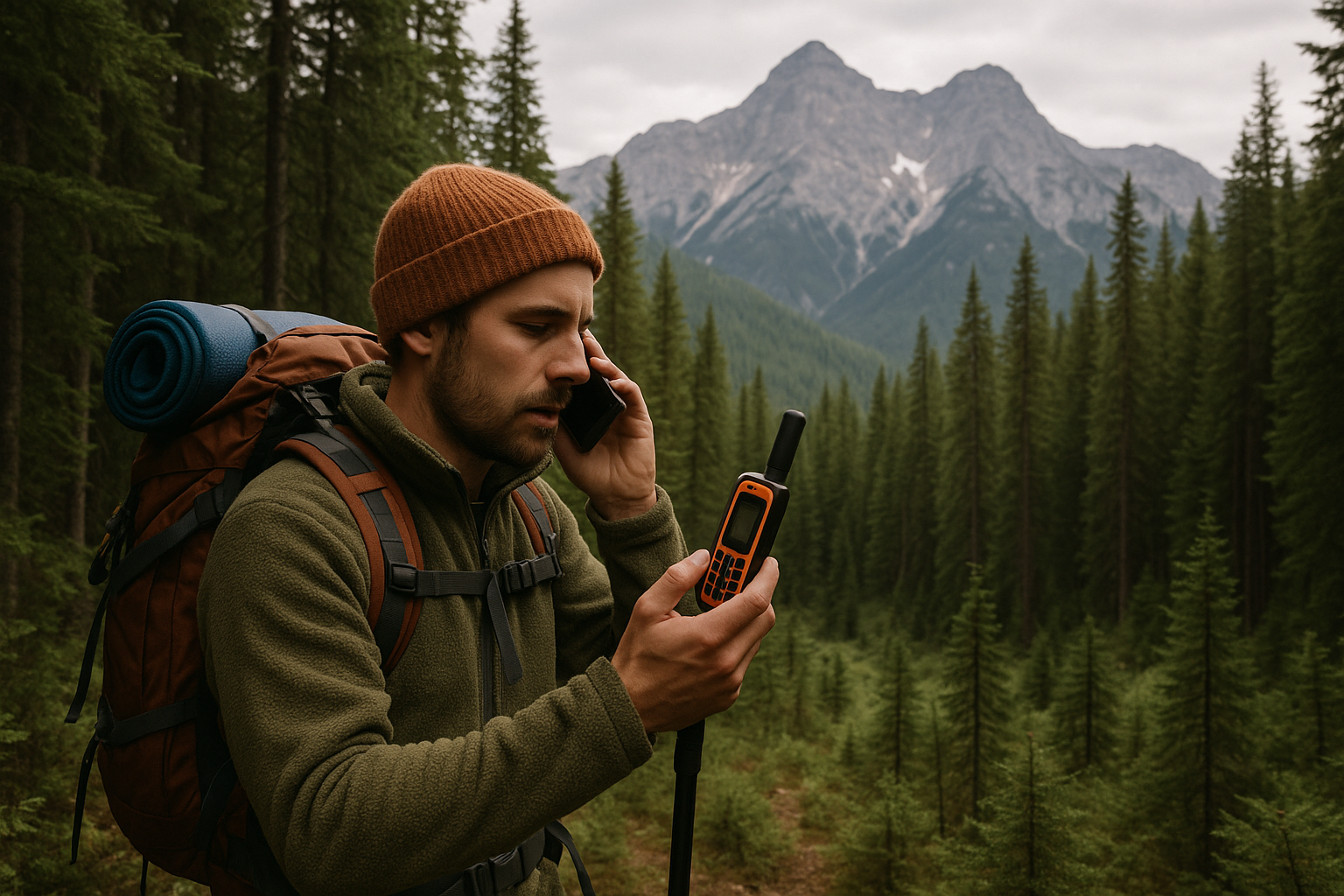
How to Call for Help When There's No Signal
This is every hiker's nightmare: a serious emergency and no way to communicate. I've lived through this, and that's when you realize the importance of having a plan B... and C.
Emergency Communication Solutions
Personal Locator Beacon (PLB): My favorite investment for isolated outings. $400-500, but it works anywhere on the planet. One button, satellites pick it up, rescuers come.
Satellite communicator: More expensive but more versatile. You can send messages, share your position, even reassure family.
Satellite phone: The premium option. Heavy and expensive, but you can talk directly to rescuers.
Emergency Signaling Techniques
When you don't have high-tech equipment, go back to basics:
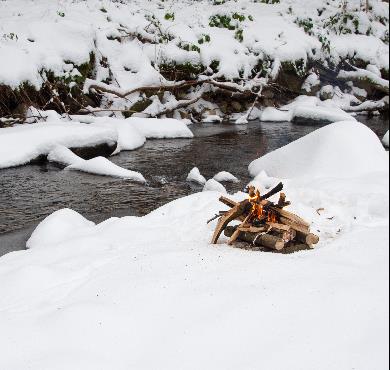
- Smoke signal: Three fires in a triangle, or one big fire with green branches to make smoke
- Ground signals: A large X with rocks or branches (visible from aircraft)
- Signal mirror: Reflect light toward planes or helicopters
- Coded whistle: 3 short blasts, pause, repeat (universal distress signal)
Communication Priority Rule
When you finally manage to reach rescuers, every second counts. Here's the essential info in order:
- Nature of emergency: "Open fracture with hemorrhage"
- Number of people involved: "One injured person, two people on site"
- Exact position: GPS coordinates if you have them, otherwise precise landmark
- Victim's condition: Conscious? Breathing? Bleeding?
- Evacuation conditions: Accessible on foot? Need a helicopter?
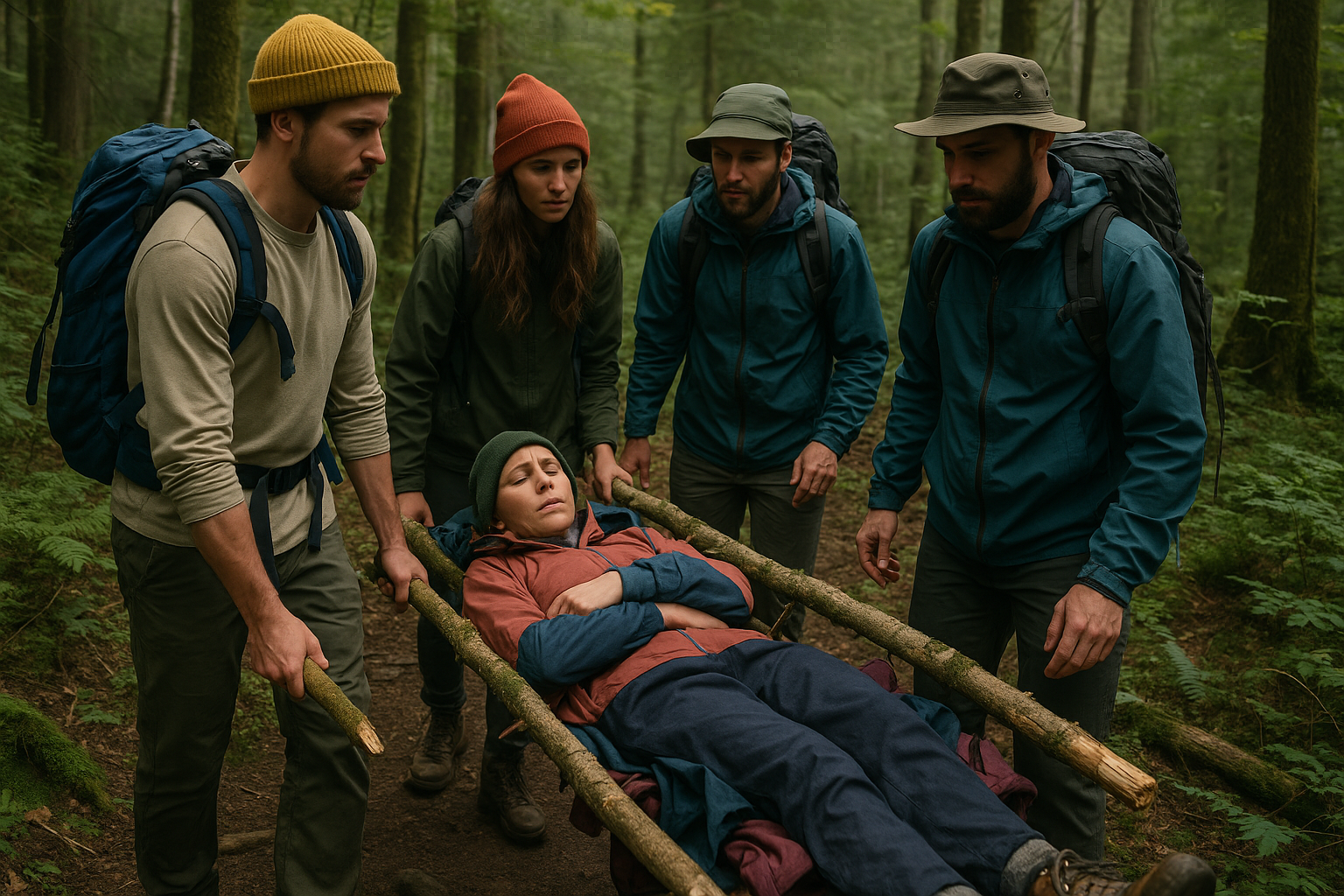
Emergency Evacuation: How to Transport an Injured Person
Sometimes, rescuers can't come to you. Or they'll take hours to arrive. That's when it gets really technical, because poor transport can worsen injuries.
Assessing Whether You Can Move the Person
NEVER move someone if:
- You suspect a spinal injury
- There's an unstabilized open fracture
- The person is unconscious without obvious cause
- You can wait for professional rescuers
You MUST move if:
- Immediate danger (rockfall, fire, severe hypothermia)
- Rescuers can't access your position
- Condition is rapidly deteriorating
Emergency Transport Techniques
Piggyback transport (for short distances): The conscious person can hold on, you carry the weight on your hips. Avoid if arm or chest injury.
Improvised stretcher: Two solid sticks + a jacket or tarp. Test the strength with weight before putting the person on it.
Chair technique: Two carriers, hands crossed under thighs and behind back. Perfect for leg injuries.
Preparation Before Transport
- Stabilize all injuries: Immobilize, bandage, protect
- Keep the person warm: Transport will worsen shock
- Plan your route: The shortest isn't always the safest
- Assign roles: Who carries, who guides, who monitors the victim
I had to transport a guy with a fractured ankle for 3 km in the Parc national des Hautes-Gorges. We took our time, rotated among four of us, and took breaks every 200 meters. He kept his ankle, and we kept our backs.
Managing Stress and Making Good Decisions
Here's what they don't tell you in first aid courses: when it happens for real, your brain goes into panic mode. I've seen brilliant people become completely paralyzed in front of a simple cut because stress had taken over.
The STOP Method to Regain Control
- S - Stop: Stop, breathe deeply
- T - Think: Assess the situation calmly
- O - Observe: Look around, identify dangers
- P - Plan: Decide on your action plan
It takes 30 seconds, but it can make the difference between an intervention that saves and one that makes things worse.
Managing a Panicked Victim
An injured person who panics is often more dangerous than the injury itself. Your calm will determine their calm.
- Speak in a firm but reassuring voice: "I'm here, we're going to take care of you"
- Explain what you're doing: "I'm going to clean your wound, it will sting a little"
- Give them simple tasks: "Hold this bandage", "Breathe with me"
- Stay physically close: Human contact reassures
Making Decisions Under Pressure
In an emergency, you'll have to make decisions quickly, often with incomplete information. Here's my process:
- Identify immediate danger: What can kill now?
- Stabilize first: Stop bleeding, clear airways
- Evaluate your options: Evacuate or wait for rescuers?
- Act with the resources you have: Don't wait for perfect equipment
"In 15 years of hiking, I've learned that an imperfect immediate action is better than a perfect action that's too late."
Prevention: How to Avoid Emergency Situations
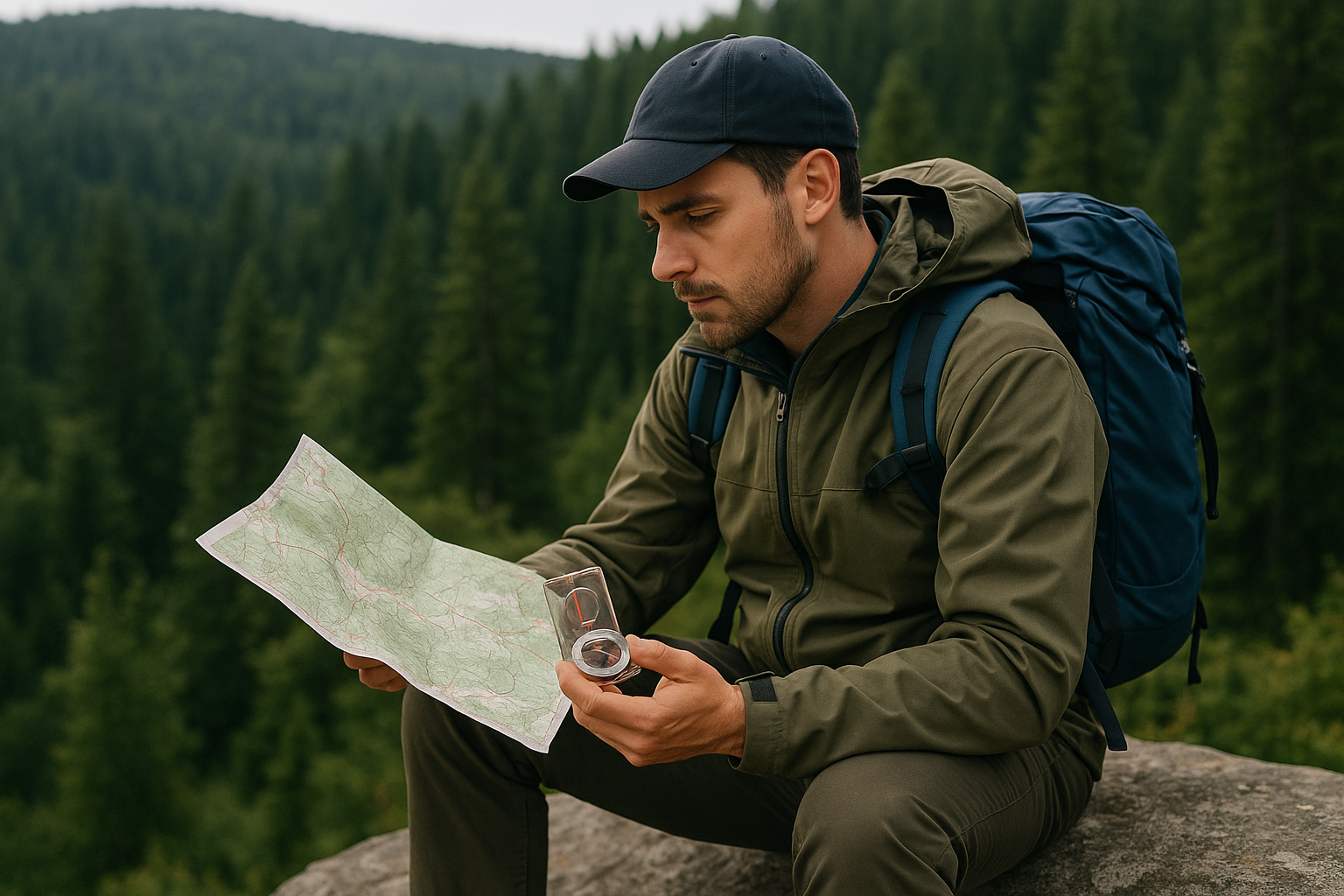
The best emergency is the one that doesn't happen. After experiencing some pretty stressful situations, I've developed my little prevention habits that have saved my skin more than once.
Smart Planning
The one-third rule: Always plan an extra third of time. If your trail should take 6 hours, plan for 8. It gives you a margin for the unexpected without putting you in danger.
Plan B and plan C: Always have an emergency exit. I know at least two ways to get back to the parking lot, and I know where the emergency shelters are if there are any.
For this, I always recommend consulting our guide on essential questions to ask yourself before leaving. It prevents many problems.
Group Risk Management
- Know everyone's limits: The group goes at the speed of the slowest
- Assign a leader and sweep: Someone in front, someone behind, nobody lost
- Communicate constantly: "How are you?", "Do you need a break?"
- Share critical equipment: Distribute first aid kit, communications
Reading Terrain and Weather
Learning to read the signs before things go wrong:
| Danger | Warning Signs | Preventive Action |
|---|---|---|
| Storm | Black clouds, shifting wind | Descend from ridges, seek shelter |
| Hypothermia | Shivering, unusual fatigue | Additional layers, calories |
| Dehydration | Dark urine, headaches | Drink more, slow the pace |
| Exhaustion | Reduced coordination, irritability | Extended break, snack |
Essential Preventive Equipment
Beyond the first aid kit, here's what prevents emergencies:
- Headlamp + spare batteries: Even for a day trip
- Extra layer: Always one more layer than the weather forecast
- Emergency food: Energy bars, nuts, something that keeps
- Emergency water: Plus a purification system
- Emergency shelter: Ultralight bivy or tarp
If you want to perfect your safe crossing techniques, check out our guide on how to cross a watercourse safely. It's one of the places where things can go wrong quickly.
Essential Emergency Protocols
Recovery Position
If a person is unconscious but breathing, place them in recovery position to prevent choking:
- Lay the person on their back
- Bend their arm closest to you at a right angle
- Take their opposite hand and place it against their cheek
- Bend their opposite knee and roll them toward you
- Make sure their head is slightly tilted down to clear the airways
CPR (Cardiopulmonary Resuscitation)
If a person is not breathing and has no pulse:
- Call for help (or ask someone to do it)
- Place your hands at the center of the chest
- Compress at a rate of 100-120 compressions per minute (to the rhythm of "Staying Alive")
- Push down 5-6 cm with each compression
- If you're trained, alternate 30 compressions / 2 rescue breaths
- Continue until rescuers arrive
• Loss of consciousness
• Severe breathing difficulty
• Bleeding you cannot control
• Open fracture (visible bone)
• Severe allergic reaction (face/throat swelling)
• Chest pain
In Quebec: 911 or 1-800-463-5060 (SOS plein air)
Conclusion: Being Ready Without Becoming Paranoid
Listen, I don't want you to stop hiking after reading this. On the contrary! But I want you to be realistic: forest emergencies happen. Not often, but they happen. And when they happen, it's rarely at the right time, in the right place, with the right people.
Here are the key points to remember:
- Master the basics: Stop bleeding, immobilize a fracture, manage hypothermia
- Equip yourself intelligently: A real first aid kit, not a bandage in your pack
- Have a communication plan: Distress beacon, satellite phone, or at minimum a shared exit plan
- Prevent rather than cure: Planning and terrain reading prevent 90% of problems
- Stay calm: Your state of mind determines the outcome of the situation
My most important advice? Practice before you need it. Take a first aid course, test your equipment, simulate scenarios with your hiking partners. Because in an emergency situation, you won't be consulting YouTube.
The mountain will always be there, but you, make sure you're there to enjoy it for a long time. Whether on the accessible trails of Mont Yamaska or in wilder corners like Mont du Lac des Cygnes, good preparation makes all the difference.
Now, go practice your bandage knots, check your kit, and get out there to enjoy our magnificent trails. But do it knowing you're ready for whatever nature might throw at you.
Happy hiking, and above all, safe hiking! 🥾

About the author
François Dumaine
Founder of Let's Go Play Outside
A passionate hiker, photographer and content creator, François has been hiking the trails of Quebec and Alberta since 2014. He founded Let's Go Play Outside to give you the information he wished he had before heading out.
Newsletter
Content that makes you want to go outside
Every week, a trail idea, a reflection on nature, or a tip worth the detour. Zero spam. Only the essentials.
Joined by 12,000+ outdoor enthusiasts
Read next
Continue the journey