
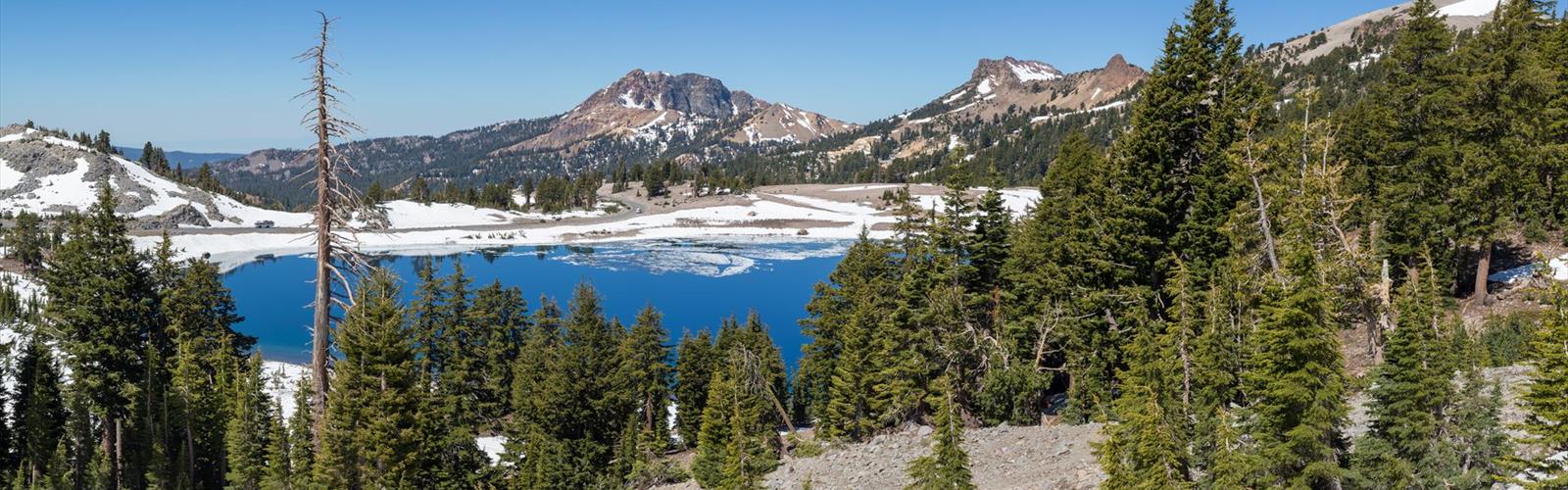
Ready to explore Lassen Volcanic National Park? Here's everything you need to know before you go!
Discover the trail
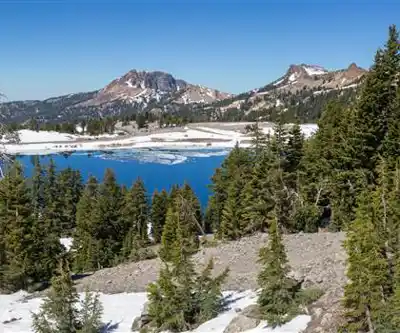
Trail description
Lassen Volcanic National Park is one of those places that genuinely stops you in your tracks. Located in Northern California, it sits at the southern end of the Cascade Range and protects one of the most geologically active landscapes in the entire country. This isn't just a pretty mountain park — it's a living, breathing volcanic system where hydrothermal features bubble and steam right alongside alpine meadows and crystal-clear lakes.
What makes Lassen stand apart from other national parks in California is the sheer variety of volcanic terrain packed into one accessible area. You've got a recently active volcano, boiling mud pots, fumaroles, lava beds, and cinder cones — all within reach of well-maintained trails. It's the kind of place where the ground itself feels alive underfoot.
The Volcanic Landscape
Lassen Peak is the centerpiece of the park — a plug dome volcano that last erupted between 1914 and 1917, making it one of the most recently active volcanoes in the contiguous United States. The eruptions left behind a dramatically altered landscape that's still recovering and evolving more than a century later. Hydrothermal areas like Bumpass Hell, Sulphur Works, and Boiling Springs Lake give visitors a front-row seat to geothermal activity that's rare to witness anywhere else in North America.
The park sits at the convergence of four distinct wilderness ecosystems: the Cascades, the Sierra Nevada, the Great Basin, and the Sacramento Valley. That overlap creates an unusually diverse environment — you'll move through dense conifer forests, open volcanic plateaus, wildflower-filled meadows, and stark lava fields sometimes within a single hike.
Trails and Hiking Experience
The trail network at Lassen covers a wide range of terrain and difficulty levels, making it a solid destination whether you're out for a short walk or a full-day summit push. The park's most iconic hike leads to the summit of Lassen Peak itself, offering sweeping views of the surrounding volcanic landscape and, on clear days, distant peaks throughout the Cascades and Sierra Nevada.
Bumpass Hell is another standout — a trail that leads directly into the park's largest hydrothermal area, where you walk boardwalks above boiling pools, steaming vents, and bubbling mud pots. It's one of the most visually striking and geologically educational hikes in the entire park system. The smell of sulfur is part of the experience, and the colors — vivid yellows, oranges, and deep blues — are unlike anything you'll find on a typical forest trail.
For those looking to get away from the main corridor, the park's backcountry opens up a quieter side of Lassen. Wilderness permits are required for overnight trips, and the backcountry trails wind through remote volcanic terrain, past remote lakes, and into areas where you might not see another hiker all day.
Wildlife and Natural Features
Despite the volcanic activity, Lassen supports a healthy and diverse wildlife community. Black bears, mule deer, black-tailed jackrabbits, and a wide variety of bird species are commonly spotted throughout the park. The lakes and streams hold native fish, and the meadows come alive with wildflowers during the summer months.
The park's lakes — including Manzanita Lake near the northwest entrance — are popular for fishing, kayaking, and simply sitting by the water. Manzanita Lake in particular offers a classic reflection of Lassen Peak on calm mornings, and it's one of the most photographed spots in the park.
Practical Information
Lassen Volcanic National Park is managed by the National Park Service. The main park road — Lassen Volcanic National Park Highway — runs through the heart of the park and provides access to most trailheads, viewpoints, and hydrothermal areas. The road typically opens in late spring once snowpack clears, and it closes again in the fall or early winter depending on conditions.
- Entrance fee: A standard national park entrance fee applies. An America the Beautiful pass covers entry.
- Visitor centers: The Kohm Yah-mah-nee Visitor Center near the southwest entrance is open year-round. The Loomis Museum near Manzanita Lake operates seasonally.
- Camping: The park has several campgrounds, including Manzanita Lake Campground, which is one of the largest and most accessible. Reservations are recommended during peak summer season.
- Dogs: Dogs are allowed in the park but are restricted to paved roads, parking areas, and campgrounds. They are not permitted on trails or in the backcountry.
- Hydrothermal areas: Stay on designated boardwalks and trails in all hydrothermal zones. The ground in these areas can be dangerously thin and unstable.
Getting There
The park has two main entrances. The northwest entrance near Manzanita Lake is accessed via Highway 44 from Redding or Highway 89 from the north. The southwest entrance is reached via Highway 36 from Red Bluff or Highway 89 from the south. Both entrances connect to the main park road that traverses the park from end to end.
The nearest larger communities for supplies and accommodations are Chester to the south and Redding to the west. Cell service inside the park is limited, so downloading offline maps before you arrive is a smart move.
Best Time to Visit
The main park road and most trails are accessible from roughly late June through October, depending on snowpack. July and August are the busiest months, with full campgrounds and crowded trailheads at popular spots like Bumpass Hell and the Lassen Peak trailhead. Visiting on weekdays or arriving early in the morning makes a noticeable difference in crowd levels.
Early summer brings impressive wildflower blooms in the meadows, while late summer and early fall offer stable weather and fewer visitors. Snow can fall at any time of year at higher elevations, so layering and checking conditions before heading out is always the right call at Lassen.
In winter
According to the National Park Service (NPS), Lassen's main park road (Highway 89 through the park) closes when snow settles in, typically in mid- to late November. Vehicle access is then limited to the Kohm Yah-mah-nee Visitor Center at the southwest entrance and the Loomis Plaza/Manzanita Lake parking area at the northwest entrance. Roads to Butte Lake, Juniper Lake and Warner Valley are typically not maintained in winter and may be gated for safety. The park receives up to 30 feet of snowfall during the snowy season, typically November to May. In the Southwest Area (6,700 feet), winter and spring temperatures range from highs of 50°F to 61°F to lows of 13°F to 23°F; the Manzanita Lake Area (5,800 feet) runs about 5° warmer.
Both areas offer winter routes for snowshoeing and cross-country skiing, plus areas for sledding and snowplay; experienced visitors can backcountry ski and snowboard, typically in the southwest area. The NPS advises wearing layers, waterproof gear and outerwear, and sun protection. According to the NPS hours page (updated November 4, 2026), the park is open 24 hours per day, 365 days per year; the Kohm Yah-mah-nee Visitor Center is open Friday, Saturday, Sunday and holidays, except Thanksgiving Day and Christmas Day, from 9:30 a.m. to 4:30 p.m., and the Loomis Museum is closed for the winter. These hours are subject to change due to weather, road status or public safety.
Everything you need for your next hike. Bilingual, printable, 1 page.
Get your free hiking checklistRecommended gear for this trail
As an Amazon Associate I earn from qualifying purchases.


Ready to go?
Everything you need to know before you goWhen?
As an Amazon Associate I earn from qualifying purchases.
Affiliate links — LGPO may earn a commission at no extra cost to you.
- Hiking shoes Essential
- → Salomon Elixir Tour Mid WP · 203.38 $
- Layered clothing Essential
- Rain jacket Essential
- Trekking poles
- → Black Diamond Trail Ergo Cork · 69.99 $
- Headlamp
- → Petzl Actik Core 625 · 103.95 $
FAQ - Frequently asked questions
Everything you need to knowOutings near Lassen Volcanic National Park
Discover other trails you might enjoy
Cinder Cone, California
Shasta Cascade · 10.4 km away
Sulphur Works
Shasta Cascade · 11.6 km away

Butte County High Point, California
Shasta Cascade · 39.4 km away
Bald Mountain, California
Shasta Cascade · 55.1 km away
Round Valley Reservoir
Shasta Cascade · 55.6 km away
Diamond Mountain, California
Shasta Cascade · 63.2 km away
Hiking near Victoria
105 trails to explore ~897 km away
We work hard to provide the most up-to-date and error-free data possible. If something seems incorrect, let us know! Your contribution helps the whole community.
Hikers' opinions
Be the first to review!
No hiker has shared their experience yet. Share your impressions and help other hikers!