
Ready to explore Tuckermans Ravine Mount Washington? Here's everything you need to know before you go!
Discover the trail
Oh no! We don't have any photos 😢
This trail hasn't been captured yet. Be the first to share your adventure!Trail description
Tuckerman Ravine on Mount Washington is one of the most iconic hiking destinations in the northeastern United States. Carved by glacial activity, this dramatic headwall cirque sits on the southeastern flank of Mount Washington in New Hampshire's White Mountains — and it draws hikers, skiers, and mountaineers from across the continent. Whether you're pushing for the summit or just heading up to see the ravine itself, this trail delivers a raw, serious mountain experience unlike anything else in the region.
The Terrain
The trail begins at the Pinkham Notch Visitor Center and follows the Tuckerman Ravine Trail up through dense boreal forest before the landscape opens dramatically as you approach the ravine floor. The headwall is the defining feature here — a steep, imposing bowl of rock and ice that holds snow well into spring and sometimes into early summer. Even when you're not looking at the headwall directly, the scale of the surrounding terrain makes it clear you're in serious alpine country.
The trail itself is well-worn and heavily traveled, but don't let that fool you into thinking it's easy. The upper sections involve rocky, uneven footing, and conditions can change fast. Above treeline, the exposure to wind and weather is real. Mount Washington is notorious for some of the most extreme weather ever recorded at a summit in the world, and that reputation is earned. Fog, wind, and sudden temperature drops are part of the deal here, even on days that start out sunny at the trailhead.
The Ravine Experience
Most hikers aim for the ravine floor, where you get a full-on view of the headwall rising above you. It's a genuinely impressive sight — the kind of place that makes you stop and just look for a while. In late spring, you'll often see backcountry skiers and snowboarders making their way up and down the headwall, which has been a rite of passage for New England skiers for generations. The combination of hikers, skiers in ski boots carrying gear, and the raw alpine setting gives Tuckerman Ravine a character that's hard to find elsewhere in the East.
The Harvard Mountaineering Club cabin and the Hermit Lake Shelters are located near the ravine and serve as reference points on the approach. The AMC (Appalachian Mountain Club) manages facilities in this area, and rangers are often present during busy seasons, particularly in spring when the skiing crowds arrive.
Continuing to the Summit
From the ravine, experienced and well-prepared hikers can continue up the headwall and on to the summit of Mount Washington. This section is significantly more demanding — the headwall scramble requires hands-on climbing in places, and above it the terrain becomes exposed alpine tundra with cairns marking the route. The summit cone can be disorienting in poor visibility, and the weather window can close quickly. If you're heading for the top, check the Mount Washington Observatory weather forecast before you go — it's one of the most reliable and specific mountain forecasts available anywhere.
The summit itself is a busy place, with the Auto Road, the Cog Railway, and a visitor center all converging there. It's a bit of a contrast after the wildness of the ravine approach, but the views on a clear day are genuinely spectacular, stretching across multiple states.
What to Know Before You Go
- Trailhead: The Tuckerman Ravine Trail starts at the AMC Pinkham Notch Visitor Center on Route 16 in Gorham, New Hampshire. Parking is available at the visitor center, though it fills up early on weekends and during peak spring skiing season.
- Weather: Mount Washington's weather is genuinely dangerous. Check the Mount Washington Observatory forecast at mountwashington.org before every trip. Conditions at the summit and upper ravine can be completely different from what you see at the trailhead.
- Gear: Even in summer, bring extra layers, a rain shell, and more food and water than you think you need. Above treeline, wind chill can be severe regardless of the season.
- Spring conditions: If you're visiting in spring to see the skiing or to hike the headwall, be aware that snow travel requires appropriate footwear and ideally an ice axe and crampons for the steeper sections. Many hikers underestimate the headwall in icy conditions.
- Crowds: This is one of the most visited trails in New Hampshire. Weekday visits offer a noticeably quieter experience, especially outside of peak spring skiing weekends.
- Leave No Trace: The alpine zone above treeline is fragile. Stay on established trails and rock surfaces — the vegetation up here grows extremely slowly and footsteps off-trail cause lasting damage.
Wildlife and Ecology
The lower forested sections of the trail pass through classic northern hardwood and boreal forest, home to species like moose, white-tailed deer, and a variety of boreal birds. As you gain elevation and move above treeline, the landscape shifts to alpine tundra — a rare ecosystem in the northeastern US, more commonly associated with the Arctic. The plants up here are specially adapted to the harsh conditions and are easily damaged, which is why staying on trail in the alpine zone matters so much.
History and Significance
Tuckerman Ravine has been drawing adventurers for well over a century. The spring ski season here predates ski resorts in New England — people were hiking up with wooden skis long before lifts existed anywhere in the region. That tradition continues today, making Tuckerman Ravine a living piece of American outdoor history. The AMC's presence in the area dates back to the 19th century, and the organization has played a central role in managing and protecting the White Mountains ever since.
Mount Washington itself holds the record for the highest wind speed ever recorded by surface instruments — 231 mph, measured at the summit observatory in 1934. That number alone tells you something about the kind of mountain this is and why preparation here isn't optional.
Everything you need for your next hike. Bilingual, printable, 1 page.
Get your free hiking checklistRecommended gear for this trail
As an Amazon Associate I earn from qualifying purchases.


Ready to go?
Everything you need to know before you goWhen?
As an Amazon Associate I earn from qualifying purchases.
Affiliate links — LGPO may earn a commission at no extra cost to you.
- Hiking shoes Essential
- → Salomon Elixir Tour Mid WP · 203.38 $
- Layered clothing Essential
- Rain jacket Essential
- Trekking poles
- → Black Diamond Trail Ergo Cork · 69.99 $
- Headlamp
- → Petzl Actik Core 625 · 103.95 $
FAQ - Frequently asked questions
Everything you need to knowOutings near Tuckermans Ravine Mount Washington
Discover other trails you might enjoy
Wildcat Mountain
White Mountains · 1.4 km away

Thompson Falls
White Mountains · 2.0 km away
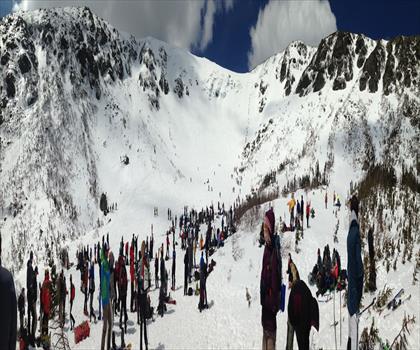
Tuckerman Ravine
Dartmouth-Lake Sunapee · 3.4 km away

Wildcat “B”, New Hampshire
White Mountains · 4.1 km away

Mount Washington
White Mountains · 4.2 km away
AMC Lakes of the Clouds Hut
White Mountains · 5.2 km away
Hiking near North Conway
225 trails to explore ~25 km away
We work hard to provide the most up-to-date and error-free data possible. If something seems incorrect, let us know! Your contribution helps the whole community.
Hikers' opinions
Be the first to review!
No hiker has shared their experience yet. Share your impressions and help other hikers!