
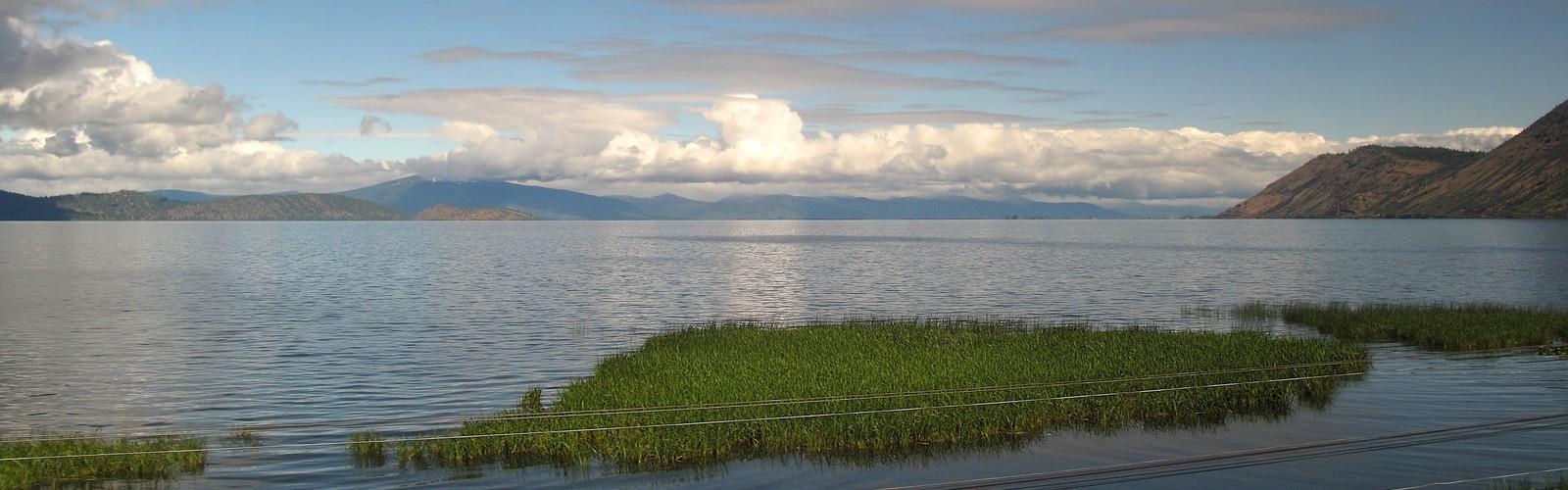

Ready to explore Upper Klamath Lake? Here's everything you need to know before you go!
Discover the trail
Oh no! We don't have any photos 😢
This trail hasn't been captured yet. Be the first to share your adventure!Trail description
Upper Klamath Lake sits in south-central Oregon and ranks as the largest freshwater lake in the state. It's a place where open water, marshland, and high desert converge in a way that feels genuinely wild — not manicured, not crowded, just big and alive. Whether you're paddling the canoe trail, birding along the shoreline, or simply taking in the scale of the landscape, Upper Klamath delivers an experience that's hard to replicate anywhere else in the Pacific Northwest.
The Landscape
The lake itself stretches across a broad, flat basin rimmed by the Cascade Range to the west and the high desert plateau to the east. The surrounding wetlands — particularly the Upper Klamath National Wildlife Refuge on the northwest shore — are dense with emergent marsh vegetation: tules, cattails, and sedges that form a thick green wall along the water's edge. This isn't a lake you walk around easily. Much of the shoreline is soft, marshy, and inaccessible on foot, which is exactly why the canoe trail exists.
The water itself is shallow across much of its surface area, and the light here does something unusual — especially in the early morning and late afternoon, when the reflections off the lake and the silhouettes of birds in flight create a scene that photographers and naturalists come back to repeatedly.
The Canoe Trail
The primary way most visitors experience Upper Klamath Lake's northern marshes is via the Upper Klamath Canoe Trail, which winds through the refuge's wetland channels. The trail is marked and navigable by canoe or kayak, threading through narrow passages between stands of tules where the outside world disappears entirely. It's quiet in there — the kind of quiet where you hear every wingbeat.
The canoe trail connects to Rocky Point, where a boat launch provides access to the open lake. Paddlers can extend their time on the water by heading out onto the main body of the lake, though conditions on open water can change quickly, so it's worth checking the weather before committing to a longer route.
Wildlife
Upper Klamath Lake and its surrounding refuge are genuinely exceptional for wildlife, particularly birds. The area sits along the Pacific Flyway, one of North America's major migratory bird routes, and the numbers during migration seasons can be staggering. The refuge is known for supporting large populations of waterfowl, wading birds, and shorebirds throughout the year.
A few species worth knowing before you go:
- American White Pelican — One of the most striking birds you'll encounter here. Large colonies nest in the region, and seeing them glide low over the water in formation is a highlight for most visitors.
- Bald Eagle — Present year-round, and particularly concentrated in winter when they gather to feed on fish.
- Great Blue Heron — Common throughout the marshes and along the shoreline.
- Sandhill Crane — Passes through during migration, often in large numbers.
- Various duck species — Canvasback, Redhead, Lesser Scaup, and others depending on the season.
Beyond birds, the lake supports a significant population of fish, including Lost River sucker and shortnose sucker — both federally listed species that are central to ongoing conservation efforts in the Klamath Basin. The ecological story of this lake is complex and ongoing, tied to water rights, tribal interests, and restoration work that has been in progress for decades.
The Klamath Basin Context
It's worth understanding a bit of the broader context when you visit Upper Klamath Lake. The Klamath Basin has been at the center of one of the most significant water and salmon restoration efforts in the American West. The Klamath Tribes have deep historical and cultural ties to this lake and its fish — the suckers in particular have been a traditional food source for thousands of years. Dam removal projects downstream on the Klamath River have been part of a larger effort to restore fish passage and ecosystem health throughout the basin.
Visiting with that awareness adds a layer of meaning to what you're seeing. The wildlife refuge, the lake, and the surrounding lands aren't just scenic — they're actively contested and actively being restored.
Access and Logistics
The main access point for the canoe trail and the northwest shore of the lake is via Rocky Point Road, which leads to the Rocky Point Resort area and the boat launch. The Upper Klamath National Wildlife Refuge is managed by the U.S. Fish and Wildlife Service.
A few practical notes:
- Canoe/kayak launch: Available at Rocky Point. If you don't have your own boat, check locally for rental options — the resort has historically offered rentals, though availability can vary by season.
- Motorized boats: Allowed on the main lake, but the canoe trail through the refuge channels is non-motorized.
- Fishing: Regulated — check current Oregon Department of Fish and Wildlife regulations before fishing, as rules around certain species are specific to this basin.
- Dogs: Check current refuge regulations, as wildlife refuges often have restrictions on pets to protect nesting birds.
- Cell service: Limited in this area. Download maps and any information you need before heading out.
Best Times to Visit
Spring and fall are peak seasons for birding, with migration bringing the highest diversity and volume of species through the area. Summer brings warm temperatures and reliable paddling conditions, though algae blooms can occur on the lake during hot, calm stretches — something to be aware of if you're swimming or if you have pets with you. Winter concentrates raptors, particularly Bald Eagles, and the landscape takes on a stark, open quality that has its own appeal.
What Makes This Place Worth the Trip
Upper Klamath Lake isn't a destination for people looking for a well-groomed trail with clear mileage markers and a summit view. It's a place for people who want to slow down, get on the water, and spend time in a functioning wetland ecosystem that's genuinely significant — ecologically, historically, and culturally. The scale of the lake, the density of the wildlife, and the ongoing conservation story make it one of the more compelling natural areas in central Oregon.
The Essential Hiking Checklist
Everything you need for your next hike. Bilingual, printable, 1 page.
Get your free hiking checklistRecommended gear for this trail
As an Amazon Associate I earn from qualifying purchases.


Ready to go?
Everything you need to know before you goWhen?
How much?
As an Amazon Associate I earn from qualifying purchases.
Affiliate links — LGPO may earn a commission at no extra cost to you.
- Hiking shoes Essential
- → Salomon Elixir Tour Mid WP · 203.38 $
- Layered clothing Essential
- Rain jacket Essential
- Trekking poles
- → Black Diamond Trail Ergo Cork · 69.99 $
- Headlamp
- → Petzl Actik Core 625 · 103.95 $
FAQ - Frequently asked questions
Everything you need to knowSimilar hikes nearby
Discover other trails you might enjoy

Hiking near Victoria
93 trails to explore ~680 km away
We work hard to provide the most up-to-date and error-free data possible. If something seems incorrect, let us know! Your contribution helps the whole community.
Hikers' opinions
Be the first to review!
No hiker has shared their experience yet. Share your impressions and help other hikers!