🦟 Why Are Ticks a Major Issue When Hiking in Quebec?
I had my first real scare with a tick a few years ago at Parc National du Mont Saint-Bruno. Coming back from a beautiful spring outing, I discovered a little critter firmly attached behind my knee. No panic, but it made me realize how essential tick protection hiking Quebec had become to enjoy our trails with peace of mind.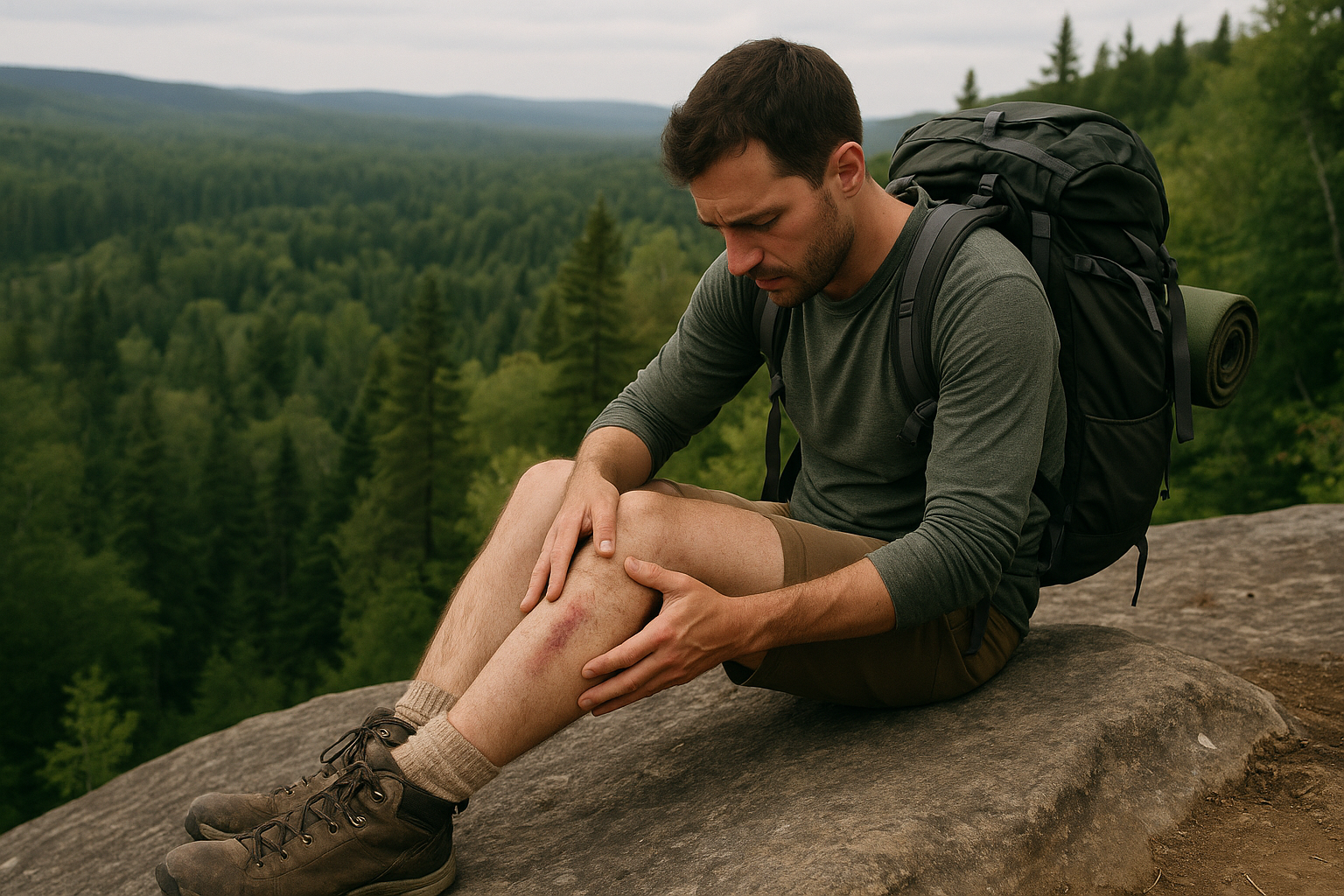
⚠️ Warning — The black-legged tick (Ixodes scapularis) can transmit Lyme disease. Even though the risk remains relatively low, a single bite can ruin much more than just a nature outing.
What strikes me most is that ticks are particularly active during our best hiking periods: from spring until fall, with peaks in May-June and September-October. Exactly when we most want to be outdoors!
The good news? With the right protection strategies and some simple reflexes, you can continue exploring our magnificent trails without stress. I'm going to share everything I've learned over the years to hike with complete peace of mind.
🛡️ How to Dress to Effectively Repel Ticks?
After hundreds of outings in all regions of Quebec, I've developed my "anti-tick formula" that allows me to fully enjoy my hikes. Clothing is really your first line of defense.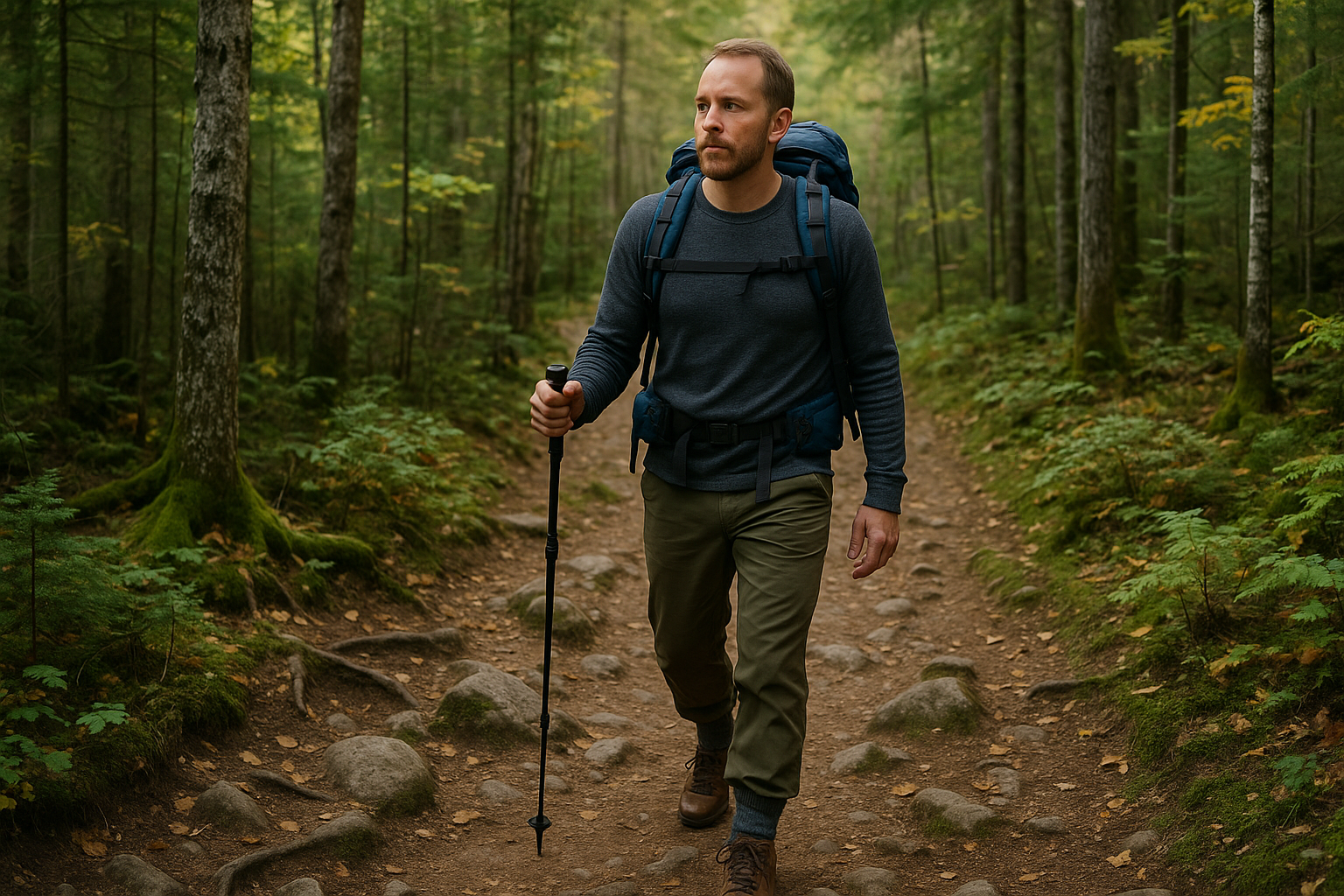
Clothing That Makes a Difference
Long pants are mandatory, even at 25°C! I know, it can seem annoying in the middle of summer, but it's non-negotiable in risk areas. My trick: I opt for light and breathable fabrics like nylon or synthetic blends. My good hiking shoes with gaiters perfectly complete the ensemble. Long-sleeved shirt in a light color. Why light? Because you spot ticks more easily on white or beige than on black. I learned this the hard way wearing a dark shirt at Mont du Lac des Cygnes - I spent 20 minutes looking for a tick I could feel crawling!| Clothing | Recommendation | Why It Works |
|---|---|---|
| Pants | Long, light color, tight weave | Main physical barrier |
| Shirt | Long sleeves, fitted at wrists | Arm protection and easier detection |
| Socks | High, preferably white | Pulled up over pants |
| Hat | With brim, light color | Scalp protection |
The Pants-in-Socks Trick
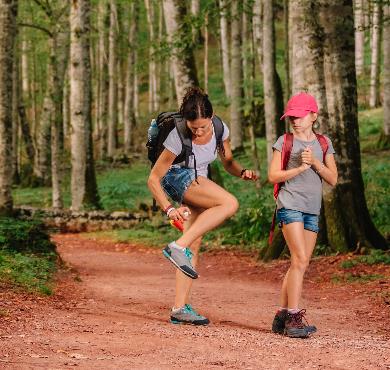
It might look ridiculous, but tucking your pants into your socks is super effective. Ticks always climb upward - they can't go down. By creating this barrier, you force them to crawl on the outside of your clothing where you can see and remove them easily.
💡 Pro tip — I always apply insect repellent to my socks and the bottom of my pants before tucking them in. Double protection guaranteed!
Fabrics to Favor
Avoid rough fabrics like wool or textured cotton - ticks cling to them more easily. I favor smooth synthetic fabrics that make them slide off. My favorite hiking pants even have a water-repellent treatment that seems to discourage these little creatures.🧴 Which Repellents to Choose and How to Apply Them?
Repellents are your life insurance in tick territory. But be careful, not all are equal! After testing tons of products over the years, I have my favorites that have proven themselves in the field.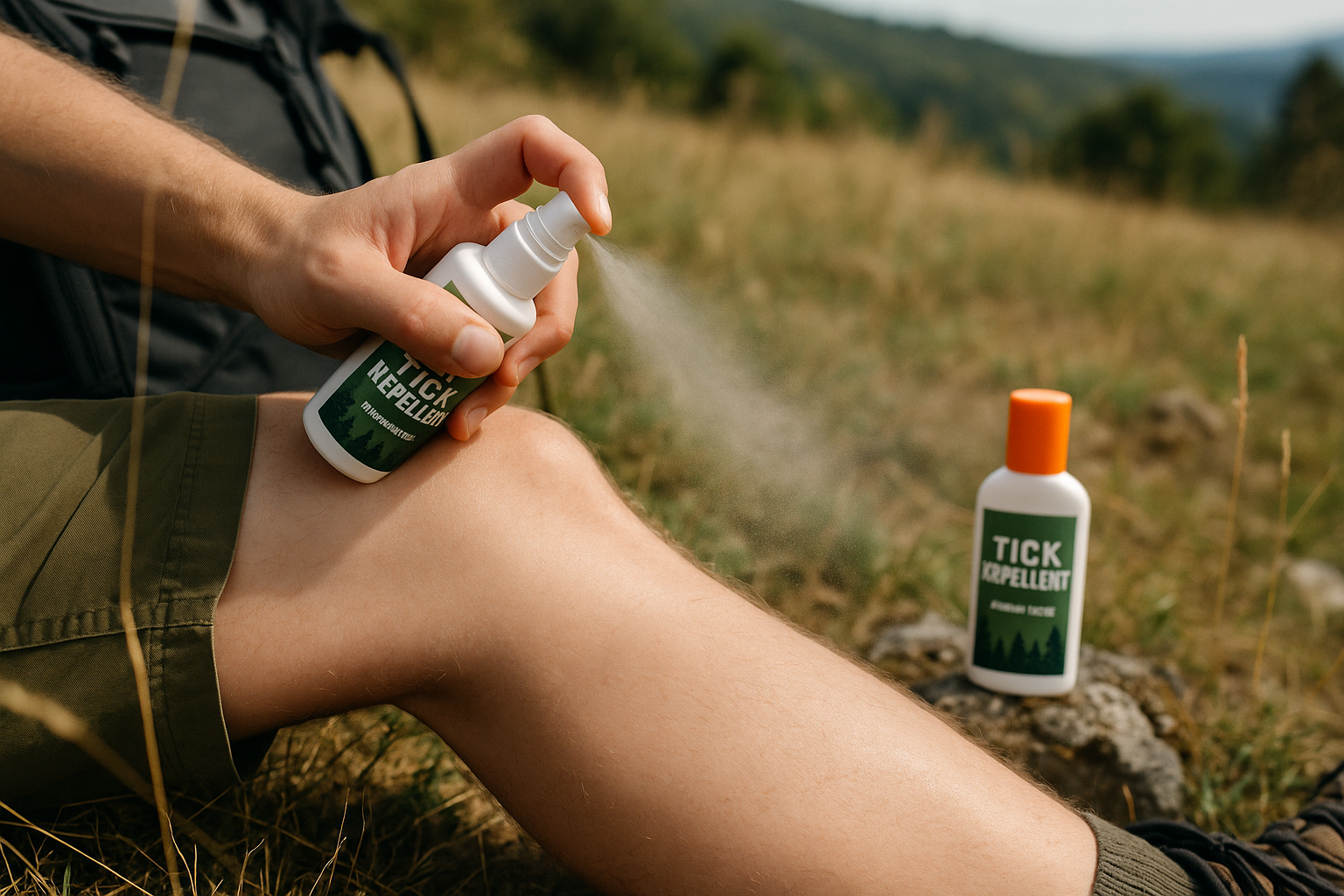
Active Ingredients That Really Work
DEET remains the champion for ticks. Unlike mosquitoes that hate lower concentrations, ticks require DEET at 20% minimum to be truly effective. I personally use 30% for my long outings in the Hautes-Gorges de la Malbaie or other heavily wooded areas. Icaridin (also called picaridin) is an excellent alternative if you don't like the smell of DEET. It's less aggressive on synthetic fabrics and just as effective against ticks. It's my choice when wearing expensive technical clothing. Permethrin for treating your clothes is amazing! You apply it to dry clothes, let it dry, and it stays active for several washes. I treated my favorite hiking pants at the beginning of the season - it saved me more than once.My Field Application Routine
I always start by applying repellent on exposed skin: ankles, wrists, neck, behind ears. These areas, ticks love them because they're warm and humid. Then, I spray generously on my clothing: bottom of pants, shoes, socks. Don't hesitate to be generous - a light application is like no application at all with ticks.
📌 Good to know — Reapply your repellent every 4-6 hours, especially if you sweat a lot or if it rains. Ticks are patient and take advantage of every opportunity!
Natural Alternatives (With Their Limits)
Lemon eucalyptus oil can work for short outings on well-cleared trails like at Parc du Mont-Royal. But let's be honest: for a real hike in dense forest, it doesn't measure up against chemical products. I've tested bracelets, patches, essential oil applications... Nothing replaces a good repellent applied correctly. Keep natural alternatives for short urban walks, not for your wilderness adventures.🔍 How to Do an Effective Inspection After Your Hike?
Post-hike inspection is probably the most important part of your entire anti-tick strategy. I've developed my little routine over the years, and believe me, it's saved me a lot of trouble!Quick Field Inspection
Before even leaving the trail, I always do a quick first check. I look at my legs, my arms, I run my hands over my clothes. Ticks can often be felt before they're seen - that little sensation of something moving on your skin. Shake your clothes vigorously before getting in your car. Ticks that aren't well attached yet will fall off. I've made it a habit to do this systematically in the parking lot - my neighbors look at me funny, but oh well!Complete Inspection at Home
Once you get home, that's when it gets serious. Undress in the entrance or laundry room - not in your bedroom! Ticks can fall and hide in your sheets. Here's my inspection order, from most important to least critical:- Scalp and hair: run your fingers everywhere, especially behind ears and at the base of the neck
- Armpits and groin: warm and humid areas are their favorites
- Behind knees and between toes: often forgotten spots
- Back and shoulders: ask for help or use a mirror
- Arms and legs: look carefully at skin folds
💡 Pro tip — Use a flashlight or your phone's light to see well. Young ticks (nymphs) are tiny - no bigger than a poppy seed!
What to Do With Your Clothes?
Straight to the dryer on high heat for 10-15 minutes before even washing them. Heat kills ticks instantly. If your clothes are too delicate for high heat, put them in the freezer for 24 hours - that works too. For my good hiking shoes, I spray them with repellent and leave them outside for a few hours. Ticks eventually give up and go look for a better host.When to Worry and Consult?
If you find an attached tick, don't panic! Remove it with fine tweezers by pulling gently and steadily - no twisting motion. Clean the area well with alcohol.
⚠️ Warning — Consult a doctor if you develop redness that spreads around the bite, fever, or flu-like symptoms in the following days. Lyme disease is very treatable if caught early!
🌲 In Which Environments Should You Be More Vigilant?
All my years on Quebec trails have taught me that ticks aren't everywhere equally. There are environments where I double my vigilance, and others where I can relax a bit more.
Red Zones Where You Should Double Your Vigilance
Forest edges are the worst. You know, those places where forest meets a field or clearing? Ticks love these transition zones. I've had my worst experiences on trails like those at Mont Yamaska where you constantly pass from dense forest to open spaces. Tall grass and ferns are real tick nests. When the trail crosses areas where vegetation brushes your legs, that's when it becomes critical. Ticks attach as you pass - they don't jump, contrary to what many think! Humid areas near waterways also attract many ticks. Humidity helps them survive longer. When I hike near the Chutes Jean-Larose or other riverside trails, I'm always more careful.Safer Environments
Clear, rocky summits are generally quite safe. Above the tree line, there's little vegetation to shelter ticks. It's one of the reasons why I love alpine hikes so much! Well-maintained and wide trails present fewer risks. When the trail is cleared 2-3 meters on each side, you're less likely to brush against infested vegetation.| Environment Type | Risk Level | Additional Precautions |
|---|---|---|
| Forest/field edge | 🔴 High | Repellent mandatory, frequent inspection |
| Dense humid forest | 🟡 Moderate | Long clothing, avoid touching vegetation |
| Clear rocky trail | 🟢 Low | Basic surveillance sufficient |
| Alpine summit | 🟢 Very low | Attention mainly on ascent/descent |
Riskier Times of Year
May to July and September to October, that's when ticks are most active. In hot, dry summer, they hide a bit more. But beware: a rainy summer can extend their activity period. After a warm and humid day, they're particularly aggressive. I've noticed that cloudy days with 60-70% humidity are the worst for ticks.
📌 Good to know — Ticks are less active early morning and evening when it's cooler. If you can adjust your hiking hours, it can make a difference!
Adapting Your Strategy According to the Trail
For my outings in known risk areas like certain sectors of the Eastern Townships or Montérégie, I apply my complete strategy: long clothing, repellent, frequent inspection. For a relaxed walk on well-maintained urban trails, I can afford to be a bit less rigid while staying vigilant. The important thing is to know your terrain and adapt your precautions accordingly. With experience, you develop a sixth sense for identifying risk areas.
📥 Download our free gifts — Safety checklists, preparation guides and trail maps to hike with confidence in Quebec.
Get my gifts →
Get my gifts →
🎒 What to Bring in Your Pack to Manage Ticks?
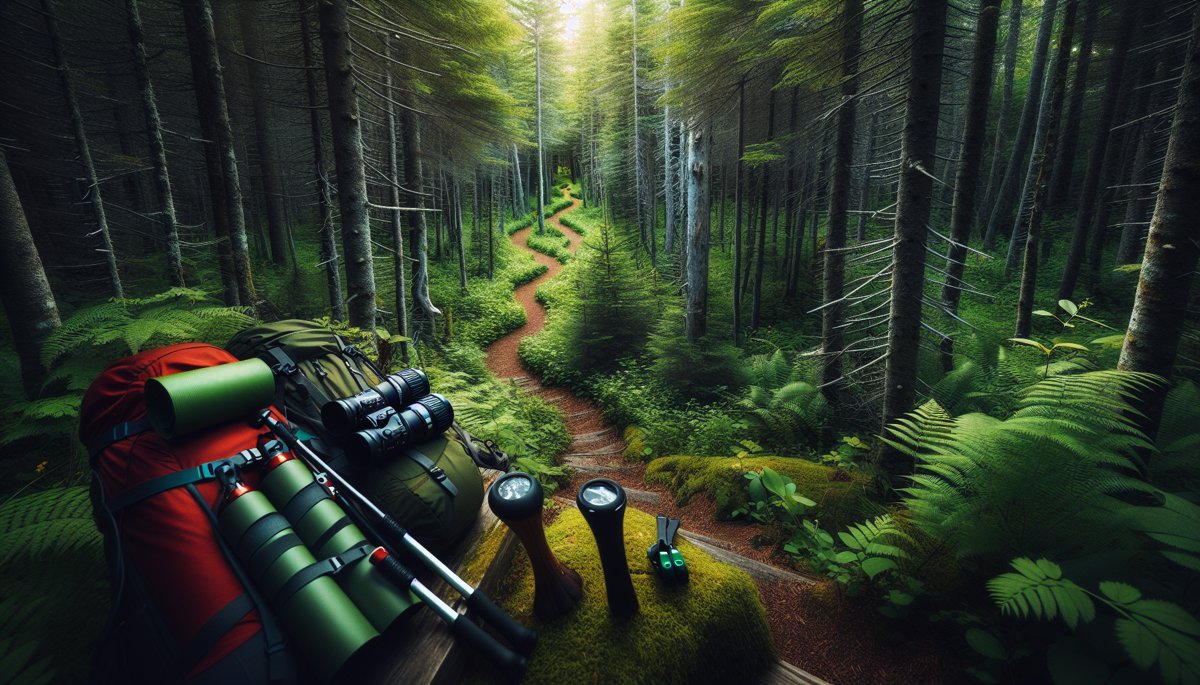
Over the years, I've developed my little anti-tick kit that I carry in my pack. It's not heavy, doesn't take much space, but it can really save your day if you encounter a particularly infested area.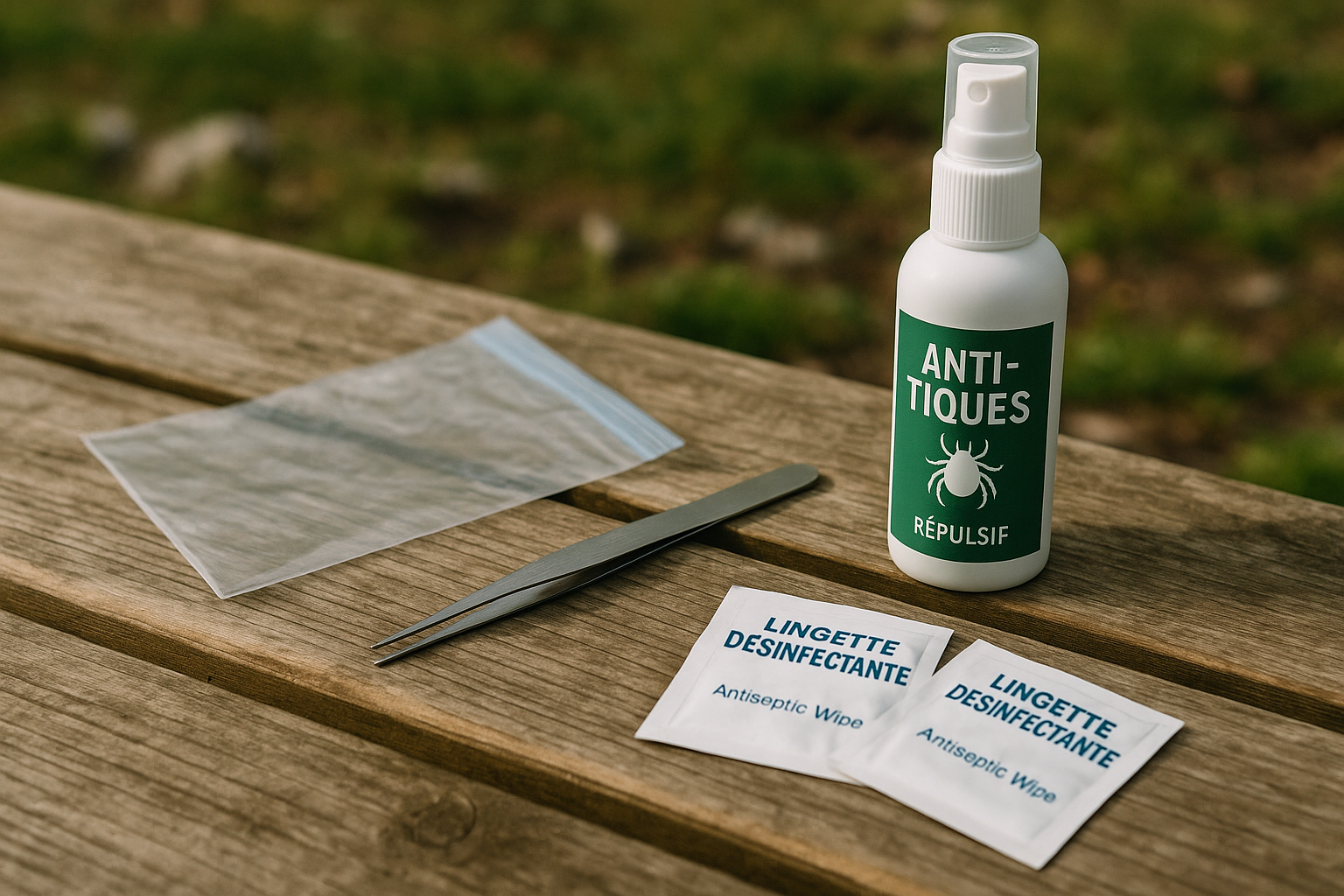
Essentials of My Anti-Tick Kit
Fine tweezers or specialized tick remover. I used regular tweezers for a long time, but since I discovered tick removers, I can't do without them. They allow you to remove the tick in one go without risking leaving the head in the skin. Backup repellent in small format. Even if I apply some before leaving, I like having some on hand for long hikes or if I feel I need more. Disinfectant wipes or small bottle of rubbing alcohol. To clean the area after removing a tick, it's essential. Small hermetic plastic bag to preserve the tick if you need to have it identified later. It might seem weird, but health professionals sometimes appreciate being able to examine the critter.Little Extras That Make a Difference
Pocket magnifying glass or headlamp with zoom. Young ticks are really tiny - sometimes, a little visual help makes all the difference in spotting them. Permanent marker to circle the bite area if you remove a tick. It helps monitor evolution and quickly detect any redness that spreads.
💡 Pro tip — I always keep a photo of the bite with the date on my phone. If symptoms appear later, it helps the doctor enormously with diagnosis.
How to Remove a Tick Correctly?
If you discover an attached tick during your hike, don't panic! Here's my proven method:- Disinfect your tweezers with alcohol or a wipe
- Grasp the tick as close to the skin as possible, not on the swollen body
- Pull gently and firmly upward, without rotating
- Disinfect the area once the tick is removed
- Preserve the tick in your small hermetic bag
Managing an Emergency Situation on the Trail
I once discovered several ticks on a friend during a hike in a particularly infested area. We were far from everything, and the situation was becoming stressful. My advice: stay calm and methodical. Remove ticks one by one, disinfect each area, and note the time and location on your GPS or in your notebook. If you're really in a heavily infested area, don't hesitate to cut your hike short."The best hike is one where you come home healthy and with a smile. Sometimes, that means turning back."
After Intervention: Monitoring and Follow-up
Once back home, monitor the bite area for the following weeks. A small immediate redness is normal. What should worry you is redness that gradually spreads or the appearance of flu-like symptoms.
⚠️ Warning — If you develop a target-shaped skin rash (erythema migrans) around the bite, consult immediately. It's the classic sign of Lyme disease.
⚠️ In case of emergency — Call 911. If you don't have cell service, use a satellite communication device (inReach, SPOT, Zoleo) or send someone to get help. Quebec outdoor SOS number: 1-800-463-5060.
👨👩👧👦 How to Protect the Whole Family During Hikes?
Family hiking with children in tick areas requires a slightly different approach. I learned this while accompanying my nephews on easy trails around Montreal - children are more vulnerable and less aware of risks.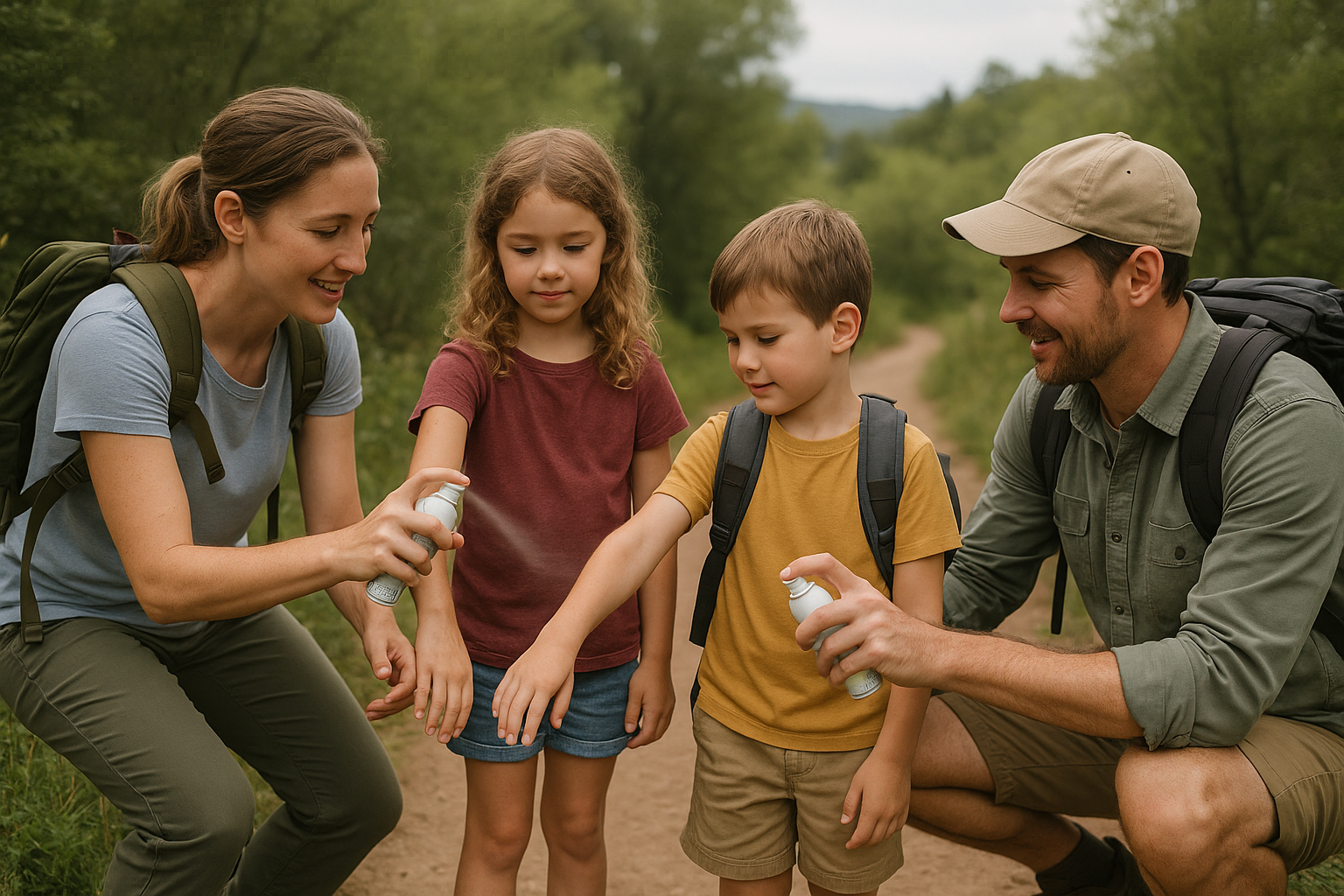
Adapting Protection According to Age
For toddlers (2-6 years), I recommend long clothing even if they complain. Children stay closer to the ground, touch everything, and are less aware of areas to avoid. Light pants and long sleeves are non-negotiable. Teens can follow the same rules as adults, but they tend to be less rigorous with repellent application. My trick: make post-hike inspection a family moment, like a fun little ritual.Choosing the Right Repellents for Children
Avoid concentrated DEET on young children. For those under 12, I favor icaridin or low-concentration DEET (10% maximum). Application is always done by an adult - never let a child apply repellent alone. Permethrin-treated clothing is perfect for children because there's no direct skin contact. I often treat children's hiking clothes at the beginning of the season.
📌 Good to know — Avoid applying repellent to children's hands - they tend to put them in their mouth or rub their eyes.
Making Prevention Fun
I turned post-hike inspection into a "treasure hunt" with my nephews. We look for "little bugs" together, and whoever does the best inspection wins a small privilege. It makes them responsible without stressing them. The color game works well too: "Today, we all wear something light to better see ticks!" Children love having a special mission.Choosing Family-Friendly Trails
For family outings, I favor wider and well-maintained trails like those at Parc du Mont Arthabaska. Less vegetation brushing against you, fewer risks for everyone.| Age | Recommended Repellent | Special Precautions |
|---|---|---|
| 2-6 years | Icaridin 10% or DEET 10% | Adult application only |
| 6-12 years | DEET 20% max | Avoid hands and face |
| 12+ years | Like adults | Supervised application |
What to Do If a Child Has a Tick?
Children often panic more than adults when they discover a tick. Stay calm and reassuring. Explain that it's not serious, that it happens often, and that you know exactly what to do. Remove the tick exactly as for an adult, but maybe take a bit more time to explain each step. Children calm down when they understand what's happening. Monitor symptoms particularly in children in the following weeks. They sometimes have more difficulty describing what they feel, so be attentive to behavior changes, unusual fatigue or headache complaints.Educating Without Scaring
The goal is for your children to develop good habits without developing a phobia of nature. I explain that ticks are part of the ecosystem, but we just need to be careful, like when crossing the street.
💡 Pro tip — Involve children in preparation: let them choose their favorite long clothes, give them their own small bottle of repellent (that you control), and make them "experts" of family inspection.
Conclusion: Hiking with Peace of Mind Despite Ticks
After all these years walking Quebec trails, I've learned that we can perfectly coexist with ticks without sacrificing our nature adventures. Here are the essential points to remember:- Smart clothing remains your best defense: long pants, light colors, and the famous pants-in-socks trick
- Effective repellents really make a difference: DEET 20%+ or icaridin, applied generously on skin and clothing
- Post-hike inspection is non-negotiable: systematic, methodical, and in order of body area importance
- Know your terrain: forest edges and tall grass require more vigilance than rocky summits
- A small anti-tick kit in your pack can transform a stressful situation into a minor inconvenience

About the author
François Dumaine
Founder of Let's Go Play Outside
A passionate hiker, photographer and content creator, François has been hiking the trails of Quebec and Alberta since 2014. He founded Let's Go Play Outside to give you the information he wished he had before heading out.
Newsletter
Content that makes you want to go outside
Every week, a trail idea, a reflection on nature, or a tip worth the detour. Zero spam. Only the essentials.
Joined by 12,000+ outdoor enthusiasts
Read next